
Growing Military Pressure on Tehran
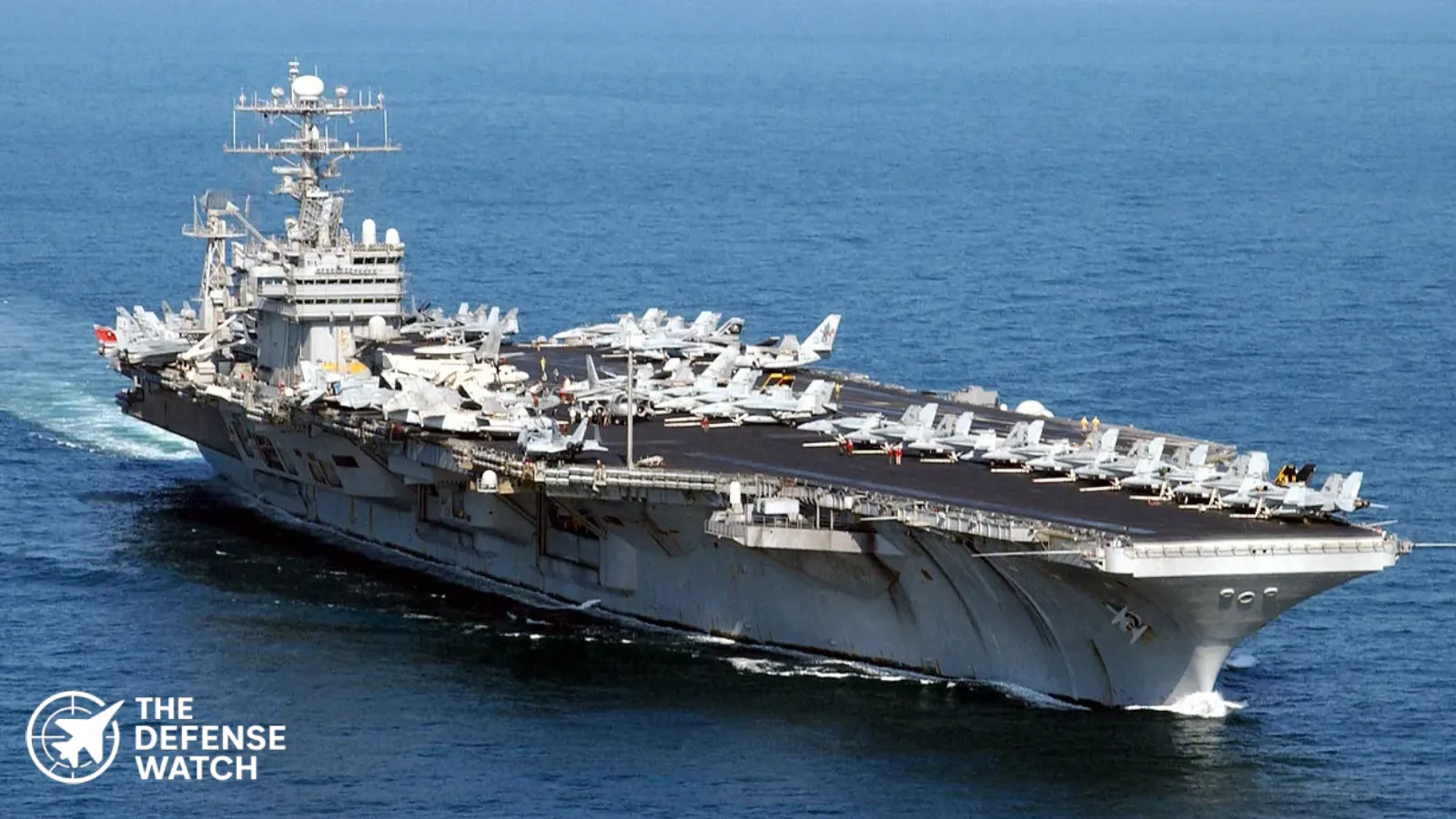
President Donald Trump issued a stark warning to Iran on January 28, 2026, declaring that failure to negotiate a nuclear weapons agreement would result in military action exceeding the destructive scope of last summer’s strikes on Iranian nuclear facilities. The ultimatum comes as the USS Abraham Lincoln carrier strike group entered U.S. Central Command’s area of responsibility, substantially increasing American military capability in the Persian Gulf region.
In a Truth Social post, Trump stated that a “massive Armada is heading to Iran” led by the aircraft carrier Abraham Lincoln, describing it as larger than the fleet deployed to Venezuela and one that is “ready, willing, and able to rapidly fulfill its mission, with speed and violence, if necessary.”
The president’s message was unambiguous: “Hopefully Iran will quickly ‘Come to the Table’ and negotiate a fair and equitable deal — NO NUCLEAR WEAPONS — one that is good for all parties. Time is running out, it is truly of the essence.”
Reference to Operation Midnight Hammer
Trump explicitly referenced Operation Midnight Hammer, the June 2025 military operation that targeted Iranian nuclear infrastructure, warning: “The next attack will be far worse! Don’t make that happen again.”
Operation Midnight Hammer involved seven B-2 Spirit stealth bombers that struck three Iranian nuclear facilities—Fordow, Natanz, and Isfahan—using fourteen GBU-57A/B Massive Ordnance Penetrator bunker buster bombs and Tomahawk cruise missiles fired from submarines. The operation, conducted on June 22, 2025, was described by Joint Chiefs Chairman General Dan Caine as the “largest B-2 operational strike in U.S. history,” involving more than 125 aircraft and approximately 75 precision-guided weapons.
The strikes inflicted severe damage to Iran’s nuclear enrichment capabilities, with the operation employing advanced deception tactics and achieving complete tactical surprise—Iranian air defenses failed to engage the strike package.
Carrier Strike Group Deployment
U.S. Central Command confirmed Monday that the USS Abraham Lincoln aircraft carrier strike group had entered the Middle East region “to promote regional security and stability,” marking the first carrier presence in the area since the USS Gerald R. Ford departed for Caribbean operations in October 2025.
The Abraham Lincoln Carrier Strike Group includes the flagship nuclear-powered aircraft carrier USS Abraham Lincoln (CVN-72) with Carrier Air Wing 9 embarked, operating F/A-18E/F Super Hornets, EA-18G Growlers, F-35C Lightning II stealth fighters, and MH-60R/S helicopters. Three guided missile destroyers accompany the carrier: USS Frank E. Petersen Jr., USS Spruance, and USS Michael Murphy.
The carrier strike group’s deployment reinforces at least three F-15 squadrons already stationed in the region, along with additional U.S. air defense batteries deployed in recent weeks. Other U.S. Navy guided-missile destroyers have been positioned in the Gulf and the Red Sea.
Iranian Response and Regional Reactions
Iran’s response was defiant. Foreign Minister Abbas Araghchi stated that Iran’s armed forces “are prepared—with their fingers on the trigger—to immediately and powerfully respond to ANY aggression.” Iran’s mission to the United Nations warned that Tehran “stands ready for dialogue based on mutual respect and interests—BUT IF PUSHED, IT WILL DEFEND ITSELF AND RESPOND LIKE NEVER BEFORE.”
Ali Shamkhani, adviser to Supreme Leader Ayatollah Ali Khamenei, warned that any U.S. military action would result in Iran targeting the United States, Israel, and their supporters.
Regional U.S. allies have expressed caution about potential escalation. Saudi Arabia’s Crown Prince indicated the kingdom will not allow its airspace to be used for attacks on Iran, while the United Arab Emirates has signaled similar restrictions.
Nuclear Negotiations Background
Trump withdrew the United States from the Joint Comprehensive Plan of Action nuclear deal with Iran in 2018 during his first term, three years after Iran agreed to halt nuclear weapons development in exchange for sanctions relief. Following the U.S. withdrawal, Iran resumed uranium enrichment activities.
Prior to Operation Midnight Hammer, the International Atomic Energy Agency assessed that Iran had stockpiled sufficient uranium enriched to 60 percent purity to construct nine nuclear weapons if further enriched to weapons-grade levels.
Secretary of State Marco Rubio told a congressional committee on January 28 that the Iranian government is weaker than ever, with its economy in collapse, though multiple U.S. intelligence reports indicate the upper ranks of Iran’s government remain intact with no major fractures.
Turkish Foreign Minister Hakan Fidan suggested “Iran is ready to negotiate a nuclear file again,” though Iranian officials have publicly rejected negotiations under threat. Foreign Minister Araghchi stated there had been no recent contact with U.S. officials and emphasized that “negotiations cannot take place under threats.”
Military Posture and Deterrence
During Senate testimony, Secretary of State Rubio characterized the U.S. military deployment as necessary baseline force protection, stating: “We have to have enough force and power in the region just on a baseline to defend against that possibility that at some point, as a result of something, the Iranian regime decides to strike at our troop presence in the region.
Rubio also indicated Trump “reserves the preemptive defensive option” if intelligence indicates Iran will strike U.S. forces, describing it as “wise and prudent to have a force posture within the region that could respond and potentially—if necessary—preemptively prevent the attack.”
U.S. Air Force units in the Middle East began exercises Monday practicing evasive maneuvers to disperse personnel and aircraft from major bases to smaller airfields throughout the region, designed to “demonstrate the ability to deploy, disperse and sustain combat airpower” under demanding conditions.
Strategic Implications
The deployment represents a significant escalation in U.S.-Iran tensions following relatively quiet months after Operation Midnight Hammer and the subsequent ceasefire between Israel and Iran in June 2025. The presence of a full carrier strike group provides Washington with enhanced strike options, intelligence-gathering capabilities, and defensive coverage for the approximately 30,000 U.S. military personnel stationed throughout the Middle East.
Military analysts note that while the United States maintains significant air, land, and maritime strike capabilities within Central Command’s area of responsibility, including strategic bombers and forward-based fighter wings, a carrier strike group provides a unique combination of sustained airpower, electronic warfare, maritime strike capabilities, and sea control unmatched by other platforms.
The coming days will prove critical as diplomatic channels remain open but under severe strain. Whether Iran responds to Trump’s ultimatum with renewed negotiations or increased defiance could determine whether the Middle East sees another round of military confrontation or a potential diplomatic breakthrough on one of the region’s most intractable security challenges.
Get real time update about this post category directly on your device, subscribe now.
