
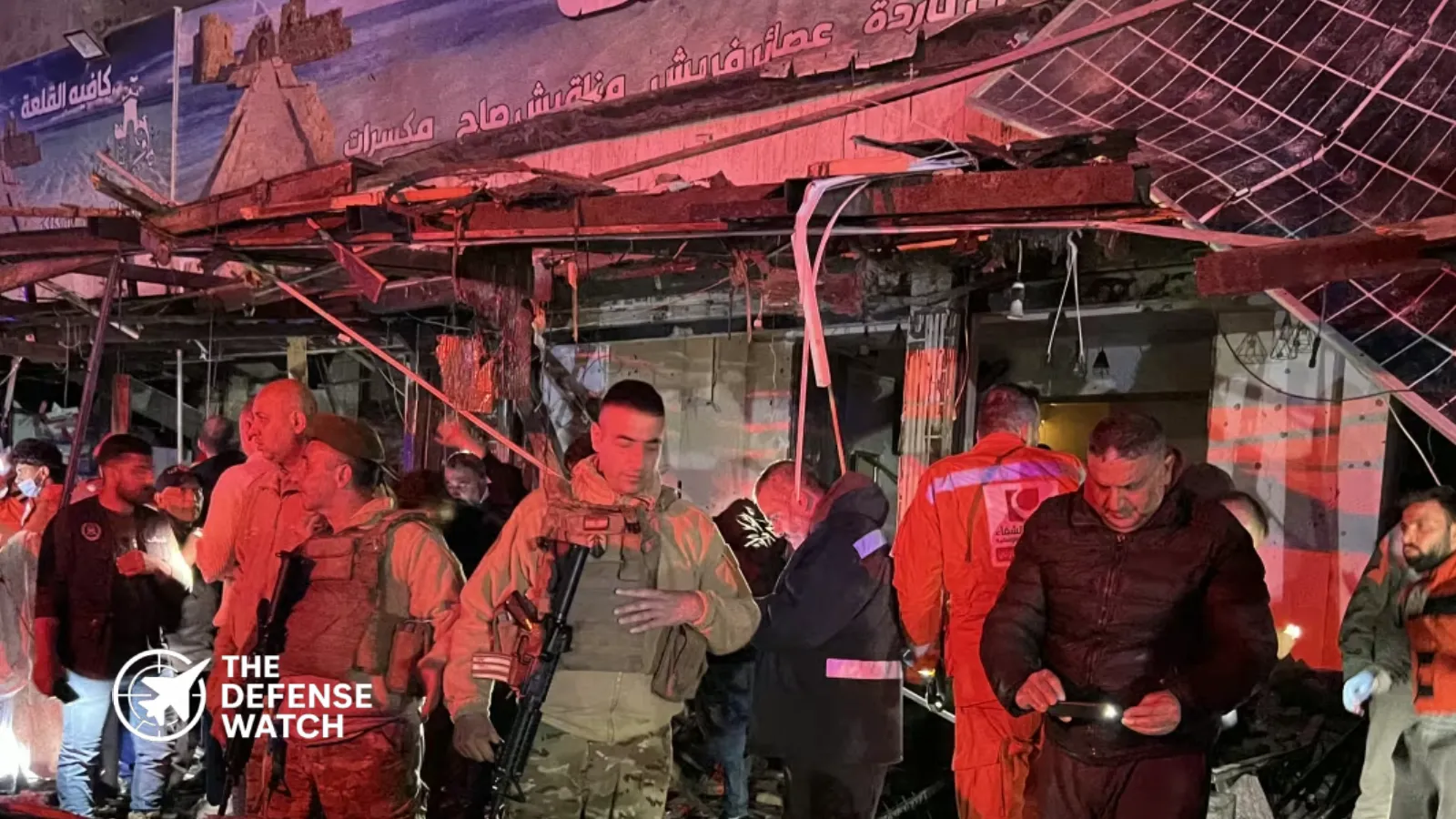
Israel Ceasefire Lebanon Exclusion Clarified
The Israel ceasefire Lebanon exclusion has emerged as a key point of contention following the announcement of a two-week truce involving the United States and Iran. In its first official response, the office of Benjamin Netanyahu stated clearly that Lebanon is not part of the agreement.
According to the statement, Israel supports the decision by Donald Trump to suspend strikes against Iran for a limited period. However, this pause is conditional. Tehran must reopen strategic maritime routes and halt attacks against the United States, Israel, and regional partners.
- Israel confirmed Lebanon is not included in the two-week ceasefire involving the US and Iran.
- The ceasefire is conditional on Iran reopening key maritime routes and halting attacks.
- Pakistan’s Prime Minister previously stated Lebanon was part of the agreement.
- US President Donald Trump did not mention Lebanon in his official statement.
- The clarification highlights ongoing ambiguity in regional ceasefire terms.
The clarification directly contradicts earlier remarks by Shehbaz Sharif, who had suggested that Lebanon was included in the ceasefire framework. That discrepancy now raises questions about the scope and coordination behind the agreement.
Conflicting Narratives Around Ceasefire Scope
The divergence in statements reflects broader uncertainty surrounding the Israel ceasefire Lebanon exclusion and the structure of the deal itself. While Washington and Tehran appear aligned on a temporary de-escalation, regional actors interpret the terms differently.
Notably, President Trump’s public statement announcing the ceasefire made no reference to Lebanon. This omission aligns with Israel’s position but contrasts with Pakistan’s claims of a broader regional arrangement.
From a policy standpoint, this gap highlights the lack of a unified communication channel among stakeholders. In high-risk environments, such inconsistencies can quickly translate into operational confusion, especially in multi-front theaters like the Middle East.
Strategic Implications For Regional Security
The Israel ceasefire Lebanon exclusion carries immediate operational implications. By excluding Lebanon, Israel retains freedom of action against threats emanating from its northern border, particularly those linked to Iran-backed groups.
This suggests that the ceasefire is narrowly tailored to reduce direct US–Iran confrontation rather than address the full spectrum of regional hostilities. In practical terms, it creates a partial pause rather than a comprehensive de-escalation.
Military planners will likely view this as a controlled reset rather than a durable peace measure. The conditional nature of the truce also introduces fragility. Any perceived violation, such as disruptions in maritime traffic or proxy attacks, could quickly collapse the agreement.
Operational Context And Military Posture
Israel’s clarification indicates that its rules of engagement remain unchanged outside the Iran-specific framework. This is critical in understanding the real-world impact of the ceasefire.
For defense analysts, the Israel ceasefire Lebanon exclusion underscores a layered conflict environment. While one axis of confrontation may pause, others remain active. This complicates command decisions, force allocation, and escalation management.
The exclusion of Lebanon also signals that Israel does not consider the current agreement sufficient to address threats from that front. As a result, surveillance, air defense readiness, and strike capabilities in northern sectors are expected to remain elevated.
Analysis: Limited Ceasefire, Broader Risks
At least 30 percent of the implications of this development lie in what the ceasefire does not cover. The Israel ceasefire Lebanon exclusion reveals a fragmented approach to conflict management in the region.
Rather than a comprehensive diplomatic breakthrough, the agreement appears to be a tactical pause focused on immediate US–Iran tensions. This leaves multiple flashpoints unresolved.
Such partial arrangements often carry inherent risks. They can reduce pressure in one area while allowing escalation in another. In this case, excluding Lebanon may prevent broader consensus and prolong instability along Israel’s northern frontier.
From a strategic perspective, the situation reflects competing priorities. The United States may seek to avoid direct confrontation with Iran, while Israel maintains a wider threat perception that includes proxy actors.
Outlook
The durability of the ceasefire will depend heavily on compliance with its conditions and clarity in its scope. As it stands, the Israel ceasefire Lebanon exclusion introduces ambiguity that could undermine confidence in the agreement.
Further official statements from Washington and Tehran will be critical in determining whether additional clarifications or expansions of the ceasefire are forthcoming.
For now, the region remains in a state of controlled tension rather than genuine de-escalation.
Get real time update about this post category directly on your device, subscribe now.
