- ► Turkey says an Iranian ballistic missile crossed Iraqi and Syrian airspace toward Turkish territory.
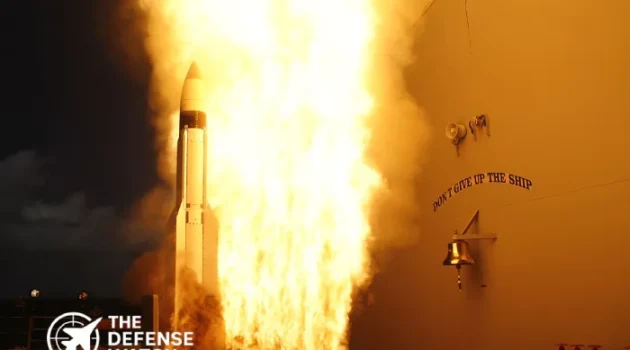
- ► A NATO naval vessel in the Eastern Mediterranean launched a ship-based SM-3 interceptor.
- ► The RIM-161 Standard Missile-3 engaged the target during its midcourse phase.
- ► Debris from the interceptor fell in Dörtyol, Hatay Province, Turkish officials said.
- ► The incident underscores NATO’s forward deployed ballistic missile defense posture in the region.
Iranian Ballistic Missile Intercepted By NATO SM-3 In Eastern Mediterranean
The Iranian ballistic missile interception in the Eastern Mediterranean marks a significant operational use of NATO missile defense assets, according to Turkey’s Ministry of National Defense.
An Iranian-launched ballistic missile crossed Iraqi and Syrian airspace before approaching Turkish territory. Turkish authorities said the threat was successfully neutralized by NATO air and missile defense forces operating in the region.
The interceptor was fired from a NATO naval vessel using the ship-based RIM-161 Standard Missile-3, commonly known as the SM-3. Debris from the interceptor reportedly fell in the Dörtyol district of Hatay Province in southern Turkey.
What Happened
Turkey’s defense ministry stated that the missile originated in Iran and traversed Iraqi and Syrian airspace en route to Turkey. NATO maritime assets positioned in the Eastern Mediterranean engaged the target before it could reach Turkish territory.
The interception was carried out using the RIM-161 Standard Missile-3, a ship-launched interceptor designed to defeat short to intermediate range ballistic missiles during their midcourse phase outside the atmosphere.
Turkish authorities confirmed that fragments from the interceptor fell in Dörtyol, Hatay Province. No casualties were immediately reported.
NATO has not publicly detailed which vessel conducted the intercept. However, several NATO navies operate Aegis-equipped destroyers and cruisers capable of launching the SM-3 under the alliance’s ballistic missile defense framework.
The Role Of The SM-3 In NATO Missile Defense
The RIM-161 Standard Missile-3 is a core element of NATO’s ballistic missile defense architecture. Developed by Raytheon and deployed on Aegis-equipped warships, the interceptor is designed to destroy ballistic missile threats in space through a hit to kill kinetic vehicle.
Unlike terminal phase systems such as Patriot, the SM-3 operates in the midcourse phase, intercepting targets outside the atmosphere. This allows engagement earlier in the missile’s flight path and reduces the risk to defended territory.
NATO’s ballistic missile defense mission, declared operational at the 2016 Warsaw Summit, integrates U.S. Aegis Ashore sites in Romania and Poland, forward deployed Aegis destroyers, and allied sensors and command networks.
An Iranian ballistic missile interception by an SM-3 warship in the Eastern Mediterranean highlights the flexibility of sea-based assets. Naval platforms can reposition rapidly and provide coverage across wide maritime approaches to Europe and the Levant.
Strategic Implications For Turkey And NATO
Turkey sits at a geographic crossroads between Europe and the Middle East. Any Iranian ballistic missile trajectory crossing Iraqi and Syrian airspace toward Turkish territory carries regional escalation risks.
The use of a NATO interceptor signals that the alliance’s collective defense framework extends to active missile threats in real time. While Turkish authorities did not specify the missile type or intended target, the engagement demonstrates that NATO assets are postured to respond quickly to emerging threats.
From an operational standpoint, this Iranian ballistic missile interception suggests high readiness levels among deployed Aegis vessels in the Eastern Mediterranean. Successful midcourse intercepts require precise tracking data, integrated command and control, and rapid decision cycles.
The fact that debris fell in Hatay Province indicates the intercept occurred at altitude, consistent with SM-3 engagement profiles. Turkish officials have not reported damage or casualties.
Regional Context
Tensions between Iran and NATO member states have fluctuated over recent years, particularly in maritime domains and airspace near the Eastern Mediterranean. Ballistic missile activity in or near contested zones often carries political signaling alongside military risk.
This event reinforces the importance of layered missile defense coverage across NATO’s southern flank. With conflicts in Syria and instability in parts of Iraq, regional airspace remains complex and crowded.
An Iranian ballistic missile interception by NATO assets may also prompt further diplomatic exchanges. However, Turkish authorities have limited public statements to operational details, avoiding broader political commentary.
Technical Considerations
The SM-3 family includes several variants with differing ranges and engagement envelopes. While the specific variant used in this intercept was not disclosed, NATO maritime forces commonly operate Block IB and Block IIA interceptors.
Midcourse interception demands accurate cueing from radar systems such as AN SPY 1 or SPY 6 arrays aboard Aegis ships. Integration with NATO command networks allows rapid dissemination of tracking data.
Such engagements are technically demanding. They require precise timing, as the interceptor must collide with the incoming warhead at high velocity in space.
The Iranian ballistic missile interception demonstrates that sea-based missile defense remains a central pillar of NATO’s deterrence and defense strategy.
Get real time update about this post category directly on your device, subscribe now.