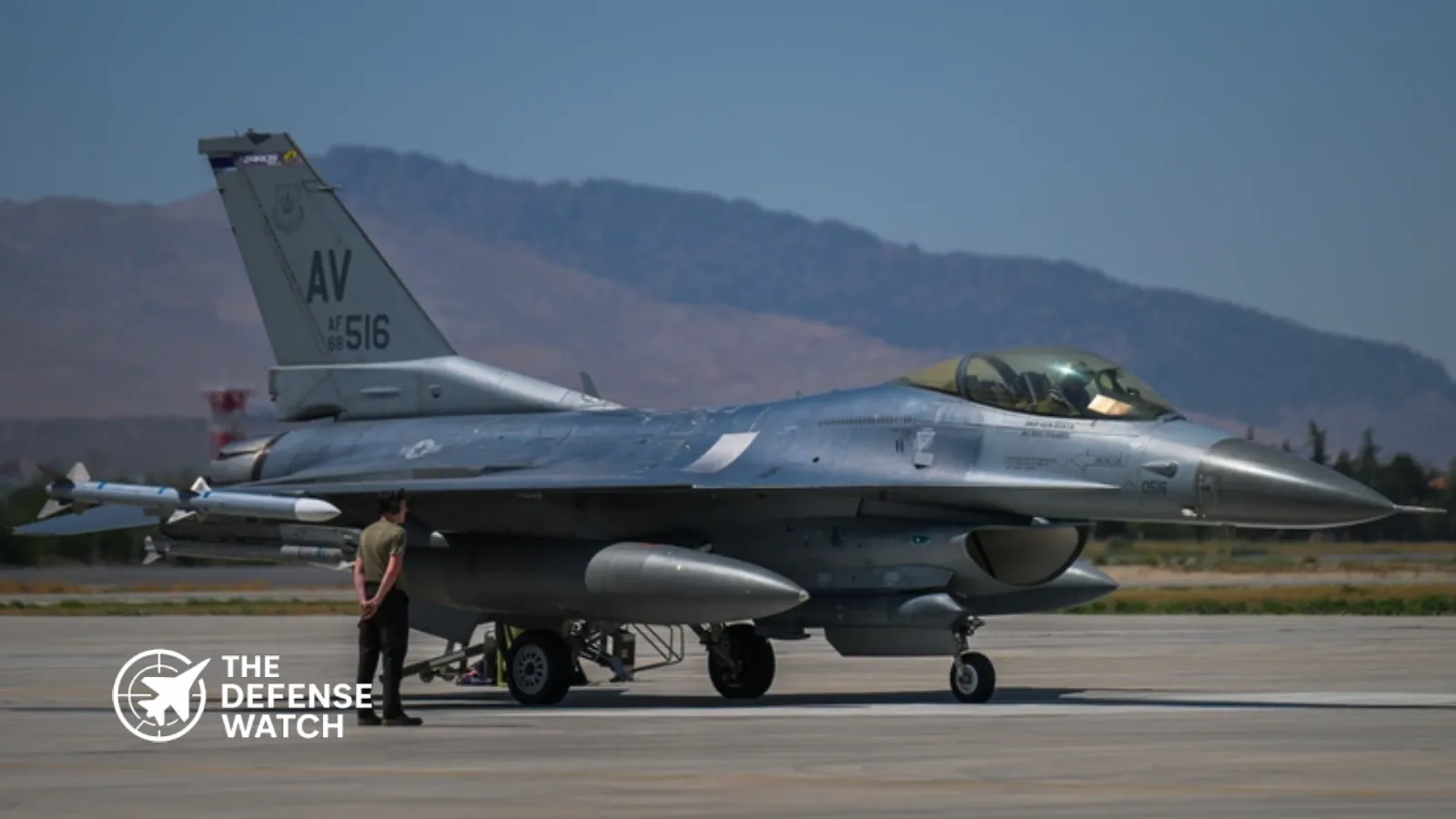
- Turkey has deployed six F-16 fighter jets to the Turkish Republic of Northern Cyprus to strengthen regional security.
- The deployment includes additional air defense systems to enhance protection of the island’s northern sector.
- The move follows a drone attack on Cyprus linked to escalating Middle East tensions.
- Greek forces previously deployed F-16 aircraft to the southern part of the island, raising military activity in the region.
- The deployment highlights growing strategic competition in the Eastern Mediterranean airspace.
Turkey F-16 Northern Cyprus Deployment Signals New Security Posture
The Turkey F-16 Northern Cyprus deployment marks a significant escalation in military activity around the divided Mediterranean island, as Ankara moves to strengthen the security of the Turkish Cypriot territory amid growing regional tensions.
According to officials cited by Reuters, Turkey has sent six F-16 fighter jets and supporting air defense systems to the Turkish Republic of Northern Cyprus (TRNC), a self-declared state recognized only by Ankara.
The deployment follows a series of regional security developments, including a drone strike on Cyprus linked to broader hostilities in the Middle East.
The Big Picture
Eastern Mediterranean security dynamics have shifted rapidly over the past decade as regional rivalries, energy competition, and military modernization reshape the balance of power.
Cyprus sits at the center of this evolving strategic landscape. The island hosts key military installations, including British sovereign bases used by NATO forces, and lies close to critical maritime routes connecting Europe, the Middle East, and North Africa.
The island has been divided since 1974 following a Turkish military intervention after a coup backed by Greece. Today, the internationally recognized Republic of Cyprus controls the south, while the Turkish-backed TRNC governs the north.
Military activity around the island has intensified as regional conflicts spill into the Eastern Mediterranean. Several countries, including Greece and European partners, have recently increased defense cooperation with the Republic of Cyprus.
Turkey’s decision to deploy fighter aircraft to Northern Cyprus reflects its intent to maintain a strong security presence in the region and protect the Turkish Cypriot community.
What’s Happening
Turkish authorities confirmed that six F-16 fighter jets have been deployed to Northern Cyprus as part of what officials described as a phased security response to recent developments in the region.
The aircraft are expected to operate from facilities near Ercan Airport, the main airfield in the northern part of the island.
Officials said the deployment will not disrupt civilian aviation operations and commercial flights will continue normally.
The move comes shortly after a drone attack struck a British military base in Cyprus, an incident linked to the broader escalation following military operations involving the United States, Israel, and Iran.
Greece had already deployed several of its own F-16 fighter jets to the southern part of Cyprus, further increasing military activity in the area.
Ankara has stated that the deployment forms part of a broader strategy to ensure the security of the TRNC and that additional measures could follow depending on how the regional situation evolves.
Why It Matters
The deployment of Turkish F-16 fighter jets to Northern Cyprus significantly improves Ankara’s ability to respond quickly to potential threats in the Eastern Mediterranean.
Operating fighter aircraft directly from the island dramatically reduces response times compared with aircraft flying from mainland Turkey. This allows faster interception of drones, missiles, or hostile aircraft approaching the area.
The move also reinforces Turkey’s air defense coverage around strategic maritime zones that are central to ongoing disputes over energy exploration and maritime boundaries.
Cyprus lies near several major offshore gas fields discovered in the Eastern Mediterranean, making control of surrounding airspace an increasingly important element of regional power projection.
By placing fighter jets on the island, Turkey strengthens both deterrence and surveillance capabilities in a region where military incidents have become more frequent.
Strategic Implications
Turkey’s deployment of F-16 aircraft introduces a new layer of military capability into an already complex security environment.
The Eastern Mediterranean has become a strategic crossroads where NATO allies, European Union members, and regional powers maintain overlapping military interests.
Ankara’s decision to forward deploy fighter aircraft may serve several operational objectives:
First, it creates a rapid reaction air defense capability near potential threat vectors originating from the Middle East.
Second, it increases Turkish air presence near maritime zones contested between Turkey, Greece, and Cyprus.
Third, it reinforces Turkey’s commitment to defending the Turkish Cypriot administration, which Ankara views as essential to its regional strategy.
From a military perspective, the deployment also enhances air patrol coverage over sea lanes connecting the Levant, Suez Canal routes, and Southern Europe.
Competitor View
Regional actors are likely to interpret the Turkish F-16 deployment through the lens of broader geopolitical competition in the Eastern Mediterranean.
Greece and Cyprus have strengthened defense cooperation with European partners and Israel in recent years, conducting joint exercises and expanding security agreements.
The presence of Turkish fighter aircraft in Northern Cyprus could therefore be viewed in Athens and Nicosia as an attempt by Ankara to consolidate military control over northern airspace.
Iran and other Middle Eastern actors may interpret the move differently, seeing it as a defensive step by Turkey to shield strategic territory from spillover effects of regional conflict.
For NATO planners, the situation highlights the complex dynamic of alliance members maintaining competing security positions in the same region.
What To Watch Next
Several developments will determine how this situation evolves in the coming months.
First, analysts will monitor whether Turkey rotates additional aircraft or expands air defense deployments on the island.
Second, regional partners may increase their own military presence in Cyprus, particularly through joint exercises or temporary deployments.
Third, NATO and European Union diplomacy could intensify to prevent further escalation between regional actors.
Another key indicator will be whether Ankara upgrades infrastructure at Northern Cyprus airbases to support longer-term fighter deployments.
Capability Gap
The deployment addresses a key operational gap in Turkey’s regional air defense posture.
Before the move, fighter aircraft responding to threats near Cyprus would typically launch from bases in southern Turkey, requiring longer flight times and reducing on-station endurance.
Forward basing F-16 aircraft on the island shortens response times significantly, especially against low-flying drones or cruise missiles.
However, the deployment also has limitations.
Six aircraft provide a modest defensive capability and would primarily support air policing and interception missions rather than sustained high-intensity air operations.
Maintaining a continuous air defense posture would require additional aircraft rotations, ground support infrastructure, and integrated radar coverage.
The Bottom Line
Turkey’s deployment of F-16 fighter jets to Northern Cyprus strengthens its regional deterrence posture and signals a more permanent Turkish airpower presence in the Eastern Mediterranean.
â– KEY FACTS AT A GLANCE- â–º Turkey says an Iranian ballistic missile crossed Iraqi and Syrian airspace toward Turkish territory.
- â–º A NATO naval vessel in the Eastern Mediterranean launched a ship-based SM-3 interceptor.
- â–º The RIM-161 Standard Missile-3 engaged the target during its midcourse phase.
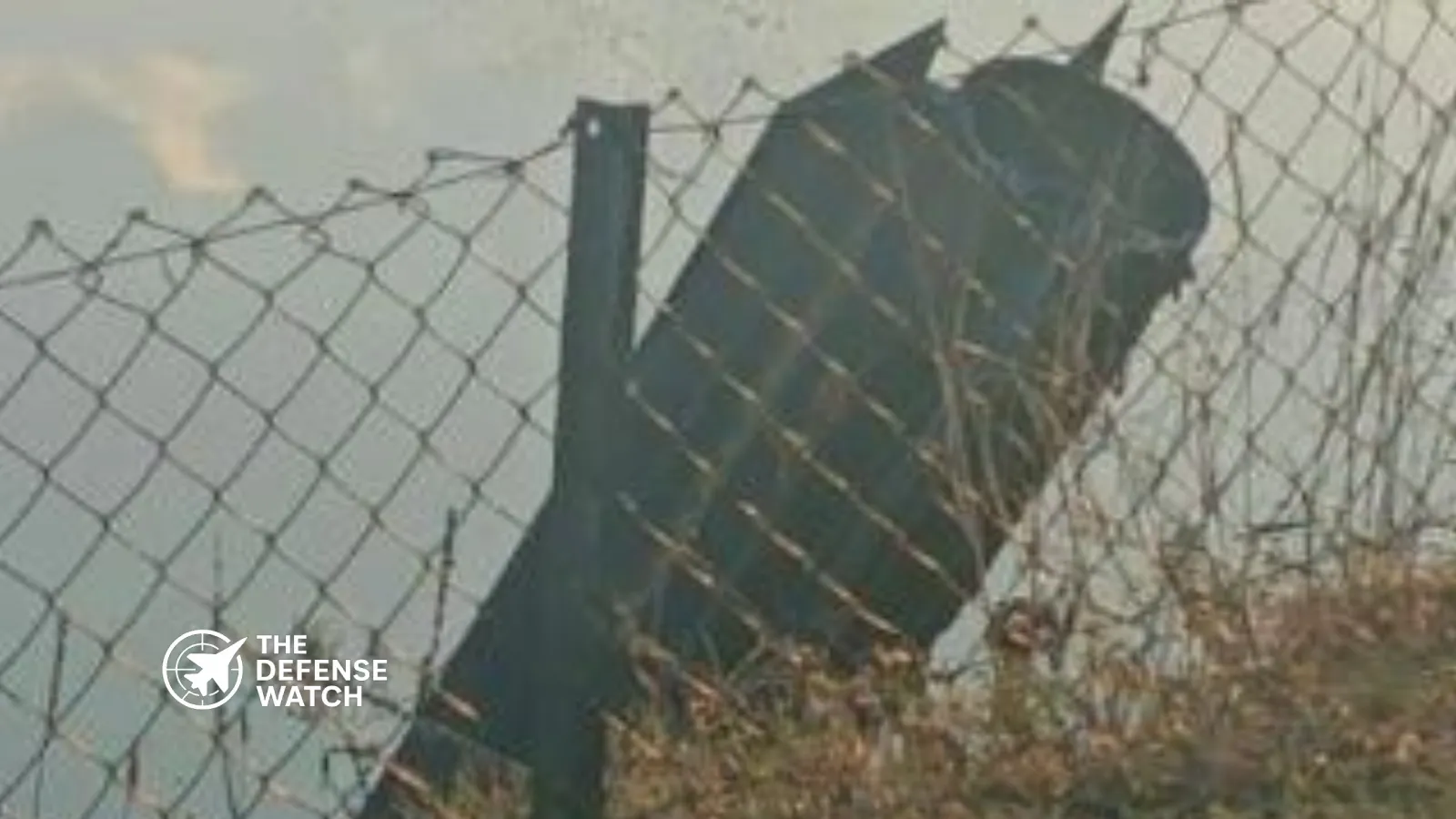
- ► Debris from the interceptor fell in Dörtyol, Hatay Province, Turkish officials said.
- ► The incident underscores NATO’s forward deployed ballistic missile defense posture in the region.
Iranian Ballistic Missile Intercepted By NATO SM-3 In Eastern Mediterranean
The Iranian ballistic missile interception in the Eastern Mediterranean marks a significant operational use of NATO missile defense assets, according to Turkey’s Ministry of National Defense.
An Iranian-launched ballistic missile crossed Iraqi and Syrian airspace before approaching Turkish territory. Turkish authorities said the threat was successfully neutralized by NATO air and missile defense forces operating in the region.
The interceptor was fired from a NATO naval vessel using the ship-based RIM-161 Standard Missile-3, commonly known as the SM-3. Debris from the interceptor reportedly fell in the Dörtyol district of Hatay Province in southern Turkey.
What Happened
Turkey’s defense ministry stated that the missile originated in Iran and traversed Iraqi and Syrian airspace en route to Turkey. NATO maritime assets positioned in the Eastern Mediterranean engaged the target before it could reach Turkish territory.
The interception was carried out using the RIM-161 Standard Missile-3, a ship-launched interceptor designed to defeat short to intermediate range ballistic missiles during their midcourse phase outside the atmosphere.
Turkish authorities confirmed that fragments from the interceptor fell in Dörtyol, Hatay Province. No casualties were immediately reported.
NATO has not publicly detailed which vessel conducted the intercept. However, several NATO navies operate Aegis-equipped destroyers and cruisers capable of launching the SM-3 under the alliance’s ballistic missile defense framework.
The Role Of The SM-3 In NATO Missile Defense
The RIM-161 Standard Missile-3 is a core element of NATO’s ballistic missile defense architecture. Developed by Raytheon and deployed on Aegis-equipped warships, the interceptor is designed to destroy ballistic missile threats in space through a hit to kill kinetic vehicle.
Unlike terminal phase systems such as Patriot, the SM-3 operates in the midcourse phase, intercepting targets outside the atmosphere. This allows engagement earlier in the missile’s flight path and reduces the risk to defended territory.
NATO’s ballistic missile defense mission, declared operational at the 2016 Warsaw Summit, integrates U.S. Aegis Ashore sites in Romania and Poland, forward deployed Aegis destroyers, and allied sensors and command networks.
An Iranian ballistic missile interception by an SM-3 warship in the Eastern Mediterranean highlights the flexibility of sea-based assets. Naval platforms can reposition rapidly and provide coverage across wide maritime approaches to Europe and the Levant.
Strategic Implications For Turkey And NATO
Turkey sits at a geographic crossroads between Europe and the Middle East. Any Iranian ballistic missile trajectory crossing Iraqi and Syrian airspace toward Turkish territory carries regional escalation risks.
The use of a NATO interceptor signals that the alliance’s collective defense framework extends to active missile threats in real time. While Turkish authorities did not specify the missile type or intended target, the engagement demonstrates that NATO assets are postured to respond quickly to emerging threats.
From an operational standpoint, this Iranian ballistic missile interception suggests high readiness levels among deployed Aegis vessels in the Eastern Mediterranean. Successful midcourse intercepts require precise tracking data, integrated command and control, and rapid decision cycles.
The fact that debris fell in Hatay Province indicates the intercept occurred at altitude, consistent with SM-3 engagement profiles. Turkish officials have not reported damage or casualties.
Regional Context
Tensions between Iran and NATO member states have fluctuated over recent years, particularly in maritime domains and airspace near the Eastern Mediterranean. Ballistic missile activity in or near contested zones often carries political signaling alongside military risk.
This event reinforces the importance of layered missile defense coverage across NATO’s southern flank. With conflicts in Syria and instability in parts of Iraq, regional airspace remains complex and crowded.
An Iranian ballistic missile interception by NATO assets may also prompt further diplomatic exchanges. However, Turkish authorities have limited public statements to operational details, avoiding broader political commentary.
Technical Considerations
The SM-3 family includes several variants with differing ranges and engagement envelopes. While the specific variant used in this intercept was not disclosed, NATO maritime forces commonly operate Block IB and Block IIA interceptors.
Midcourse interception demands accurate cueing from radar systems such as AN SPY 1 or SPY 6 arrays aboard Aegis ships. Integration with NATO command networks allows rapid dissemination of tracking data.
Such engagements are technically demanding. They require precise timing, as the interceptor must collide with the incoming warhead at high velocity in space.
The Iranian ballistic missile interception demonstrates that sea-based missile defense remains a central pillar of NATO’s deterrence and defense strategy.
■KEY FACTS AT A GLANCE- ► Iran and Russia reportedly signed a secret €500 million missile deal in December 2025, according to the Financial Times.
- â–º The pact covers delivery of 500 Verba man portable air defense launch units and 2,500 9M336 missiles through 2027 to 2029.
- â–º The Verba systems are infrared guided MANPADS designed to target low altitude threats including drones and cruise missiles.
- ► The deal follows damage to Iran’s air defense network during the 2025 conflict with Israel.
- â–º The agreement reflects deepening military cooperation between Tehran and Moscow.
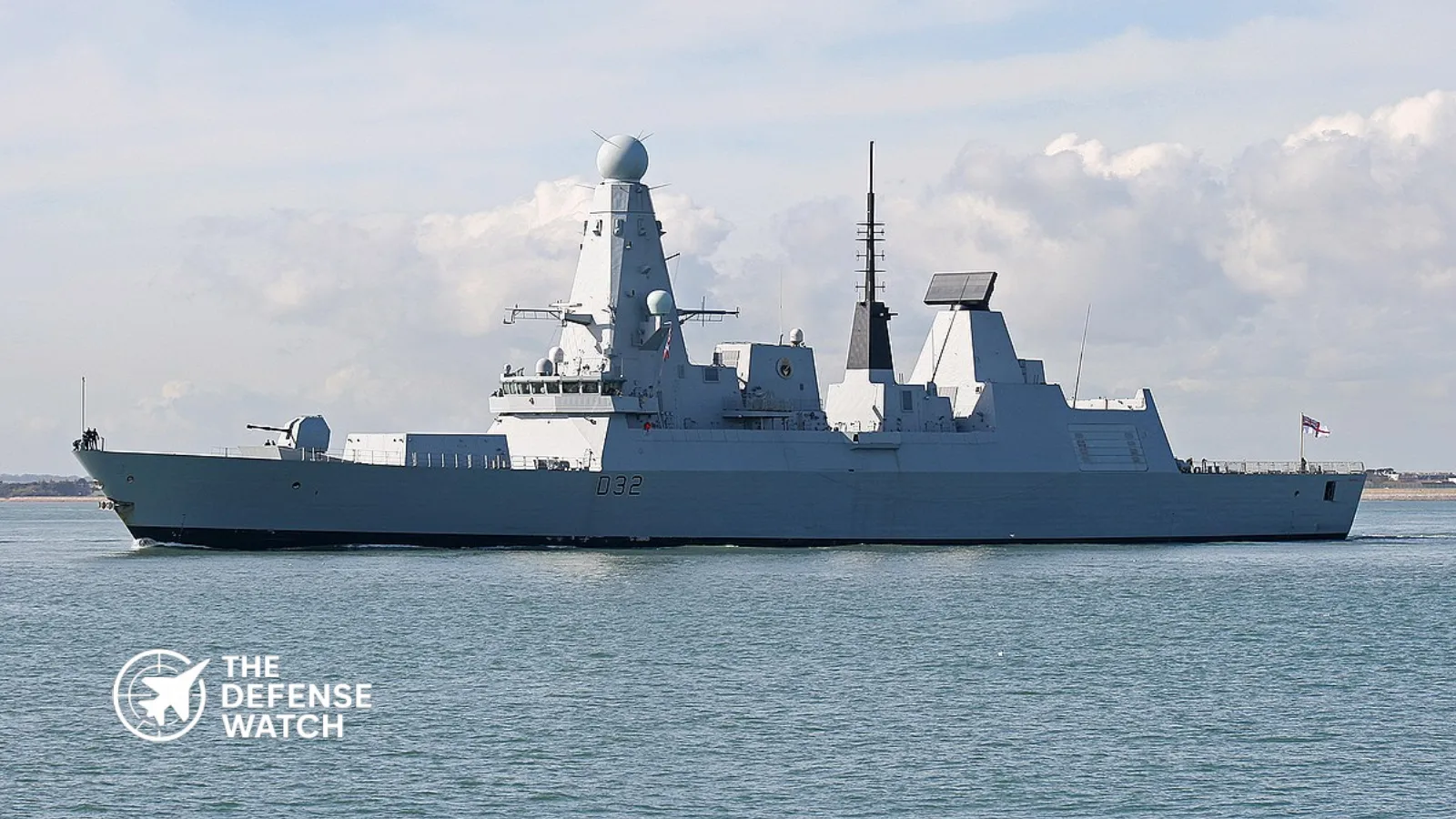
HMS Duncan Deployment Under Review As Eastern Mediterranean Tensions Rise
The possible HMS Duncan deployment to Cyprus reflects growing concern in London over Iranian drone and missile threats in the Eastern Mediterranean. The United Kingdom is weighing the dispatch of the Royal Navy’s Type 45 destroyer to help protect Cyprus amid escalating regional tensions.
Cyprus hosts two British Sovereign Base Areas, including RAF Akrotiri, which have long supported UK and allied operations across the Middle East. Any increase in Iranian long range drone or missile activity could put these facilities at risk, particularly during periods of heightened confrontation involving Israel or regional proxies.
Why HMS Duncan Matters
HMS Duncan is one of six Type 45 air defense destroyers operated by the Royal Navy. The class was designed specifically to counter advanced aerial threats, including supersonic anti ship missiles, ballistic missiles in limited scenarios, and increasingly, unmanned aerial systems.
Equipped with the Sea Viper air defense system, which integrates the SAMPSON multifunction radar and Aster interceptor missiles, HMS Duncan can track and engage multiple air targets simultaneously. In recent years, Type 45 destroyers have played a visible role in protecting shipping and allied forces from missile and drone attacks in the Red Sea and Gulf regions.
Deploying HMS Duncan to waters near Cyprus would provide a mobile, layered air defense capability. Unlike fixed land based systems, a destroyer can reposition rapidly based on threat intelligence and provide coverage across maritime and coastal approaches.
Iran’s Expanding Drone And Missile Footprint
Iran has invested heavily in drones, cruise missiles, and ballistic missile systems over the past decade. Systems such as the Shahed series loitering munitions have been widely used by Iranian aligned forces and exported to partners abroad. Tehran’s cruise missile inventory has also expanded, with improved guidance and extended ranges.
Western defense analysts, including assessments from the International Institute for Strategic Studies and the Center for Strategic and International Studies, have repeatedly highlighted the growing sophistication of Iran’s unmanned and missile arsenal. These systems are often used below the threshold of full scale conflict, allowing calibrated pressure without immediate escalation.
The Eastern Mediterranean has become strategically sensitive as regional actors increase military coordination and forward deployments. Cyprus, while not a frontline combatant, sits within operational range of various missile systems if tensions flare.
Strategic Signaling And Deterrence
A HMS Duncan deployment would serve both defensive and signaling purposes. Militarily, it enhances force protection for British personnel and assets on Cyprus. Politically, it signals commitment to regional stability and alliance obligations.
The UK has previously deployed naval assets to reinforce air and missile defense in response to emerging threats. In 2023 and 2024, Royal Navy ships operated alongside US and allied vessels to counter missile and drone attacks against commercial shipping.
While no final decision has been publicly confirmed, the review underscores how rapidly evolving drone and missile threats are reshaping maritime posture. Mobile air defense platforms such as Type 45 destroyers are increasingly central to deterrence in contested theaters.
Broader Implications For NATO And Regional Security
Cyprus is not a NATO member, yet the presence of UK sovereign bases links the island directly to broader alliance planning. Any Iranian strike risk against Western facilities would carry diplomatic and strategic consequences.
The potential HMS Duncan deployment also reflects a shift toward integrated air and missile defense across domains. Sea based interceptors, land based systems, and airborne early warning assets now operate as part of a layered architecture.
From a force planning perspective, this raises sustainability questions. The Royal Navy operates a limited number of Type 45 destroyers. Extended deployments to multiple theaters, from the North Atlantic to the Middle East, stretch availability. Balancing homeland defense, NATO commitments, and expeditionary roles will remain a key challenge for UK planners.
At the same time, the drone threat has lowered the cost barrier for adversaries. Cheap, expendable systems can compel advanced navies to expend high cost interceptors. That cost imbalance is driving investment in directed energy weapons and close in defenses, though those capabilities are still maturing.
Outlook
For now, the HMS Duncan deployment remains under consideration. However, the fact that it is being actively reviewed signals that UK defense planners assess the risk environment around Cyprus as credible and evolving.
As Iranian drone and missile capabilities continue to expand, maritime air defense assets will likely play a larger role in protecting forward based forces. The Eastern Mediterranean is emerging as another key arena in that evolving security landscape.
The Egyptian Air Force (EAF) has taken delivery of three additional Dassault Rafale F3R fighter jets from Dassault Aviation of France, under a contract originally signed in 2021. The package — valued at roughly €3.75 billion — calls for 30 new Rafale F3R airframes, to be delivered by the end of the procurement timetable. The three jets comprise two single-seat models (EM10 and EM11) and one two-seat (DM21) and will join the EAF’s 203rd Tactical Fighter Wing at Gebel El Basur Air Base.
Egypt is already an export customer for the Rafale, having previously acquired 24 airframes under a 2015 contract for eight single-seat and 16 two-seat airframes.
Details of the Development
The latest delivery builds on the timeline of the 2021 deal. The first deliveries under that contract began in late 2024, with deliveries continuing into 2025-26. The three jets were observed on ferry flights from France to Egypt earlier in the month.
The Rafale F3R variant being delivered includes advanced mission systems: the Thales RBE2 active-electronically scanned array (AESA) radar, the SPECTRA electronic self-protection suite, an infrared search and track (IRST) sensor, in-flight refuelling capability via NARANG pods, and compatibility with a wide array of weapons including MBDA Meteor air-to-air missiles, SCALP/Storm Shadow cruise missiles, AASM-1000 Hammer guided bombs, and Exocet anti-ship missiles.
The increment brings Egypt’s total Rafale inventory closer to 54 operational jets — making it one of the largest non-French Rafale fleets in the export domain.
Strategic Context
From a regional security standpoint, Egypt’s expansion of its Rafale fleet aligns with increasing competition in the Eastern Mediterranean and North Africa’s littoral zones. The more advanced multirole capability enables Egypt to project air power across varied threat environments — from maritime interdiction to land strikes and air superiority tasks.
For the U.S., while not directly a client for these jets, this development influences American defence posture in the region. Egypt remains a key partner for the U.S., and its modernization has spill-over effects for coalition operations, interoperability, and regional deterrence. The procurement also reflects how non-U.S. suppliers continue to capture market share for advanced combat aircraft — a trend Washington monitors in its competitive and allied markets.
Defense or Industry Reactions
Industry observers note that the Rafale’s export success — with Egypt now taking further deliveries — underscores the maturation of the aircraft as a globally competitive platform. Production of the 300th Rafale was announced by Dassault, showing the jet’s sustained export momentum.
From a defence-technology perspective, the F3R standard brings sensor and networking upgrades that align with the broader transition toward multi-domain readiness and advanced aerial operations. Analysts highlight that Egypt’s ability to field Meteor missiles and SCALP/Storm Shadow strikes positions the country’s air force in a higher capability tier than many regional neighbours.
On the geopolitical front, some U.S. defence analysts might view this as a challenge to American aircraft exporters such as F‑16 Fighting Falcon or F‑15E Strike Eagle, especially in markets where Washington seeks to maintain dominance. Egypt’s prior interest in the Russian Sukhoi Su‑35 (which did not proceed) set the stage for the French deal.
Future Outlook
Egypt’s delivery schedule suggests remaining aircraft under the 2021 contract will arrive over the next year or two, bringing the Rafale fleet to full strength for that tranche. An upgrade path toward the Rafale F4 standard (already in French service) may be considered, which would further raise Egypt’s capability edge.
Regionally, operability will hinge not only on airframes but on maintenance, training, integrated logistics, and munitions supply—all of which Egypt appears to be prioritizing. For U.S. planners, monitoring allied air forces’ modernization helps inform force posture, support arrangements, and coalition interoperability strategies.
Analysis
From a U.S. defence-strategy perspective, Egypt’s acquisition of advanced Rafales reflects several notable trends:
- Third-party aircraft proliferation — The entry of high-end multirole jets into more air forces means the U.S. must work harder to maintain interoperability advantages and to position American platforms competitively for allied procurements.
- Regional capability escalation — As Egypt boosts its air power, U.S. and allied forces operating in or near the Eastern Mediterranean must account for improved regional partners and potential adversaries. This influences mission planning, air-base basing options, and coalition agility.
- Operationalising advanced munitions — The Rafale F3R’s ability to carry advanced standoff weapons like SCALP/Storm Shadow and Meteor means that partner air forces will increasingly deploy into high-end missions beyond traditional air-defence or ground-attack roles. The U.S. will need to ensure that its own systems and doctrines remain ahead of, or compatible with, this evolution.
- Industrial and export dynamics — France’s success with the Rafale complicates U.S. export efforts where American aircraft vie for the same markets. The U.S. must leverage not only platform performance but broader defence-industrial cooperation, logistics support, offset arrangements and regional relationships to sustain its export competitiveness.
In sum, Egypt’s new Rafale delivery is not just a one-off procurement story—it is emblematic of shifting dynamics in global fighter-aircraft markets, regional power balance, and the evolving baseline of air-force capabilities.
Conclusion
The addition of three Rafale F3R fighters to Egypt’s air force marks a meaningful milestone in Cairo’s multiyear modernisation programme. With deliveries continuing under the 2021 contract and upgrade potential on the horizon, Egypt is positioning itself with a frontline combat-air fleet that rivals many regional neighbors. For U.S. defense watchers, the development underscores the importance of allied air-power evolution, competitive industrial landscapes, and the need to stay attuned to capability shifts beyond American platforms. Moving forward, how Egypt integrates, supports, and leverages these jets will be a key barometer of regional force posture and strategic alignment in the Eastern Mediterranean.