
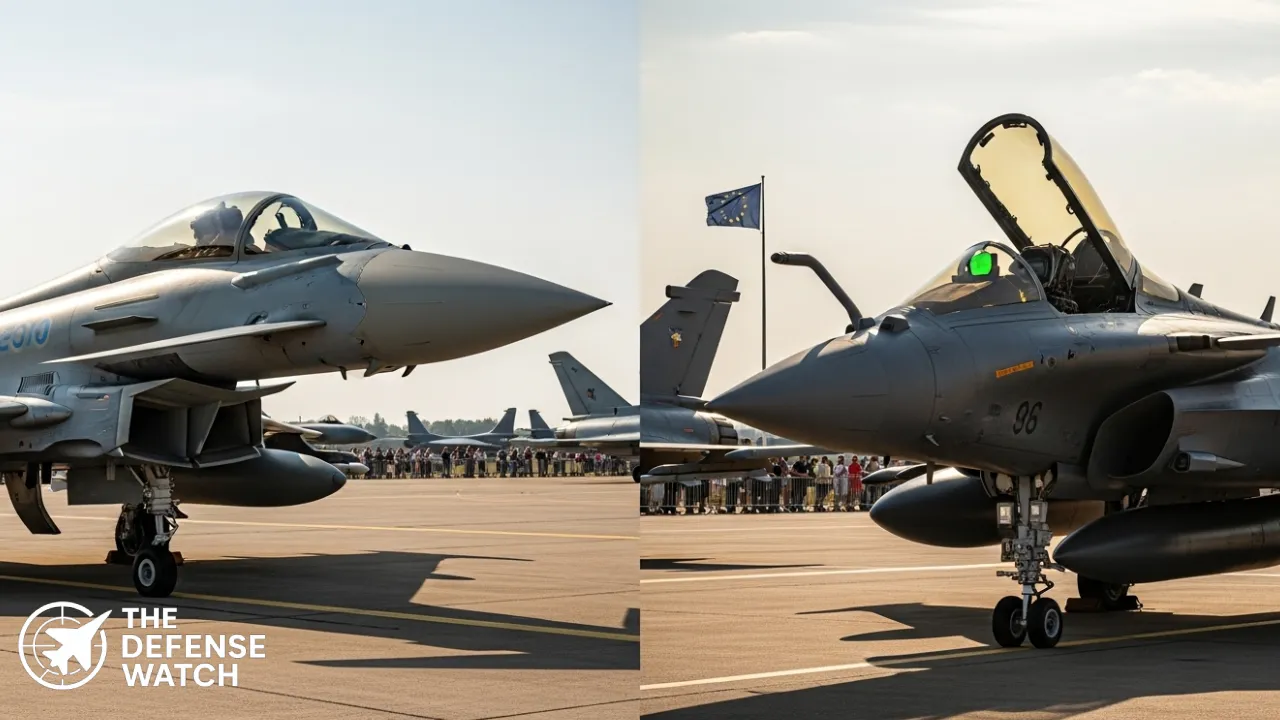
France and Germany Increase Pressure to Resolve Fighter Impasse
PARIS/BERLIN — France and Germany have stepped up diplomatic and industrial pressure on leading European defense companies to break a longstanding impasse over the development of a next-generation fighter jet, officials confirmed this week. The renewed push aims to advance the Future Combat Air System (FCAS) program, a flagship initiative intended to deliver Europe’s next major combat aircraft and supporting systems.
The governments of both countries are urging Airbus and Dassault Aviation to resolve disagreements that have stalled progress, particularly surrounding development responsibilities, intellectual property rights, and system integration authority. According to European officials, the latest discussions took place in late November, with both sides signaling the need to prevent further delays as geopolitical tensions rise.

Background: Europe’s Flagship Fighter Program
The Future Combat Air System, commonly referred to as FCAS, is a joint defense initiative launched by France and Germany and later joined by Spain. The program is designed to produce a next-generation fighter jet to replace current platforms such as the French Rafale and the Eurofighter Typhoon starting in the 2040s. The FCAS effort also includes advanced unmanned aircraft, networked sensor systems, and combat cloud technologies intended to provide multi-domain operational capability.
The fighter impasse has persisted despite repeated efforts to advance agreements between the participating defense firms. Dassault, the French aerospace prime, has been designated as the lead contractor for the manned fighter component, while Airbus has been positioned for major roles in other operational pillars. Negotiations have centered on design authority and software access, areas considered commercially sensitive and strategically significant.
Government Statements and Industry Dynamics
Officials in Paris and Berlin indicated that failure to resolve the fighter impasse could undermine Europe’s goal of achieving greater defense industrial autonomy. A senior French defense representative stated that both governments expect industry partners to finalize a path forward, emphasizing that continued stagnation is no longer acceptable.
German officials echoed this sentiment, highlighting the need to maintain timelines for technology demonstrations and system maturity milestones. The fighter impasse has already contributed to delays in the next development phase, and European defense planners warn that further slippage could widen capability gaps relative to U.S. and emerging competitors.
Industry sources familiar with the negotiations have said the remaining points of contention relate to control of key software architectures and the level of shared intellectual property between companies. Both Airbus and Dassault have publicly expressed support for the FCAS vision while acknowledging the complexity of negotiating collaborative structures for an advanced fighter platform.
Strategic and Policy Context
The fighter impasse comes at a time when European governments are increasing defense spending and strengthening cooperative defense frameworks. Russia’s continued security posture, instability in neighboring regions, and shifts in U.S. defense prioritization have reinforced calls for Europe to bolster its own military capabilities.
Defense analysts note that the success of FCAS is regarded as an important symbol of European industrial alignment. The project runs parallel to the United Kingdom-led Tempest/Global Combat Air Programme (GCAP), and both initiatives are seen as central to the future of Western aerial combat capability. The fighter impasse within FCAS has raised questions about whether overlapping European programs could fragment regional military aviation markets.
Policy experts in Brussels have emphasized that France and Germany must demonstrate unity in defense procurement strategy if Europe intends to maintain competitive technological capabilities. The fighter impasse, they argue, risks weakening the continent’s long-term industrial capacity and export positioning.
What Comes Next
Officials have suggested that a breakthrough may depend on renewed political directives and structured negotiation frameworks. While no definitive timeline has been announced, both governments have indicated they expect progress before the next scheduled phase reviews.
If the fighter impasse is resolved, FCAS could move into more advanced development stages, including prototype and demonstrator construction. Failure to reach agreement could trigger reassessments of national priorities or adjustments to program leadership roles.
For now, France and Germany continue to present a unified public stance, stressing the importance of the program for European defense resilience. The fighter impasse remains a central obstacle, but government pressure signals a determination to move the initiative forward.
Get real time update about this post category directly on your device, subscribe now.



9 comments
[…] development effort is tied to Frances broader naval industrial base, with Naval Group playing a central role. Missile integration is also expected to involve […]
[…] surfaced periodically in policy debates, often tied to discussions on European strategic autonomy. France and Germany have previously supported deeper defense coordination, while other countries have raised concerns […]
[…] chief growth officer said the company was approached by France’s Ministry of the Armed Forces for its industrial and design capabilities, as the country seeks to build a domestic drone production […]
[…] carriers cited security conditions in the region as the reason for the cancellations. KLM and Air France both said they are monitoring developments […]
[…] next-generation fighter initiative is intended to succeed existing fourth- and fifth-generation aircraft in Turkish […]
[…] positioning the Su-35 as an interim solution that maintains operational readiness while awaiting next-generation fighter […]
[…] military aviation platforms. As European nations continue modernizing their air capabilities with next-generation fighter aircraft, unmanned systems, and space-based assets, programs like EETAAE serve as critical talent […]
[…] fighter development efforts into a unified program. The initiative aims to deliver an operational next-generation fighter aircraft by 2035, designed to integrate crewed and uncrewed platforms, advanced sensors, and […]
[…] The carrier is designed to operate around 40 aircraft, including next-generation fighter jets. […]