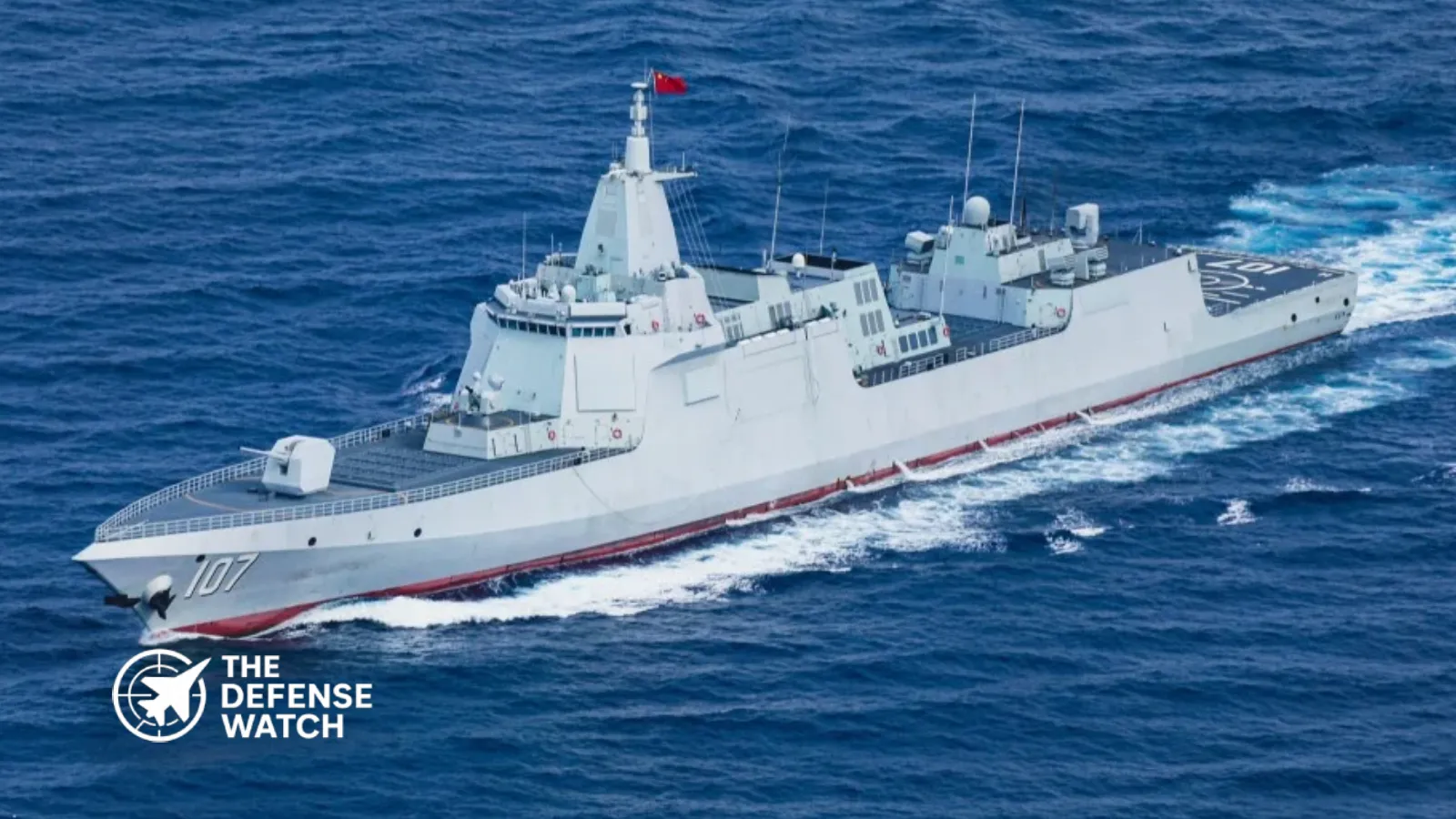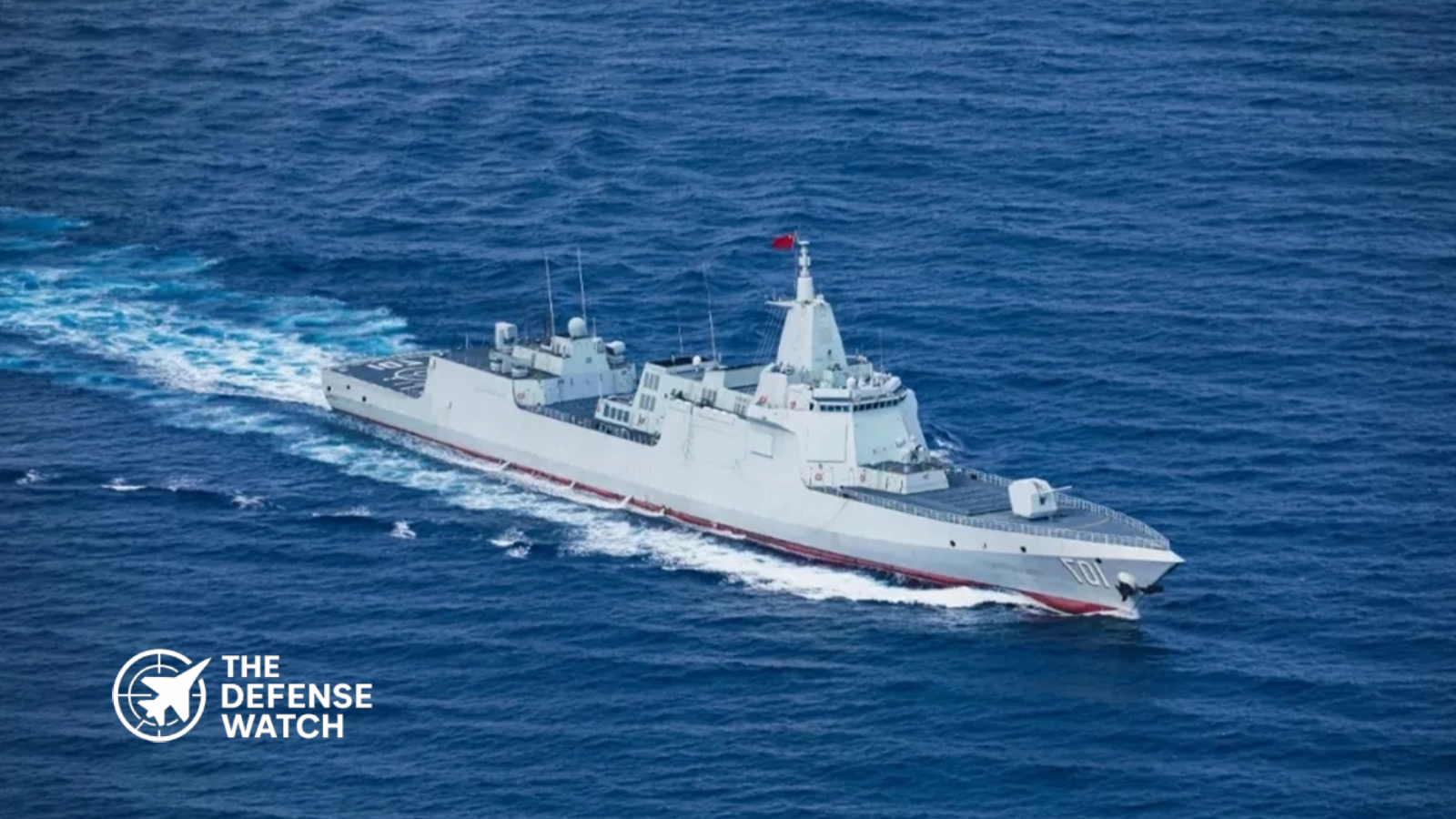
- PLA Navy commissions Dongguan (Hull 109) and Anqing (Hull 110) as the ninth and tenth Type 055 guided-missile destroyers.
- The 12,000-ton-class ships feature 112 vertical launch system cells and advanced integrated mast radar.
- Both vessels assigned to Eastern Theater Command Navy, the first Type 055s in Taiwan-facing waters.
- First batch of eight ships completed service entry by 2023; second batch now entering fleet.
- Type 055 fleet expansion supports PLAN carrier escort and multi-domain operations across three theater commands.
The Chinese People’s Liberation Army Navy has commissioned two new Type 055 guided-missile destroyers, Dongguan (Hull 109) and Anqing (Hull 110), bringing the total number of these 10,000-ton-class warships to 10.
The vessels entered service with the Eastern Theater Command Navy, according to official Chinese military reporting broadcast by China Central Television on March 9, 2026. This marks the first deployment of Type 055 destroyers to the East Sea Fleet, which operates in waters directly facing Taiwan and the first island chain.
The Big Picture
China continues rapid naval modernization as part of its broader military buildup. The People’s Liberation Army Navy now operates the world’s largest fleet by hull count and fields increasingly capable surface combatants. The Type 055 program forms a central element of this effort, providing large, multi-mission platforms that bridge the gap between traditional destroyers and cruisers. U.S. Department of Defense assessments note steady progress toward Beijing’s 2027 goals, including enhanced capabilities for potential Taiwan contingencies and operations beyond the first island chain.
What’s Happening
Dongguan and Anqing represent the lead ships of the second production batch. The first eight hulls — Nanchang (101) through Xianyang (108) — entered service between 2020 and 2023. The new pair received hull numbers 109 and 110 and appeared in official media footage confirming commissioning. Chinese state sources list the full fleet as Nanchang, Lhasa, Anshan, Wuxi, Dalian, Yan’an, Zunyi, Xianyang, Dongguan, and Anqing. All ten ships now serve across three theater commands, with the latest pair assigned to the Eastern Theater.
Why It Matters
The Type 055 class delivers significant combat power in a single hull. Each ship displaces approximately 12,000–13,000 tons at full load, measures 180 meters in length, and carries 112 vertical launch system cells. These cells accommodate a mix of HHQ-9 long-range surface-to-air missiles, YJ-18 anti-ship cruise missiles, CJ-10 land-attack cruise missiles, and anti-submarine weapons. The integrated mast houses advanced radars capable of tracking hundreds of aerial targets simultaneously. A 130 mm main gun and multiple close-in weapon systems round out the suite.
Operationally, the ships serve as principal escorts for Chinese aircraft carriers and amphibious assault groups. Their size and sensor suite enable command-and-control functions previously limited to larger cruisers. The rapid transition from first to second batch production demonstrates sustained industrial capacity at Jiangnan and Dalian shipyards.
Strategic Implications
Assignment of the first Type 055 destroyers to the Eastern Theater Command alters the balance in waters around Taiwan. These vessels extend air-defense umbrellas, support long-range precision strikes, and enhance anti-submarine coverage in a high-threat environment. Their presence allows the PLAN to conduct more credible escort missions for carrier groups operating east of Taiwan or pushing toward the Philippine Sea. The move also signals Beijing’s intent to project power beyond coastal defense into sustained blue-water operations.
Competitor View
U.S. defense planners view the Type 055 as a key component of China’s anti-access/area-denial strategy. Pentagon reports highlight the class’s role in challenging American and allied forces in the western Pacific. The ships’ missile capacity and sensor reach complicate U.S. carrier strike group operations and increase the risk profile for surface forces inside the first island chain. Allies in Japan, Australia, and the Philippines monitor the development closely, as it directly affects maritime security in the East and South China Seas.
What To Watch Next
Analysts expect additional second-batch Type 055 hulls to reach commissioning milestones throughout 2026 and 2027. Satellite imagery already shows further vessels under construction at both major shipyards. The PLAN may integrate incremental upgrades, including improved electronics or future high-energy weapons, as production continues toward a potential total of 16 ships. Fleet exercises involving multiple Type 055 units alongside carriers will provide the clearest indicator of operational maturity.
Capability Gap
The Type 055 program addresses the PLAN’s previous shortfall in large, multi-mission surface combatants capable of independent operations far from shore. Earlier Chinese destroyers lacked the vertical launch capacity, radar performance, and command facilities required for modern carrier task groups. While the ships close that gap effectively, they still operate within a fleet that trails the U.S. Navy in overall experience and allied integration. Realistic limitations include dependence on shore-based logistics for extended deployments and vulnerability to advanced submarine threats in open ocean.
- ► China’s newest aircraft carrier is the Fujian, also known as the Type 003 carrier.
- â–º Unlike earlier carriers, Fujian uses an electromagnetic aircraft launch system instead of a ski jump ramp.
- â–º Analysts question whether its conventional power plant can sustain high sortie rates during intensive operations.
- â–º Deck layout and aircraft handling efficiency are also under scrutiny.
- ► The carrier is central to China’s long term blue water naval strategy.
China’s New Aircraft Carrier Design Flaw Raises Operational Concerns
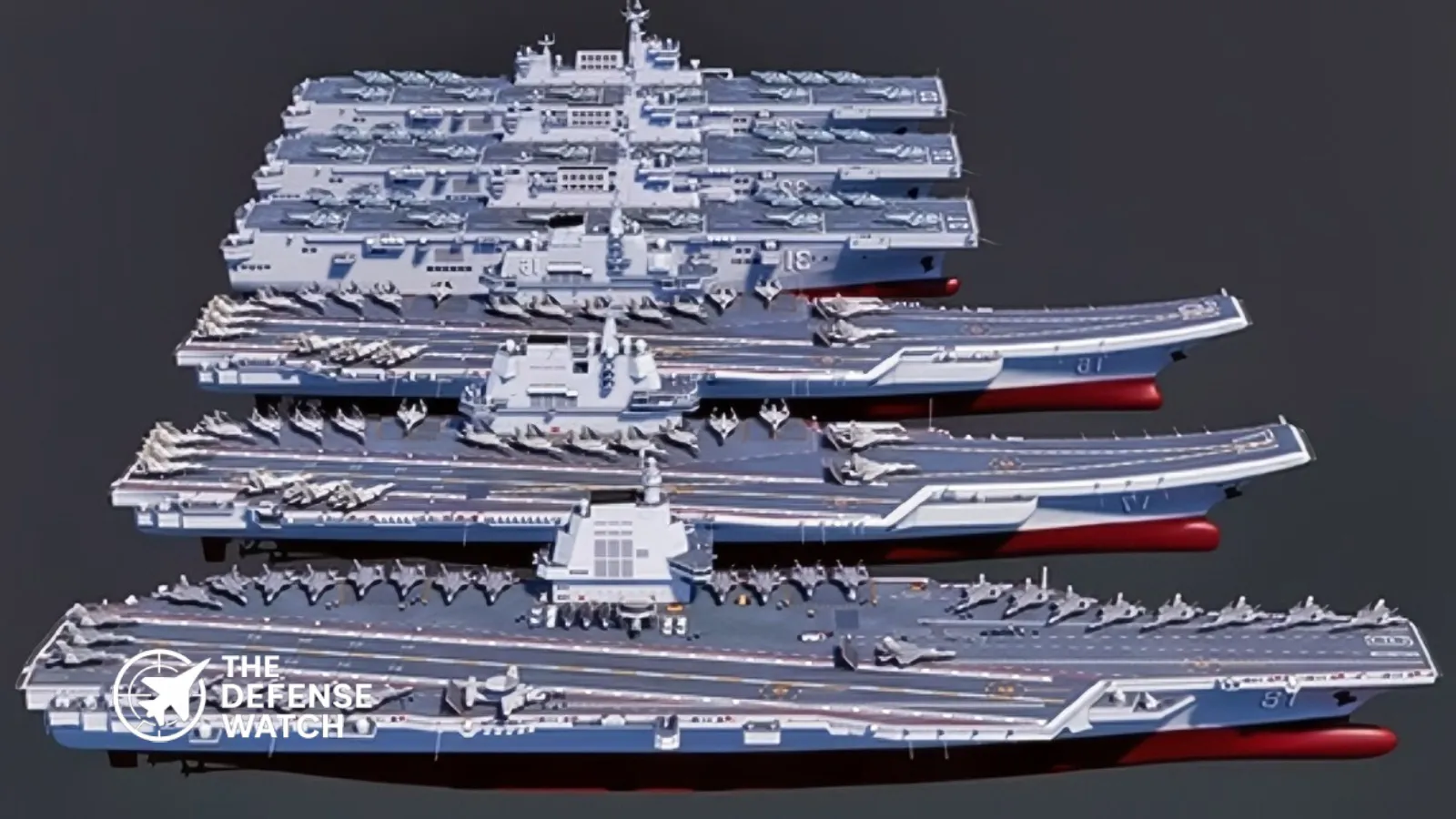
China’s new aircraft carrier design flaw is drawing growing attention among naval analysts, as the PLA Navy pushes forward with its most advanced flattop to date. The vessel in question, widely known as the Fujian, represents a major technological leap for China’s carrier program. Yet structural and operational questions continue to surface, potentially limiting the ship’s long term effectiveness.
The discussion centers on how design decisions, particularly involving the carrier’s launch system and deck configuration, may affect sortie generation rates, aircraft handling efficiency, and overall survivability in high intensity conflict scenarios.
From Ski Jump to Catapult: A Major Transition
China’s earlier carriers, Liaoning and Shandong, used ski jump ramps for launching aircraft. While simpler, that configuration limits takeoff weight, reducing fuel and weapons loads for carrier borne fighters.

With Fujian, Beijing moved to an electromagnetic aircraft launch system, similar in concept to the EMALS technology deployed on the U.S. Navy’s USS Gerald R. Ford. This transition was intended to boost launch efficiency, support heavier aircraft, and enable fixed wing airborne early warning platforms.
However, integrating such a system into a conventionally powered hull introduces complexity. Unlike U.S. nuclear powered carriers, Fujian must rely on conventional propulsion to generate sufficient electrical power. That dynamic may constrain sustained high tempo flight operations.
The Core Design Concern
At the center of the China’s new aircraft carrier design flaw debate is how power generation, deck layout, and structural design interact.
Reports suggest that electrical output margins may be tighter than optimal for prolonged catapult intensive operations. In practical terms, this could limit the rate at which aircraft are launched during surge scenarios. In a peer level conflict, sortie rate often determines combat effectiveness more than platform count alone.
Another concern relates to deck space and aircraft handling. Modern carriers depend on carefully optimized deck choreography. Small inefficiencies compound rapidly during combat. If deck movement patterns are constrained by layout compromises, operational tempo suffers.
While Beijing has not acknowledged any issues publicly, the absence of extensive at sea operational history leaves open questions about long term reliability under sustained stress.
Implications for PLA Navy Strategy
The People’s Liberation Army Navy views aircraft carriers as central to extending maritime influence beyond the first island chain. Fujian is expected to operate the carrier variant of the Shenyang J-15, and potentially a next generation stealth aircraft derived from the Shenyang FC-31.
If launch rates or electrical reliability limit sustained air operations, the carrier’s deterrent value could be reduced. Power projection missions depend on endurance, not just initial capability.
That said, early generation design friction is not unusual. The U.S. Navy faced well documented integration challenges during the early deployment of USS Gerald R. Ford. Over time, engineering refinements improved performance.
China may follow a similar trajectory, using Fujian as a stepping stone toward a future nuclear powered carrier class.
Analysis: A Transitional Platform or Structural Constraint?
There are two ways to interpret the China’s new aircraft carrier design flaw issue.
First, it may reflect a transitional stage in China’s naval modernization. Shifting from ski jump carriers to advanced catapult systems in a single generational leap is ambitious. Technical friction is expected. If so, the lessons learned could inform the design of China’s next carrier, potentially rumored to be nuclear powered.
Second, if the flaw stems from deeper structural compromises in hull design or power architecture, correcting it may require significant redesign in future vessels. That would delay China’s timeline for achieving carrier parity with the United States.
It is also important to consider doctrine. China’s carriers may initially operate under protective layers of land based anti ship missile systems and long range aviation, rather than independently projecting power globally. In that scenario, slightly lower sortie rates may be operationally acceptable in the near term.
Still, long term ambitions clearly point toward blue water capability. For that, reliability and sustained operational tempo are non negotiable.
The Broader Naval Balance
The evolution of China’s carrier fleet has strategic implications for the Indo Pacific balance of power. The United States currently operates eleven nuclear powered aircraft carriers. China operates two ski jump carriers and is preparing Fujian for full operational deployment.
Even if Fujian faces limitations, its existence marks a significant shift in regional naval capability. It enhances Beijing’s ability to conduct joint operations, support amphibious forces, and project air power farther from mainland bases.
The question is not whether China can field carriers. It already has. The question is how effective those carriers will be in contested, high intensity scenarios.
If the design flaw proves manageable, Fujian could become the foundation for a more capable future fleet. If not, it may highlight the difficulty of compressing decades of carrier development into a single technological jump.
Conclusion
China’s new aircraft carrier design flaw underscores the complexity of modern naval aviation. The Fujian represents a bold technological advance for the PLA Navy, but ambition alone does not guarantee operational success.
As sea trials continue and air wing integration progresses, clearer data will emerge about sustained launch rates, electrical resilience, and combat readiness. Until then, analysts will continue to scrutinize how design decisions made today shape China’s maritime power tomorrow.
FAQs
What is the name of China’s newest aircraft carrier?China’s newest carrier is the Fujian, also known as the Type 003 aircraft carrier.
What is the main design concern with Fujian?Analysts question whether its power generation and deck configuration can sustain high sortie rates using electromagnetic catapults.
How does Fujian differ from earlier Chinese carriers?Unlike Liaoning and Shandong, Fujian uses an electromagnetic catapult system instead of a ski jump ramp.
Does this flaw make the carrier ineffective?Not necessarily. It may limit sustained operations, but long term improvements could address current constraints.
Will China build nuclear powered carriers next?Many analysts expect China to eventually field nuclear powered carriers to improve endurance and power generation capacity.
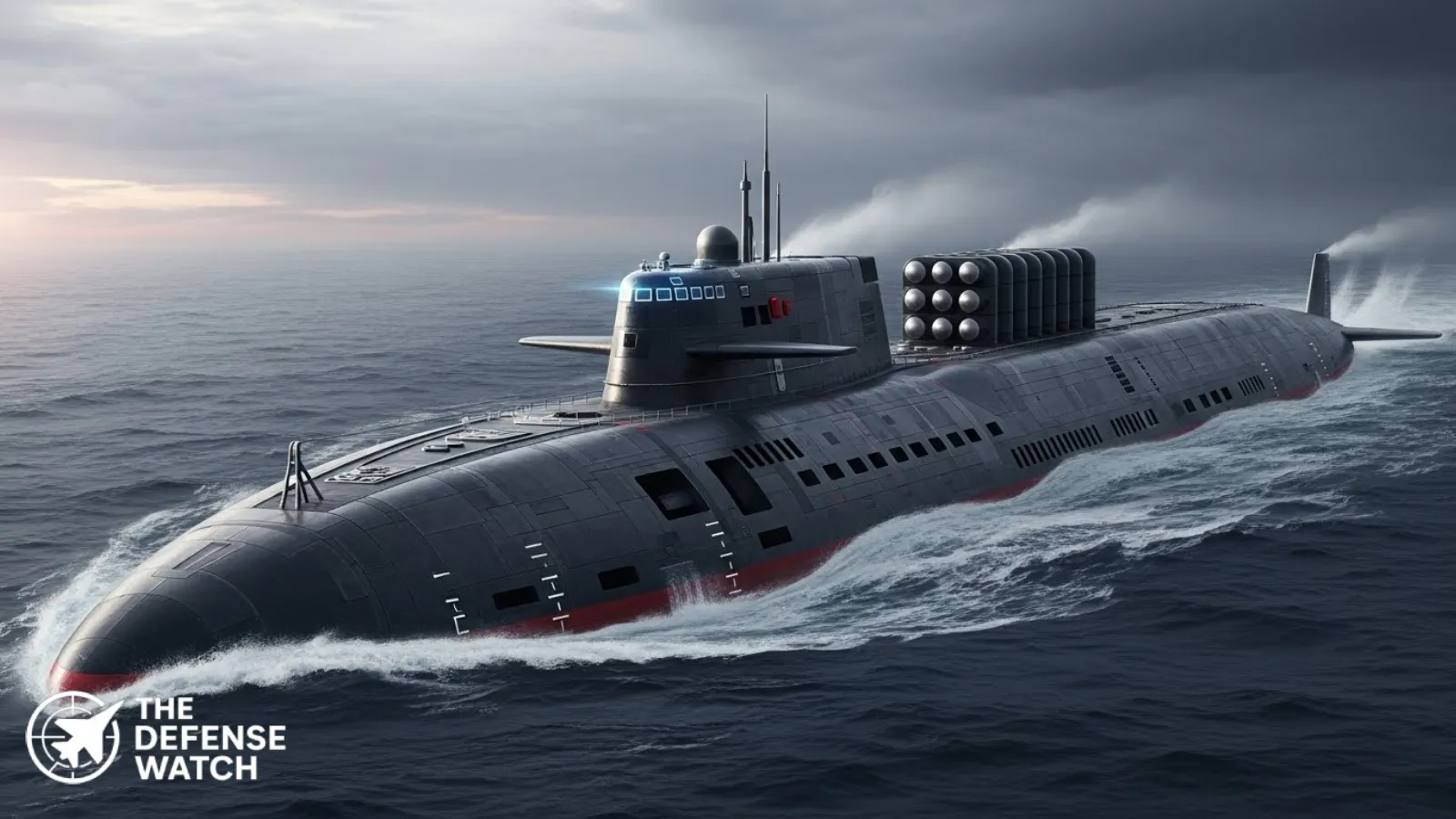
China Type 096 ballistic missile submarine is emerging as Beijing latest effort to strengthen sea based nuclear deterrence and narrow the undersea gap with the United States.
China Type 096 submarine development
The Type 096 ballistic missile submarine is designed to address long standing limitations in Chinese SSBN operations. Analysts cited by Army Recognition note that current Type 094 boats are noisier than U S and Russian counterparts, limiting survivability in contested waters.
The Type 096 is expected to incorporate improved hull design, quieter propulsion, and more advanced acoustic damping. These changes aim to reduce detectability and support continuous at sea deterrence patrols, a core requirement for credible nuclear deterrence.
Missile capability and strategic role
The submarine is expected to carry the JL 3 submarine launched ballistic missile, which has a significantly longer range than earlier Chinese systems. This would allow Chinese SSBNs to strike targets from protected bastions closer to home waters.
U S defense assessments, including those from the Pentagon annual China Military Power Report, have highlighted China focus on strengthening its nuclear triad. Sea based forces are seen as the most survivable leg of that triad.
Implications for U S and regional security
The development of the Type 096 ballistic missile submarine reflects broader shifts in the undersea balance in the Indo Pacific. While the United States retains a qualitative advantage with the Ohio class and future Columbia class submarines, Chinese advances could complicate U S and allied anti submarine warfare planning.
Regional security analysts note that a quieter and more capable Chinese SSBN force would increase the importance of undersea surveillance, allied cooperation, and deterrence stability measures.
Authoritative context
The U S Department of Defense and independent research bodies such as the Center for Strategic and International Studies have consistently assessed that China is moving toward a more mature and diversified nuclear posture. The Type 096 fits within this long term modernization trend rather than representing a sudden shift.
China Releases Footage of YJ-20 Hypersonic Missile Launch
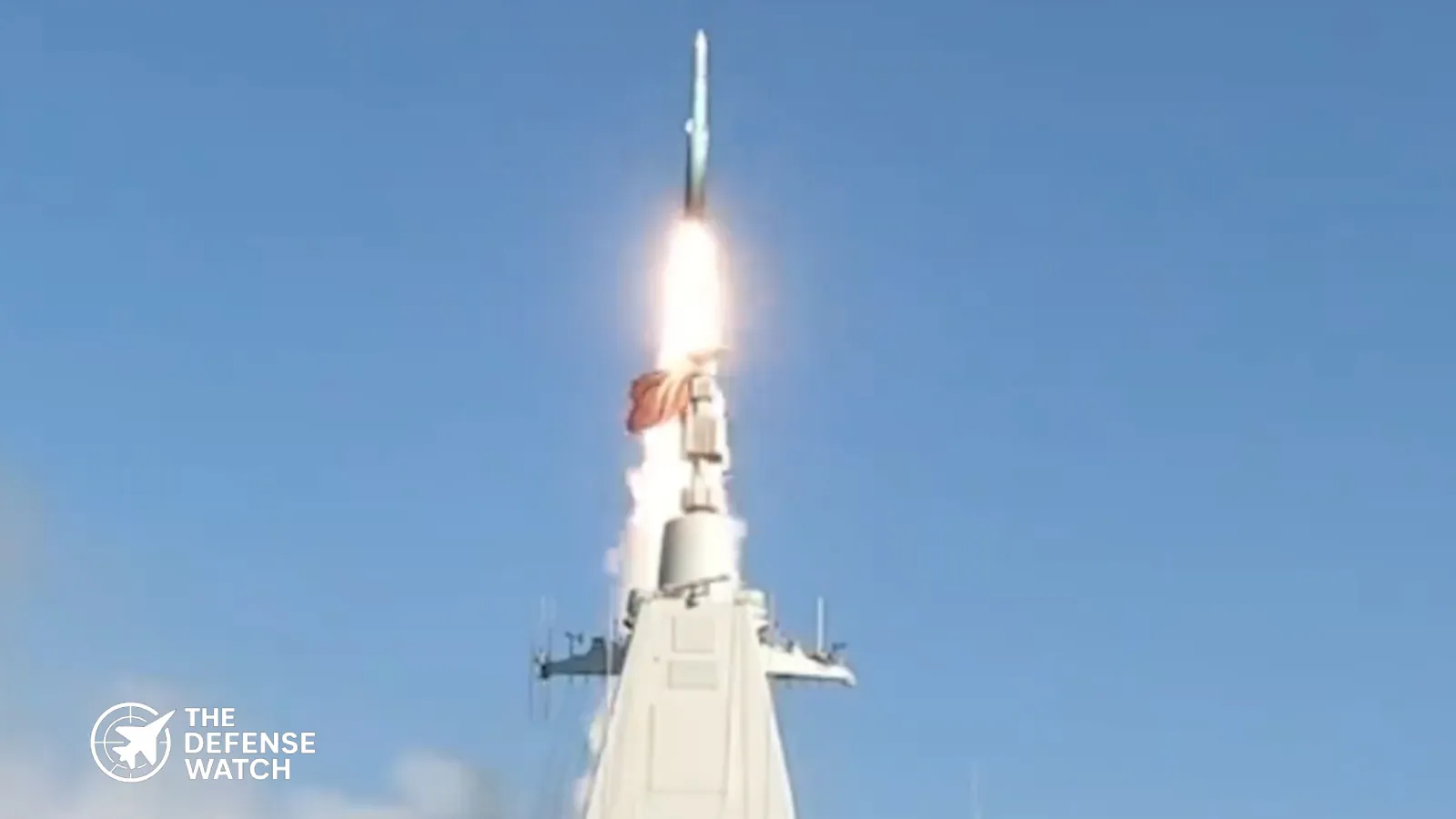
China has released its first known footage showing the launch of a YJ-20 hypersonic missile from a Type 055 guided-missile destroyer, marking a notable step in public disclosure of the PLA Navy’s advanced strike capabilities.
The video, published by Chinese state-linked media and reported by Defence Industry Europe, shows the missile being fired from a vertical launch system aboard a Type 055 warship during what appears to be a live-fire naval exercise. Chinese authorities did not provide technical details or the exact timing of the launch.
YJ-20 Missile and Type 055 Platform
The YJ-20 hypersonic missile is believed to be an anti-ship weapon designed for long-range maritime strike missions. Analysts widely assess the missile as capable of high-speed flight intended to complicate interception by modern air and missile defense systems.
The Type 055 destroyer, known in NATO reporting as the Renhai class, is the largest surface combatant currently in service with the PLA Navy. It displaces more than 12,000 tons and is equipped with a large vertical launch system that supports air defense, land attack, and anti-ship missiles.
-
Strategic Signaling and Naval Modernization
By releasing footage of a YJ-20 hypersonic missile launch, Beijing appears to be signaling confidence in its naval hypersonic weapons program. The move aligns with broader Chinese efforts to showcase advances in long-range precision strike systems as part of ongoing naval modernization.
U.S. and allied defense analysts have closely tracked the Type 055 class due to its potential role in carrier escort missions and long-range maritime operations. Public confirmation of a YJ-20 launch from the platform adds context to long-standing assessments of its offensive capabilities.
Regional and Global Implications
The appearance of the YJ-20 hypersonic missile on a frontline surface combatant underscores China’s focus on strengthening sea denial and power projection in contested maritime regions. It also highlights the growing role of hypersonic weapons in naval warfare planning.
While many technical aspects remain undisclosed, the footage itself marks a rare and deliberate public release related to China’s hypersonic anti-ship missile development.
-
China commissions new Type 052D destroyer
China Type 052D destroyer forces expanded again as the People’s Liberation Army Navy commissions a newly built ship featuring upgraded radar and command systems. The development reflects ongoing efforts to improve surface fleet combat management and sensor performance as part of China naval modernization.
According to Army Recognition, the new destroyer represents an updated configuration within the Type 052D class, sometimes referred to as a revised or enhanced variant. The ship entered active service following commissioning ceremonies held by the PLA Navy, adding to an already large and growing fleet of guided missile destroyers.
Upgraded sensors and combat systems
The latest Type 052D destroyer is reported to feature an improved radar suite and updated command and control systems. These upgrades are intended to enhance situational awareness, data fusion, and coordination with other naval and air assets. The Type 052D design is known for its integrated mast and phased array radar layout, supporting air defense, surface warfare, and anti submarine missions.
The class is equipped with a vertical launch system capable of firing surface to air, anti ship, and land attack missiles. While the core weapons fit remains consistent with earlier ships, the emphasis of the new variant appears focused on information processing and battle management improvements.
Role in PLA Navy fleet structure
Type 052D destroyers serve as key escorts for aircraft carriers and amphibious task groups, while also operating independently on regional patrols and long range deployments. The steady commissioning of new hulls highlights the PLA Navy’s focus on fleet size, readiness, and system upgrades rather than radical redesigns.
Analysts note that incremental improvements across multiple ships allow China to field more capable formations without disrupting production lines or training pipelines.
Broader modernization trend
The commissioning aligns with a wider pattern of Chinese naval expansion that includes aircraft carriers, large amphibious ships, and advanced submarines. Official Chinese sources consistently frame these developments as defensive and necessary for maritime security, while regional observers track the pace and technical evolution closely.
The new Type 052D destroyer underscores how China continues to refine existing platforms as part of a long term modernization strategy.
China’s recent test of the YJ-20 hypersonic anti-ship missile aboard a Type 055 destroyer matters because it shows how Beijing is pushing ahead with high-speed strike capability that could challenge Western naval power at range. This test, and the broader push into hypersonic weapons, adds a new layer to strategic competition between China, the United States, and allied navies in the Indo-Pacific and beyond. The main keyword here is China YJ-20 hypersonic missile.
What It Is
China YJ-20 Hypersonic Missile
The YJ-20 hypersonic missile is a Chinese anti-ship weapon designed to fly faster than five times the speed of sound and maneuver in flight. This gives it a harder-to-intercept path compared to traditional cruise missiles.
Type 055 Destroyer
The Type 055 is a large modern surface combatant in the PLA Navy. With advanced sensors and vertical launch systems, it serves as a key element of China’s effort to project naval power. The recent test shows the YJ-20 firing from one of these vertical launch cells aboard the destroyer.
How It Works
A hypersonic missile like the YJ-20 uses a rocket booster and a glide vehicle that travels at hypersonic speeds. Its maneuverability and speed reduce the time for an enemy to react and make interception difficult. In the footage released by Chinese sources, the missile was launched from a vertical cell and destroyed its test target.
Compared with older anti-ship missiles such as the Russian P-800 Oniks or the US Harpoon, the YJ-20’s hypersonic speed and terminal maneuvering aim to overcome layered naval defenses. This type of capability is similar in concept to Russia’s Kinzhal, though the platforms, guidance systems, and shipboard integration differ.
Information on precise range and guidance is limited publicly and should be treated as speculative, based on expert commentary in open sources and comparisons to similar systems.
Why It Matters in Strategic Competition
Regional Power Balance
A sea-launched China YJ-20 hypersonic missile expands China’s ability to strike moving naval targets at long range. That matters for Taiwan Strait, South China Sea, and broader Indo-Pacific security dynamics. U.S. and allied navies rely on layered air and sea defenses to protect carrier strike groups and amphibious forces. A credible hypersonic threat complicates these defenses.
Naval Strategy Evolution
Western navies have invested in integrated air-and-missile defense, electronic warfare, and layered surface-to-air missiles to counter advanced threats. Hypersonic weapons change this calculus because their speed compresses decision cycles. Analysts have noted that navies must rethink how they detect, track, and intercept these fast threats, much like the shift after anti-ship cruise missiles first appeared in the 1970s.
Broader Military Technology Race
China is pushing hypersonics across domains, including land and air launched variants. This fits into broader competition with the United States over future strike systems, missile defense, and control of key sea lanes. The U.S. has its own hypersonic programs, but operational deployment at sea remains limited. The PLA’s testing feeds Beijing’s goal to build deterrence and, if needed, anti-access capabilities.
Strategic Impact for Major Actors
China
This test underscores China’s focus on modernizing the PLA Navy with advanced strike tools. It strengthens deterrence and supports Beijing’s maritime strategy, which aims to secure territorial claims and expand influence in adjoining seas.United States
The test highlights a gap U.S. forces must address in layered defense. It could accelerate U.S. investment in hypersonic defenses and countermeasures, affecting force posture in the Pacific.Allied Navies
Japan, Australia, India, and European partners will watch closely. They may deepen cooperation on missile defense, ISR (intelligence, surveillance, reconnaissance), and joint operations to counter advanced strike weapons.