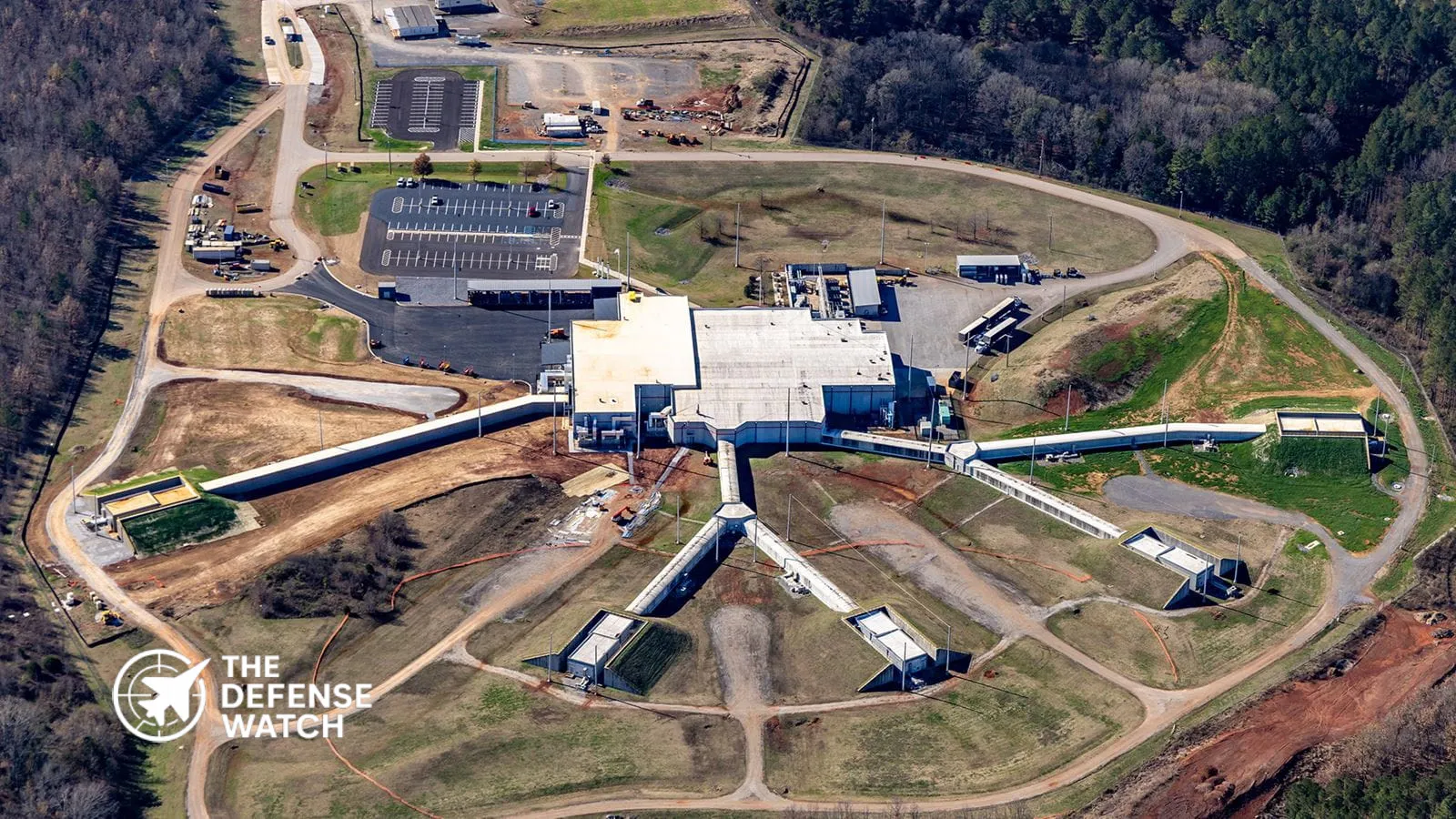
- Raytheon completed a $115 million expansion of its Alabama missile integration facility.
- The facility supports integration and assembly of advanced precision-guided missiles.
- Expansion strengthens U.S. and allied missile supply chains amid rising global demand.
- Investment reflects long-term Pentagon focus on industrial base resilience and surge capacity.
- Facility enhances production scalability for high-demand systems like air defense and strike missiles.
Raytheon Alabama Missile Integration Facility Expansion
The Raytheon Alabama missile integration facility expansion marks a significant step in strengthening U.S. missile production capacity, with a $115 million investment aimed at accelerating assembly and delivery of advanced weapons systems.
The Big Picture
The United States is actively rebuilding its defense industrial base to meet sustained demand for precision weapons. High consumption rates in recent conflicts, combined with rising tensions in the Indo-Pacific and Europe, have exposed limits in existing production capacity.
Missile systems such as air defense interceptors, precision strike munitions, and long-range weapons now sit at the center of U.S. deterrence strategy. The Department of Defense has prioritized expanding manufacturing throughput, reducing bottlenecks, and ensuring rapid replenishment capability.
Raytheon, a business unit of RTX Corporation, plays a central role in this effort. Its investment in Alabama reflects a broader industry shift toward scalable, high-rate production.
What’s Happening
Raytheon has completed a $115 million expansion of its missile integration facility in Alabama, according to an official company announcement released in March 2026.
The upgraded site focuses on the integration phase of missile production, where key components such as guidance systems, propulsion units, and warheads are assembled into operational weapons. This stage is often the most complex and time-sensitive part of the manufacturing process.
The expansion adds new production lines, advanced tooling, and modernized workflows designed to increase throughput and improve efficiency. The facility supports a range of missile programs used by the U.S. military and allied partners.
Raytheon officials stated the investment will help meet growing demand while improving delivery timelines for critical systems.
Why It Matters
Missile demand has surged across multiple theaters. The U.S. has transferred large quantities of air defense and precision strike systems to allies while maintaining its own readiness requirements.
Production constraints have become a strategic concern. Integration facilities like the one in Alabama often determine how quickly finished systems can reach operational units.
The Raytheon Alabama missile integration facility expansion directly addresses this bottleneck. By increasing integration capacity, the company can move partially completed components into deployable systems at a faster rate.
This capability is especially important for systems that rely on complex electronics and multi-domain integration, where delays can ripple across the entire supply chain.
Strategic Implications
The expansion strengthens U.S. military readiness by enabling faster replenishment of key missile inventories. It also improves surge capacity in the event of a prolonged conflict.
A more resilient industrial base supports deterrence by signaling that the United States can sustain high-intensity operations over time. This has direct implications for both NATO commitments and Indo-Pacific force posture.
The investment also reinforces domestic manufacturing. By expanding production within the United States, Raytheon reduces reliance on external suppliers and mitigates supply chain vulnerabilities.
For allied nations, increased U.S. production capacity translates into more reliable access to advanced weapons systems, particularly in air defense and precision strike roles.
Competitor View
China has placed heavy emphasis on scaling its own missile production capabilities, particularly for long-range precision strike systems and anti-access strategies. Beijing is likely to view U.S. industrial expansion as part of a broader effort to sustain military advantage.
Russia, facing constraints from sanctions and wartime attrition, may interpret the expansion as evidence of Western industrial depth. Increased U.S. production capacity highlights the gap between NATO and Russian defense manufacturing output.
Regional actors such as Iran also monitor U.S. missile production trends, particularly in relation to air defense systems that could counter their missile and drone capabilities.
What To Watch Next
Raytheon’s next steps will likely focus on ramping up production rates and integrating additional missile programs into the expanded facility.
Key indicators include:
Production output increases over the next 12 to 24 months
New contracts from the U.S. Department of Defense and allied customers
Integration of emerging missile technologies into the facility
The Pentagon’s continued funding for munitions production will also shape how quickly facilities like this reach full operational capacity.
Capability Gap
The expansion addresses a critical gap in U.S. defense manufacturing, limited integration capacity for complex missile systems.
While the U.S. maintains advanced design and development capabilities, scaling production has proven more difficult. Integration facilities require specialized infrastructure and skilled labor, which cannot be expanded overnight.
However, the investment does not fully eliminate constraints. Supply chain dependencies, particularly in electronics and propulsion components, remain potential limiting factors.
The Bottom Line
Raytheon’s Alabama expansion strengthens the backbone of U.S. missile production, improving readiness and ensuring the ability to sustain high-demand operations.
Get real time update about this post category directly on your device, subscribe now.