

Conti Federal Wins $74.8 Million B-21 RF Hangar Contract
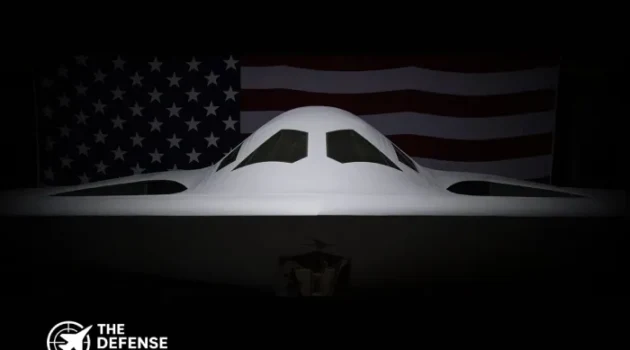
Conti Federal Services has been awarded a $74.787 million contract for a B-21 radio frequency and measurements hangar at Whiteman Air Force Base, Missouri, adding another major piece of infrastructure to the Air Force’s planned B-21 operating base network.
- Conti Federal Wins $74.8 Million B-21 RF Hangar Contract
- Takeaways
- What The B-21 RF Hangar Will Do
- Whiteman Is Preparing For Its B-21 Mission
- A Wider Military Construction Program Is Underway
- Why Radio Frequency Infrastructure Matters
- B-21 Infrastructure Is Expanding Across Multiple Bases
- Contract Structure And Schedule
- Strategic Significance For The Bomber Force
- What Happens Next
The firm-fixed-price award has a total cumulative face value of $74.978 million. The U.S. Army Corps of Engineers Kansas City District is the contracting activity, under contract W912DQ-26-C-A048.
Takeaways
The U.S. Air Force is adding specialized infrastructure at Whiteman Air Force Base as the installation prepares to transition from the B-2 Spirit to the B-21 Raider.
The project is scheduled for completion Sept. 25, 2029. Fiscal 2026 military construction, defense-wide funding of $74.787 million was obligated at award.
The award follows an earlier USACE procurement effort that identified the project as a large-scale, unrestricted design-bid-build construction requirement. The planned facility includes both unclassified and classified areas and was originally described as approximately 57,532 square feet, or 5,345 square meters.
Contract At A Glance
Item Details Contractor Conti Federal Services LLC Contract value $74,787,155 Cumulative face value $74,978,377 Location Whiteman Air Force Base, Missouri Facility B-21 Radio Frequency and Measurements Hangar Aircraft positions One B-21 position Acquisition Firm-fixed-price Bids received Three Funding FY2026 military construction, defense-wide Completion date Sept. 25, 2029 Contracting activity U.S. Army Corps of Engineers, Kansas City District Contract number W912DQ-26-C-A048 What The B-21 RF Hangar Will Do
The project is not simply another aircraft storage hangar. Its primary purpose is to provide a specialized environment for radio frequency measurements associated with the B-21 weapon system.
The facility will include an aircraft position, back shops, material storage, administrative areas and other support spaces. Earlier procurement documents also specified classified and unclassified areas, utilities, pavement and other site improvements needed to make the facility operational.
Radio frequency measurement infrastructure is particularly important for an aircraft whose survivability depends heavily on its ability to operate in contested electromagnetic and air-defense environments.
The exact measurement equipment and technical procedures to be used at the facility are not detailed in the public contract announcement. That distinction matters because the construction award establishes the physical infrastructure requirement without publicly disclosing sensitive operational or engineering information.
Conti Federal has also constructed a B-21 RF facility at Ellsworth Air Force Base, South Dakota. The company’s description of that project identifies a single aircraft measurement bay, back-shop and support areas, security infrastructure and supporting utilities.
Whiteman Is Preparing For Its B-21 Mission
The contract comes as Whiteman moves deeper into its transition toward the B-21 Raider.
The Air Force selected Whiteman in September 2024 as the second main operating base for the B-21, after Ellsworth Air Force Base. Dyess Air Force Base, Texas, was selected as the third B-21 base.
Whiteman currently operates the B-2 Spirit through the 509th Bomb Wing. The installation’s existing experience with stealth bombers and its established bomber infrastructure were among the factors cited in the Air Force’s basing decision.
The B-21 is intended to replace the B-1B and B-2 portions of the Air Force’s bomber force over time while providing both conventional and nuclear strike capabilities. The Air Force’s stated production objective is at least 100 aircraft.
The infrastructure requirement therefore extends well beyond aircraft shelters. Operational B-21 bases require facilities for maintenance, weapons handling, training, communications, security, logistics and specialized testing and measurement activities.
A Wider Military Construction Program Is Underway
The RF hangar is one element of a larger construction program at Whiteman.
The Kansas City District’s current contracting forecast lists multiple B-21 projects at the Missouri installation, including the RF hangar, a B-21 weapons-related storage project, a weapons load trainer and additional RF hangar support work.
The Air Force’s fiscal 2027 military construction documentation also identifies an $80 million B-21 weapons load trainer project at Whiteman and states that the base must complete multiple infrastructure upgrades to support the new bomber.
Taken together, these projects show that B-21 modernization at Whiteman is being treated as a systems-level infrastructure transition rather than a single construction effort.
That approach is important because the effectiveness of a modern bomber fleet depends on more than the aircraft itself. Specialized facilities must support aircraft generation, maintenance, weapons integration, testing, secure communications and personnel operations.
Why Radio Frequency Infrastructure Matters
The B-21 is being developed as a long-range, highly survivable penetrating strike aircraft. Its design incorporates low-observable characteristics and an open systems architecture intended to allow future technologies to be integrated as threats evolve.
Radio frequency measurements are relevant to that broader architecture because electromagnetic performance is a critical part of modern military aircraft operations.
For a stealth aircraft, testing and measuring electromagnetic characteristics can help engineers and maintainers verify that the aircraft performs within required parameters. Such work can involve highly controlled facilities because measurements can reveal information about an aircraft’s electromagnetic behavior and configuration.
Public information on the Whiteman project does not provide details about specific test frequencies, procedures, signatures or performance thresholds. Those details should not be inferred from the construction award.
What is clear is that the Air Force is investing in dedicated infrastructure to support the B-21’s specialized requirements at one of its future operational bases.
B-21 Infrastructure Is Expanding Across Multiple Bases
Whiteman is not the only installation receiving major B-21 infrastructure.
Ellsworth, the first B-21 main operating base and formal training location, has already been progressing with extensive construction to prepare for the aircraft. The Air Force reported in July 2026 that infrastructure construction was underway as the base prepared to integrate the Raider.
The Air Force has also said that fiscal 2026 would begin extensive military construction projects at all three designated B-21 main operating bases.
This parallel infrastructure effort reflects the scale of the B-21 transition. The program requires not only production aircraft, but also facilities capable of supporting the aircraft throughout its operational life.
Contract Structure And Schedule
The Conti Federal award uses a firm-fixed-price structure, placing significant responsibility on the contractor to deliver the defined construction scope for the agreed price.
Three bids were received through an internet solicitation, indicating that the construction requirement was competed rather than awarded on a sole-source basis.
The scheduled completion date of Sept. 25, 2029 also places the facility within the broader period in which Whiteman is expected to be preparing for its B-21 operating mission.
The timing provides several years for construction, infrastructure integration and facility preparation before the project reaches its scheduled completion milestone.
Strategic Significance For The Bomber Force
The significance of the contract extends beyond the $74.8 million construction value.
The B-21 is a central element of the Air Force’s long-term bomber modernization plan. The service describes the aircraft as a penetrating strike platform designed to operate in highly contested environments, while its open architecture is intended to support future upgrades.
Whiteman’s future role is particularly important because the base has operated the B-2 for decades. Building B-21-specific infrastructure there allows the Air Force to prepare the installation for a new generation of stealth bomber operations while maintaining the expertise and infrastructure associated with its existing bomber mission.
The RF measurements facility adds a specialized capability to that transition. Rather than treating the B-21 as an aircraft that simply arrives at an existing airfield, the construction program recognizes that the platform requires a dedicated ecosystem of facilities and support functions.
That is one of the clearest indicators of where the B-21 program now stands: the modernization effort is increasingly moving from aircraft development and flight testing toward the physical infrastructure required for sustained operational deployment.
What Happens Next
Conti Federal is expected to carry out construction at Whiteman under the newly awarded contract, with completion currently scheduled for September 2029.
Additional B-21 infrastructure projects are expected to continue at Whiteman as the base prepares for its future bomber mission. The Kansas City District’s project listings already identify several related construction requirements.
The RF measurements hangar will ultimately provide one specialized aircraft position and the associated support infrastructure needed for B-21 activities at the base.
For the Air Force, the project is another step in transforming Whiteman from a B-2-centered installation into a future B-21 operating base.