
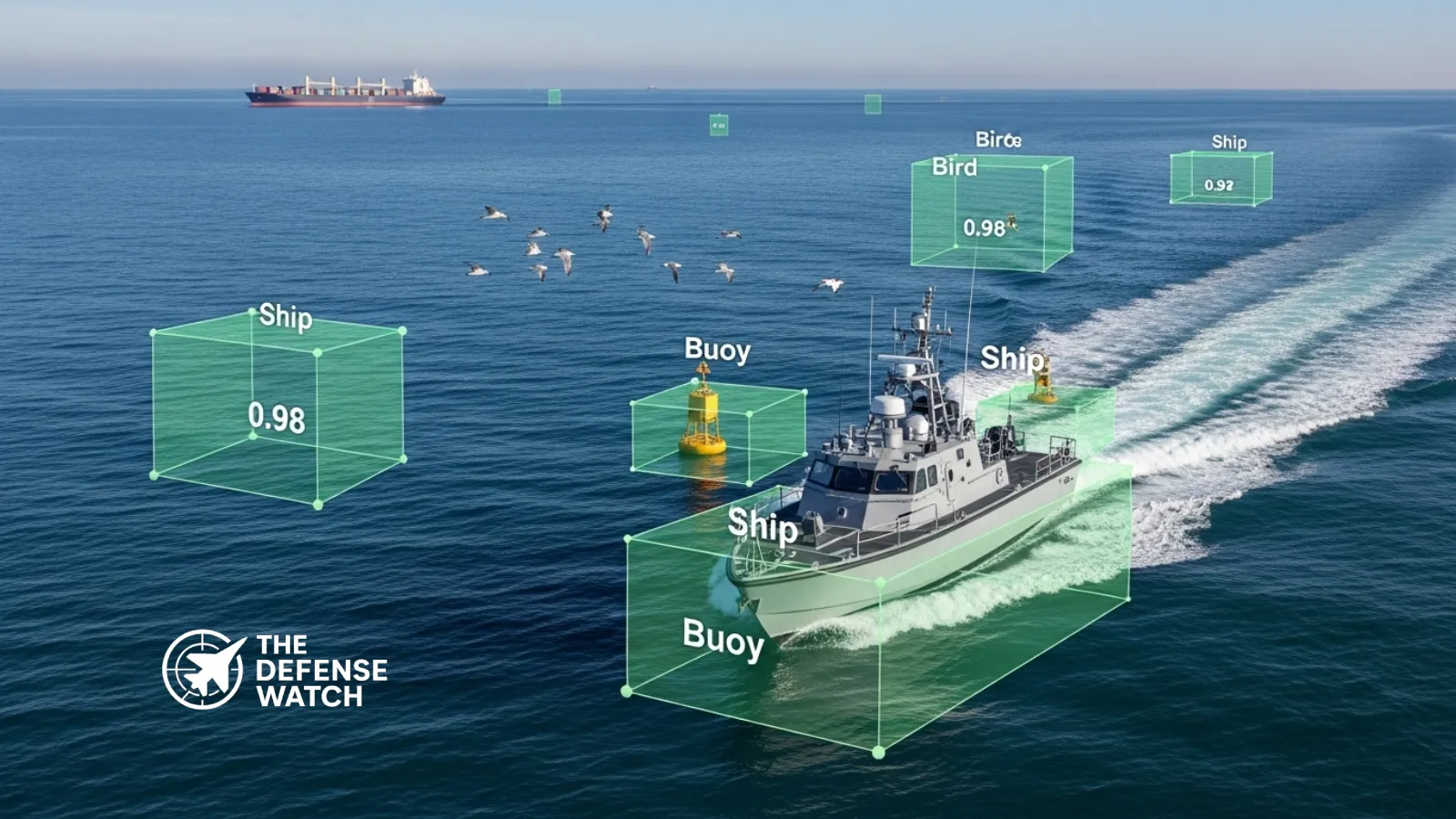
AeroVironment Navy AI contract expands long term research into autonomous and swarming technologies for U.S. naval and joint unmanned systems. The U.S. Navy has awarded AeroVironment Inc. a firm fixed price order worth nearly 24 million dollars to advance computer vision, machine learning, and imagery processing software with direct pathways into operational use.
Announced by Naval Air Systems Command, the award supports applied research, advanced technology development, and sustainment of deployed artificial intelligence tools across multiple Navy and Department of Defense programs. The work will run through February 2031 and is funded under Fiscal Year 2025 research, development, test, and evaluation accounts.
Contract scope and value
At the time of award, the Navy obligated 2,812,074 dollars in FY2025 RDT and E funds. These funds will expire at the end of the current fiscal year, in line with standard defense research funding rules.
According to the contract notice, the effort covers applied research and development of computer vision and machine learning algorithms, video and imagery processing software, and the transition of these technologies into operational systems. The work also includes maintenance and support for already deployed AI enabled capabilities.
Focus on autonomy and swarming
These capabilities are increasingly important as the U.S. Navy pursues distributed maritime operations and seeks to reduce risk to crewed platforms. AI enabled perception allows unmanned systems to detect, classify, and track objects in complex maritime and littoral environments with limited human input.
Defense officials have repeatedly highlighted autonomy and machine learning as force multipliers, particularly for persistent surveillance, reconnaissance, and contested operations. This contract supports those priorities by moving beyond laboratory research toward fielded and sustained systems.
Multi site execution across the U.S.
Simi Valley, California, 11 percent
Port Hueneme, California, 11 percent
San Diego, California, 11 percent
Norfolk, Virginia, 11 percent
Dahlgren, Virginia, 11 percent
Centreville, Virginia, 11 percent
Dugway Proving Ground, Utah, 11 percent
Atlanta, Georgia, 11 percent
Baltimore, Maryland, 12 percent
The inclusion of Dugway Proving Ground and naval centers such as Dahlgren and Port Hueneme suggests testing in realistic operational environments, including electronic warfare and contested sensing conditions.
Role of Naval Air Systems Command
Although traditionally associated with aircraft, NAVAIR plays a key role in cross domain autonomy efforts that span air, surface, and subsurface platforms. The AeroVironment Navy AI contract aligns with this broader mandate.
AeroVironment’s position in defense autonomy
AeroVironment is best known for its small unmanned aircraft systems and loitering munitions used by U.S. and allied forces. In recent years, the company has expanded its focus on software, autonomy, and AI enabled capabilities to complement its hardware portfolio.
This contract reinforces AeroVironment’s role as a trusted supplier of advanced autonomy solutions rather than just platforms. By supporting both development and sustainment of deployed systems, the Navy signals confidence in the maturity and operational relevance of the company’s technology.
Industry analysts note that long duration research contracts, particularly those extending beyond five years, provide stable funding and opportunities to shape future operational concepts. The completion date of February 2031 positions this effort to influence next generation unmanned programs.
Strategic context
Autonomous swarming, resilient perception, and machine speed decision support are seen as essential to countering peer competitors in contested maritime regions. Investment in software centric capabilities also allows faster upgrades compared to traditional hardware focused programs.
While the contract notice does not specify particular platforms or theaters, its emphasis on uncrewed surface vessels and unmanned systems aligns with Navy experimentation in the Indo Pacific and other high priority regions.
Get real time update about this post category directly on your device, subscribe now.
