
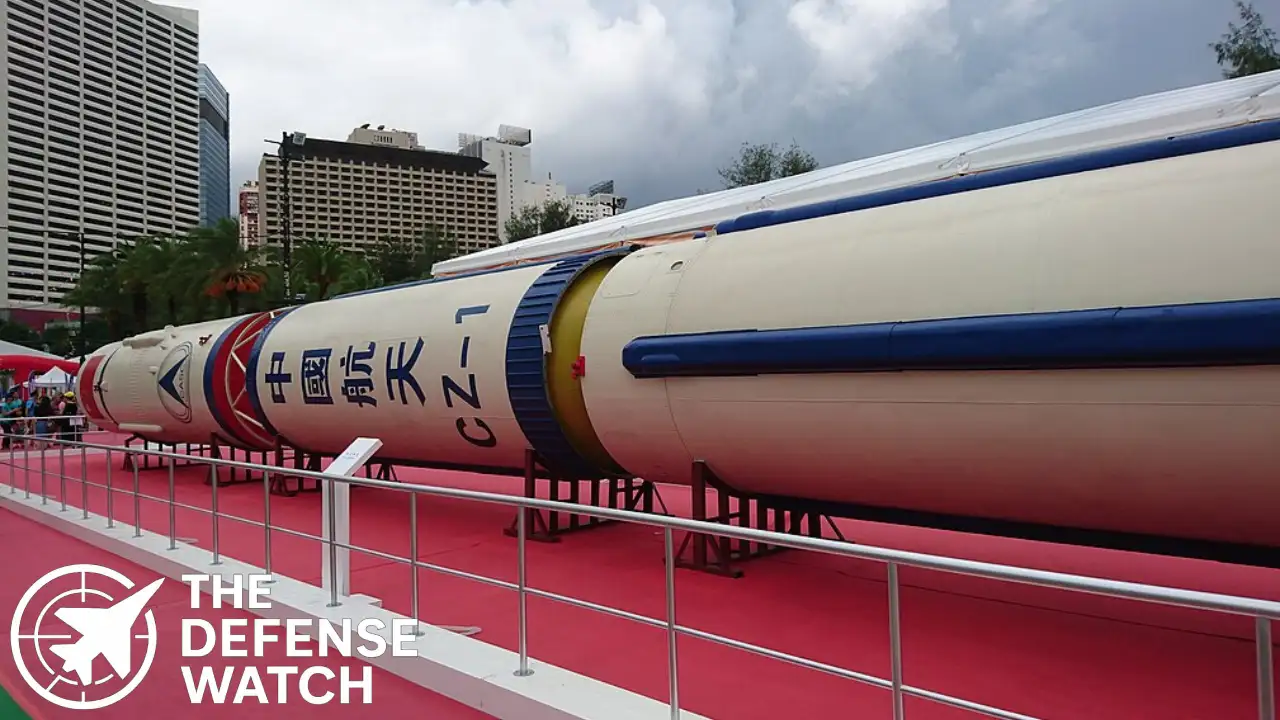
The rapid expansion of China’s space militarization has transformed outer space into a new arena of strategic competition between Beijing and Washington. From advanced satellite constellations to anti-satellite (ASAT) weapons and hypersonic glide vehicles, China’s growing capabilities are viewed by U.S. defense officials as a direct challenge to America’s long-standing space dominance.
China’s Expanding Satellite Programs
Over the past decade, China has deployed an extensive network of military and dual-use satellites under the management of the People’s Liberation Army Strategic Support Force (PLASSF). These include:
- Reconnaissance satellites for Earth observation and maritime tracking.
- Electronic intelligence satellites for signals interception.
- Navigation systems through the BeiDou constellation, which rivals the U.S. GPS and now provides global coverage.
- Secure communications satellites, supporting military operations across the Indo-Pacific.
With over 700 active satellites in orbit—second only to the United States—China’s satellite capabilities are now critical to its military doctrine, particularly in enabling precision strikes and joint operations.
Anti-Satellite Weapons and Space Denial Strategy
China’s 2007 ASAT test, which destroyed a weather satellite and created more than 3,000 pieces of debris, marked the world’s attention to its counter-space ambitions. Since then, Beijing has advanced both direct-ascent ASAT missiles and co-orbital systems designed to approach and potentially disable adversary satellites.
U.S. officials have expressed concerns that China’s counter-space arsenal could cripple critical American assets such as GPS, communications, and missile warning satellites in the event of a conflict, leaving U.S. forces vulnerable on the battlefield.
Hypersonic Glide Vehicles and Space Integration
China’s development of hypersonic glide vehicles (HGVs) has further fueled concerns about the militarization of space. The DF-ZF HGV, tested multiple times since 2014, can maneuver at speeds above Mach 5, potentially bypassing U.S. missile defense systems. In 2021, China reportedly tested a fractional orbital bombardment system (FOBS) with a hypersonic glide vehicle, demonstrating a novel approach to space-enabled strike capability.
Such technologies blur the line between traditional missile systems and space-based weapons, reinforcing U.S. fears of Beijing’s intent to dominate multiple strategic domains.
U.S. Response: Space Force and Allied Coordination
Washington has responded with accelerated investments in space defense. The creation of the U.S. Space Force in 2019 underscored the recognition of space as a contested warfighting domain. Key initiatives include:
- Deploying resilient satellite architectures with smaller, distributed constellations to reduce vulnerability.
- Advancing missile warning and tracking satellites to counter hypersonic threats.
- Expanding collaboration with allies through NATO’s Space Centre of Excellence and partnerships with Japan and Australia.
Pentagon officials argue that deterrence will require not only defensive measures but also the credible ability to respond to hostile actions in space.
Strategic Implications
The pace of China’s space militarization signals a shift in the global balance of power. Unlike the Cold War, where U.S.-Soviet space competition was largely symbolic, today’s rivalry has direct implications for command, control, and precision warfare.
Analysts warn that without renewed international norms, space risks becoming an extension of great-power conflict, where satellites are prime targets and orbital debris could jeopardize civilian as well as military infrastructure.
Analysis: A Looming Space Arms Race
China’s steady progress underscores the reality that space is no longer a sanctuary. With Beijing integrating space capabilities into its joint force doctrine, the U.S. faces a dilemma: invest heavily to preserve dominance or seek cooperative arms control measures to prevent destabilization.
For now, the trend points toward an emerging space arms race. The critical question is whether international frameworks—such as proposals at the UN Conference on Disarmament—can slow the march toward weaponized orbit, or whether strategic rivalry will continue unchecked.
FAQs
China operates more than 700 active satellites, second only to the United States.
It demonstrated China’s ability to destroy satellites but created massive space debris, raising global concerns.
It is a maneuverable weapon capable of speeds above Mach 5, designed to evade missile defense systems.
By expanding the U.S. Space Force, deploying resilient satellite constellations, and strengthening allied partnerships.
Get real time update about this post category directly on your device, subscribe now.

12 comments
[…] Arms Race Dynamics – The Fatah-4 is part of a broader South Asian missile race. India’s ballistic missile […]
cannabis gummies usa delivery direct to your door
[…] an anti-ship aerobalistic missile with a hypersonic glide vehicle warhead, unveiled in […]
[…] Space Sensor (HBTSS) program. Meanwhile, defense contractors are working on directed-energy weapons and interceptor prototypes capable of engaging hypersonic threats […]
[…] Pentagon officials also insist that China’s threat will still be treated as a key concern—if no longer the preeminent priority. The strategy, in […]
[…] builds on China’s broader hypersonic R&D efforts, which include advanced wind-tunnels, hypersonic vehicle testing, and domestic engine program such as the Shenyang WS‑15 for the J-20 […]
[…] Mach 5 as a disruptive threshold. One academic study noted that to evade advanced missile-defenses, vehicles often need sustained speeds above Mach 5 during glide or manoeuvre […]
[…] also emphasizing that CMSA’s decision to employ the Shenzhou-21 vehicle highlights built-in redundancy in China’s human-space system, the expert stressed that redundancy does not replace robust debris-tracking and […]
[…] China’s Manned Space Agency announced that the Shenzhou-22 spacecraft will be launched at an appropriate time in the future, though no specific timeline was provided. The premature deployment of Shenzhou-22, originally scheduled for April launch, may draw on experience from Russia’s Soyuz program, upon which Chinese Shenzhou vessels are based. […]
[…] ballistic or hypersonic threats, it reportedly uses kinetic 77N6-N and 77N6-N1 missiles, capable of “hit-to-kill” […]
[…] cyber threats noted by the NCSC typically take the form of distributed denial-of-service attacks aimed at […]
[…] SD-3 rocket, developed within China’s commercial space sector, carried multiple satellites, including Pakistan’s PRSC-EO2 and six others, into planned […]