Executive Summary:
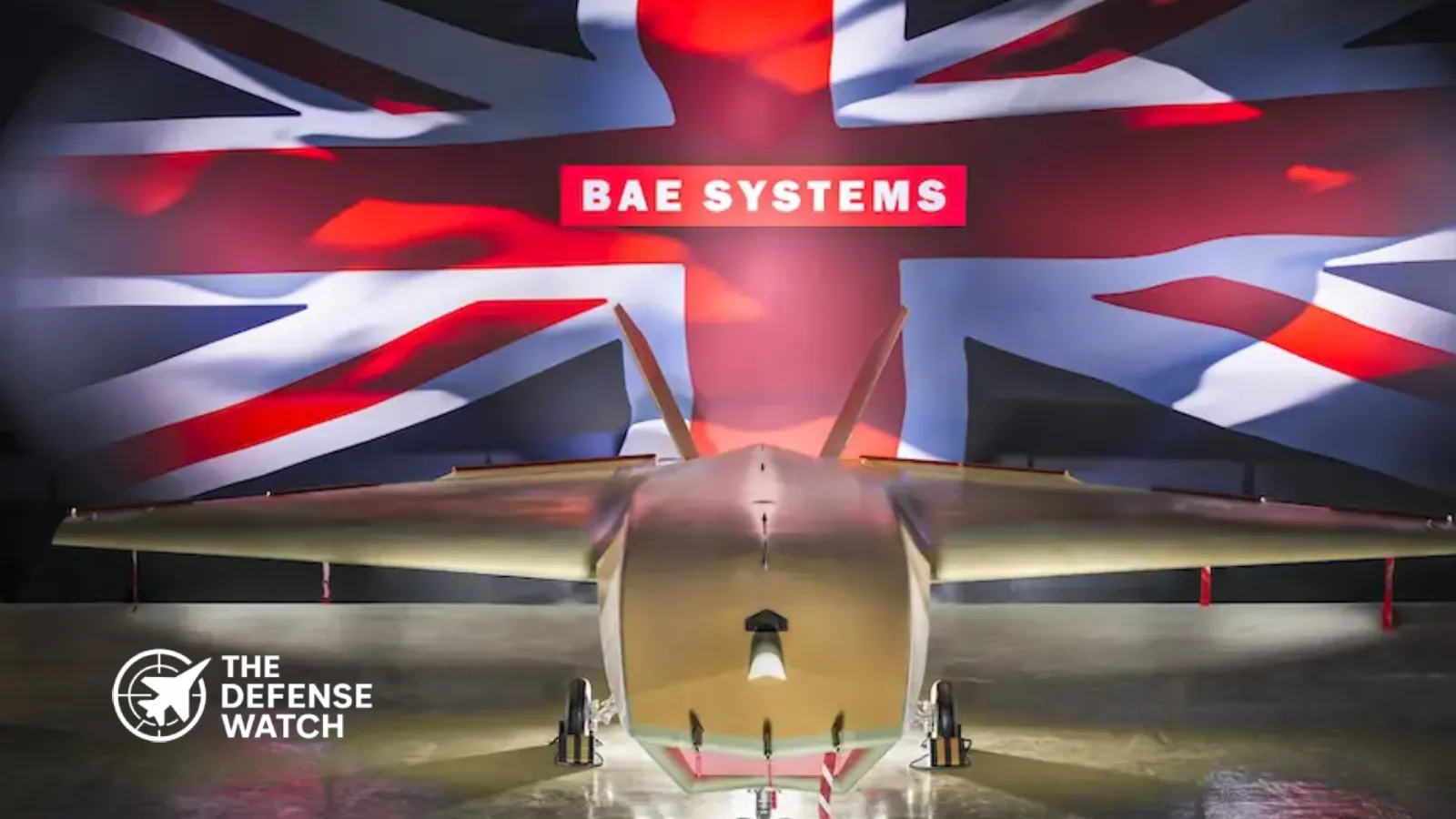
BAE Systems has unveiled the Brontanax collaborative combat aircraft (CCA), a new autonomous air vehicle designed to operate alongside the UK’s future Storm fighter. The concept demonstrates Britain’s growing investment in crewed and uncrewed teaming, a capability increasingly viewed as essential for maintaining air superiority in future high threat environments.
BAE Systems Unveils Brontanax Collaborative Combat Aircraft For UK Storm Fighter Program
BAE Systems has introduced the Brontanax collaborative combat aircraft (CCA) as part of its contribution to the United Kingdom’s future Storm fighter program, providing the latest glimpse into how autonomous aircraft could support next generation combat aviation. The company presented the concept through an official promotional video, outlining its vision for crewed and uncrewed teaming within the UK’s Future Combat Air System (FCAS).
- BAE Systems Unveils Brontanax Collaborative Combat Aircraft For UK Storm Fighter Program
- Brontanax Designed To Operate Alongside The Storm Fighter
- Supporting The UK’s Future Combat Air Strategy
- Why Collaborative Combat Aircraft Matter
- Part Of A Global Shift Toward Autonomous Air Combat
- Technical Design Focuses On Flexibility
- Strategic Importance For The UK Defense Industry
- Analysis: Why Brontanax Matters Beyond A Single Aircraft
- Conclusion
The announcement comes as major defense manufacturers across Europe and the United States accelerate development of collaborative combat aircraft capable of extending the reach, survivability, and effectiveness of sixth generation fighter aircraft.
Brontanax Designed To Operate Alongside The Storm Fighter
Brontanax is envisioned as an autonomous combat aircraft that can accompany the future Storm fighter during complex operations. Rather than replacing crewed aircraft, the platform is intended to function as a force multiplier capable of carrying additional sensors, electronic warfare payloads, intelligence equipment, or precision weapons.
According to BAE Systems, the aircraft is designed around the concept of human machine teaming, allowing pilots to command multiple autonomous aircraft during combat missions.
The company describes Brontanax as part of a broader family of collaborative combat aircraft that could perform missions including:
- Electronic warfare
- Intelligence, surveillance, and reconnaissance (ISR)
- Air defense suppression
- Precision strike
- Decoy operations
- Communications relay
- Escort missions
This distributed operating model reduces risk to high value crewed fighters while increasing operational flexibility.
Supporting The UK’s Future Combat Air Strategy
The Brontanax concept supports the UK’s wider Future Combat Air System (FCAS) initiative, commonly known as the Global Combat Air Programme (GCAP), which is being developed jointly by the United Kingdom, Italy, and Japan.
The future Storm fighter is expected to become one of the world’s most advanced sixth generation combat aircraft, incorporating:
| Capability | Expected Role |
|---|---|
| Artificial intelligence | Mission management and decision support |
| Stealth design | Reduced radar signature |
| Advanced sensors | Multi-domain awareness |
| Secure networking | Real-time data sharing |
| Collaborative combat aircraft | Autonomous force multiplication |
| Electronic warfare | Enhanced survivability |
Brontanax represents one element of this broader combat ecosystem rather than a standalone aircraft program.
Why Collaborative Combat Aircraft Matter
Collaborative combat aircraft have become one of the fastest growing segments of military aviation.
Instead of deploying only expensive crewed fighters, air forces increasingly envision mixed formations where autonomous aircraft perform higher risk missions while human pilots maintain overall command.
This approach offers several operational advantages:
- Greater combat mass without increasing pilot numbers
- Lower operational risk during contested missions
- Expanded sensor coverage
- Additional weapons capacity
- Improved electronic warfare capabilities
- Greater mission endurance
For the Royal Air Force, integrating collaborative aircraft could significantly improve operational flexibility while reducing pressure on limited fighter fleets.
Part Of A Global Shift Toward Autonomous Air Combat
The Brontanax announcement reflects a broader international trend.
The United States Air Force continues development of its Collaborative Combat Aircraft (CCA) initiative, with industry teams led by General Atomics and Anduril progressing toward prototype testing.
Australia’s MQ-28 Ghost Bat, developed by Boeing Australia, has already demonstrated autonomous teaming with crewed aircraft, while European manufacturers are expanding investments in similar technologies under multiple FCAS programs.
Rather than pursuing identical solutions, allied nations are developing aircraft tailored to their own operational requirements while emphasizing interoperability across NATO and partner forces.
Technical Design Focuses On Flexibility
Although BAE Systems has not released detailed technical specifications, the Brontanax concept suggests several core design priorities.
The aircraft appears optimized for:
- Modular payload integration
- Autonomous navigation
- Secure communications
- Low observable characteristics
- Long range operations
- Network enabled warfare
The modular approach would allow operators to configure aircraft for different missions without redesigning the platform.
Such flexibility is becoming increasingly important as military planners seek adaptable systems capable of evolving alongside rapidly changing threats.
Strategic Importance For The UK Defense Industry
The unveiling also demonstrates continued investment by the United Kingdom in maintaining an advanced domestic combat aviation sector.
BAE Systems serves as the lead industrial partner for the UK’s future combat aircraft development and plays a central role within the Global Combat Air Programme alongside Leonardo UK, Rolls Royce, and MBDA UK.
Collaborative combat aircraft represent an important component of that industrial strategy because they combine advances in artificial intelligence, autonomous flight, digital engineering, and secure communications into a single operational ecosystem.
If successfully integrated with the future Storm fighter, Brontanax could provide the Royal Air Force with additional operational capacity while strengthening the UK’s defense technology base and supporting export opportunities with partner nations.
Analysis: Why Brontanax Matters Beyond A Single Aircraft
The significance of Brontanax extends beyond the unveiling of another drone concept.
Modern air warfare is increasingly driven by networked systems rather than individual platforms. Future combat effectiveness will depend on how well crewed fighters, autonomous aircraft, satellites, sensors, and electronic warfare assets operate as a connected force.
For the United Kingdom, Brontanax illustrates an effort to build that ecosystem from the outset rather than adding autonomous capabilities later in the aircraft’s service life.
From a U.S. perspective, the concept also reinforces growing alignment among Western allies regarding future air combat doctrine. The United States, United Kingdom, Australia, and several European partners are independently investing in collaborative combat aircraft because they address common operational challenges, including contested airspace, long range precision warfare, and increasingly sophisticated integrated air defense systems.
While Brontanax remains a concept vehicle, its unveiling signals that autonomous wingmen are becoming a central element of sixth generation airpower rather than an experimental capability.
Conclusion
BAE Systems’ unveiling of the Brontanax collaborative combat aircraft marks another milestone in the evolution of the UK’s future combat aviation strategy. As development of the Storm fighter and the broader Global Combat Air Programme continues, autonomous aircraft are expected to play a growing role in delivering combat mass, survivability, and mission flexibility.
Although key technical details and timelines remain undisclosed, Brontanax demonstrates the direction of next generation airpower, where crewed fighters and autonomous systems operate as an integrated combat team capable of responding to increasingly complex operational environments.