
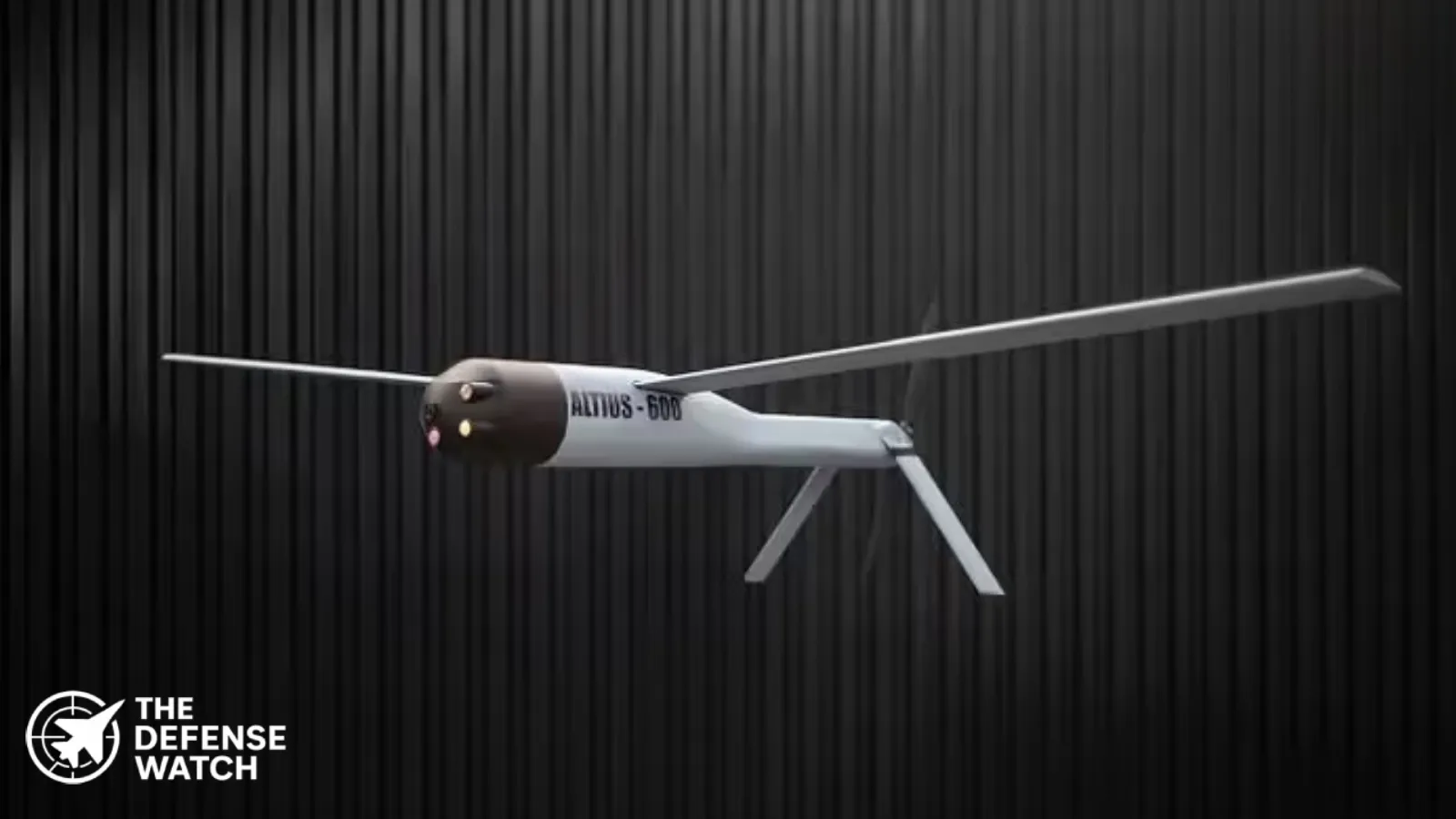
Taiwan asymmetric defense drones
Taiwan has publicly disclosed procurement quantities of ALTIUS-700M loitering munitions and 600 ISR reconnaissance drones, underscoring its push to expand Taiwan asymmetric defense drones as part of a broader effort to counter maritime and amphibious threats.
The disclosure was made during legislative budget reviews, offering rare insight into classified acquisition plans tied to Taiwan’s evolving deterrence strategy and growing reliance on unmanned systems.
Drone Quantities and Procurement Details
According to official documents cited by Army Recognition, Taiwan plans to acquire:
- 291 ALTIUS-700M loitering munitions
- 600 units of the 600 ISR intelligence, surveillance, and reconnaissance drone
Both systems are produced by U.S.-based Anduril Industries and are being procured under U.S. Foreign Military Sales frameworks.
The procurement aligns with Taiwan’s emphasis on distributed, survivable capabilities that can operate in contested environments without relying on traditional air superiority.
Role of ALTIUS-700M in Asymmetric Warfare
The ALTIUS-700M loitering munition is designed for launch from ground vehicles, naval platforms, and aircraft. It combines long endurance with precision strike capability against high-value targets, including surface vessels and landing forces.
For Taiwan, the system is intended to complicate adversary planning by enabling rapid, dispersed attacks during early phases of a conflict. Defense planners view loitering munitions as a cost-effective way to offset numerical disadvantages.
The ALTIUS-700M has been marketed as suitable for swarm operations and autonomous targeting, features increasingly central to modern asymmetric warfare doctrines.
600 ISR Drone Expands Surveillance Coverage
The 600 ISR drone is optimized for intelligence collection rather than strike missions. Its primary role is persistent surveillance, target identification, and battlefield awareness.
Taiwanese defense officials have highlighted the need for continuous maritime and coastal monitoring, particularly in chokepoints and likely amphibious landing zones. The 600 ISR platform supports this requirement by providing real-time data to command networks and strike assets.
Together, the ISR and strike drone pairing reflects a layered approach, detect first, then engage.
Strategic Context and U.S.-Taiwan Defense Cooperation
The procurement fits within Taiwan’s shift away from large, vulnerable platforms toward mobile, expendable systems. U.S. defense officials have repeatedly encouraged Taipei to prioritize asymmetric capabilities that raise the cost of coercion or invasion.
Washington has approved multiple drone-related sales to Taiwan in recent years, viewing unmanned systems as central to Indo-Pacific deterrence and interoperability.
While Taiwan has invested heavily in domestic drone programs, U.S.-supplied platforms continue to fill capability gaps in endurance, networking, and autonomous operation.
Regional Implications
Taiwan’s disclosure comes amid heightened military pressure in the Taiwan Strait, including increased air and naval activity by the People’s Liberation Army.
Analysts note that unmanned systems allow Taiwan to scale deterrence without escalating politically sensitive force posture changes. By spreading capability across hundreds of small platforms, Taiwan aims to reduce vulnerability to preemptive strikes.
The drone acquisitions also reflect lessons drawn from recent conflicts, where loitering munitions and ISR drones have proven decisive in shaping battlefield outcomes.
Get real time update about this post category directly on your device, subscribe now.

