Saab Pitches Comprehensive Industrial Plan for Gripen E Production in India
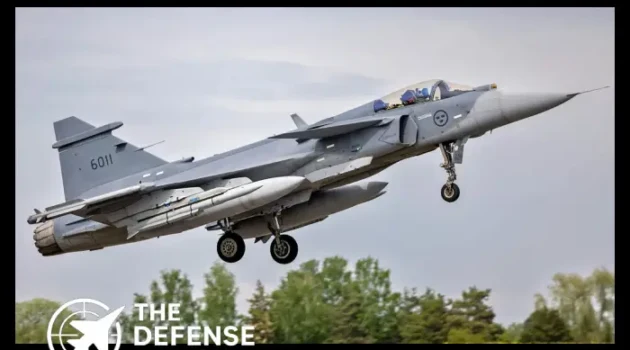
Swedish defense manufacturer Saab AB has formally offered the Gripen E multirole fighter jet to the Government of India, presenting a comprehensive industrial partnership that extends beyond aircraft sales to include design, production, and long-term sustainment capabilities across India’s defense manufacturing sector.
Speaking at the Singapore Airshow on February 9, 2026, Mikael Franzén, Saab’s Chief Marketing Officer for Gripen and Vice President of Business Area Aeronautics, revealed that the proposal involves more than 300 tier 1, tier 2, and tier 3 companies, including micro, small, and medium enterprises throughout India. According to Franzén, deliveries could commence as early as the third year following contract signature, with aircraft initially manufactured in Sweden before production rapidly transitions to Indian facilities.
The offer comes at a critical time for the Indian Air Force, which currently operates well below its authorized strength of 42 squadrons. The IAF’s existing fleet includes Dassault Rafale, HAL Tejas, Sukhoi Su-30MKI, upgraded MiG-29, Mirage 2000, and Jaguar aircraft, but retirements of older platforms such as the MiG-21 have outpaced new inductions.
Strategic Positioning Between Rafale and Tejas
Saab positions the Gripen E as a complementary platform that fills the operational gap between India’s heavyweight Rafale fighters and the domestically produced Tejas light combat aircraft. Franzén emphasized that the Gripen E could be inducted quickly and in larger numbers compared to heavier twin-engine fighters, directly addressing the IAF’s numerical deficiency while reducing operational pressure on higher-cost assets during routine air defense and tactical missions.
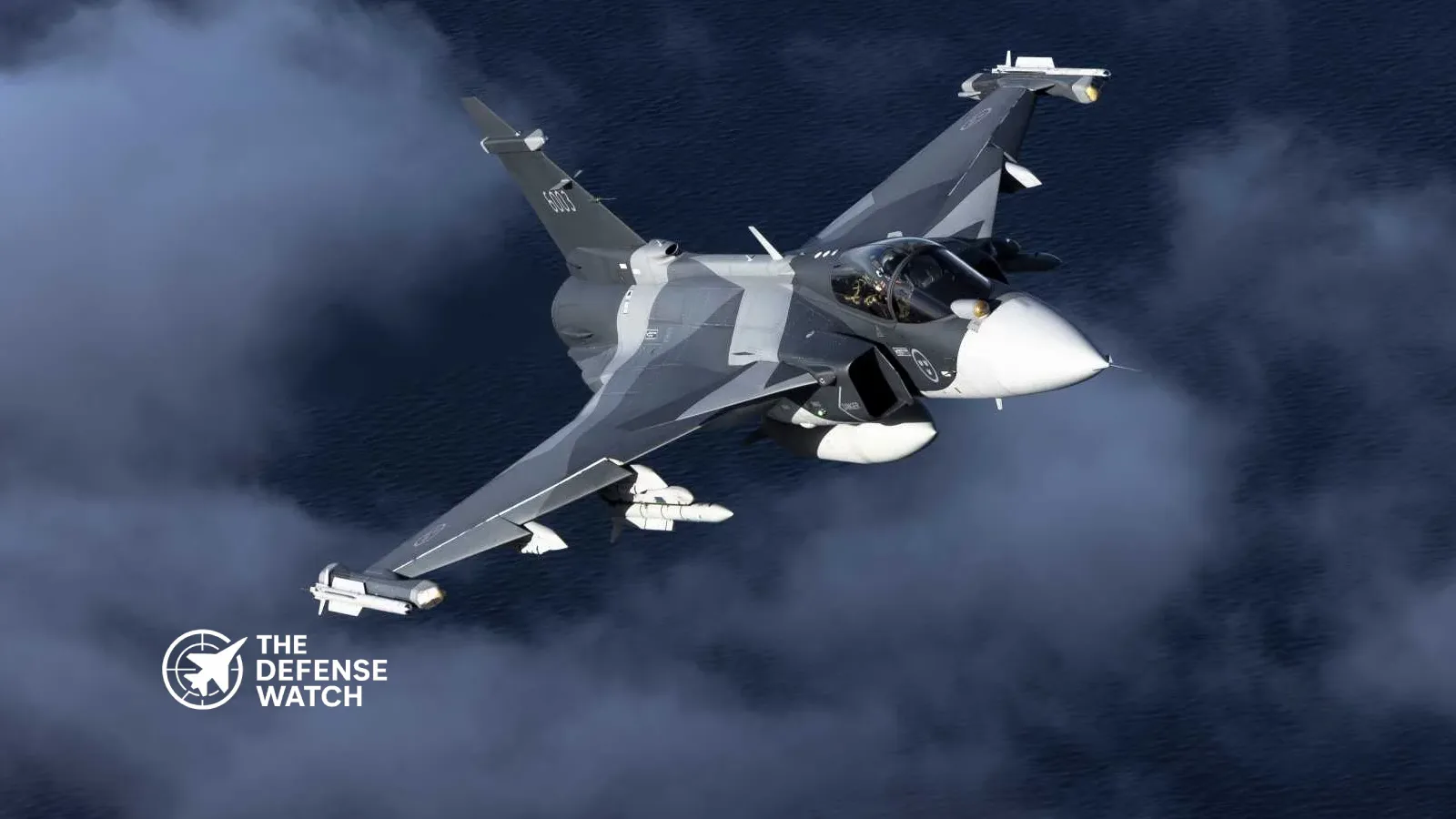
The Gripen E represents a medium-weight, single-engine fighter with a maximum takeoff weight of 16,500 kg. Powered by the General Electric F414G turbofan engine producing 98 kN of thrust, the aircraft achieves speeds exceeding Mach 2 and features ten external hardpoints capable of carrying a diverse weapons loadout including Meteor beyond-visual-range missiles and IRIS-T short-range air-to-air missiles.
Advanced Sensor Fusion and Software Autonomy
The Gripen E integrates several advanced systems that distinguish it from competitors in the Indian procurement landscape. The aircraft features the Raven ES-05 active electronically scanned array radar mounted on a repositionable swashplate, providing expanded field of regard. This radar works in conjunction with an infrared search and track system and an internal electronic warfare suite to deliver 360-degree spherical coverage.
A significant technological differentiator highlighted by Saab is the aircraft’s modular mission system architecture, which separates mission-critical software from flight-critical systems. According to Saab, this design allows operators to develop, qualify, and certify their own mission software—including electronic warfare logic and artificial intelligence functions—without manufacturer involvement. This capability contrasts with platforms where upgrade cycles remain tightly controlled by original equipment manufacturers.
The Gripen E recently completed its first artificial intelligence-controlled flight, demonstrating the platform’s potential for integrating national AI software directly into the avionics core. For the Indian Air Force, this could enable autonomous capability development aligned with indigenous defense initiatives without prolonged fleet grounding due to foreign certification schedules.
Austere Basing and Rapid Turnaround Capabilities
Unlike conventional fighters optimized for established air base infrastructure, the Gripen E is specifically engineered for dispersed operations from unprepared bases, highways, and short airstrips. Saab states the aircraft can be refueled and rearmed for air-to-air missions in under 15 minutes with minimal ground crew requirements, with general combat turnaround times ranging from 15 to 25 minutes.
This austere basing capability aligns with distributed operations concepts and provides operational resilience against potential adversary strikes on fixed air bases. The design also incorporates extreme climate tolerance, addressing India’s diverse operational environments from high-altitude Himalayan sectors to tropical coastal regions.
The airframe measures 15.2 meters in length with an 8.6-meter wingspan and is equipped with a Mauser BK 27mm internal cannon on single-seat variants. The aircraft’s certified maneuvering limit extends to +9g, supporting high-performance air combat maneuvering.
Addressing India’s Fighter Fleet Challenges
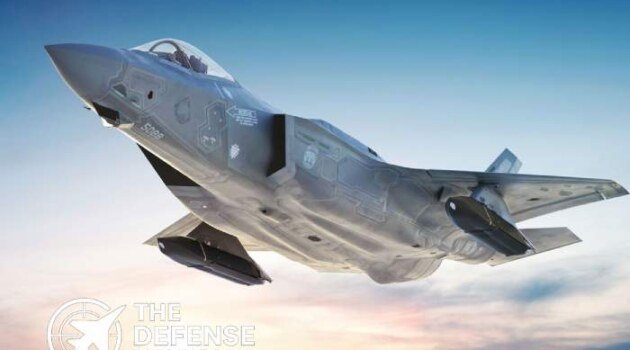
India’s procurement challenges extend beyond simple aircraft acquisition. The IAF has sought assistance from Oman and Ecuador to maintain its aging Jaguar strike aircraft fleet, and recently signed an agreement with a U.S. company to modernize approximately 100 Russian-origin MiG-29 fighters. Simultaneously, India continues evaluating options for fifth-generation stealth fighters, including the indigenous Advanced Medium Combat Aircraft (AMCA), Lockheed Martin’s F-35, and Russia’s Su-57.
The Gripen E proposal addresses multiple challenges simultaneously: expanding the number of mission-ready fighters available to squadron commanders, establishing scalable domestic production infrastructure to rebuild squadron strength, and providing a technology platform capable of long-term modernization with minimal foreign dependency.
The industrial partnership proposed by Saab would create multi-tier supply chains incorporating Indian companies across design, manufacturing, and sustainment activities. This approach mirrors India’s “Make in India” defense manufacturing objectives while potentially accelerating technology transfer beyond traditional offset arrangements.
Interoperability and Network-Centric Operations
The Gripen E’s avionics suite supports multi-sensor data fusion and networked operations through integrated communication systems including Link 16, national tactical data links, and IFF Mode 5 identification. The cockpit features a wide-area display and helmet-mounted display system presenting fused sensor data to support pilot decision-making in complex operational environments.
These capabilities enable interoperability with joint and allied forces, a consideration for the IAF given India’s growing defense partnerships with the United States, France, Israel, and other nations. The platform’s modular architecture also supports integration of indigenous sensors, weapons, and electronic warfare systems developed by India’s Defense Research and Development Organisation (DRDO) and private sector partners.
Timeline and Production Transition
According to Saab, the proposed timeline includes initial deliveries from Swedish production facilities beginning in the third year following contract signature, followed by a rapid transition to Indian manufacturing. The company has not disclosed specific annual production rates or total order quantities under discussion with Indian authorities.
The IAF’s current procurement planning includes ongoing induction of Rafale fighters under existing contracts, continued production of Tejas Mk1A variants by Hindustan Aeronautics Limited, and development of the more capable Tejas Mk2. Whether the Gripen E proposal will advance to formal competition or direct negotiation remains undisclosed by Indian defense officials.
Industry observers note that any major fighter acquisition must navigate India’s defense procurement procedures, including technical evaluations, life-cycle cost assessments, and technology transfer negotiations. Previous competitions for medium multirole combat aircraft have encountered delays and revisions, suggesting extended timelines before final contract decisions.
The Gripen E currently serves with the Swedish and Brazilian air forces, with Thailand having placed orders for the type. Saab continues marketing the platform to additional customers seeking modern multirole capabilities with lower acquisition and operating costs compared to twin-engine heavyweight fighters.
Get real time update about this post category directly on your device, subscribe now.