Europe’s combat air sector is in the middle of its most consequential upgrade cycle since the Cold War. Legacy platforms are receiving fifth-generation-grade sensors, next-generation fighters are moving from concept to metal, and export order books are the fullest they have been in decades. This list ranks the European military aircraft setting the pace in 2026 — spanning frontline fighters, tankers, transports, and the sixth-generation programs now taking shape on the factory floor.
KEY FACTS AT A GLANCE
| Aircraft | Manufacturer | Generation | Max Speed | Combat Radius | Key Sensor | Primary Armament |
|---|---|---|---|---|---|---|
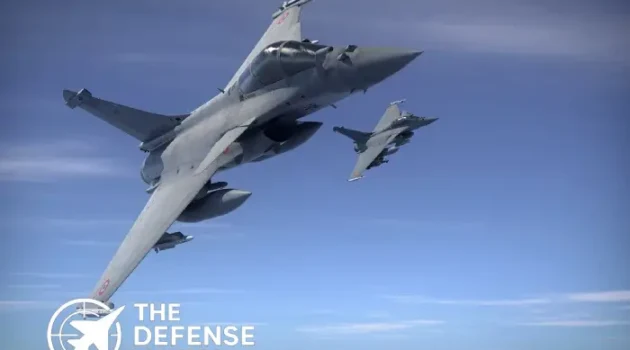
| Dassault Rafale F5 | Dassault Aviation (FR) | 4.5+ Gen | Mach 1.8 | ~1,850 km | RBE2-AESA / SPECTRA EW | Meteor, MICA NG, SCALP |
| Eurofighter Typhoon (ECRS Mk2) | BAE Systems / Leonardo / Airbus | 4.5 Gen | Mach 2.0 | ~1,390 km | ECRS Mk2 AESA (GaN) | Meteor, IRIS-T, Storm Shadow |
| Saab Gripen E/F | Saab AB (SE) | 4.5+ Gen | Mach 2.0 | ~1,500 km | Raven ES-05 AESA | Meteor, IRIS-T, RBS15 |
| GCAP/Tempest Demonstrator | Edgewing (BAE/Leonardo/JAIEC) | 6th Gen (dev.) | Classified | Classified | Distributed sensor fusion suite | Next-gen BVR + CCA control |
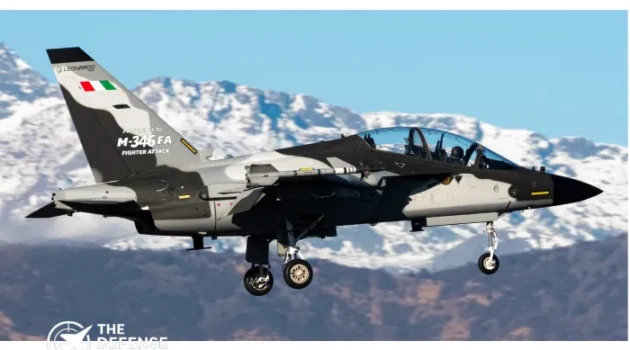
| Leonardo M-346FA | Leonardo (IT) | Light Combat | Mach 0.95 | ~556 km | Grifo-M AESA (opt.) | AIM-9, laser-guided bombs |
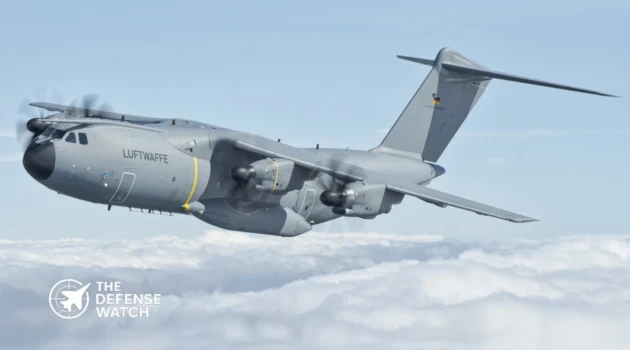
| Airbus A400M Atlas | Airbus Defence & Space | Strategic Airlift | Mach 0.72 | ~3,300 km (with load) | Defensive Aids Sub-System | N/A (airlift/tanker role) |
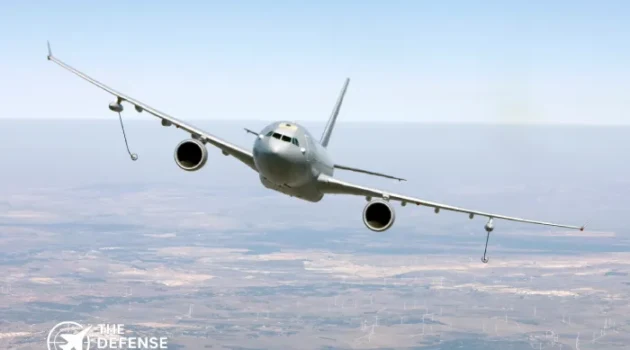
| Airbus A330 MRTT | Airbus Defence & Space | Tanker/Transport | Mach 0.86 | ~7,400 km ferry | ARBS boom + hose-drogue | N/A (refueling platform) |
| NHIndustries NH90 | Airbus/Leonardo/Fokker | Multirole Helicopter | 300 km/h | ~450 km | FLIR/EO turret, dipping sonar (NFH) | Torpedoes, ATGMs (variant-dependent) |
| Eurodrone (Airbus/Dassault/Leonardo) | Airbus DS-led consortium | MALE RPAS | 165+ km/h | 24-hr endurance | Multi-sensor EO/IR + SAR | Precision-guided munitions |
| TAI KAAN (Turkey/NATO partner) | Turkish Aerospace | 5th Gen (dev.) | Mach 2.0 (proj.) | Classified | AESA radar (dev.) | Meteor-class BVR (planned) |
Executive Summary
2026 has been a milestone year for European military aircraft. Dassault formally launched the Rafale F5 standard, pairing a new AESA radar and uprated Safran M88 engines with a stealthy unmanned combat air vehicle derived from the nEUROn demonstrator. The Eurofighter consortium secured a £453.5 million production contract for 40 ECRS Mk2 AESA radars, closing Typhoon’s longest-standing capability gap. Saab’s Gripen E/F line is scaling toward 30+ aircraft annually as Brazil, Thailand, Colombia, and Ukraine join the customer list. Most notably, the UK-Italy-Japan GCAP/Tempest program awarded a £4.6 billion detailed-design contract to Edgewing in July 2026, with a crewed demonstrator now in final assembly — cementing Europe’s arrival in sixth-generation development.
The Top 10 Ranked
1. Dassault Rafale F5 (France) — The Rafale has evolved from an “omnirole” 4.5-gen fighter into what Dassault now markets as a 2026-era digital combat hub. The F5 standard, formally launched in October 2025, adds a next-generation radar, 20%-more-thrust M88 engines, hardened data architecture for nuclear-mission assurance, and control of a stealthy Unmanned Combat Air System derived from the nEUROn program. With France’s FCAS partnership with Germany and Spain stalled, Dassault is now charting an independent roadmap toward a “Super-Rafale” and beyond, targeting F5 entry into service between 2033 and 2035.
2. Eurofighter Typhoon — ECRS Mk2 (UK/Germany/Italy/Spain) — Nine air forces now fly the Typhoon, and its biggest weakness — the aging mechanically scanned Captor-M radar — is finally being retired. The ECRS Mk2, built by Leonardo UK and integrated by BAE Systems, uses gallium-nitride AESA modules across roughly 200 degrees of field of regard, fusing air-to-air search, ground targeting, and offensive electronic-attack jamming into a single aperture. Full-rate production of 40 units for RAF Tranche 3 jets began following a January 2026 contract award, with first flight already completed.
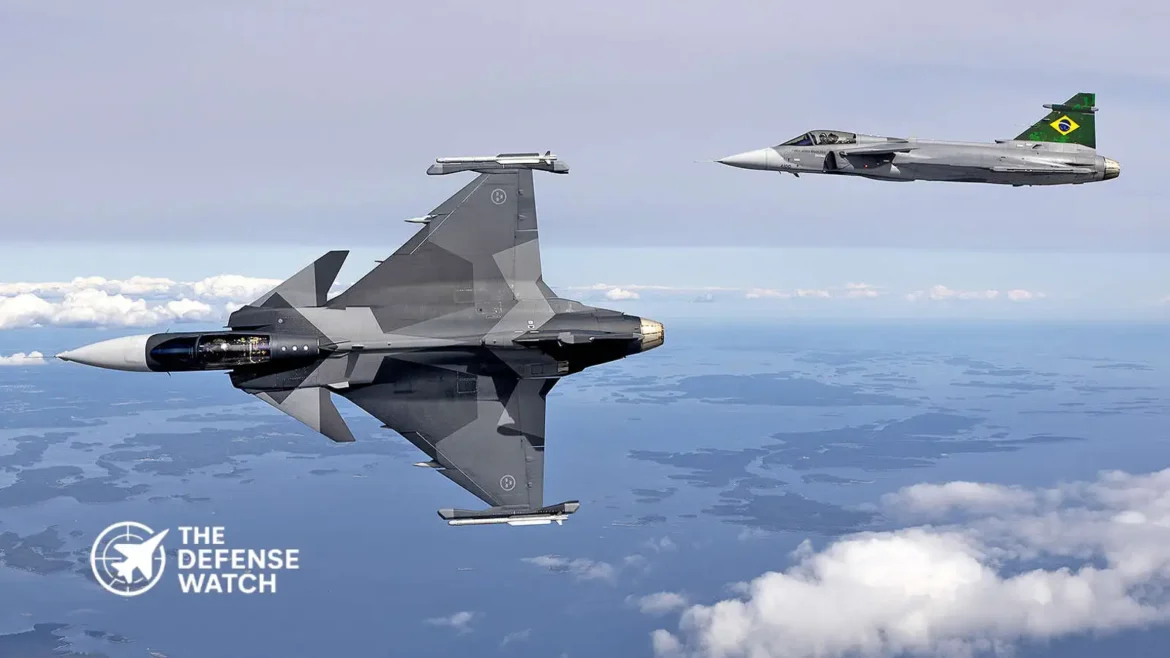
3. Saab Gripen E/F (Sweden/Brazil) — The Gripen E/F backlog has grown to 117+ firm orders across Sweden, Brazil, Colombia, and Thailand, with a Ukraine order for 16 aircraft also on the books. Brazil’s Embraer-built assembly line delivered its first locally produced Gripen E in March 2026 and rolled out the first two-seat Gripen F in June, which completed its maiden flight in August. Saab is doubling production capacity to 25–30 jets a year, powered throughout by the GE F414G engine.
4. GCAP/Tempest Demonstrator (UK, Italy, Japan) — The Global Combat Air Programme is the West’s most advanced sixth-generation effort outside the U.S. F-47. The July 2026 £4.6 billion Edgewing contract funds an 18-month detailed-design phase, and the crewed Tempest demonstrator is now in final assembly, with a flight-test aircraft targeted for 2026 and a Combat Air Demonstrator for 2027. Canada joined as the program’s first observer nation in July 2026, and entry into service remains targeted for 2035, though UK funding timelines have slipped toward the late 2030s.
5. Leonardo M-346FA (Italy) — A light combat variant of the widely exported M-346 trainer, the FA model adds an optional Grifo-M AESA radar, an integrated self-defense suite, and combat wiring for AIM-9 missiles and precision-guided munitions — making it a cost-effective bridge for air forces needing 4th-gen-adjacent capability without a full fighter budget.
6. Airbus A400M Atlas (Multinational) — Europe’s flagship strategic/tactical airlifter combines a 37-tonne payload with rough-field and low-level tactical capability, plus an air-to-air refueling role that few competitors match.
7. Airbus A330 MRTT (Multinational) — The backbone of NATO’s Multinational MRTT Fleet, offering both boom and hose-drogue refueling alongside strategic transport and medevac configurations.
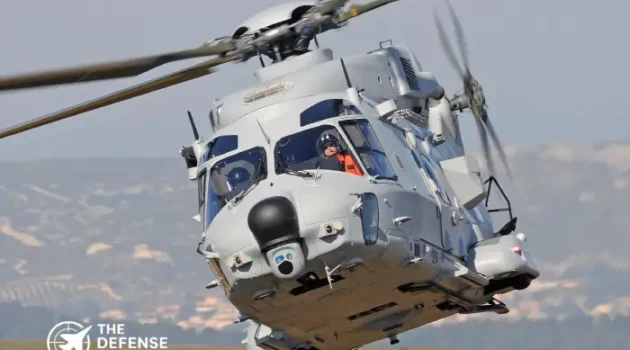
8. NHIndustries NH90 (France/Germany/Italy/Netherlands) — A fly-by-wire, composite-airframe multirole helicopter fielded in naval (NFH) and tactical transport (TTH) variants across more than a dozen European air arms and navies.
9. Eurodrone (Airbus/Dassault/Leonardo) — Europe’s sovereign MALE RPAS answer to the Reaper and Bayraktar TB2, combining twin-turboprop endurance with a certifiable design for flight in unsegregated European airspace.
10. TAI KAAN (Turkey, NATO-integrated program) — Turkey’s twin-engine fifth-generation fighter, developed with European industrial input, rounds out the list as the platform to watch as it moves toward low-rate production and its first export discussions.
Technical Deep-Dive
Airframe & Stealth
Among frontline European fighters, true low-observable shaping remains limited to the developmental GCAP/Tempest and KAAN airframes, which use faceted, blended-wing designs, internal weapons bays, and advanced RAM (radar-absorbent material) coatings to minimize frontal RCS. The Rafale and Typhoon instead rely on a “reduced-signature, not stealth” philosophy — semi-recessed weapon carriage, radar-absorbent edge treatments, and composite structures — while leaning on electronic warfare to offset a higher baseline RCS. The Gripen E takes the smallest-signature approach among legacy-generation jets, prioritizing a compact frontal cross-section and canted vertical stabilizers.
Avionics & Sensor Fusion
This is where 2026’s upgrades matter most. The Typhoon’s ECRS Mk2 and Rafale’s F5-standard radar both move to gallium-nitride AESA modules for greater power efficiency and jamming resistance, paired with wide-band IRST search-and-track and comprehensive EW suites (SPECTRA on Rafale, Praetorian DASS on Typhoon). Gripen E’s Raven ES-05 AESA and its data-link-centric “smart” avionics architecture emphasize networked situational awareness over raw radar power. GCAP’s demonstrator introduces a distributed, AI-assisted sensor-fusion backbone designed from inception to command Collaborative Combat Aircraft (CCA) drone wingmen.
Propulsion
The Rafale’s Safran M88 is being uprated for roughly 20% more thrust under F5 without airframe modification. Typhoon retains its twin EJ200 engines, while Gripen E/F relies on a single GE F414G producing around 98 kN of thrust — the same engine family powering South Korea’s KF-21. GCAP’s next-generation engine core, under development by a UK-Italy-Japan consortium, is progressing toward ground testing as part of the program’s detailed-design phase.
Strategic & Export Outlook
Export momentum favors platforms offering sovereignty without US ITAR entanglement. Rafale’s order backlog exceeds 220 aircraft, including a landmark 80-jet UAE deal, ongoing Indonesian deliveries, and advancing negotiations with India for 114 more. Gripen E/F has become the preferred choice for buyers wary of both cost and political strings, with Brazil, Colombia, Thailand, and Ukraine all committed. Typhoon’s future exports likely hinge on Turkey, the Philippines, and Gulf state fleet expansions. GCAP, meanwhile, has already attracted India and Canada as dialogue/observer partners — a sign that Europe’s next-generation fighter ecosystem is positioning itself as a genuine alternative to US programs like the F-47.
Conclusion
No single European military aircraft dominates every category in 2026 — but collectively, the continent’s combat air industry has never been more competitive. The Rafale F5 and Typhoon’s ECRS Mk2 keep 4.5-generation platforms relevant against emerging threats, Gripen E/F proves that affordability and capability aren’t mutually exclusive, and GCAP/Tempest’s rapid progress from bridging contract to demonstrator assembly shows Europe is serious about sixth-generation air dominance. The regional air balance — and NATO’s collective posture toward Russia and beyond — will be shaped as much by these programs as by any single airframe.
FAQ
Which is the most advanced modern European military aircraft in 2026?In terms of pure development stage, the GCAP/Tempest demonstrator represents Europe’s most advanced sixth-generation effort. Among fielded fighters, the Eurofighter Typhoon with ECRS Mk2 and the Rafale F5 standard are the most capable in service or entering service.
Is the Rafale F5 a fifth-generation fighter?No — the F5 is officially a 4.5+ generation upgrade, though Dassault markets its sensor fusion, AI tools, and UCAV-teaming as approaching fifth-generation functionality.
When will the GCAP Tempest enter service?The stated target is 2035, though UK funding timelines disclosed in 2026 suggest a possible slip toward the late 2030s or early 2040s.
Which European fighter has the largest export backlog in 2026?The Dassault Rafale, with a firm order backlog exceeding 220 aircraft as of mid-2026.
Key Takeaways
What defense professionals need to remember about Europe’s 2026 combat air fleet
Radar Is the Real Upgrade
ECRS Mk2 and Rafale’s next-gen AESA are the single biggest capability jumps of 2026 — not new airframes.
Gripen E Wins on Value
A 117+ aircraft backlog across four export customers proves affordability still sells in 2026.
FCAS Is Effectively Dead
France is now pursuing a national Rafale F5-to-Super-Rafale path instead of the Franco-German-Spanish FCAS.
GCAP Is Moving Fast
From a bridging contract to a £4.6B detailed-design award and demonstrator assembly in a single year.
Sovereignty Sells
Buyers wary of US ITAR restrictions are driving Rafale, Gripen, and GCAP interest from India, Canada, and the Gulf.
From the Cockpit to the Console: For strategy-gaming and esports fans, this leaderboard shift will feel familiar — it’s the defense-industry equivalent of a mid-season balance patch. The Rafale and Typhoon are the “buffed legacy units” getting stat boosts (new radar, better EW) rather than being replaced outright, while GCAP/Tempest is the new S-tier unit still in the testing server, not yet live but already reshaping how everyone else plans their loadout. Just as competitive players track patch notes to stay ahead of the meta, defense planners are now tracking radar contracts and demonstrator milestones to judge who holds the regional air-power advantage.

Britain’s combat air fleet spent much of 2025 defined by delay and uncertainty — a slipping F-35B delivery schedule, an unresolved Typhoon retirement debate, and open questions about how much of the original 138-aircraft F-35 ambition would survive contact with budget reality. Several of those threads have now resolved, at least for the moment. Here’s where things actually stand as of August 2026.
The Typhoon Fleet: A Bigger Upgrade Than Planned
The headline shift this year is on the Typhoon side. The UK’s latest Defence Investment Plan commits to upgrading all 107 of the RAF’s Tranche 2 and Tranche 3 Eurofighter Typhoons — a significant expansion from the 40 aircraft originally announced as recently as January 2026. The upgrade package, worth £5.4 billion, covers radar, communications, and software improvements, a new defensive aids system, and enhancements to weapons integration, funded across FY 2026/27 through FY 2029/30. A further £1.1 billion is earmarked to sustain the fleet into the 2040s through the Long Term Evolution programme.

Image : UK Royal Navy That investment confirms what UK defense officials have signaled for some time: the Typhoon isn’t a bridge aircraft waiting to be replaced, but the core of RAF combat air capability for roughly another 15 years, alongside the F-35B and, eventually, the GCAP/Tempest sixth-generation fighter.
The RAF’s oldest Typhoons haven’t been as fortunate. Of the original 30 Tranche 1 airframes, 26 have been scrapped, stripped for spares, or placed in storage pending disposal. Four remain in active service — but only in the Falkland Islands, flying Quick Reaction Alert duty out of Mount Pleasant Complex, where they’re scheduled to serve until 2027 before final retirement. Unlike the Tranche 2/3 fleet, the Tranche 1 jets lacked the avionics and structural provisions needed for the newer upgrade package, making retention uneconomical despite some earlier industry suggestions that BAE Systems could modernize them.
The F-35B: First Tranche Complete, Long Road Still Ahead
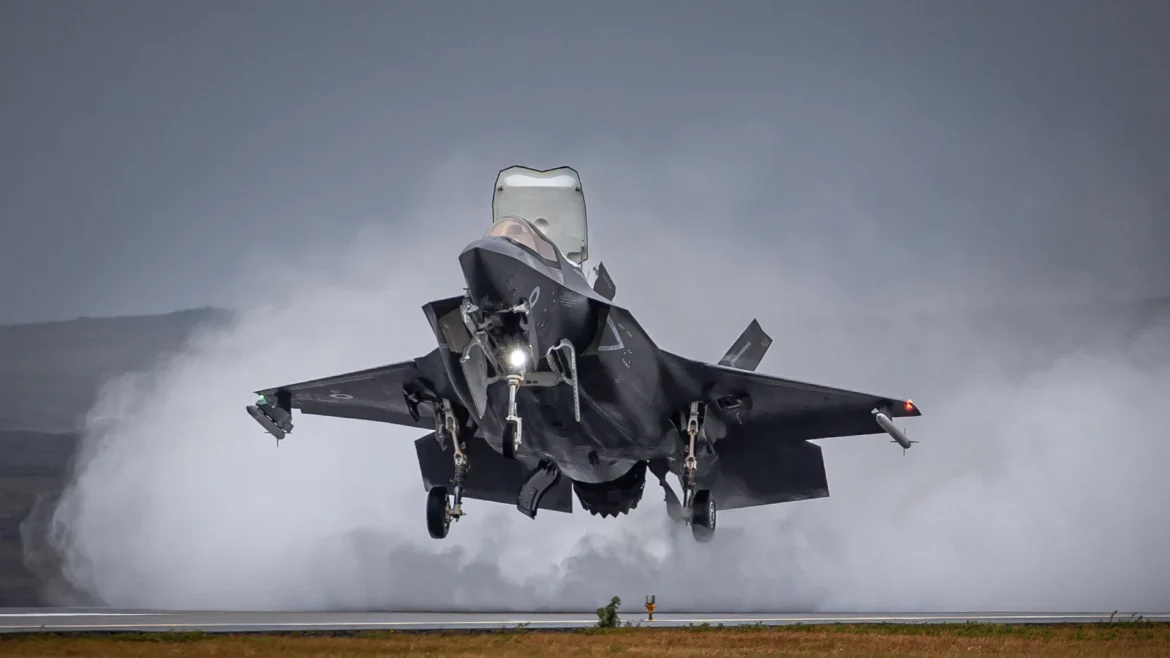
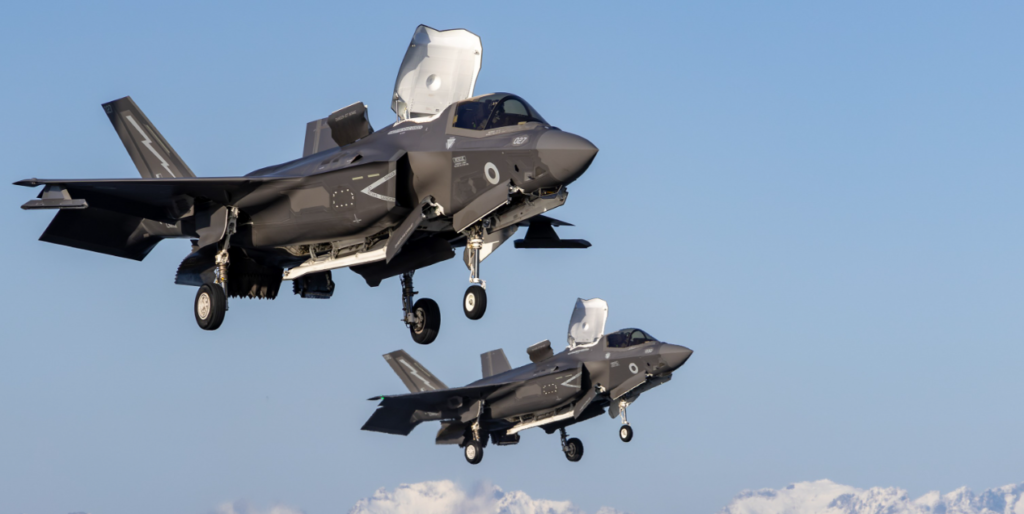
On the Lightning Force side, the UK Ministry of Defence confirmed in late March 2026 that it had received the last of its first 48 contracted F-35B Lightning IIs — a milestone reached roughly 14 years after the first STOVL F-35B was delivered to the MoD in 2012, and eight years after the type’s arrival at RAF Marham in 2018.
That completion came later than planned. Lot 17 aircraft that were originally due by the end of 2025 slipped into early 2026, with the final deliveries landing by April 2026 — a three-to-four month delay attributable to the Joint Program Office’s shared production-lot structure, under which the UK, as sole Tier One international partner, has no contractual mechanism to impose delay penalties on Lockheed Martin.
As of the completed first tranche, the RAF and Royal Navy’s joint Lightning Force — comprising 617 Squadron and 809 Naval Air Squadron, both based at RAF Marham — operates 47 F-35Bs, following the loss of one airframe. The government has confirmed a long-term delivery plan extending well beyond that first batch: a written parliamentary answer in January 2026 set expectations for the UK’s 75th F-35 to arrive by the end of 2033, with deliveries continuing steadily through the 2030s.
That trajectory still falls well short of the UK’s original ambition of 138 F-35Bs, first set out in the 2015 Strategic Defence and Security Review. Analysts and reporting have increasingly described that full order as unaffordable, with some commentary suggesting future purchases may lean toward the cheaper F-35A variant at the B model’s expense — though the UK’s carrier-based, STOVL-dependent force structure makes a wholesale pivot away from the B model operationally complicated.
What the F-35B Still Can’t Do
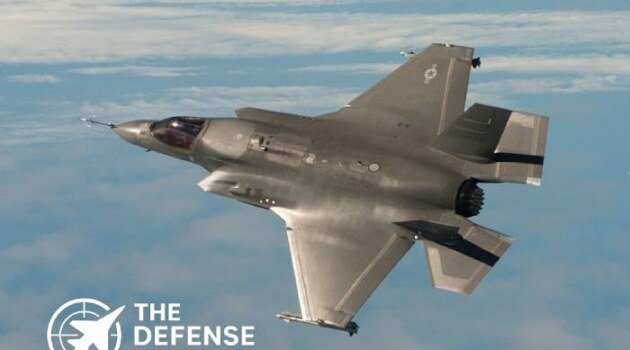
Delivery numbers are only part of the readiness picture. The RAF’s F-35Bs remain constrained by weapons integration timelines tied to the aircraft’s Block 4 software upgrade. Until Block 4 arrives, UK F-35Bs will continue operating with a more limited weapons set than originally envisioned: SPEAR 3 integration is now targeted for financial year 2028-29, and Meteor beyond-visual-range missile integration isn’t expected until the early 2030s. In the meantime, the aircraft’s stealth, sensor fusion, and electronic-attack capability are doing most of the operational work — its RAF nickname, “the assassin,” reflects that role, working alongside the Typhoon (“the thug”) in a high-low mix where the F-35B clears the way and the Typhoon brings the heavier ordnance load.
Comparing the Two Fleets
Eurofighter Typhoon F-35B Lightning II Current fleet size 111 total (107 Tranche 2/3 active + 4 Tranche 1 in Falklands) 47 operational 2026 development £5.4B upgrade covering all 107 Tranche 2/3 jets First 48-aircraft tranche completed (delayed to April 2026) Out-of-service date Tranche 1: 2027; Tranche 2/3: 2040 Deliveries continuing through the 2030s; 75th aircraft expected by end of 2033 Key limitation Tranche 1 lacked upgrade-compatible avionics Full weapons set (SPEAR 3, Meteor) awaiting Block 4, not expected until 2028-early 2030s Role Heavy ordnance, air defense, core fast-jet mass Stealth, sensor fusion, carrier operations, first-in strike FAQ
How many F-35Bs does the UK have as of 2026?The RAF and Royal Navy’s Lightning Force operates 47 F-35Bs following completion of the first 48-aircraft contracted tranche in March/April 2026, with one airframe lost. The government expects to reach 75 total F-35s by the end of 2033.
Why was the UK’s F-35B delivery delayed?Lot 17 aircraft due by the end of 2025 slipped into early 2026 due to production issues within the Joint Program Office’s shared-lot structure. Because the UK buys through annual international production lots rather than a bespoke bilateral contract, it has no financial remedy or delay penalty available against Lockheed Martin.
Is the RAF still planning to buy 138 F-35Bs?The original 2015 target of 138 F-35Bs is now widely viewed as unaffordable. Current confirmed government planning extends only to a 75th aircraft by 2033, with the long-term fleet size beyond that still unresolved.
What happened to the RAF’s Tranche 1 Typhoons?Of the original 30 Tranche 1 Typhoons, 26 have been scrapped, stripped for parts, or placed in storage. Four remain in service on Quick Reaction Alert duty in the Falkland Islands until 2027, after which the type will be fully retired from RAF service.
When will RAF F-35Bs get their full weapons package?SPEAR 3 integration is targeted for financial year 2028-29, and Meteor missile integration isn’t expected until the early 2030s, both tied to the aircraft’s Block 4 software upgrade.
How much is the UK spending to upgrade the Typhoon fleet?£5.4 billion to upgrade and sustain all 107 Tranche 2 and 3 Typhoons, spread across FY 2026/27 to FY 2029/30, plus a further £1.1 billion for long-term sustainment into the 2040s.
The Loadout Problem, In Gaming Terms
Any player who’s grinded through a live-service shooter’s weapon-unlock tree will recognize the RAF’s current F-35B situation instantly: you’ve got the platform, you’ve got the base kit, but half your loadout is still locked behind a content update that keeps slipping right. SPEAR 3 and Meteor are effectively the F-35B’s endgame weapon unlocks — available on the roadmap, promised for a future patch, but not yet in the loadout menu. Until Block 4 ships, RAF pilots are running a stealth platform that’s already lethal in its current build, but still waiting on the DLC that unlocks its full kit.