Britain’s combat air fleet spent much of 2025 defined by delay and uncertainty — a slipping F-35B delivery schedule, an unresolved Typhoon retirement debate, and open questions about how much of the original 138-aircraft F-35 ambition would survive contact with budget reality. Several of those threads have now resolved, at least for the moment. Here’s where things actually stand as of August 2026.
The Typhoon Fleet: A Bigger Upgrade Than Planned
The headline shift this year is on the Typhoon side. The UK’s latest Defence Investment Plan commits to upgrading all 107 of the RAF’s Tranche 2 and Tranche 3 Eurofighter Typhoons — a significant expansion from the 40 aircraft originally announced as recently as January 2026. The upgrade package, worth £5.4 billion, covers radar, communications, and software improvements, a new defensive aids system, and enhancements to weapons integration, funded across FY 2026/27 through FY 2029/30. A further £1.1 billion is earmarked to sustain the fleet into the 2040s through the Long Term Evolution programme.

That investment confirms what UK defense officials have signaled for some time: the Typhoon isn’t a bridge aircraft waiting to be replaced, but the core of RAF combat air capability for roughly another 15 years, alongside the F-35B and, eventually, the GCAP/Tempest sixth-generation fighter.
The RAF’s oldest Typhoons haven’t been as fortunate. Of the original 30 Tranche 1 airframes, 26 have been scrapped, stripped for spares, or placed in storage pending disposal. Four remain in active service — but only in the Falkland Islands, flying Quick Reaction Alert duty out of Mount Pleasant Complex, where they’re scheduled to serve until 2027 before final retirement. Unlike the Tranche 2/3 fleet, the Tranche 1 jets lacked the avionics and structural provisions needed for the newer upgrade package, making retention uneconomical despite some earlier industry suggestions that BAE Systems could modernize them.
The F-35B: First Tranche Complete, Long Road Still Ahead
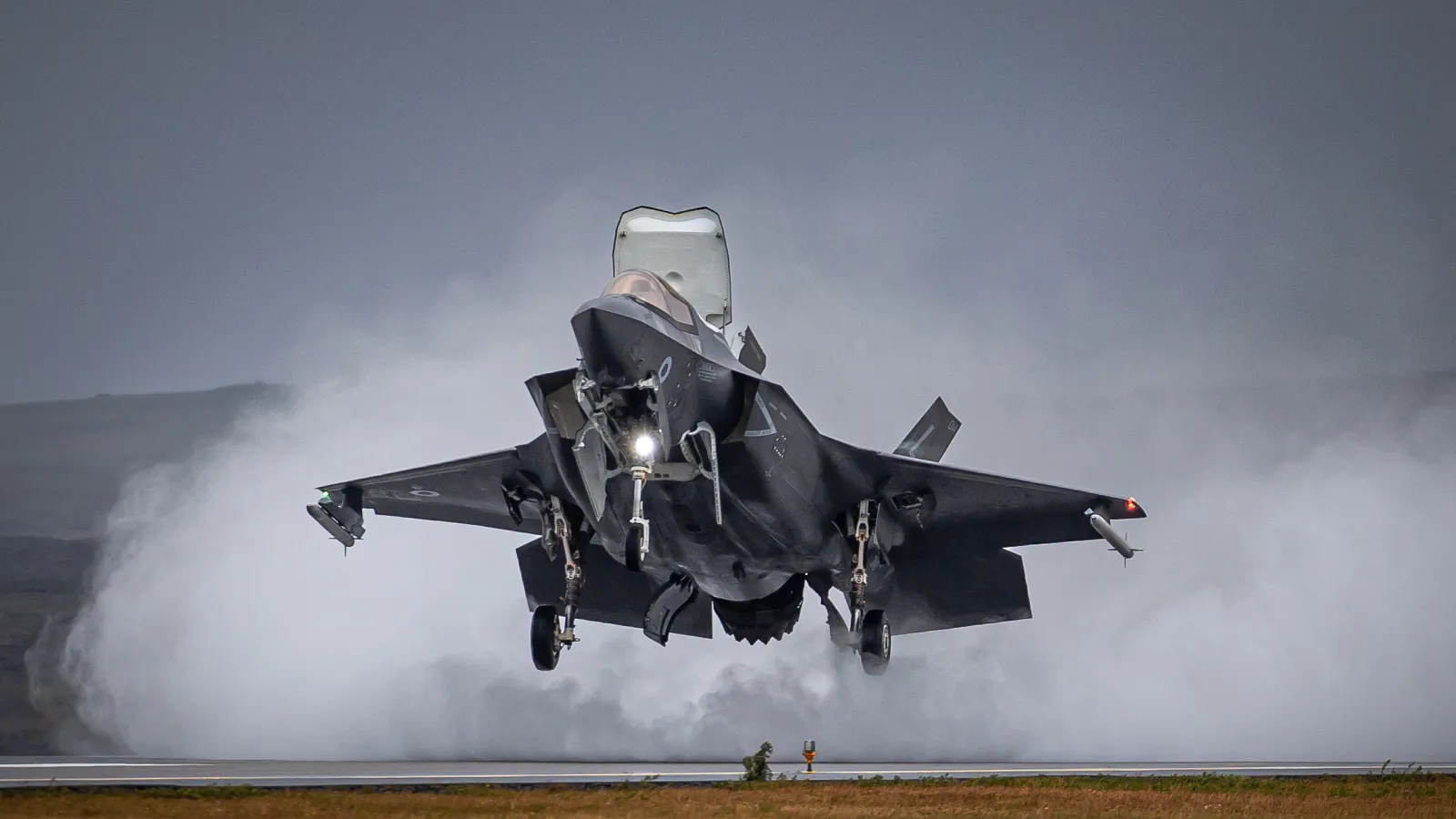
On the Lightning Force side, the UK Ministry of Defence confirmed in late March 2026 that it had received the last of its first 48 contracted F-35B Lightning IIs — a milestone reached roughly 14 years after the first STOVL F-35B was delivered to the MoD in 2012, and eight years after the type’s arrival at RAF Marham in 2018.
That completion came later than planned. Lot 17 aircraft that were originally due by the end of 2025 slipped into early 2026, with the final deliveries landing by April 2026 — a three-to-four month delay attributable to the Joint Program Office’s shared production-lot structure, under which the UK, as sole Tier One international partner, has no contractual mechanism to impose delay penalties on Lockheed Martin.
As of the completed first tranche, the RAF and Royal Navy’s joint Lightning Force — comprising 617 Squadron and 809 Naval Air Squadron, both based at RAF Marham — operates 47 F-35Bs, following the loss of one airframe. The government has confirmed a long-term delivery plan extending well beyond that first batch: a written parliamentary answer in January 2026 set expectations for the UK’s 75th F-35 to arrive by the end of 2033, with deliveries continuing steadily through the 2030s.
That trajectory still falls well short of the UK’s original ambition of 138 F-35Bs, first set out in the 2015 Strategic Defence and Security Review. Analysts and reporting have increasingly described that full order as unaffordable, with some commentary suggesting future purchases may lean toward the cheaper F-35A variant at the B model’s expense — though the UK’s carrier-based, STOVL-dependent force structure makes a wholesale pivot away from the B model operationally complicated.
What the F-35B Still Can’t Do
Delivery numbers are only part of the readiness picture. The RAF’s F-35Bs remain constrained by weapons integration timelines tied to the aircraft’s Block 4 software upgrade. Until Block 4 arrives, UK F-35Bs will continue operating with a more limited weapons set than originally envisioned: SPEAR 3 integration is now targeted for financial year 2028-29, and Meteor beyond-visual-range missile integration isn’t expected until the early 2030s. In the meantime, the aircraft’s stealth, sensor fusion, and electronic-attack capability are doing most of the operational work — its RAF nickname, “the assassin,” reflects that role, working alongside the Typhoon (“the thug”) in a high-low mix where the F-35B clears the way and the Typhoon brings the heavier ordnance load.
Comparing the Two Fleets
Eurofighter Typhoon F-35B Lightning II Current fleet size 111 total (107 Tranche 2/3 active + 4 Tranche 1 in Falklands) 47 operational 2026 development £5.4B upgrade covering all 107 Tranche 2/3 jets First 48-aircraft tranche completed (delayed to April 2026) Out-of-service date Tranche 1: 2027; Tranche 2/3: 2040 Deliveries continuing through the 2030s; 75th aircraft expected by end of 2033 Key limitation Tranche 1 lacked upgrade-compatible avionics Full weapons set (SPEAR 3, Meteor) awaiting Block 4, not expected until 2028-early 2030s Role Heavy ordnance, air defense, core fast-jet mass Stealth, sensor fusion, carrier operations, first-in strike FAQ
How many F-35Bs does the UK have as of 2026?The RAF and Royal Navy’s Lightning Force operates 47 F-35Bs following completion of the first 48-aircraft contracted tranche in March/April 2026, with one airframe lost. The government expects to reach 75 total F-35s by the end of 2033.
Why was the UK’s F-35B delivery delayed?Lot 17 aircraft due by the end of 2025 slipped into early 2026 due to production issues within the Joint Program Office’s shared-lot structure. Because the UK buys through annual international production lots rather than a bespoke bilateral contract, it has no financial remedy or delay penalty available against Lockheed Martin.
Is the RAF still planning to buy 138 F-35Bs?The original 2015 target of 138 F-35Bs is now widely viewed as unaffordable. Current confirmed government planning extends only to a 75th aircraft by 2033, with the long-term fleet size beyond that still unresolved.
What happened to the RAF’s Tranche 1 Typhoons?Of the original 30 Tranche 1 Typhoons, 26 have been scrapped, stripped for parts, or placed in storage. Four remain in service on Quick Reaction Alert duty in the Falkland Islands until 2027, after which the type will be fully retired from RAF service.
When will RAF F-35Bs get their full weapons package?SPEAR 3 integration is targeted for financial year 2028-29, and Meteor missile integration isn’t expected until the early 2030s, both tied to the aircraft’s Block 4 software upgrade.
How much is the UK spending to upgrade the Typhoon fleet?£5.4 billion to upgrade and sustain all 107 Tranche 2 and 3 Typhoons, spread across FY 2026/27 to FY 2029/30, plus a further £1.1 billion for long-term sustainment into the 2040s.
The Loadout Problem, In Gaming Terms
Any player who’s grinded through a live-service shooter’s weapon-unlock tree will recognize the RAF’s current F-35B situation instantly: you’ve got the platform, you’ve got the base kit, but half your loadout is still locked behind a content update that keeps slipping right. SPEAR 3 and Meteor are effectively the F-35B’s endgame weapon unlocks — available on the roadmap, promised for a future patch, but not yet in the loadout menu. Until Block 4 ships, RAF pilots are running a stealth platform that’s already lethal in its current build, but still waiting on the DLC that unlocks its full kit.
Executive Summary:
The UK Ministry of Defence has awarded Janes a new multi year agreement to provide access to its unclassified military intelligence databases, analytical tools, and defence assessments. The contract reflects the growing importance of open-source intelligence in modern military planning, procurement, and threat assessment.
The United Kingdom’s Ministry of Defence (MoD), through its Defence Digital organization, has awarded a new enterprise agreement to Janes for the provision of unclassified military intelligence, open-source intelligence (OSINT) databases, and analytical services. The agreement will provide defence personnel across the UK military with access to Janes’ extensive repository of global military equipment data, force structures, and defense capability assessments.
According to procurement information released by the MoD, the three year agreement is valued at approximately £17.5 million and will serve as a framework through which software licenses and intelligence products can be acquired through 2029. Defence Digital cited Janes’ proprietary databases and intellectual property as key reasons for the direct award process.
Deep Technical & Strategic Context Analysis
The significance of this agreement extends well beyond software licensing. In modern military operations, open-source intelligence has become a critical component of strategic warning, force planning, procurement analysis, and battlefield assessment. Governments increasingly rely on commercial intelligence providers to supplement classified intelligence streams with continuously updated data derived from public sources, satellite imagery, defense procurement records, industrial reporting, and geospatial information.
Janes occupies a unique position within the global defense intelligence market. Its databases track thousands of military platforms across air, land, naval, missile, space, and electronic warfare domains. The company’s structured taxonomies allow analysts to compare force capabilities, assess emerging technologies, and model military modernization trends across potential adversaries and allies alike. The MoD has previously described Janes as providing the world’s most comprehensive unclassified technical intelligence dataset covering military equipment and defense forces worldwide.
The timing is particularly notable. The UK recently consolidated multiple intelligence organizations under its new Military Intelligence Services (MIS) structure, designed to improve information sharing across the Royal Navy, British Army, Royal Air Force, UK Space Command, and joint forces. Access to standardized intelligence databases supports this broader effort to accelerate decision making and improve situational awareness across domains.
Unlike traditional classified intelligence programs, commercial OSINT solutions provide scalable access to large volumes of defense data without the security restrictions associated with highly classified systems. This enables analysts, planners, acquisition officials, and operational commanders to work from a common baseline of validated information while preserving classified resources for higher priority collection missions.
Contract Breakdown & Details
Agreement Overview
- Customer: UK Ministry of Defence, Defence Digital
- Contractor: Janes Group UK Limited
- Contract Type: Enterprise Agreement Lite
- Estimated Value: Approximately £17.5 million
- Performance Period: Three years, expected through 2029
- Primary Purpose: Access to military intelligence databases, taxonomies, and analytical tools
What Janes Will Provide
- Global military equipment databases
- Open-source intelligence repositories
- Defense capability assessments
- Military force structure analysis
- Technical intelligence on air, land, sea, and space systems
- Analytical tools and structured taxonomies for intelligence workflows
Why The Contract Was Directly Awarded
The MoD determined that Janes is the sole owner and licensor of the proprietary datasets, methodologies, and classification frameworks underpinning its intelligence products. Procurement documents stated that no reasonable alternative supplier provides equivalent coverage and depth of unclassified military intelligence.
Strategic Relevance
- Supports UK defense intelligence modernization efforts.
- Enhances decision support across joint military commands.
- Provides standardized intelligence references for procurement and operational planning.
- Expands the role of commercial intelligence in national security decision making.
- Aligns with broader UK initiatives to improve intelligence integration and multi domain operations.
Industry Implications
The award underscores a broader trend across NATO nations toward integrating commercial intelligence providers into defense ecosystems. As military organizations face increasing demands for rapid threat assessment and technology monitoring, commercial OSINT platforms are becoming indispensable complements to traditional classified intelligence capabilities.
For Janes, the agreement reinforces its position as one of the most influential defense intelligence providers serving government, military, and industry customers worldwide. The company has also expanded partnerships focused on advanced intelligence analytics and contextualized military data solutions, reflecting growing demand for faster and more integrated decision support tools.
- ► UK Nightfall procurement plans have not been formally confirmed by the British government.
- ► Parliamentary questions sought clarity on timelines and funding for Nightfall.
- ► Ministers reiterated that UK air defense capabilities are under continuous review.
- ► The debate comes amid heightened focus on integrated air and missile defense across NATO.
- ► No contract award, production schedule, or delivery timeline has been disclosed.
UK Nightfall Procurement Plans Under Scrutiny
UK Nightfall procurement plans are drawing renewed attention after the British government declined to provide detailed answers on whether it intends to move forward with the program. The issue surfaced in Parliament, where ministers were asked to clarify the status of Nightfall and the broader modernization of the United Kingdom’s ground based air defense network.
The government response offered no firm commitment, instead reiterating that air defense capabilities are kept under constant review as part of defense planning processes. No procurement timeline, contract award, or budget allocation was confirmed.
The lack of clarity comes at a time when European security dynamics remain tense following Russia’s full scale invasion of Ukraine and sustained missile and drone campaigns targeting critical infrastructure. NATO members, including the United Kingdom, have increased focus on integrated air and missile defense in response.
Parliamentary Pressure And Strategic Context
Members of Parliament raised concerns about the future of the UK Nightfall procurement plans, seeking transparency on whether the program remains active or has been delayed. The Ministry of Defence has not publicly defined Nightfall’s full technical scope, but it is understood to be associated with modernizing the British Army’s ground based air defense capabilities.
At present, the British Army fields systems such as Sky Sabre, designed to intercept aircraft, drones, and certain missile threats. However, evolving battlefield trends, particularly the widespread use of low cost drones and cruise missiles, have prompted calls for layered and scalable air defense networks.
The government’s response emphasized that capability decisions are aligned with the Integrated Review and subsequent defense updates. Yet the absence of firm statements on UK Nightfall procurement plans leaves open questions about prioritization and funding.
From an analytical standpoint, ambiguity in procurement messaging can reflect several realities. Programs may be in early assessment phases, awaiting spending review outcomes, or subject to classified capability considerations. However, in a high threat environment, delayed clarity can also complicate industry planning and allied coordination.
Air Defense Modernization And NATO Commitments
The United Kingdom is a core NATO member and contributes to alliance air policing and missile defense missions. Integrated air and missile defense has become central to NATO planning, especially after the war in Ukraine demonstrated the scale and persistence of modern aerial threats.
Across Europe, several nations have accelerated procurement of ground based air defense systems. Germany’s European Sky Shield Initiative and Poland’s missile defense expansion underscore a regional shift toward layered protection.
In this context, UK Nightfall procurement plans carry broader strategic weight. If Nightfall represents a next generation air defense capability, delays or uncertainty could affect the United Kingdom’s ability to align with allied architecture and shared defense frameworks.
Defense analysts note that air defense modernization requires long lead times, including radar integration, interceptor procurement, training pipelines, and command and control networks. Clear policy signals help sustain industrial capacity and interoperability planning.
Budget Pressures And Policy Signals
Defense procurement decisions in the United Kingdom are shaped by fiscal constraints and competing modernization priorities, including naval expansion, combat air development, and nuclear deterrent sustainment.
The Ministry of Defence has repeatedly stated that it must balance readiness with long term transformation. In that context, UK Nightfall procurement plans may be weighed against other capital intensive programs.
Still, ground based air defense has gained renewed prominence across NATO. The experience of Ukraine has reinforced that even advanced air forces require resilient, layered surface based defenses to protect infrastructure and deployed forces.
Without confirmed funding lines or contractual milestones, it remains unclear whether Nightfall is a near term acquisition, a mid term concept, or a placeholder for future capability evolution.
What Comes Next
For now, UK Nightfall procurement plans remain undefined in public documentation. Parliamentary scrutiny suggests that lawmakers are seeking greater transparency on timelines and investment levels.
Future defense spending reviews and formal procurement announcements will likely determine whether Nightfall becomes a central pillar of British air defense modernization or remains an aspirational framework.
Until then, the government’s silence underscores the tension between operational security, fiscal discipline, and the growing demand for credible air and missile defense in Europe’s evolving threat environment.
The UK Ministry of Defence (MoD) says pensions for Gurkha veterans already match those of British Army troops, pushing back on renewed calls for pension parity for older veterans. The statement comes amid campaigning by Gurkha groups and recent questions from UK lawmakers about equal treatment.
MoD Statement on Pension Alignment
In written answers published February 5, Defence Minister Louise Sandher-Jones told Parliament that the government has no new plans to change Gurkha pensions. She said Gurkhas serving since 2007 now receive pensions under the Armed Forces Pension Scheme (AFPS), the same as other UK Armed Forces personnel. For those who served prior to 2007, she added that the older Gurkha Pension Scheme (GPS) delivers outcomes “at least as good, and in many cases better” than British counterparts with the same service length.
The minister also noted ongoing engagement with Gurkha representative bodies and the Government of Nepal on a range of veteran issues.
Background on Gurkha Pension Schemes
Historically, Gurkhas served under the GPS, a scheme tied to their service conditions and retirement in Nepal. Under GPS, Gurkhas normally qualify for an immediate pension after 15 years of service. In contrast the AFPS generally requires 22 years of service for an immediate pension. This means many Gurkhas begin receiving pension payments earlier than British soldiers.
The GPS was closed in 2007 when Gurkhas were fully integrated into the AFPS framework following their basing in the United Kingdom. Those serving from that point onward can choose AFPS benefits like other UK servicemembers.
Debate on Parity and Pre-1997 Service
Campaigners have long argued that Gurkha veterans who retired before GPS integration do not receive pensions equivalent in real value to those of British Army peers. Older campaigns highlighted large gaps in payouts for those who retired before major reforms in the late 1990s, when GPS remained tied to costs of living in Nepal and Indian Army pay codes.
The MoD position rejects the idea that the scheme is unequal for most Gurkhas, pointing to the structure of earlier GPS benefits and comparisons that often show Gurkha pensions starting sooner and delivering equivalent lifetime value.
Legal and Political Context
There have been legal challenges over alleged discrimination against Gurkha pensioners, but British and European courts have repeatedly upheld MoD policy. A European human rights court in 2016 found differential treatment was objectively justified in the context of historic schemes.
In UK politics, MPs have questioned why the government will not align pre-1997 Gurkha pensions with standard British Army rates, eliciting recent ministerial responses but no commitment to change.
Wider Veteran Support
In addition to pension arrangements, the UK government has invested in enhanced support for Gurkha veterans, including pension increases and medical support investments in Nepal announced in 2019. These moves aimed to improve financial and healthcare outcomes for retired Gurkhas and families.
What Comes Next
At present there is no indication of new UK policy to adjust Gurkha pensions further. Advocacy groups for Gurkha veterans continue to press for changes, but the Ministry of Defence maintains that existing schemes provide fair treatment for most Gurkha pensioners.
The UK Ministry of Defence says the Royal Fleet Auxiliary 3-month crewing rotation is optional, not the default arrangement for personnel, according to a written response to a Member of Parliament. The clarification addresses confusion over recruitment material that implied a standard three months on, three months off pattern for RFA seafarers.
Ministry of Defence Clarifies RFA Crewing Policy
In a Feb 2026 written reply to Labour MP John McDonnell, Defence Minister Louise Sandher-Jones confirmed that only a minority of Royal Fleet Auxiliary personnel currently use the three-month on, three-month off option. As of January 2026, about 10 percent of permanent RFA staff had chosen that rotation. The three-month arrangement remains an option available to all RFA seafarers but is not the standard employment model.
The Ministry has removed wording from RFA recruitment sites that suggested the three-month cycle was the default practice, following questions raised in Parliament over accuracy of those materials.
Workforce and Recruitment Context
The RFA is a civilian-crewed fleet owned by the UK Ministry of Defence that provides logistics and operational support for the Royal Navy globally. Its mariners staff replenishment ships, amphibious support vessels and other auxiliaries but are civilian employees rather than uniformed Royal Navy sailors.
The clarification comes amid broader efforts by the Ministry of Defence to reshape RFA terms and conditions of service. Sandher-Jones told MPs that work is under way to redefine contracts, including salaried obligations, to support future recruitment and retention.
Operational Staffing and Safety Levels
Veterans Minister Al Carns responded to further parliamentary queries about how many Royal Navy tasks rely on RFA vessels. He said RFA ships are maintained at safe-crewing levels sufficient to meet all operational commitments but detailed figures are not publicly released for security reasons. The UK MoD does not record a formal split of activity between Royal Navy and RFA units.
Terms and Conditions Reform
In response to questions on pay and hours, Sandher-Jones said ongoing work to revise RFA terms and conditions will inform future pay and reward reforms. That includes establishing clearer contractual definitions across seafarer grades.
What This Means for RFA Crewing
The MoD statement makes clear the three-month rotation is not imposed as the standard working pattern across the Royal Fleet Auxiliary. Instead, it is a flexible option that some personnel choose, while many maintain other deployment lengths under existing agreements. Official recruitment messaging now reflects this clarification.
UK Ministry of Defence Says Project Grayburn to Span Pistols Through Machine Guns
The United Kingdom’s Ministry of Defence (MOD) has confirmed that Project Grayburn, the British Army’s future small arms programme, will extend beyond replacing just the service rifle to cover a full range of infantry weapons — from pistols to machine guns.
In written parliamentary answers, Defence Minister Luke Pollard reiterated that Grayburn remains in its concept phase and has not yet progressed to formal design selection or production decisions. However, the expanded scope marks a broader effort to modernise the Army’s close combat weapons portfolio under a unified framework.
Broader Scope Than Initially Publicised
Under the current structure, Grayburn is being shaped to encompass a variety of weapon types — not limited to a next-generation service rifle. Early concept work is considering multiple variants built on a common architecture that could include:
- Standard dismounted close combat rifle (intended SA80 replacement)
- Short-barrel variants
- Personal defence weapons to replace the current L22 carbine
- Generalist rifles
- Cadet weapons replacing the L98 family
Decisions on configurations such as barrel lengths and role-specific performance thresholds will be determined later in the concept phase, with user roles and expected engagement profiles guiding differentiation.
Industrial Strategy and Sovereign Supply
Pollard emphasised that a key objective is to generate skilled employment and sovereign manufacturing capability in the UK, consistent with the Defence Industrial Strategy. While the MOD has not committed to the exact level of domestic production, the focus on industrial resilience remains central as the programme evolves.
Earlier industry engagement notices under the Grayburn umbrella have highlighted the Ministry’s intent to replace the SA80 family ahead of its projected out-of-service date around 2030. Concept work is also driven by lessons from recent conflicts, including the need to defeat modern body armour and integrate advanced optics and night-vision systems.
Operational Enablers and Technology Integration
Officials have indicated that beyond lethality improvements, the programme is examining signature reduction technologies and the potential for long-term spiral development rather than single procurement events. A strategic supplier relationship, rather than discrete contracts for individual systems, is under consideration to maintain a sustained partnership with industry.
Strategic Context
Project Grayburn stands as one of the most significant British small arms modernisation efforts in decades, aiming to replace the decades-old SA80 service rifle while broadening the capability envelope across the infantry weapons suite. According to summaries of the initiative, the programme could influence up to 150,000–180,000 future small arms systems and has considered a range of calibres and modular designs — reflecting evolving NATO standards and battlefield requirements.
What’s Next
Despite the expanded scope and ongoing industrial discussions, no final design, supplier, or formal acquisition contract has yet been announced. MOD documentation indicates that further industry engagement is anticipated as the concept phase progresses, with future notices expected to outline evaluation and assessment timelines.
The UK Ministry of Defence has issued a new industry notice expanding work on Project Grayburn rifle replacement, outlining key characteristics and industry engagement as Britain prepares to replace the SA80 service rifle.
The Ministry of Defence has provided updated guidance to industry on Project Grayburn, the long-running programme to find a replacement for the British Army’s SA80A3 rifle. The move follows earlier public acknowledgements that the initiative remains in a concept phase focused on defining capability requirements and shaping future procurement.
The procurement pipeline notice from Defence Equipment and Support reinforces that no final investment decisions have been made, but it expands the scope of work being considered under Grayburn. The document highlights an emphasis on UK manufacture to strengthen sovereign supply chains, support skilled employment, and offer a platform with export potential.
Officials noted that Project Grayburn will explore a family of weapons built around a common lower receiver with multiple variants. Planned configurations include a standard dismounted close combat rifle to succeed the SA80A3, a shorter close combat variant, a personal defence weapon to replace the L22 carbine, a generalist rifle to replace the SA80A2, and a cadet rifle for training units.
The MoD also identified performance priorities likely to shape requirements. These include the ability to defeat contemporary and emerging body armour, integration with day optics and in-line night vision systems, signature reduction features on select variants, and a high degree of reliability across diverse climates and environments.
Indicative contract dates in the notice run from 2028 to 2045, but the MoD stressed these are not commitments to enter production at those points. A further information notice is expected as the concept phase progresses toward formal industry engagement.
Project Grayburn reflects broader efforts by the UK to modernize infantry small arms after decades of service by the SA80 family. Previous ministerial statements indicated the replacement programme aims to advance beyond early concept work, with details expected to be fleshed out in the Defence Investment Plan later this year.