

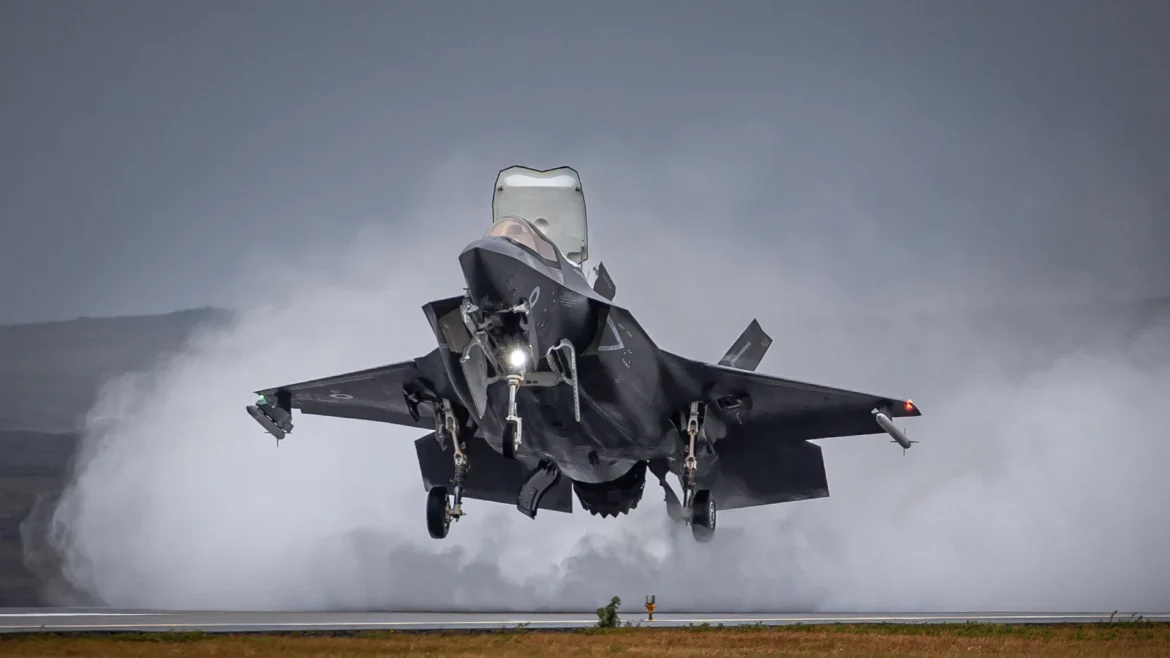
Britain’s combat air fleet spent much of 2025 defined by delay and uncertainty — a slipping F-35B delivery schedule, an unresolved Typhoon retirement debate, and open questions about how much of the original 138-aircraft F-35 ambition would survive contact with budget reality. Several of those threads have now resolved, at least for the moment. Here’s where things actually stand as of August 2026.
The Typhoon Fleet: A Bigger Upgrade Than Planned
The headline shift this year is on the Typhoon side. The UK’s latest Defence Investment Plan commits to upgrading all 107 of the RAF’s Tranche 2 and Tranche 3 Eurofighter Typhoons — a significant expansion from the 40 aircraft originally announced as recently as January 2026. The upgrade package, worth £5.4 billion, covers radar, communications, and software improvements, a new defensive aids system, and enhancements to weapons integration, funded across FY 2026/27 through FY 2029/30. A further £1.1 billion is earmarked to sustain the fleet into the 2040s through the Long Term Evolution programme.
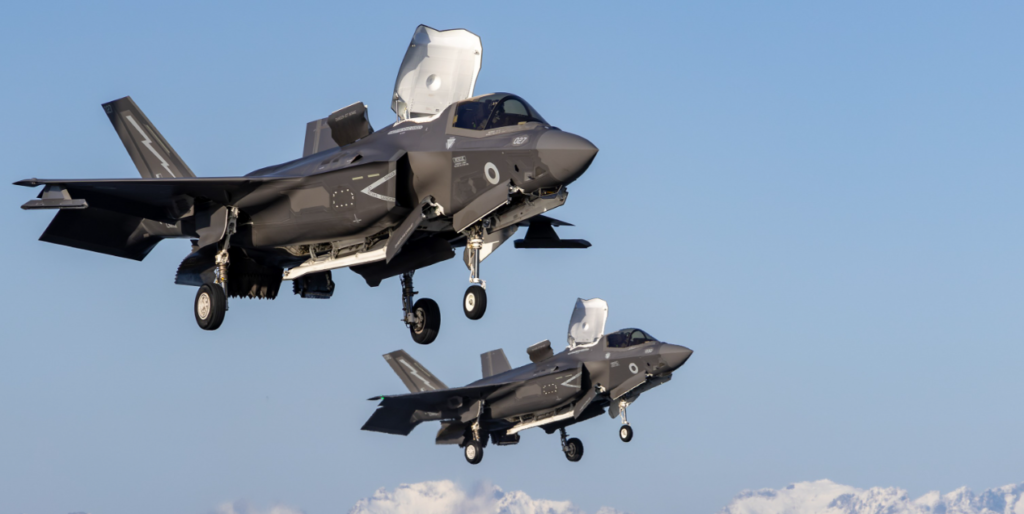
That investment confirms what UK defense officials have signaled for some time: the Typhoon isn’t a bridge aircraft waiting to be replaced, but the core of RAF combat air capability for roughly another 15 years, alongside the F-35B and, eventually, the GCAP/Tempest sixth-generation fighter.
The RAF’s oldest Typhoons haven’t been as fortunate. Of the original 30 Tranche 1 airframes, 26 have been scrapped, stripped for spares, or placed in storage pending disposal. Four remain in active service — but only in the Falkland Islands, flying Quick Reaction Alert duty out of Mount Pleasant Complex, where they’re scheduled to serve until 2027 before final retirement. Unlike the Tranche 2/3 fleet, the Tranche 1 jets lacked the avionics and structural provisions needed for the newer upgrade package, making retention uneconomical despite some earlier industry suggestions that BAE Systems could modernize them.
The F-35B: First Tranche Complete, Long Road Still Ahead
On the Lightning Force side, the UK Ministry of Defence confirmed in late March 2026 that it had received the last of its first 48 contracted F-35B Lightning IIs — a milestone reached roughly 14 years after the first STOVL F-35B was delivered to the MoD in 2012, and eight years after the type’s arrival at RAF Marham in 2018.
That completion came later than planned. Lot 17 aircraft that were originally due by the end of 2025 slipped into early 2026, with the final deliveries landing by April 2026 — a three-to-four month delay attributable to the Joint Program Office’s shared production-lot structure, under which the UK, as sole Tier One international partner, has no contractual mechanism to impose delay penalties on Lockheed Martin.
As of the completed first tranche, the RAF and Royal Navy’s joint Lightning Force — comprising 617 Squadron and 809 Naval Air Squadron, both based at RAF Marham — operates 47 F-35Bs, following the loss of one airframe. The government has confirmed a long-term delivery plan extending well beyond that first batch: a written parliamentary answer in January 2026 set expectations for the UK’s 75th F-35 to arrive by the end of 2033, with deliveries continuing steadily through the 2030s.
That trajectory still falls well short of the UK’s original ambition of 138 F-35Bs, first set out in the 2015 Strategic Defence and Security Review. Analysts and reporting have increasingly described that full order as unaffordable, with some commentary suggesting future purchases may lean toward the cheaper F-35A variant at the B model’s expense — though the UK’s carrier-based, STOVL-dependent force structure makes a wholesale pivot away from the B model operationally complicated.
What the F-35B Still Can’t Do
Delivery numbers are only part of the readiness picture. The RAF’s F-35Bs remain constrained by weapons integration timelines tied to the aircraft’s Block 4 software upgrade. Until Block 4 arrives, UK F-35Bs will continue operating with a more limited weapons set than originally envisioned: SPEAR 3 integration is now targeted for financial year 2028-29, and Meteor beyond-visual-range missile integration isn’t expected until the early 2030s. In the meantime, the aircraft’s stealth, sensor fusion, and electronic-attack capability are doing most of the operational work — its RAF nickname, “the assassin,” reflects that role, working alongside the Typhoon (“the thug”) in a high-low mix where the F-35B clears the way and the Typhoon brings the heavier ordnance load.
Comparing the Two Fleets
Eurofighter Typhoon F-35B Lightning II Current fleet size 111 total (107 Tranche 2/3 active + 4 Tranche 1 in Falklands) 47 operational 2026 development £5.4B upgrade covering all 107 Tranche 2/3 jets First 48-aircraft tranche completed (delayed to April 2026) Out-of-service date Tranche 1: 2027; Tranche 2/3: 2040 Deliveries continuing through the 2030s; 75th aircraft expected by end of 2033 Key limitation Tranche 1 lacked upgrade-compatible avionics Full weapons set (SPEAR 3, Meteor) awaiting Block 4, not expected until 2028-early 2030s Role Heavy ordnance, air defense, core fast-jet mass Stealth, sensor fusion, carrier operations, first-in strike FAQ
How many F-35Bs does the UK have as of 2026?The RAF and Royal Navy’s Lightning Force operates 47 F-35Bs following completion of the first 48-aircraft contracted tranche in March/April 2026, with one airframe lost. The government expects to reach 75 total F-35s by the end of 2033.
Why was the UK’s F-35B delivery delayed?Lot 17 aircraft due by the end of 2025 slipped into early 2026 due to production issues within the Joint Program Office’s shared-lot structure. Because the UK buys through annual international production lots rather than a bespoke bilateral contract, it has no financial remedy or delay penalty available against Lockheed Martin.
Is the RAF still planning to buy 138 F-35Bs?The original 2015 target of 138 F-35Bs is now widely viewed as unaffordable. Current confirmed government planning extends only to a 75th aircraft by 2033, with the long-term fleet size beyond that still unresolved.
What happened to the RAF’s Tranche 1 Typhoons?Of the original 30 Tranche 1 Typhoons, 26 have been scrapped, stripped for parts, or placed in storage. Four remain in service on Quick Reaction Alert duty in the Falkland Islands until 2027, after which the type will be fully retired from RAF service.
When will RAF F-35Bs get their full weapons package?SPEAR 3 integration is targeted for financial year 2028-29, and Meteor missile integration isn’t expected until the early 2030s, both tied to the aircraft’s Block 4 software upgrade.
How much is the UK spending to upgrade the Typhoon fleet?£5.4 billion to upgrade and sustain all 107 Tranche 2 and 3 Typhoons, spread across FY 2026/27 to FY 2029/30, plus a further £1.1 billion for long-term sustainment into the 2040s.
The Loadout Problem, In Gaming Terms
Any player who’s grinded through a live-service shooter’s weapon-unlock tree will recognize the RAF’s current F-35B situation instantly: you’ve got the platform, you’ve got the base kit, but half your loadout is still locked behind a content update that keeps slipping right. SPEAR 3 and Meteor are effectively the F-35B’s endgame weapon unlocks — available on the roadmap, promised for a future patch, but not yet in the loadout menu. Until Block 4 ships, RAF pilots are running a stealth platform that’s already lethal in its current build, but still waiting on the DLC that unlocks its full kit.

Executive Summary:
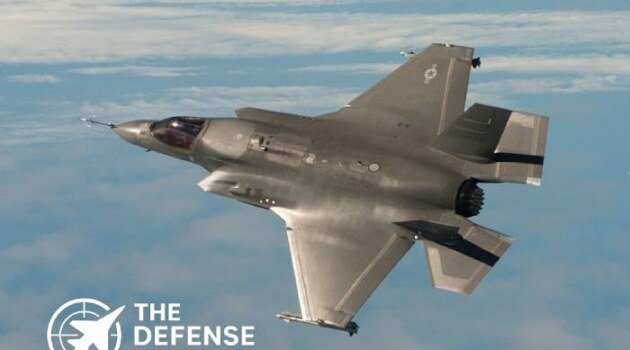
The United Kingdom has completed its initial procurement phase for the F-35B Lightning II following the arrival of the final two aircraft at RAF Marham. The milestone strengthens British carrier strike operations and supports NATO airpower integration across Europe.
UK Completes F-35B Lightning II Procurement Phase
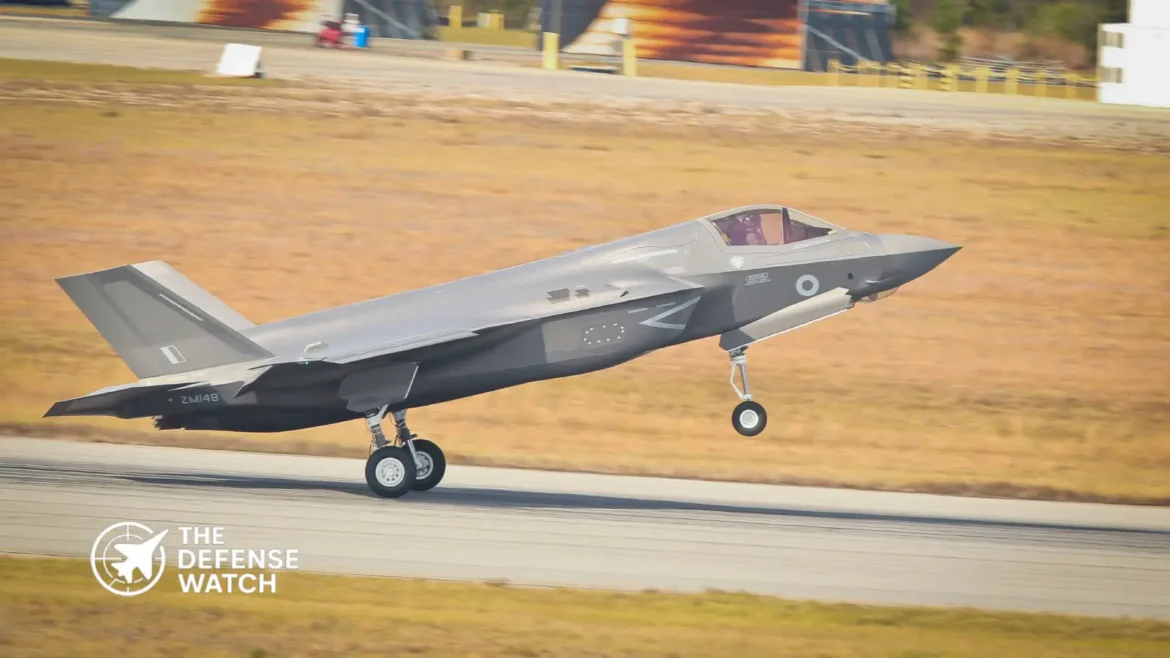
The UK F-35B Lightning II program reached a major milestone this week as the final two aircraft from the country’s initial procurement batch arrived at RAF Marham in Norfolk, England.
(adsbygoogle = window.adsbygoogle || []).push({});The aircraft, designated BK-43 and BK-44, landed at the Royal Air Force’s primary Lightning Force operating base after departing the United States. Their arrival completes the United Kingdom’s first procurement phase of the fifth-generation stealth fighter program.
The milestone comes as the UK continues expanding its carrier strike capability centered around the Royal Navy’s Queen Elizabeth-class aircraft carriers and integrated NATO air operations.
According to the UK Ministry of Defence and program reporting, the country has now received all aircraft included in its first planned acquisition tranche.
RAF Marham Strengthens Britain’s Lightning Force
RAF Marham serves as the main operating hub for the UK F-35B Lightning II fleet. The base supports frontline operations, pilot training, maintenance, logistics, and mission support for both Royal Air Force and Royal Navy aviation units.
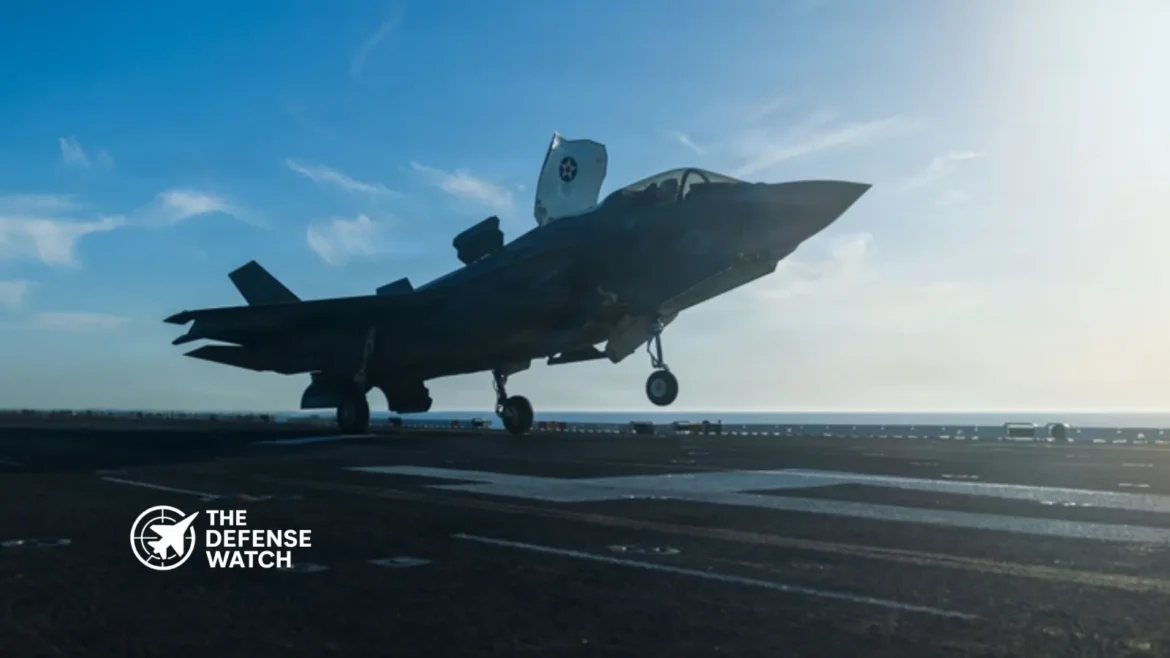
The F-35B is the short takeoff and vertical landing variant of the Joint Strike Fighter family developed by Lockheed Martin. The aircraft is designed to operate from short runways and aircraft carriers without catapult launch systems.
That capability is central to British naval aviation strategy. The aircraft regularly deploy aboard HMS Queen Elizabeth and HMS Prince of Wales, giving the UK an expeditionary airpower capability that had been absent for years after the retirement of the Harrier fleet.
(adsbygoogle = window.adsbygoogle || []).push({});British officials view the platform as a core component of future joint operations across Europe, the North Atlantic, and Indo-Pacific deployments.
Strategic Importance Beyond Fleet Numbers
While the delivery itself marks the completion of a procurement phase, the broader significance lies in operational readiness and force integration.
The UK F-35B Lightning II fleet is increasingly integrated into NATO exercises and multinational operations. British F-35Bs routinely train with U.S. Air Force, U.S. Marine Corps, and allied fifth-generation aircraft units.
The aircraft’s sensor fusion, low observable design, and data-sharing architecture provide advantages in contested airspace and maritime strike operations. British defense planners continue emphasizing interoperability with U.S. and NATO forces as Russia’s military activity and broader European security concerns drive modernization efforts.
The completion of the first procurement phase also provides greater stability for long-term force planning. RAF Marham can now focus more heavily on sustainment, pilot generation, readiness cycles, and carrier deployment preparation.
Carrier Strike Capability Remains Central
The F-35B program remains tightly linked to the UK’s carrier strike doctrine.
(adsbygoogle = window.adsbygoogle || []).push({});Unlike conventional carrier aircraft, the F-35B’s short takeoff and vertical landing configuration allows operations from the Royal Navy’s ski-jump carriers without complex launch systems. That gives Britain a flexible maritime aviation capability capable of rapid deployment in crisis regions.
The aircraft also supports intelligence gathering, electronic warfare support, precision strike, and networked targeting missions.
Recent deployments by the UK Carrier Strike Group demonstrated how the F-35B can operate alongside allied naval forces, particularly with the United States and NATO member states.
Defense analysts note that the UK continues balancing high-end air combat capability with affordability and sustainment requirements. The F-35 program has faced scrutiny globally over procurement costs and maintenance demands, but London continues treating the platform as a cornerstone of future combat aviation.
Production And International Partnership
The UK remains one of the leading international partners in the F-35 program.
British industry contributes components and systems to the global F-35 supply chain, supporting thousands of jobs across the aerospace and defense sector. Companies including BAE Systems and Rolls-Royce play major roles in manufacturing and propulsion support for the aircraft.
The F-35B used by the UK is powered by the Pratt & Whitney F135 engine, while Rolls-Royce supplies the LiftSystem technology that enables vertical landing operations.
The aircraft’s arrival at RAF Marham also reflects continued transatlantic defense cooperation between the UK and the United States under the broader Joint Strike Fighter framework.
Future Expansion Plans Remain Under Discussion
The UK government has previously stated its long-term intent to expand the Lightning fleet beyond the current procurement phase, though future acquisition schedules and quantities remain subject to defense budget planning.
(adsbygoogle = window.adsbygoogle || []).push({});British defense reviews continue evaluating future combat air requirements alongside development of the Global Combat Air Programme (GCAP), a sixth-generation fighter initiative involving the UK, Italy, and Japan.
For now, the completion of the initial UK F-35B Lightning II procurement phase marks a significant benchmark for British military aviation modernization and carrier-enabled power projection.
UK Positions Advanced Stealth Capability in Eastern Mediterranean
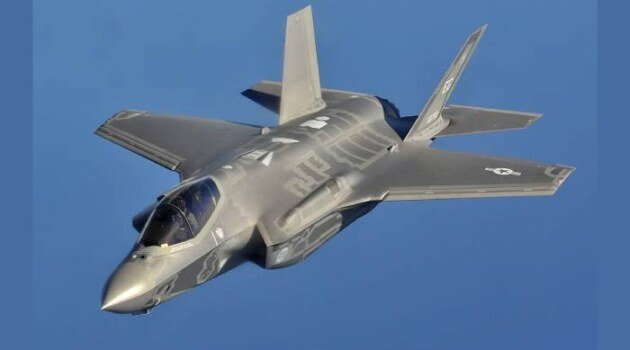
The United Kingdom has deployed six Royal Air Force F-35B Lightning II stealth fighters to RAF Akrotiri in Cyprus, significantly bolstering British military presence in the Eastern Mediterranean as regional tensions escalate following recent U.S.-Iran confrontations, according to official defense sources.The deployment of the fifth-generation stealth aircraft represents a substantial enhancement of UK military capabilities in the region, with the F-35B Lightning II fighters providing advanced reconnaissance, intelligence-gathering, and rapid-response capabilities. RAF Akrotiri, Britain’s sovereign base area on the island of Cyprus, serves as a strategic hub for operations across the Middle East and Eastern Mediterranean.
(adsbygoogle = window.adsbygoogle || []).push({});Strategic Positioning Amid Regional Instability
The UK F-35B deployment to Cyprus comes at a time of heightened security concerns across the Middle East. The timing of the deployment suggests coordination with broader Western military posturing in response to escalating tensions between the United States and Iran, though British defense officials have not explicitly linked the deployment to any specific threat scenario.
RAF Akrotiri has historically served as a critical staging point for British military operations in the region. The base’s location provides rapid access to key strategic areas across the Middle East, North Africa, and the Eastern Mediterranean. The addition of six F-35B Lightning II aircraft significantly enhances the base’s operational capabilities.
The F-35B variant is specifically designed for short takeoff and vertical landing (STOVL) operations, making it particularly suitable for deployment to forward operating bases and aircraft carriers. This capability provides the Royal Air Force with enhanced operational flexibility in austere or contested environments.
F-35B Lightning II Capabilities
The Lockheed Martin F-35B Lightning II represents the UK’s most advanced combat aircraft, combining stealth technology, advanced sensors, and network-centric warfare capabilities. Each aircraft is valued at approximately $115 million and features:
Stealth Technology: Advanced radar-absorbing materials and airframe design minimize detection by enemy air defense systems, enabling operations in contested airspace.
Sensor Fusion: Integrated sensor packages collect and process information from multiple sources, providing pilots with comprehensive situational awareness across the battlespace.
Network Integration: Data-link capabilities enable F-35B aircraft to share real-time intelligence with other platforms, including ground forces, naval vessels, and allied aircraft.
Multi-Role Capability: The aircraft can perform air-to-air combat, ground attack, reconnaissance, and electronic warfare missions using a variety of precision-guided munitions.
The UK currently operates a fleet of 48 F-35B aircraft, with plans to acquire a total of 138 aircraft over the life of the program. British F-35Bs operate from both land bases and the Royal Navy’s Queen Elizabeth-class aircraft carriers.
RAF Akrotiri’s Strategic Importance
RAF Akrotiri serves as one of the UK’s two sovereign base areas in Cyprus, established following Cypriot independence in 1960. The base occupies a critical geographic position, providing access to:
- The Eastern Mediterranean
- The Middle East theater
- North Africa
- The Black Sea region
The facility houses intelligence-gathering assets, supports aerial refueling operations, and serves as a hub for British military operations across multiple theaters. Recent infrastructure improvements have enhanced the base’s capability to support advanced combat aircraft operations.
(adsbygoogle = window.adsbygoogle || []).push({});British forces have utilized RAF Akrotiri for operations against ISIS in Iraq and Syria, humanitarian missions, and regional security operations. The base’s strategic value has increased as geopolitical tensions in the region have intensified.
Regional Security Context
The deployment occurs against a backdrop of complex security challenges across the Middle East. Recent developments include:
U.S.-Iran Relations: Ongoing tensions between Washington and Tehran have created uncertainty across the region, with concerns about potential military confrontations affecting allied planning and posture.
Maritime Security: Threats to commercial shipping in the Red Sea, Gulf of Aden, and Persian Gulf have required sustained military presence from Western nations.
Syrian Conflict: Continued instability in Syria maintains regional security concerns, with multiple international actors maintaining military presence.
Eastern Mediterranean Energy: Competing claims over natural gas resources in the Eastern Mediterranean have created additional friction points between regional actors.
British defense analysts note that the F-35B deployment enhances the UK’s ability to respond to multiple contingencies across this complex security environment.
(adsbygoogle = window.adsbygoogle || []).push({});UK Defense Posture and Capabilities
The deployment aligns with the UK’s Integrated Review of Security, Defence, Development and Foreign Policy, which emphasized a “tilt” toward the Indo-Pacific while maintaining commitments to Euro-Atlantic security and Middle Eastern stability.
Britain maintains significant military capabilities in the region through:
- Permanent facilities at RAF Akrotiri
- Naval presence in regional waters
- Special operations forces deployments
- Intelligence and surveillance assets
- Partnerships with regional allies
The F-35B deployment demonstrates the UK’s commitment to maintaining a credible military presence despite budgetary pressures and competing global priorities.
Allied Coordination and Interoperability
The UK F-35B deployment to Cyprus likely involves coordination with NATO allies and regional partners. The F-35 program is a multinational effort involving nine partner nations, with extensive interoperability built into the aircraft’s design.
British F-35B aircraft can integrate seamlessly with U.S. and other allied F-35 operations, sharing sensor data and coordinating mission planning through secure communication networks. This interoperability enhances the effectiveness of allied operations across the region.
The deployment may also involve coordination with U.S. forces operating from regional bases, including those in Qatar, Bahrain, and the United Arab Emirates. Combined operations enhance deterrence and provide flexible response options to security challenges.
Operational Considerations
Military analysts note several operational factors relevant to the F-35B deployment:
Maintenance and Logistics: Sustaining F-35B operations requires sophisticated maintenance infrastructure and supply chains. RAF Akrotiri’s existing facilities have been upgraded to support fifth-generation aircraft operations.
Pilot and Crew Readiness: RAF F-35B pilots undergo extensive training, including operations from both land bases and aircraft carriers. The Cyprus deployment provides valuable operational experience in a strategically important theater.
(adsbygoogle = window.adsbygoogle || []).push({});Mission Profiles: Potential missions could include reconnaissance, air patrols, training exercises with regional partners, and maintaining readiness for contingency operations.
Duration: Defense officials have not specified the duration of the deployment, with rotational patterns likely depending on evolving regional security requirements.
Strategic Implications
The deployment of six RAF F-35B stealth fighters to Cyprus carries several strategic implications:
Deterrence: The presence of advanced stealth aircraft enhances Western military capabilities in the region, potentially deterring adversary actions.
Reassurance: Allied nations and partners may view the deployment as evidence of sustained British commitment to regional security.
Flexibility: F-35B capabilities provide British commanders with options for responding to a range of security scenarios, from surveillance to combat operations.
Signal: The deployment sends a message about UK willingness to maintain forward military presence despite domestic political and economic challenges.
Defense experts note that stealth aircraft deployments carry particular significance due to their ability to operate in contested environments where conventional aircraft face greater risks.
Looking Ahead
The UK’s deployment of F-35B Lightning II aircraft to RAF Akrotiri represents a significant commitment of advanced military assets to the Eastern Mediterranean theater. As regional security dynamics continue to evolve, the presence of British stealth fighters provides London with enhanced options for protecting national interests and supporting allied operations.
(adsbygoogle = window.adsbygoogle || []).push({});The deployment underscores the enduring strategic importance of RAF Akrotiri and the UK’s determination to maintain a credible military presence in a region of vital global importance. Whether this deployment represents a temporary surge or the beginning of a sustained forward presence remains to be seen, with decisions likely dependent on evolving threat assessments and diplomatic developments.