
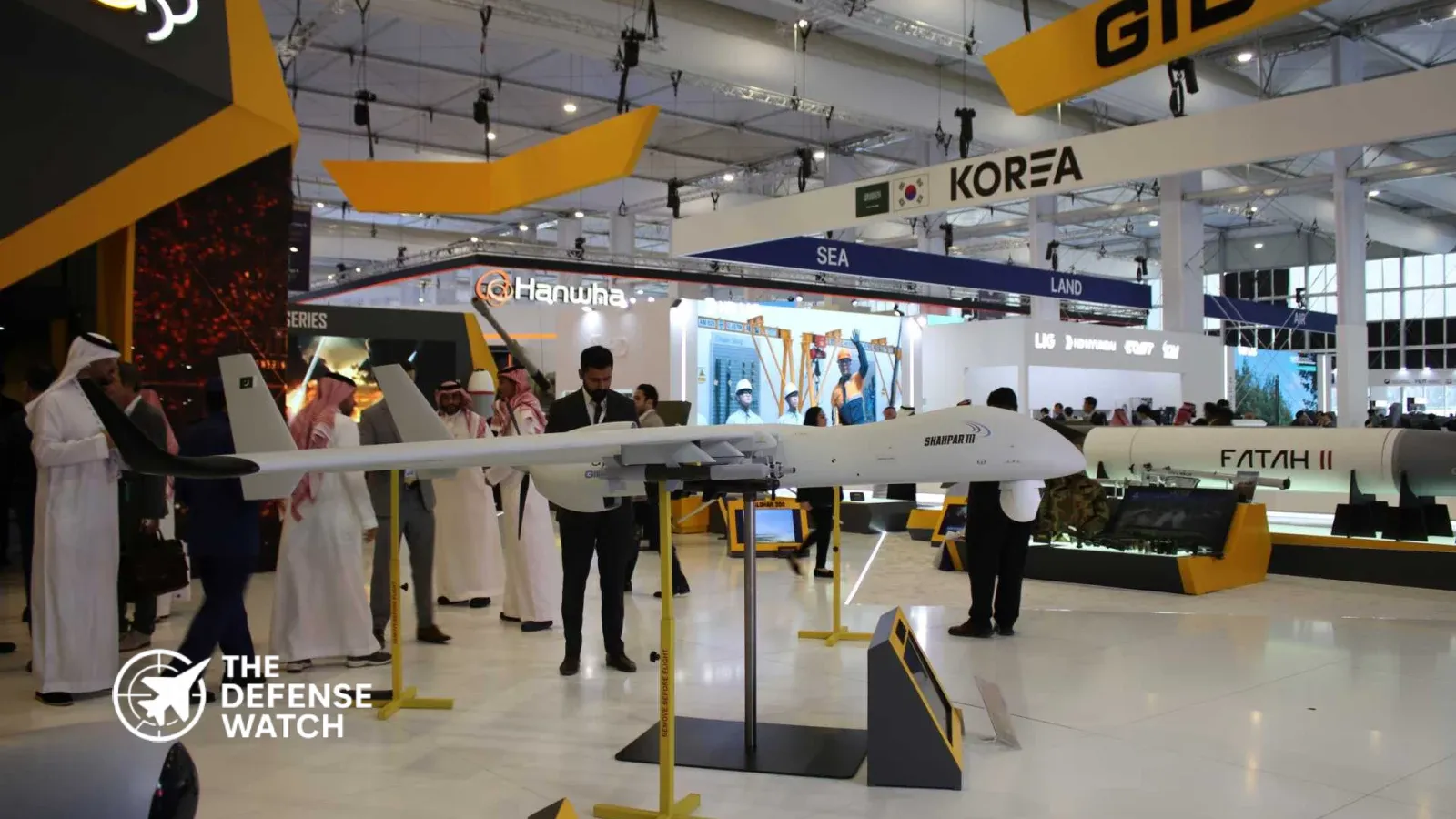
Pakistan Confirms Shahpar III MALE Combat Drone Program
Pakistan has confirmed that the Shahpar III MALE combat drone is scheduled to conduct its first flight test by the end of 2026, marking a key milestone in the country’s ongoing unmanned aerial vehicle modernization efforts. The announcement underscores Islamabad’s focus on expanding indigenous intelligence, surveillance, reconnaissance, and strike capabilities using domestically developed platforms.
The confirmation was reported during World Defense Show 2026 and later detailed by Army Recognition, citing official Pakistani sources involved in the program. The Shahpar III is being positioned as the next evolution of Pakistan’s locally developed unmanned systems, following earlier Shahpar variants already in service.
Shahpar III Program Background
The Shahpar III is a medium altitude long endurance unmanned combat aerial vehicle designed to meet Pakistan’s growing operational requirements across surveillance, reconnaissance, and precision strike missions. It builds on experience gained from the Shahpar II, which has been operated by the Pakistan Armed Forces for intelligence and battlefield monitoring roles.
According to information released at World Defense Show 2026, Shahpar III is intended to offer extended endurance, higher payload capacity, and improved mission flexibility compared to its predecessors. Pakistani officials described the platform as a domestically developed system tailored for regional operational environments and multi mission use.
The program reflects Pakistan’s broader defense policy emphasis on indigenous development to reduce reliance on foreign suppliers and mitigate export restrictions that often affect advanced UAV acquisitions.
Design And Capability Overview
While detailed performance specifications remain limited, officials have indicated that Shahpar III falls within the MALE category, aligning it with systems such as the Turkish Bayraktar TB2 and Chinese Wing Loong series in terms of mission profile.
The drone is expected to support a mix of electro optical and infrared sensors, synthetic aperture radar options, and secure data link systems for beyond line of sight operations. Its design is reportedly optimized for long endurance patrols, border surveillance, and precision engagement tasks when fitted with compatible munitions.
Pakistani defense sources have emphasized that Shahpar III is being designed with modular payload integration in mind, allowing the platform to adapt to evolving operational requirements without extensive airframe changes.
Strategic Importance For Pakistan
The Shahpar III program carries strategic significance for Pakistan’s defense posture, particularly in the context of regional security dynamics in South Asia. MALE class drones provide persistent surveillance and strike options at lower cost and risk compared to manned aircraft, a factor increasingly valued by modern militaries.
By advancing an indigenous MALE combat drone, Pakistan aims to strengthen its autonomous ISR capabilities while enhancing deterrence through precision strike options. The program also supports the development of domestic aerospace engineering expertise and supply chains, which Pakistani officials have described as a long term national priority.
The planned first flight by the end of 2026 suggests that the program has moved beyond conceptual and early design phases into advanced development and integration.
Position Within Pakistan’s UAV Portfolio
Shahpar III is expected to complement, rather than replace, existing UAV assets operated by Pakistan. The country currently fields a mix of indigenous and imported unmanned systems for surveillance and tactical missions.
Defense analysts note that Shahpar III’s MALE classification places it in a higher capability tier than many tactical drones, potentially enabling longer range operations and greater persistence over areas of interest. This aligns with Pakistan’s stated goal of maintaining situational awareness across its borders and key maritime approaches.
The program also reflects lessons learned from global conflicts, where MALE drones have demonstrated operational value in intelligence gathering and precision engagement roles.
Timeline And Next Steps
Pakistani officials have stated that the first flight test is targeted for completion by the end of 2026. Following initial flight trials, the program is expected to move into a phased testing and evaluation process, including sensor integration, endurance validation, and mission system trials.
No official timeline has been released regarding operational induction, export prospects, or serial production. Authorities have stressed that development milestones will be driven by testing outcomes and operational requirements rather than fixed calendar targets.
Regional And Global Context
The Shahpar III announcement comes amid a broader expansion of UAV programs across Asia and the Middle East, where MALE platforms are increasingly seen as essential components of modern airpower. Countries are investing heavily in indigenous drone development to address sovereignty concerns and ensure long term operational availability.
Pakistan’s confirmation of the Shahpar III first flight timeline places it among a growing group of nations pursuing self sufficient unmanned combat capabilities tailored to national defense needs.
Get real time update about this post category directly on your device, subscribe now.
