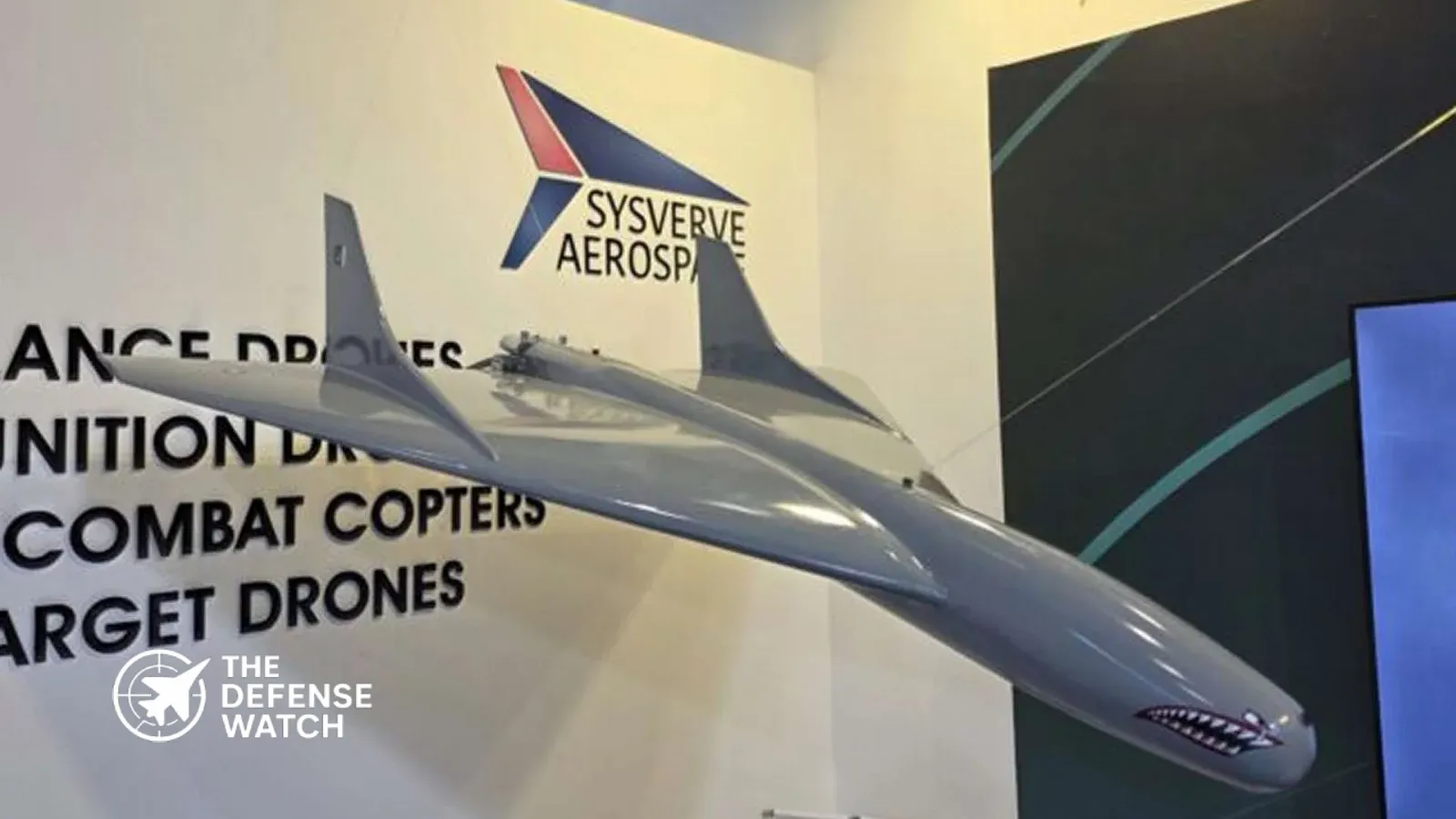
Pakistan Mudamir LR AI Drone Strengthens Maritime Strike Capabilities
Pakistan Mudamir LR AI drone marks a significant step in the country’s evolving unmanned warfare strategy, introducing a long-range, AI-guided platform designed for maritime strike and sea denial missions.
The Mudamir LR is designed to operate at ranges of up to 600 kilometers, enabling deep-strike capability against naval targets while remaining outside traditional defensive envelopes. The system reflects Pakistan’s growing emphasis on autonomous systems in contested maritime environments.
- Pakistan has unveiled the Mudamir LR, an AI-guided naval strike drone with a reported range of 600 kilometers.
- The system is designed for sea denial missions targeting enemy surface vessels in contested maritime zones.
- Mudamir LR integrates artificial intelligence for autonomous navigation and target engagement.
- The drone enhances Pakistan’s ability to conduct stand-off maritime strikes without risking manned platforms.
- The development reflects broader global trends toward unmanned and AI-enabled naval warfare systems.
A New Layer in Pakistan’s Maritime Strategy
The Pakistan Mudamir LR drone is positioned as a force multiplier for naval operations, particularly in the Arabian Sea where maritime competition continues to intensify. With a 600 km operational range, the system allows Pakistan to project strike capability far beyond its coastline.
Unlike conventional anti-ship missiles, the Mudamir LR introduces persistence and adaptability. Its AI-enabled guidance system is designed to improve target identification and navigation in complex environments, potentially reducing reliance on external guidance systems such as GPS in contested scenarios.
This aligns with a broader doctrinal shift toward distributed lethality, where smaller, unmanned platforms can impose disproportionate costs on larger naval assets.
AI Integration and Operational Flexibility
A defining feature of the Pakistan Mudamir LR drone is its use of artificial intelligence for mission execution. While specific technical details remain limited, AI integration typically supports functions such as autonomous flight path optimization, threat avoidance, and terminal targeting.
In operational terms, this could allow the drone to adapt mid-mission, respond to dynamic threats, and maintain effectiveness in electronic warfare environments. These capabilities are increasingly relevant as modern naval battlefields become more contested and sensor-dense.
The use of AI also suggests a move toward reducing operator workload and enabling scalable deployment of unmanned systems in swarm or coordinated attack roles, although no such capability has been officially confirmed.
Expanding Sea Denial Capabilities
The Pakistan Mudamir LR drone appears tailored for sea denial missions, a strategy focused on restricting an adversary’s freedom of movement rather than achieving full maritime control.
By combining long range with autonomous targeting, the drone can threaten high-value naval assets such as frigates, destroyers, or logistics vessels. This creates operational uncertainty for adversaries and forces them to allocate additional resources to counter unmanned threats.
From a cost perspective, such systems can offer a more economical alternative to traditional naval strike platforms, allowing for greater force distribution and resilience.
Regional and Global Context
The unveiling of the Pakistan Mudamir LR drone comes amid a global surge in unmanned maritime strike systems. Countries including the United States, China, and Iran have all accelerated development of UAVs and unmanned surface vessels for naval warfare.
In South Asia, maritime competition is increasingly shaped by long-range precision strike capabilities and surveillance systems. Pakistan’s investment in AI-enabled drones suggests a focus on asymmetric capabilities to offset conventional naval imbalances.
This development also reflects lessons learned from recent conflicts, where drones have demonstrated effectiveness in both reconnaissance and strike roles against naval and land-based targets.
Operational Implications
The introduction of the Pakistan Mudamir LR drone could alter tactical planning in regional maritime operations. Its range allows it to operate from inland or coastal launch sites while still reaching key sea lanes and chokepoints.
For naval forces operating in the region, this increases the need for layered air defense systems capable of detecting and intercepting low-observable UAVs. It also underscores the growing importance of electronic warfare and counter-drone technologies.
While the full capabilities of the system remain undisclosed, its introduction signals a clear intent to expand unmanned strike options within Pakistan’s naval doctrine.
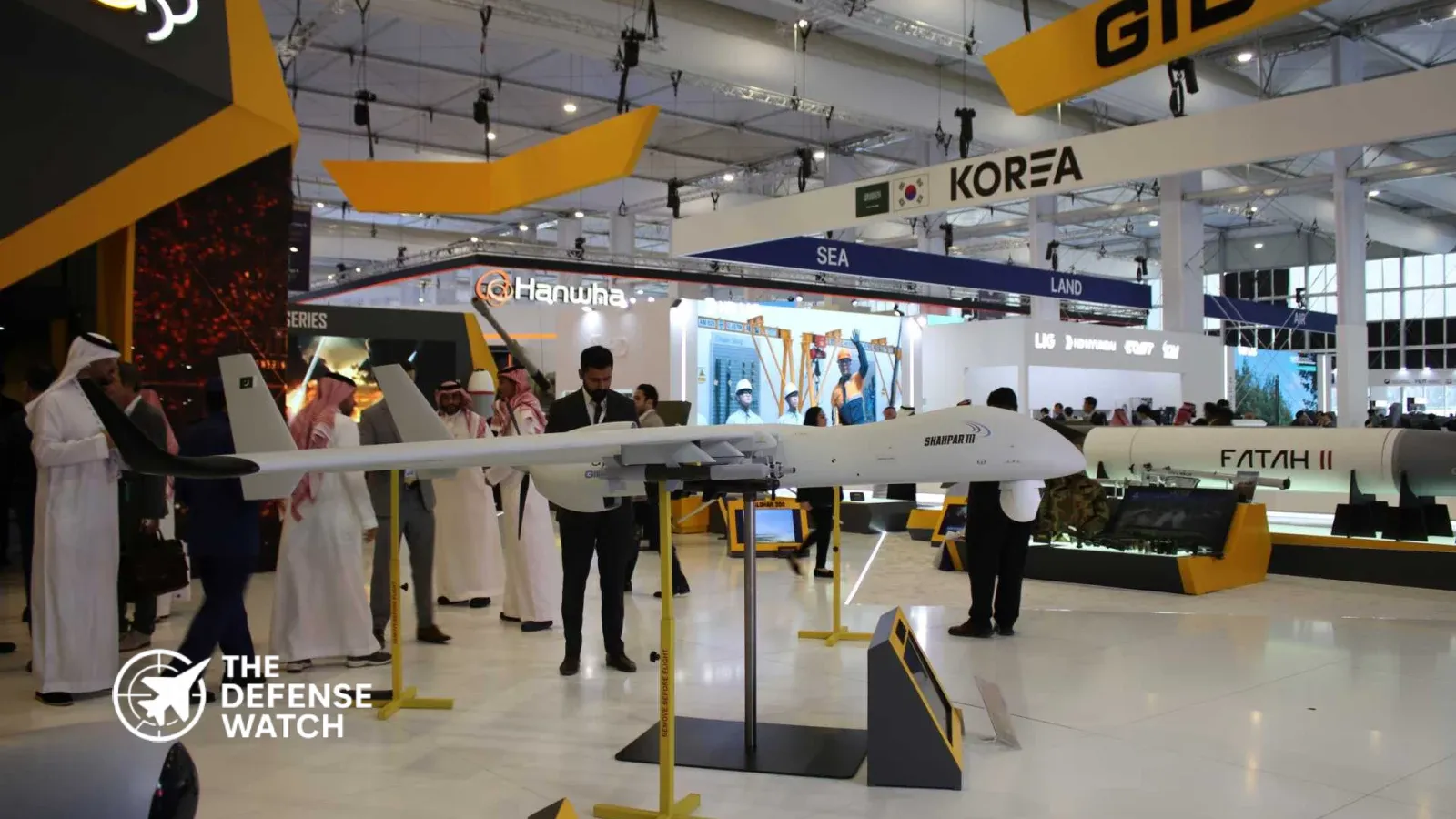
Pakistan Confirms Shahpar III MALE Combat Drone Program
Pakistan has confirmed that the Shahpar III MALE combat drone is scheduled to conduct its first flight test by the end of 2026, marking a key milestone in the country’s ongoing unmanned aerial vehicle modernization efforts. The announcement underscores Islamabad’s focus on expanding indigenous intelligence, surveillance, reconnaissance, and strike capabilities using domestically developed platforms.
The confirmation was reported during World Defense Show 2026 and later detailed by Army Recognition, citing official Pakistani sources involved in the program. The Shahpar III is being positioned as the next evolution of Pakistan’s locally developed unmanned systems, following earlier Shahpar variants already in service.
Shahpar III Program Background
The Shahpar III is a medium altitude long endurance unmanned combat aerial vehicle designed to meet Pakistan’s growing operational requirements across surveillance, reconnaissance, and precision strike missions. It builds on experience gained from the Shahpar II, which has been operated by the Pakistan Armed Forces for intelligence and battlefield monitoring roles.
According to information released at World Defense Show 2026, Shahpar III is intended to offer extended endurance, higher payload capacity, and improved mission flexibility compared to its predecessors. Pakistani officials described the platform as a domestically developed system tailored for regional operational environments and multi mission use.
The program reflects Pakistan’s broader defense policy emphasis on indigenous development to reduce reliance on foreign suppliers and mitigate export restrictions that often affect advanced UAV acquisitions.
Design And Capability Overview
While detailed performance specifications remain limited, officials have indicated that Shahpar III falls within the MALE category, aligning it with systems such as the Turkish Bayraktar TB2 and Chinese Wing Loong series in terms of mission profile.
The drone is expected to support a mix of electro optical and infrared sensors, synthetic aperture radar options, and secure data link systems for beyond line of sight operations. Its design is reportedly optimized for long endurance patrols, border surveillance, and precision engagement tasks when fitted with compatible munitions.
Pakistani defense sources have emphasized that Shahpar III is being designed with modular payload integration in mind, allowing the platform to adapt to evolving operational requirements without extensive airframe changes.
Strategic Importance For Pakistan
The Shahpar III program carries strategic significance for Pakistan’s defense posture, particularly in the context of regional security dynamics in South Asia. MALE class drones provide persistent surveillance and strike options at lower cost and risk compared to manned aircraft, a factor increasingly valued by modern militaries.
By advancing an indigenous MALE combat drone, Pakistan aims to strengthen its autonomous ISR capabilities while enhancing deterrence through precision strike options. The program also supports the development of domestic aerospace engineering expertise and supply chains, which Pakistani officials have described as a long term national priority.
The planned first flight by the end of 2026 suggests that the program has moved beyond conceptual and early design phases into advanced development and integration.
Position Within Pakistan’s UAV Portfolio
Shahpar III is expected to complement, rather than replace, existing UAV assets operated by Pakistan. The country currently fields a mix of indigenous and imported unmanned systems for surveillance and tactical missions.
Defense analysts note that Shahpar III’s MALE classification places it in a higher capability tier than many tactical drones, potentially enabling longer range operations and greater persistence over areas of interest. This aligns with Pakistan’s stated goal of maintaining situational awareness across its borders and key maritime approaches.
The program also reflects lessons learned from global conflicts, where MALE drones have demonstrated operational value in intelligence gathering and precision engagement roles.
Timeline And Next Steps
Pakistani officials have stated that the first flight test is targeted for completion by the end of 2026. Following initial flight trials, the program is expected to move into a phased testing and evaluation process, including sensor integration, endurance validation, and mission system trials.
No official timeline has been released regarding operational induction, export prospects, or serial production. Authorities have stressed that development milestones will be driven by testing outcomes and operational requirements rather than fixed calendar targets.
Regional And Global Context
The Shahpar III announcement comes amid a broader expansion of UAV programs across Asia and the Middle East, where MALE platforms are increasingly seen as essential components of modern airpower. Countries are investing heavily in indigenous drone development to address sovereignty concerns and ensure long term operational availability.
Pakistan’s confirmation of the Shahpar III first flight timeline places it among a growing group of nations pursuing self sufficient unmanned combat capabilities tailored to national defense needs.
Pakistan Combat-Tested Jets Boost Weapons Sales
Pakistan’s combat-tested jets and military gear are drawing interest from at least 13 countries, as Islamabad pushes defense exports following a major 2025 air conflict with India, Reuters reports.
Talks with six to eight nations are at advanced stages, focused on exports of the JF-17 fighter developed with China, training aircraft, drones, and other weapons systems, according to multiple Pakistani sources familiar with the negotiations.
Rising Interest in Pakistani Hardware
Sources say Pakistan’s defense industry is fielding queries from countries in the Middle East, Africa, and Asia, including Saudi Arabia, Indonesia, Morocco, Ethiopia, and Nigeria, with formal talks also under way with Bangladesh and Iraq.
The JF-17 Block III, a multi-role combat aircraft, features in most discussions, along with training platforms, reconnaissance and attack drones, air defense gear, and armored vehicles.
Production and Cost Factors
Pakistan’s annual JF-17 output stands near 20 aircraft, but officials aim to increase capacity by late 2027 to meet potential export demand.
The jets’ lower acquisition cost, about 30 million to 40 million USD each, positions them as a budget-friendly alternative to pricier Western types.
Strategic Context
Analysts link the sales push to broader shifts in global arms sourcing, with several nations seeking non-Western suppliers amid supply chain disruptions and regional conflicts.
Pakistan’s effort to expand exports comes with geopolitical hurdles, including possible objections from China on certain deals and arms embargo constraints for some prospective buyers.