
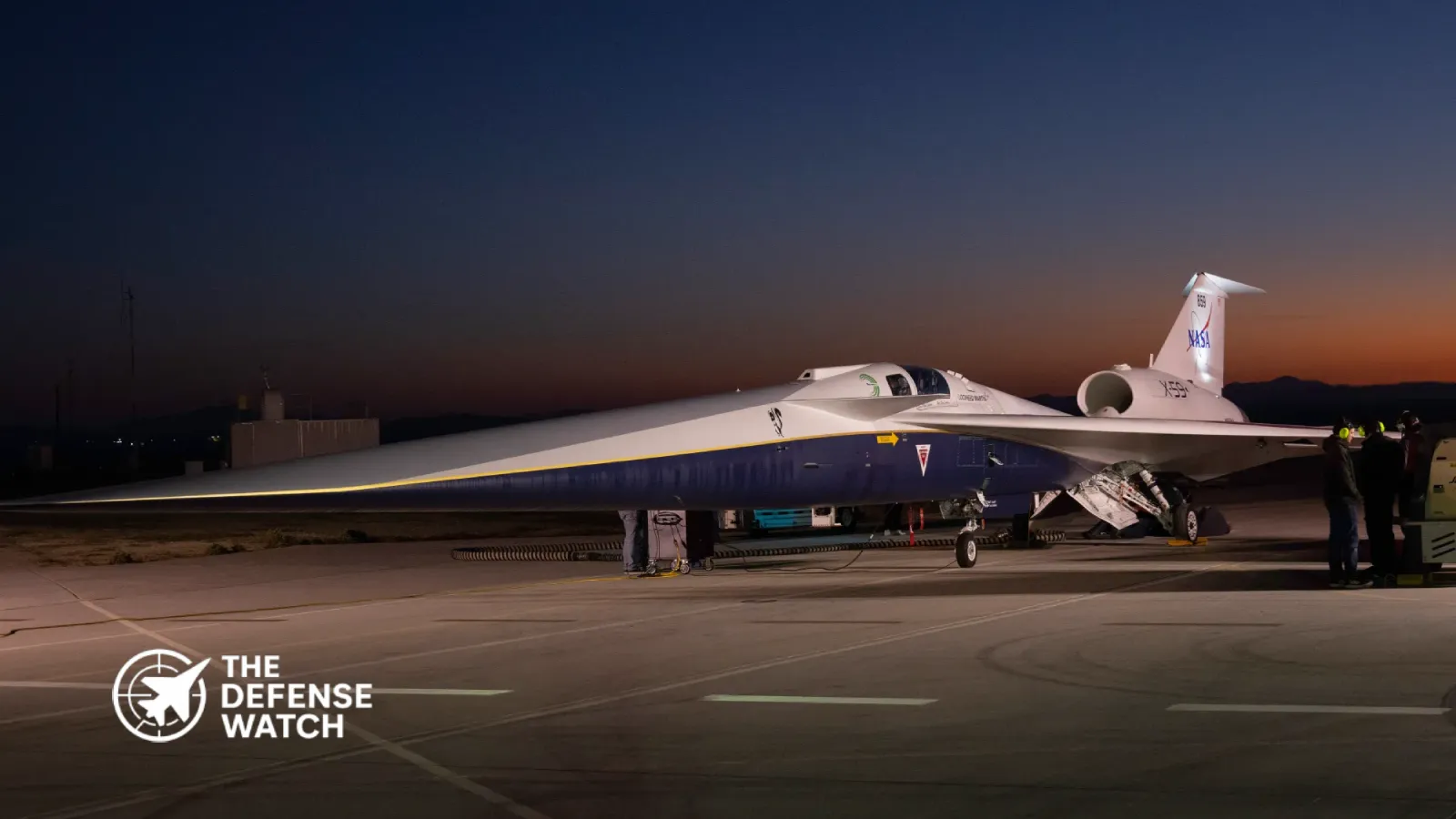
- NASA is preparing the X-59 aircraft for upcoming low-boom flight tests.
- The aircraft is designed to reduce sonic boom noise to a quiet thump.
- Data from test flights will inform future global supersonic flight regulations.
- Community overflight tests will gather public response to low-boom noise levels.
- The program could enable commercial supersonic travel over land for the first time in decades.
NASA X-59 Test Flights Mark Critical Step Toward Quiet Supersonic Travel
The NASA X-59 test flights represent a major milestone in the effort to enable quiet supersonic flight, with NASA preparing to demonstrate its low-boom aircraft to media and stakeholders ahead of operational testing.
NASA confirmed that the X-59, developed under the Quesst mission, will soon enter a new phase of flight testing designed to validate its ability to significantly reduce the disruptive sonic boom associated with supersonic travel.
The Big Picture
Supersonic flight over land has remained largely restricted since the late 20th century due to noise concerns. Traditional aircraft like the Concorde generated loud sonic booms that led regulators to prohibit routine overland supersonic operations.
The X-59 program directly addresses this long-standing limitation. It forms part of a broader U.S. push to modernize aerospace capabilities and reestablish leadership in high-speed aviation.
Low-boom technology has implications beyond commercial travel. It supports military research into survivability, rapid response, and reduced acoustic signatures for high-speed platforms.
What’s Happening
NASA is inviting media to observe the upcoming X-59 test flight campaign, which will take place at its flight research facilities. The aircraft has already completed ground testing and is transitioning toward initial flight operations.
The X-59 features a highly elongated nose and advanced aerodynamic shaping designed to disperse shockwaves. Instead of a sharp sonic boom, the aircraft is expected to produce a quieter “sonic thump.”
Following initial flights, NASA plans to conduct community overflight tests across multiple U.S. locations. These tests will measure how people perceive the reduced noise signature.
The collected data will be shared with regulators, including the Federal Aviation Administration and international aviation bodies, to inform future policy decisions.
Why It Matters
The NASA X-59 test flights could redefine the future of civil aviation. If the aircraft meets its performance goals, regulators may reconsider bans on supersonic flight over land.
This would open new commercial routes and significantly reduce travel times. For example, transcontinental flights could be shortened by several hours.
From a defense perspective, the ability to manage acoustic signatures at high speeds offers clear operational benefits. Reduced noise improves mission discretion and could expand operational flexibility in contested environments.
Strategic Implications
The X-59 program strengthens U.S. technological leadership in advanced aerodynamics and flight testing. It reinforces the role of government-led research in shaping global aviation standards.
Quiet supersonic capability also supports future military aviation concepts. Aircraft that can travel faster than sound without revealing their position through loud booms offer a tactical advantage.
The program may also influence allied nations. NATO partners and close U.S. allies could adopt similar technologies or align their regulatory frameworks with U.S. standards.
Competitor View
China and Russia continue to invest in high-speed aviation, including hypersonic systems and next-generation fighters.
Both countries are likely to monitor the NASA X-59 test flights closely. While their focus remains heavily military, the ability to reduce acoustic signatures has dual-use implications.
China, in particular, has shown interest in commercial supersonic concepts. A successful U.S. demonstration could accelerate competing programs or drive parallel regulatory efforts.
Russia, with its legacy in supersonic aviation, may view the X-59 as a validation of renewed interest in high-speed civilian flight.
What To Watch Next
The next phase involves first flight operations, followed by envelope expansion testing. Engineers will validate handling, stability, and acoustic performance.
Community overflight campaigns will mark a critical milestone. These tests will provide real-world data on public perception, a key factor in regulatory approval.
Regulatory engagement will follow. Authorities will review the data to determine whether current restrictions on supersonic overland flight should be updated.
Capability Gap
The X-59 addresses a clear gap in aviation. Current supersonic aircraft cannot operate over land without violating noise regulations.
By reducing sonic boom intensity, the aircraft aims to make supersonic travel socially acceptable and operationally viable.
However, limitations remain. The X-59 is a demonstrator, not a commercial platform. Scaling the technology for widespread airline use will require further investment, certification, and economic validation.
The Bottom Line
NASA X-59 test flights could unlock quiet supersonic travel and reshape both civilian aviation and future high-speed military operations.
Get real time update about this post category directly on your device, subscribe now.
