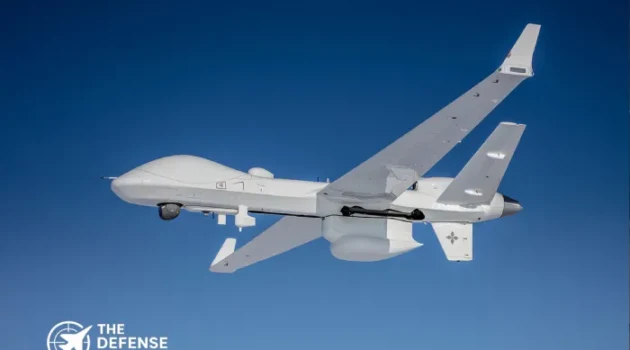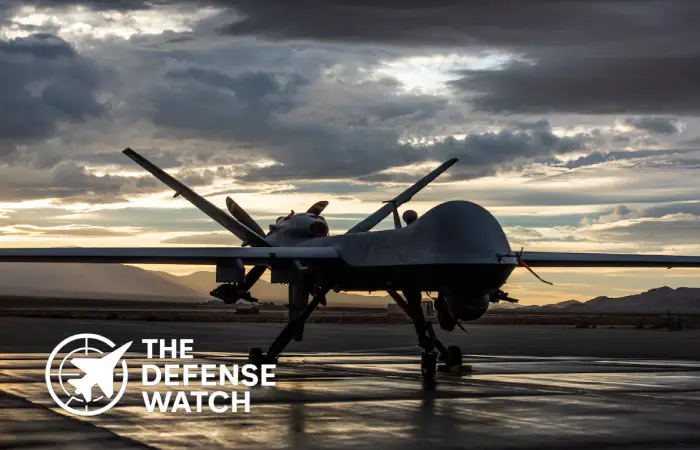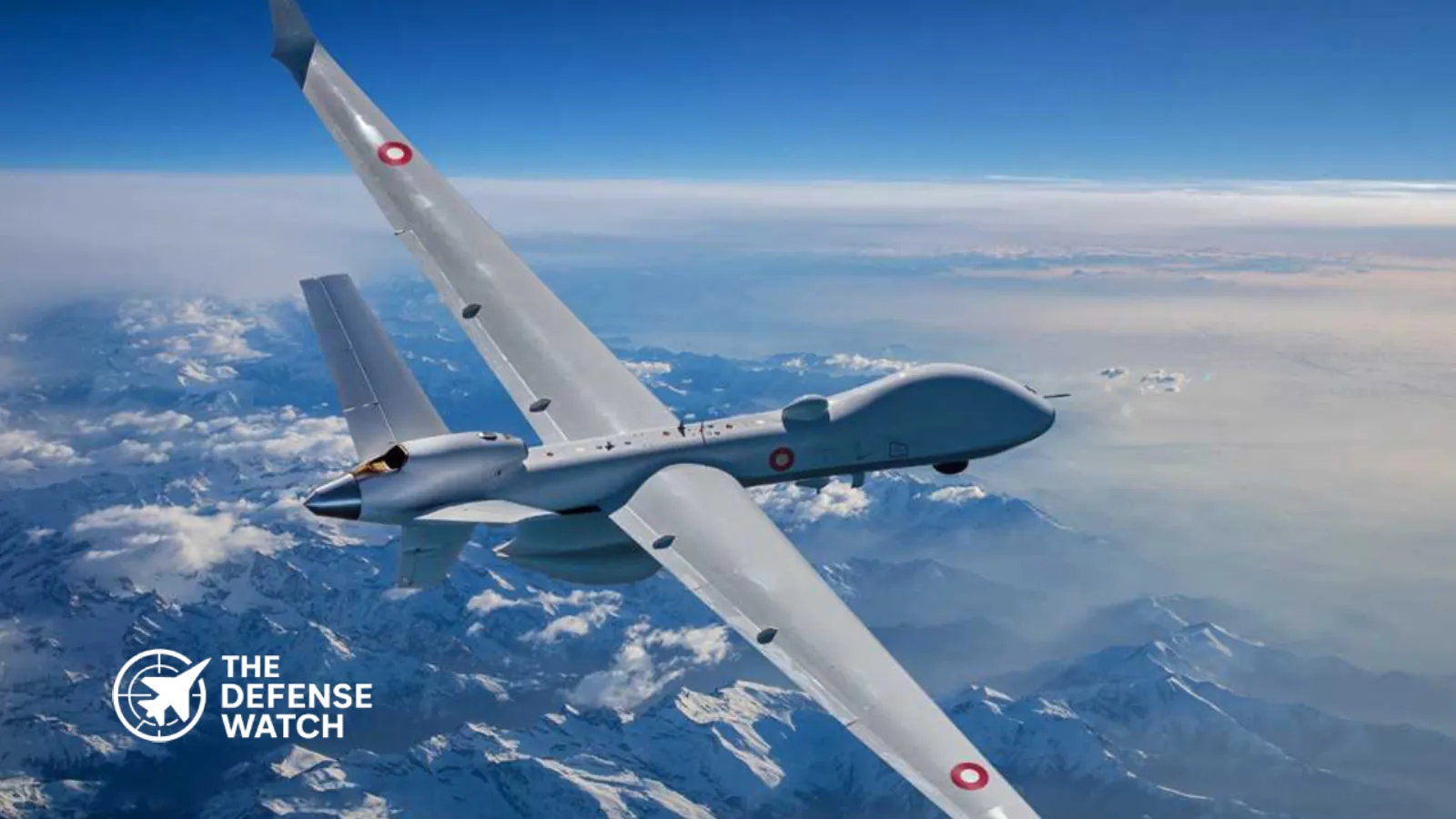
- ► Denmark is establishing a new long-range drone squadron within the Royal Danish Air Force.
- ► The squadron will operate long-endurance unmanned aircraft for intelligence, surveillance, and reconnaissance missions.
- ► Missions will cover Danish national interests, including the Baltic Sea, North Sea, and Arctic areas.
- ► The initiative is part of Denmark’s broader defense agreement aimed at strengthening NATO contributions.
- ► The new capability will enhance Denmark’s independent situational awareness and long-range monitoring capacity.
- ► The squadron will support NATO intelligence sharing and allied operational planning in Northern Europe.
Denmark Long-Range Drone Squadron Marks a Strategic Shift in Nordic ISR
Denmark’s long-range drone squadron is set to become a new operational element within the Royal Danish Air Force, expanding the country’s ability to conduct persistent surveillance across the Baltic Sea and the Arctic.
The decision reflects more than force restructuring. It signals Copenhagen’s recognition that long-endurance unmanned aircraft are now central to NATO’s deterrence architecture in Northern Europe.
The squadron will focus on long-range intelligence, surveillance, and reconnaissance missions. That mission set is increasingly critical as Russia’s military activity in the Baltic region and High North continues to draw allied attention.
Denmark has traditionally relied on maritime patrol aircraft and allied ISR coverage. The establishment of a dedicated long-range drone capability suggests a move toward greater national autonomy in persistent surveillance.
Why This Matters Now
The timing is not coincidental.
Since Russia’s invasion of Ukraine in 2022, NATO has reinforced its eastern and northern flanks. The accession of Finland and Sweden to NATO has reshaped the Baltic security map. The Baltic Sea is now effectively a NATO-dominated maritime space, except for Russia’s Kaliningrad enclave and St. Petersburg region.
In this environment, ISR gaps become strategic liabilities.
Long-range drones offer continuous coverage at lower operating cost than crewed aircraft. They can remain airborne for extended periods, track naval movements, monitor infrastructure, and support targeting networks.
For Denmark, whose territory includes Greenland and the Faroe Islands, the requirement extends well beyond the Baltic. Arctic surveillance is becoming a core mission area as climate change opens new sea routes and increases great power competition in the High North.
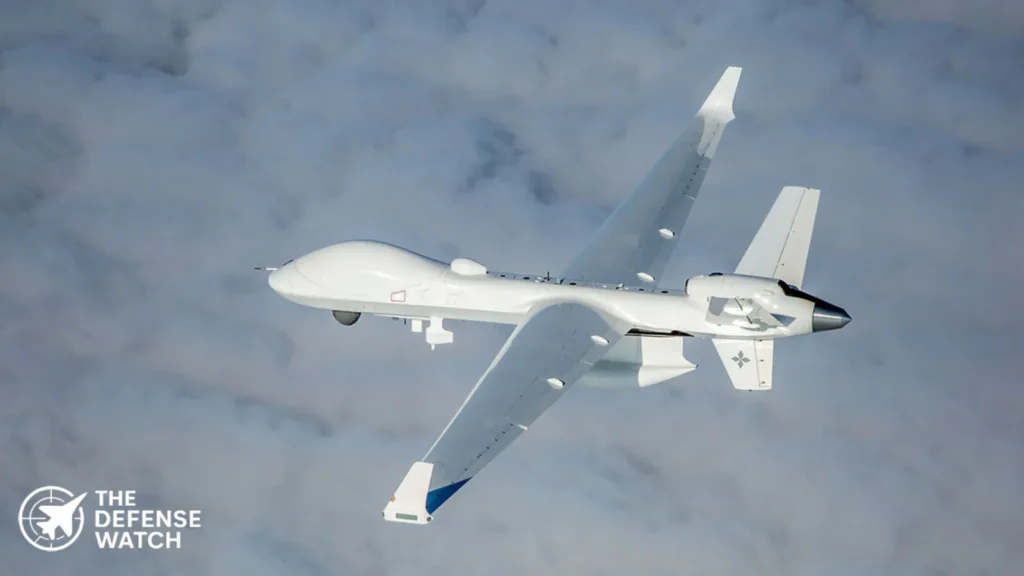
The new Denmark long-range drone squadron therefore supports both Baltic deterrence and Arctic domain awareness.
Operational Impact: Persistent Eyes Over the Baltic and Arctic
Long-range unmanned systems fundamentally change how small and mid-sized NATO members manage airspace and maritime awareness.
Unlike tactical drones, long-range ISR platforms can:
- Conduct multi-day maritime patrol cycles
- Track surface vessels and submarine support activity
- Monitor undersea cable infrastructure
- Support search and rescue operations in the Arctic
- Feed real-time data into NATO’s command network
For Denmark, this means reduced dependence on allied airborne assets such as U.S. RQ-4 Global Hawk deployments or British P-8 patrol rotations.
It also enhances interoperability. NATO increasingly relies on distributed ISR networks, linking national drone fleets with alliance data fusion centers.
Denmark’s investment aligns with broader European trends. Germany operates the Heron TP. Italy fields MQ-9 variants. Poland is expanding MALE drone procurement. The UK integrates Protector RG1 into its ISR structure.
Copenhagen is moving into the same operational category.
Industrial and Budget Dimension
Denmark has significantly increased defense spending following a national referendum abolishing its EU defense opt-out and committing to NATO’s 2 percent GDP benchmark.
The drone squadron reflects where those funds are going: networked, high-end surveillance rather than legacy mass platforms.
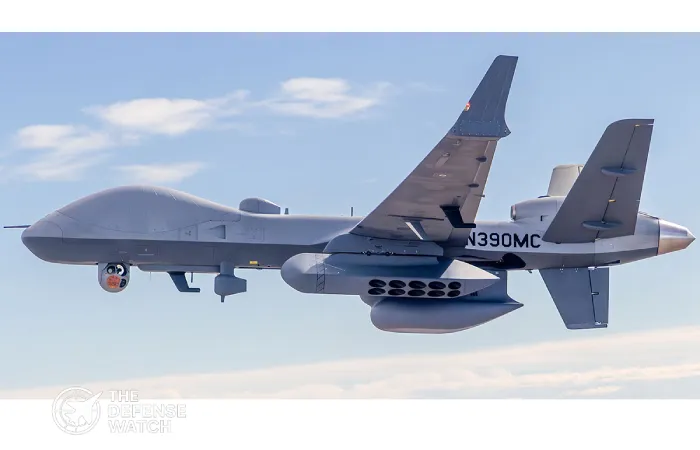
Long-range unmanned systems offer a favorable cost-to-effect ratio. Operating costs per flight hour are typically lower than those of crewed maritime patrol aircraft. Personnel demands are also smaller.
From a procurement perspective, Denmark’s decision may open opportunities for U.S. and Israeli manufacturers, depending on platform selection. If Copenhagen selects a U.S.-built system such as the MQ-9 family, it would deepen transatlantic industrial integration.
At the same time, European strategic autonomy debates could push Denmark toward a European supplier.
The choice will signal alignment priorities.
Regional Security Context: Baltic and High North
Denmark occupies a strategic geographic position controlling access to the Baltic Sea through the Danish Straits.
Monitoring Russian naval traffic from Kaliningrad and St. Petersburg remains a core mission.
Long-range drones add persistent overwatch capability across:
- The Baltic Sea
- North Sea energy infrastructure
- Undersea communication cables
- Arctic maritime approaches
Following suspected sabotage incidents involving Baltic undersea infrastructure in recent years, European governments have intensified maritime monitoring.
Unmanned ISR platforms are particularly suited for identifying unusual vessel behavior patterns over time.

Images from af.mil In the Arctic, Denmark’s responsibilities extend to Greenland. The High North has seen increasing Russian submarine patrols and renewed U.S. strategic interest. Persistent ISR coverage enhances both sovereignty enforcement and alliance reassurance.
Comparison With Nordic Peers
Denmark’s move mirrors developments among Nordic allies.
Norway operates long-endurance ISR platforms and has expanded maritime patrol coverage with P-8 aircraft. Sweden, now a NATO member, maintains strong airborne early warning capabilities. Finland integrates ground-based sensors with allied ISR networks.
The Denmark long-range drone squadron ensures Copenhagen remains an active contributor rather than a peripheral participant in this evolving Nordic security architecture.
Unlike larger NATO members, Denmark cannot field large fleets. But high-end drones allow it to punch above its weight in surveillance contributions.
Alliance Dynamics and NATO Burden Sharing
NATO’s northern flank is no longer secondary.
The Baltic region is now a primary theater of deterrence planning. Persistent ISR coverage reduces escalation risks by improving transparency. It also strengthens crisis response timelines.
By investing in long-range drones, Denmark demonstrates tangible burden sharing rather than relying solely on U.S. ISR deployments.
For Washington, this is strategically welcome. The U.S. Department of Defense has consistently encouraged European allies to build independent ISR capabilities that integrate into NATO networks.
Denmark’s decision fits that pattern.
Strategic Assessment
The Denmark long-range drone squadron has implications beyond air force restructuring.
Impact on Regional Power Balance:
Persistent surveillance strengthens NATO’s situational awareness in the Baltic and Arctic. That reduces Russia’s ability to operate undetected in maritime corridors near Danish territory.Deterrence Implications:
ISR does not directly project force, but it underpins targeting, early warning, and decision-making. Better visibility increases deterrence credibility.Budget Signals:
Denmark is prioritizing advanced, networked capabilities over legacy mass platforms. That reflects NATO’s broader shift toward high-end surveillance and data dominance.Alliance Dynamics:
The squadron reinforces Denmark’s standing within NATO as a serious contributor to northern security. It also reduces pressure on U.S. ISR assets in Europe.Escalation Risks:
Improved monitoring can reduce miscalculation. However, increased surveillance in contested areas may also generate diplomatic friction with Russia, particularly in Arctic airspace corridors.Overall, this move does not alter the military balance dramatically. It does incrementally tighten NATO’s ISR net in a region where warning time matters.
What Happens Next
The key questions now involve platform selection, timeline to operational readiness, and integration into NATO’s ISR architecture.
If Denmark fields a medium-altitude, long-endurance platform comparable to the MQ-9 class, operational capability could significantly expand within a few years.
Full integration with NATO data-sharing networks will determine the real strategic value of the squadron.
For now, Denmark has signaled clearly that long-range unmanned surveillance is no longer optional. It is foundational to modern Nordic defense planning.
Get real time update about this post category directly on your device, subscribe now.