China Displays LW-30 Laser Weapon for Gulf Counter-Drone Defense (Intro)
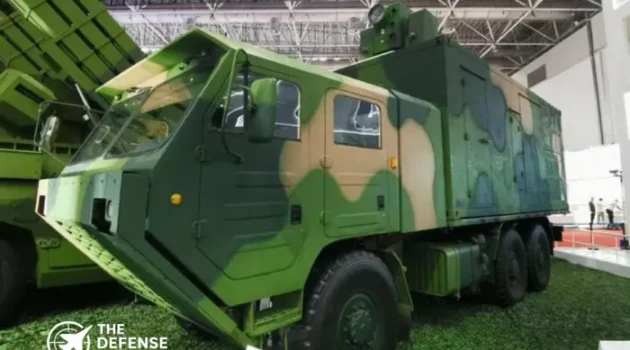
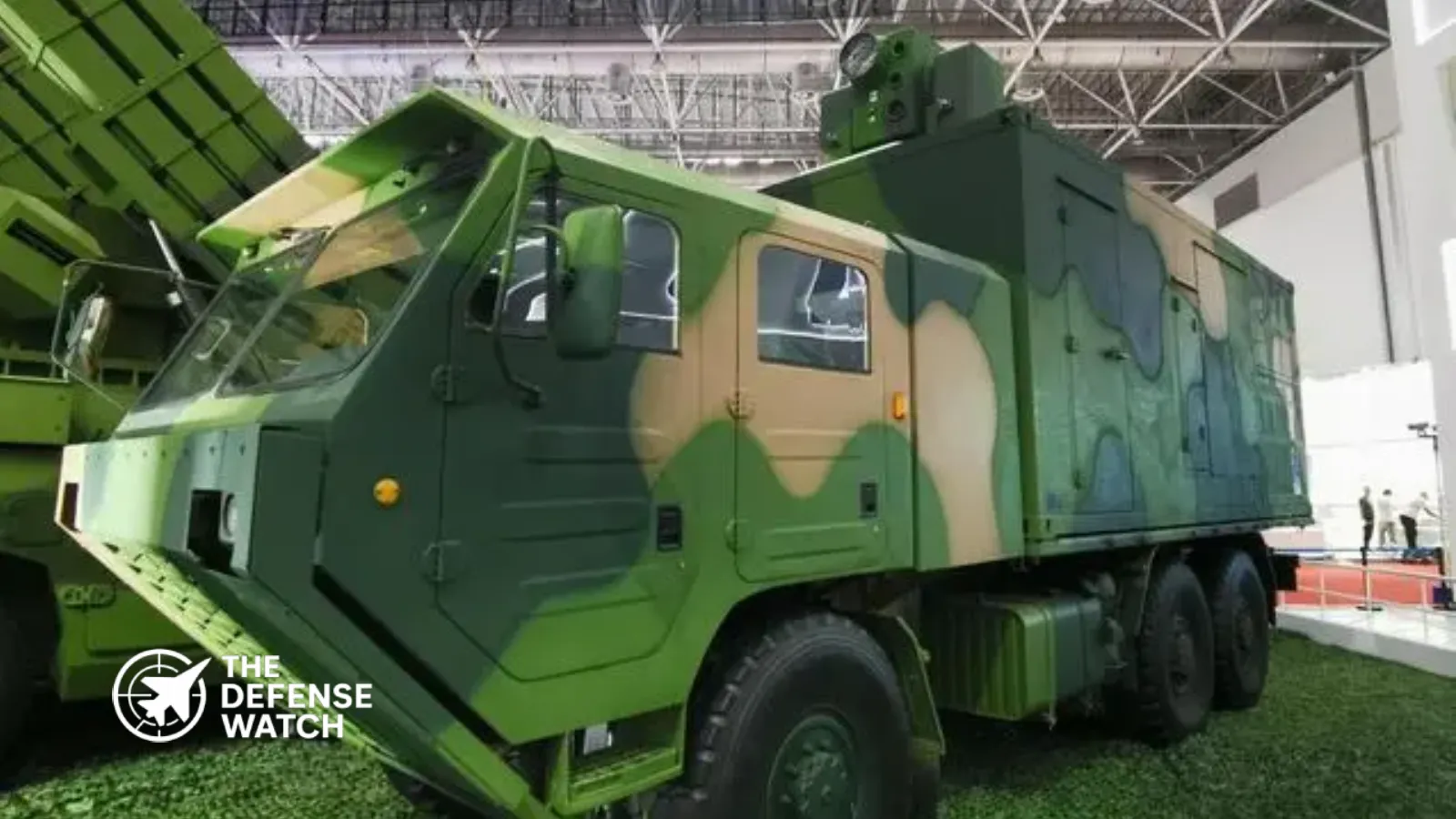
At the World Defense Show 2026 in Riyadh, China National Precision Machinery Import and Export Corporation (CPMIEC) unveiled its LW-30 laser weapon system, a truck-mounted directed energy weapon designed to counter drones and other aerial threats, highlighting Beijing’s push to expand its air defense exports to Gulf states and other markets.
What the LW-30 Is
The LW-30 is a high-energy laser weapon system mounted on a wheeled vehicle, part of a broader class of directed energy air defense tools aimed at unmanned aerial systems and sensor-based threats.
The system integrates a high-power optical fiber laser, a command and communications unit, and supporting vehicles or equipment. The primary mission set highlighted at WDS 2026 was counter-UAV defense, including both soft-kill effects on photo-optical sensors and hard-kill engagements against smaller drones.
Display at World Defense Show 2026
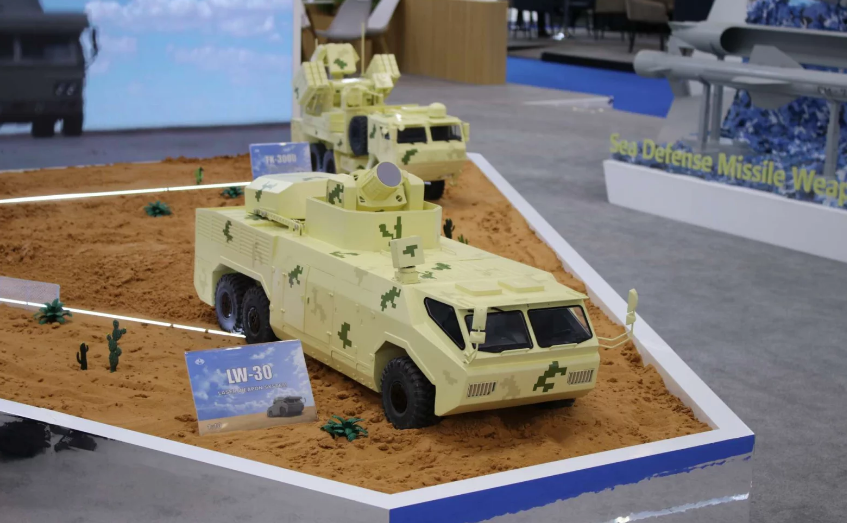
CPMIEC presented a 1:10 scale model of the LW-30 at the defense expo, which draws military delegations and industry exhibitors from around the Middle East and beyond. The company made the case that laser directed energy weapons can play a role in layered air defense architectures, especially where threats include low-cost UAVs and electro-optical systems.
Reported Performance and Capabilities
According to the manufacturer’s data presented in Riyadh, the LW-30 system can produce a concentrated laser beam with an output of up to 30 kilowatts. Engagement parameters shared by CPMIEC included:
- Ability to blind or degrade sensors at ranges up to 10 kilometers.
- Hard-kill effects against small UAVs out to around 3 to 5 kilometers.
- Engagement windows of roughly five to ten seconds per target under nominal atmospheric conditions.
- 360-degree tracking coverage with high-precision targeting.
Mobility was also emphasized, with the system able to prepare for combat in under ten minutes and reposition quickly if needed. Operational envelopes for temperature, humidity, wind, and visibility were included in the manufacturer’s briefing at the show.
Context in Global Directed Energy Development
Directed energy weapons such as the LW-30 are part of a wider trend among major militaries to explore laser-based air defense concepts. These systems aim to add an alternative to traditional kinetic interceptors by using concentrated energy to disable or destroy threats at lower cost per engagement.
China’s defense industry has multiple laser and directed energy systems under development or display. State-owned firms such as CASIC and others have shown variations of vehicle-mounted lasers designed to counter low, slow, and small aerial threats. Previous iterations of systems similar to the LW-30 have been exhibited at air shows and international defense trade fairs.
Export and Regional Interest
The pitch of the LW-30 at a major Gulf defense show underscores growing interest in counter-UAV solutions in the Middle East. Regional armed forces and defense buyers have increasingly looked for technologies to defend against small drones, a threat type that has figured in recent conflicts and security operations across the region.
Chinese companies, including CPMIEC and others, have been active in promoting air defense systems abroad, meeting demand where buyers seek alternatives to Western suppliers or complementary solutions to existing inventories.
Challenges and Operational Notes
It is important to note that real-world performance of laser weapons remains operationally dependent on environment and conditions. Factors such as dust, humidity, and atmospheric distortion can affect beam propagation and effectiveness, based on open reporting on similar systems in testing and field use.
Get real time update about this post category directly on your device, subscribe now.