• Home
  • About
  • Defense Systems
  • Manufacturer
  • Comparisons
  • Compare 
  • Tools
TheDefenseWatch.com
  • Aerospace & Aviation
  • Military & Ordnance
  • Naval & Maritime
  • Cyber & Space Defense
  • Policy & Strategy
  • Global News
  • Tools Library
    • Smart Calculator
    • Drone Flight Time Calculator
    • Drone Range Calculator
    • Counter-Drone Jammer Effective Range Calculator
    • Counter-Battery Radar Detection Calculator
    • Artillery Fire Correction Calculator
    • Thermal Camera Detection Range Calculator
    • Missile Range & Time-of-Flight Calculator
    • Radar Detection Range Calculator
    • FPV Strike Drone Payload vs Range Calculator
    • Loitering Munition Endurance Calculator
    • Sniper Ballistic Drop & Windage Calculator
    • Bullet Drop Calculator
    • U.S. Army Combat Fitness Test (ACFT) Calculator
    • Military Pension Calculator
    • Military Retirement Calculator
    • Military Pension Calculator
    • Large Number Calculator
Font ResizerAa

TheDefenseWatch.com

The Defense Watch | U.S. & Global Defense News, Analysis & Military Updates

Search
  • Home
  • About
  • Defense Systems
  • Manufacturer
  • Comparisons
  • Compare 
  • Tools

Stay Updated

Get the latest update

Subscribe

Explore

  • Drone
  • Fighter Jets & Military Aircraft
  • Hypersonic Weapons
  • Aircraft Carriers
  • Strategic History & Missions
  • Tools Library
Home » World’s Best Aircraft Carriers for 2026 Ranked, Why U.S. Naval Power Still Leads
Aircraft CarriersNaval & Maritime

World’s Best Aircraft Carriers for 2026 Ranked, Why U.S. Naval Power Still Leads

TeamDefenseWatch
Last updated: January 6, 2026 4:21 am
TeamDefenseWatch
Share
8 Min Read
best aircraft carriers 2026
SHARE

Best Aircraft Carriers in the World 2026, Why It Matters

The best aircraft carriers in the world in 2026 matter because they remain the clearest measure of global naval power. These ships project airpower far from home ports, support allies, deter rivals, and shape crisis response. As competition sharpens in the Indo Pacific, the Atlantic, and the Middle East, carrier capability is no longer about prestige. It is about who can sustain combat power at sea.

Contents
  • Best Aircraft Carriers in the World 2026, Why It Matters
  • How the Ranking Assessment Was Made
  • 1. Gerald R. Ford Class, United States
    • Why It Leads the Ranking
    • Strategic Impact
  • 2. Nimitz Class, United States
    • Still Relevant in 2026
    • Operational Value
  • 3. Fujian, China
    • A Leap Forward for China
    • Regional Consequences
  • 4. HMS Queen Elizabeth, United Kingdom
    • Strength Through Integration
    • Strategic Role
  • 5. Charles de Gaulle, France
    • Compact but Capable
    • Global Reach
  • Comparing Carrier Capabilities in 2026
    • Size vs Effectiveness
    • Technology and Training
    • Numbers Matter
  • Analysis, What This Ranking Tells Us
  • FAQs

How the Ranking Assessment Was Made

The ranking assessment looks at how well each aircraft carrier can perform real world combat and sustained operations in 2026, not just how large or new the ship is. Key factors include the size and capability of the air wing, launch and recovery systems, power generation, survivability, and how often the carrier can generate sorties during high intensity operations. Operational experience also matters. Navies with decades of carrier deployments score higher because training, maintenance, and command integration are proven under stress. Finally, the assessment weighs how each carrier fits into its nation’s wider naval strategy, including escort ships, logistics support, and alliance interoperability. This approach gives a clearer picture of actual combat value rather than paper specifications alone.

What follows is a fresh analysis of the top aircraft carriers shaping naval balance in 2026, written for TheDefenseWatch.com audience.

1. Gerald R. Ford Class, United States

The Gerald R. Ford class remains the benchmark for modern aircraft carriers. These nuclear powered ships are the largest warships ever built and represent a generational leap over the older Nimitz class.

- Advertisement -

Why It Leads the Ranking

Ford class carriers introduce electromagnetic catapults, advanced arresting gear, and a redesigned flight deck. These changes increase sortie rates while reducing crew workload. The class is built to operate modern aircraft like the F 35C alongside legacy platforms.

  • USS Gerald R. Ford Aircraft Carrier

    USS Gerald R. Ford Aircraft Carrier

    • Large Flight Deck: 4.5-acre angled deck supports 75+ aircraft
    • Onboard Air Wing: Fighters, AEW, ASW, and support helicopters
    • Advanced Command & Control: Integrated CMS, AI-assisted decision support
    • Defensive Weapon Systems: CIWS, RAM, decoys, electronic warfare
    • View Details →
    8.3

    Strategic Impact

    In 2026, USS Gerald R. Ford and USS John F. Kennedy anchor U.S. carrier strike groups in the Atlantic and Pacific. Their ability to generate sustained air operations gives Washington unmatched reach. No other navy can deploy comparable power at similar scale or tempo.

    2. Nimitz Class, United States

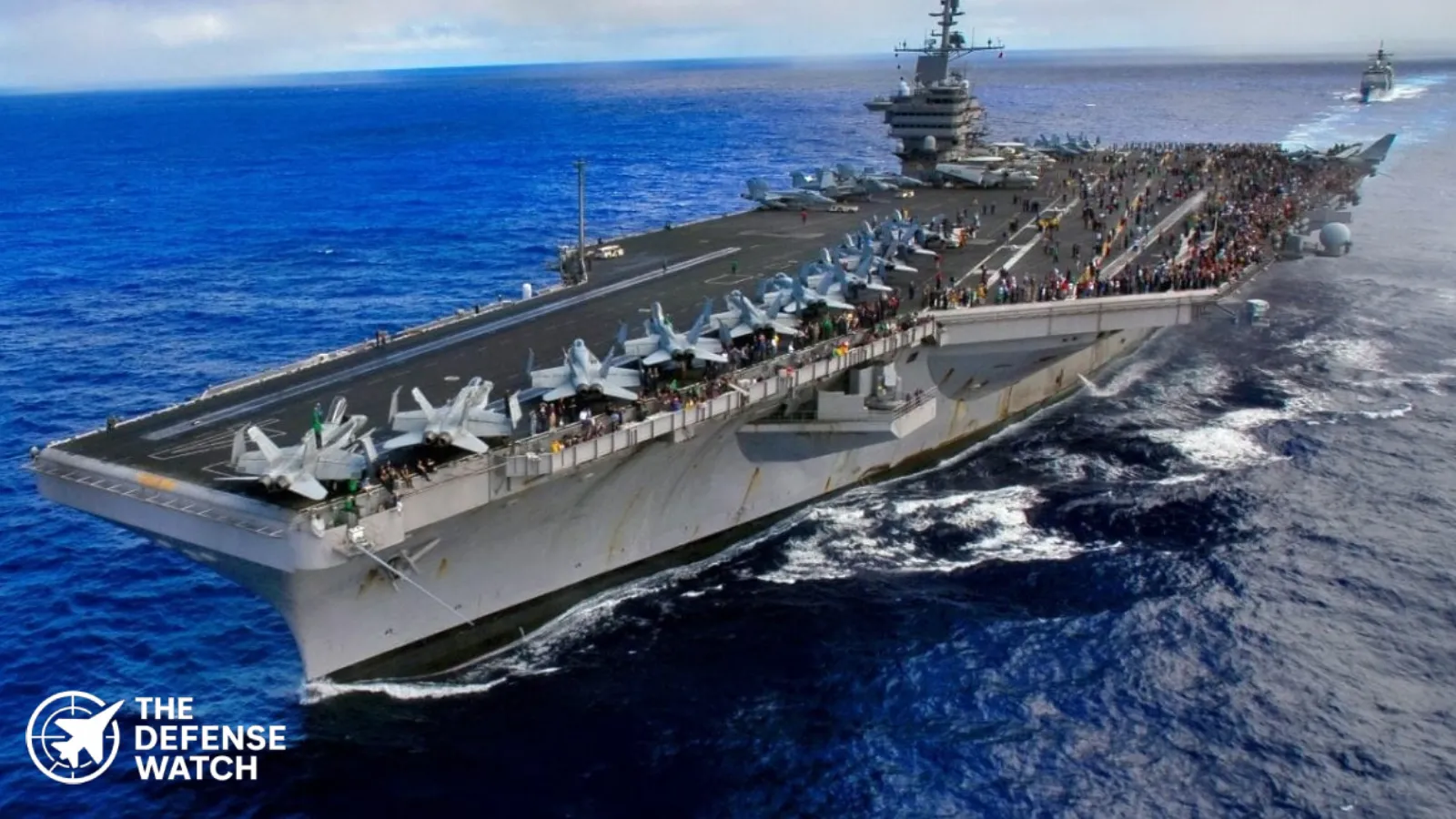
    Even as newer ships enter service, the Nimitz class remains a core pillar of U.S. naval power. Several of these carriers will remain active into the 2030s.

    Still Relevant in 2026

    Despite their age, Nimitz class carriers have received major upgrades. Improved radars, combat systems, and air wings keep them combat credible. Their nuclear propulsion allows long deployments without refueling.

    • USS Nimitz Aircraft Carrier

      USS Nimitz Aircraft Carrier

      • Large Flight Deck: Supports CATOBAR operations
      • Onboard Air Wing: 60+ fixed-wing and rotary aircraft
      • Advanced Command & Control: Integrated CIC and data links
      • Defensive Weapon Systems: CIWS, RAM, Sea Sparrow
      • View Details →
      8.3

      Operational Value

      Nimitz class carriers continue to shoulder much of the U.S. Navy’s global presence mission. From freedom of navigation patrols to crisis response, these ships remain central to American maritime strategy.

      3. Fujian, China

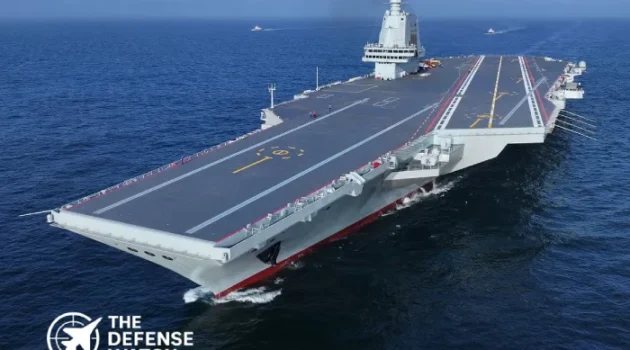
      China’s Fujian aircraft carrier marks a turning point for the People’s Liberation Army Navy. It is Beijing’s first carrier designed from the start with electromagnetic catapults.

      A Leap Forward for China

      Unlike earlier Chinese carriers, Fujian is not based on Soviet era designs. It is larger, more capable, and better suited for high tempo flight operations. This allows China to operate heavier aircraft with greater range and payload.

      • Fujian (CV-18) Aircraft Carrier

        Fujian (CV-18) Aircraft Carrier

        • Large Flight Deck: Flat top with 3 EMALS catapults
        • Onboard Air Wing: Fighters, AEW, ASW, and support aircraft
        • Advanced Command & Control: Integrated combat systems
        • Defensive Weapon Systems: CIWS + short-range SAMs
        • View Details →
        8.8

        Regional Consequences

        While Fujian does not yet match U.S. carriers in experience or integration, its entry into service signals China’s intent to operate blue water carrier groups. In the Western Pacific, this adds pressure on U.S. and allied naval planners.

        4. HMS Queen Elizabeth, United Kingdom

        The United Kingdom’s Queen Elizabeth class focuses on flexibility rather than raw size. These carriers operate short takeoff and vertical landing aircraft, primarily the F 35B.

        Strength Through Integration

        HMS Queen Elizabeth and HMS Prince of Wales are designed to operate closely with NATO allies, especially the United States. U.S. Marine Corps F 35Bs routinely deploy aboard British carriers, creating combined air wings.

        • HMS Queen Elizabeth Aircraft Carrier

          HMS Queen Elizabeth Aircraft Carrier

          • Large Flight Deck: 280 m, supports simultaneous STOVL operations
          • Onboard Air Wing: 40+ aircraft, F-35B, helicopters
          • Advanced Command & Control: Integrated CMS, CIC, AEW support
          • Defensive Weapon Systems: CIWS, short-range SAMs, decoy systems
          • View Details →
          7.8

          Strategic Role

          In 2026, British carriers support NATO operations, reinforce presence in the Indo Pacific, and provide London with independent strike options. Their strength lies in coalition warfare rather than solo power projection.

          5. Charles de Gaulle, France

          France’s Charles de Gaulle remains Europe’s only nuclear powered aircraft carrier. Though smaller than U.S. carriers, it packs significant capability.

          Compact but Capable

          The ship operates CATOBAR systems, allowing it to launch heavier aircraft than STOVL carriers. Its air wing includes Rafale M fighters with nuclear strike capability.

          • Charles de Gaulle Aircraft Carrier

            Charles de Gaulle Aircraft Carrier

            • Large Flight Deck: Full-length CATOBAR deck
            • Onboard Air Wing: 30–40 aircraft
            • Advanced Command & Control: Integrated CMS and CIC
            • Defensive Weapon Systems: Crotale SAM, SADRAL CIWS
            • View Details →
            7.8

            Global Reach

            Charles de Gaulle gives France an independent global strike option. Regular deployments to the Indo Pacific and Middle East underline Paris’s role as a global naval actor.

            Comparing Carrier Capabilities in 2026

            Size vs Effectiveness

            Bigger is not always better, but size still matters. Larger decks allow more aircraft, higher sortie rates, and better sustainment. This remains a U.S. advantage.

            Technology and Training

            Catapult systems, aircraft integration, and crew experience often matter more than displacement. The U.S. Navy still leads in operational knowledge built over decades.

            Numbers Matter

            The United States operates more aircraft carriers than the rest of the world combined. Even as rivals improve individual ships, overall capacity remains uneven.

            Analysis, What This Ranking Tells Us

            The best aircraft carriers in the world in 2026 reflect a shifting but still U.S. led naval order. China’s progress is real and should not be dismissed. However, experience, integration, and logistics remain decisive advantages for the United States and its allies.

            European carriers show a different model. They focus on alliance operations and crisis response rather than sustained high intensity conflict alone. This complements U.S. strategy and spreads risk across partners.

            For Washington, the message is clear. Maintaining carrier readiness matters as much as building new hulls. For rivals, closing the gap will take more than hardware. It will require decades of training and operational learning.

            FAQs

            Which country has the best aircraft carriers in 2026?

            The United States operates the most capable and numerous aircraft carriers in the world in 2026.

            Is China close to matching U.S. aircraft carriers?

            China is improving rapidly, but it still lacks the operational experience and global reach of the U.S. Navy.

            Why are aircraft carriers still important?

            They provide mobile airpower, deterrence, and rapid response without relying on foreign bases.

            Do smaller carriers still matter?

            Yes. British and French carriers play key roles in coalition operations and regional security.

TAGGED:Aircraft CarriersChina militaryFeaturedGlobal maritime securityNaval powerU.S. Navy
Share This Article
Facebook Copy Link Print
ByTeamDefenseWatch
TeamDefenseWatch is the official editorial byline of TheDefenseWatch.com. Working under one umbrella, TheDefenseWatch.com, the team delivers verified, factual reporting on global defense, military technology, aerospace systems, and security developments. Articles are sourced from official statements, defense industry releases, and trusted media, with editorial review to ensure accuracy and clarity.Contact: info@TheDefenseWtach.com
Leave a Comment

Leave a Reply Cancel reply

Your email address will not be published. Required fields are marked *

New Arrivals

  • Boeing VC-25B Presidential Aircraft Boeing VC-25B Presidential Aircraft
  • SM-3 Block IB Missile SM-3 Block IB Missile
  • USS Abraham Lincoln Aircraft Carrier USS Abraham Lincoln Aircraft Carrier
  • M142 HIMARS M142 HIMARS
  • Terrex S5 Infantry Vehicle Terrex S5 Infantry Vehicle
  • A-29 Super Tucano Aircraft A-29 Super Tucano Aircraft
  • DSAR 15 Rifle DSAR 15 Rifle

Recent Compares

  • Tejas vs Gripen: Key Differences and Capabilities Tejas vs Gripen: Key Differences and Capabilities View Comparison →
  • Tejas vs MiG-21 Bison: How India Replaced Its Iconic Supersonic Fighter Tejas vs MiG-21 Bison: How India Replaced Its Iconic Supersonic Fighter View Comparison →
  • F-35 vs F-16: Stealth, Sensors and Combat Roles F-35 vs F-16: Stealth, Sensors and Combat Roles View Comparison →
  • Tejas Fighter Jet vs F-16 Fighting Falcon: Capability Compared Tejas Fighter Jet vs F-16 Fighting Falcon: Capability Compared View Comparison →
  • Rafale Fighter Jet vs F-16 Fighting Falcon : Which Fighter Has the Edge? Rafale Fighter Jet vs F-16 Fighting Falcon : Which Fighter Has the Edge? View Comparison →
  • Su-57 Fighter Jet vs J-20 Fighter Jet: Stealth and Air Combat Compared Su-57 Fighter Jet vs J-20 Fighter Jet: Stealth and Air Combat Compared View Comparison →
  • Mirage 2000 vs Tejas Mk1A: Legacy Combat Power vs Indigenous Modernization Mirage 2000 vs Tejas Mk1A: Legacy Combat Power vs Indigenous Modernization View Comparison →
  • Rafale Fighter Jet vs F-22 Raptor: Which Air Dominance Fighter Has the Edge? Rafale Fighter Jet vs F-22 Raptor: Which Air Dominance Fighter Has the Edge? View Comparison →
  • Tejas Fighter Jet vs. Rafale Fighter Jet: India’s Indigenous Fighter Meets France’s Proven Multirole Combat Aircraft Tejas Fighter Jet vs. Rafale Fighter Jet: India’s Indigenous Fighter Meets France’s Proven Multirole Combat Aircraft View Comparison →
  • F-22 Raptor vs. F-35 Joint Strike Fighter: Which Fifth Generation Fighter Has the Edge? F-22 Raptor vs. F-35 Joint Strike Fighter: Which Fifth Generation Fighter Has the Edge? View Comparison →

Recent Posts

  • USS Oregon Visits Norway as U.S. Navy Maintains High North Presence
  • Lockheed Martin Unveils PAC-3 Edge Interceptor for U.S. Army
  • Northrop Grumman Completes B-2 Spirit of Kitty Hawk Overhaul
  • Army Report Finds Systemic Failures Behind Fatal 2025 Midair Collision
  • Lockheed Martin to Supply Black Hawk Training Systems to Philippine Air Force

You Might Also Like

US Navy ODIN Optical Dazzling Interdictor laser weapon system at the Directed Energy Systems Integration Laboratory (DESIL) at Naval Base Ventura County Point Mugu, California.
Naval & MaritimeNaval Strategy & Maritime Security

US Navy Completes First Operational ODIN Laser Training Cycle in California

May 20, 2026
Arsenal-2 shipyard Maryland
Naval & MaritimeNaval Strategy & Maritime Security

Trump, Hegseth Announce $6.6 Billion Arsenal-2 Shipyard in Maryland

October 6, 2026
autonomous drones chemical weapons
Naval & MaritimeNaval Strategy & Maritime Security

Greece To Supply CAMCOPTER S-100 UAVs For FDI Belharra-Class Frigates

September 12, 2026
U.S. Navy underwater drones
Naval & MaritimeNaval Strategy & Maritime Security

U.S. Navy Races To Deploy Advanced Underwater Drones Amid Rising Russian Submarine Activity In Baltic Sea

September 7, 2026

Logo

Copyright © 2026 TheDefenseWatch.com

Helpful Links

  • Home
  • About Us
  • Privacy Policy
  • Terms of Use / Disclaimer
  • U.S. Privacy Notice – CCPA Compliance

Defense Systems

  • Defense Systems
  • Comparisons 
  • Manufacturer
  • Tactical Calculators

Popuplar

Which 5 Air Forces Possess the Costliest Fighter Jet Fleets in the World
Evolving Strategic Value: Carrier Strike Groups in the Indo-Pacific’s Future Security Architecture
Autonomous Weapon Systems Spark U.S. Ethics Debate Amid Rapid Military AI Integration

We report on developments involving military forces, governments, defense companies, research organizations, and security institutions around the world. 

Welcome Back!

Sign in to your account

Username or Email Address
Password

Lost your password?