Executive Summary:
The United States is repositioning F-22 stealth fighters closer to China to improve response times in a potential Taiwan crisis. The move underscores growing tensions and a renewed focus on air superiority in the Indo-Pacific.
US Moves F-22 Stealth Fighters Closer To China
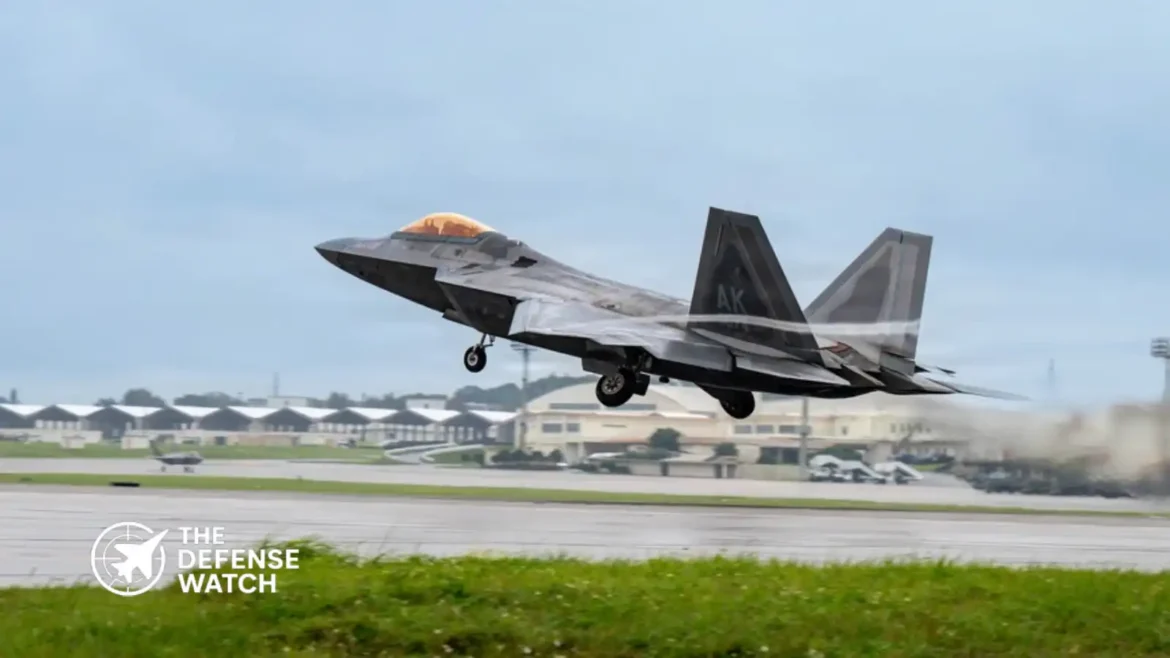
The F-22 stealth fighters deployment marks a significant step in U.S. efforts to strengthen rapid-response capabilities near Taiwan, as tensions with China continue to shape regional military planning.
The U.S. Air Force has moved F-22 Raptors closer to the western Pacific theater, reducing operational distance to potential hotspots around the Taiwan Strait. This forward positioning is designed to enable faster sortie generation and immediate air dominance in the early stages of a conflict.
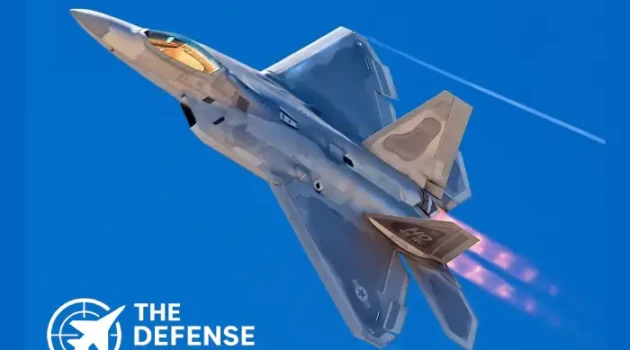
The F-22 Raptor, developed by Lockheed Martin, remains the U.S. military’s premier air superiority fighter. Its low observable design, advanced avionics, and supercruise capability allow it to penetrate contested airspace and engage high-end threats, including advanced Chinese fighters and integrated air defense systems.
Strategic Context: Taiwan And The Indo-Pacific Balance
The F-22 stealth fighters deployment comes amid increasing military activity by China around Taiwan, including large-scale air and naval exercises. Beijing continues to assert sovereignty over the island, while Washington maintains a policy of strategic ambiguity backed by growing military presence in the region.
Forward deployment of fifth-generation fighters reflects a broader U.S. shift toward distributed and resilient force posture across the Indo-Pacific. By positioning assets closer to potential flashpoints, the Pentagon aims to complicate adversary planning and ensure rapid escalation control.
From an operational perspective, reducing transit time for high-value assets like the F-22 can significantly impact early-phase combat effectiveness. In a Taiwan contingency, the first 24 to 72 hours are widely assessed by defense analysts as critical for establishing air superiority.
Operational Advantages Of Forward-Deployed F-22s
The F-22 stealth fighters deployment enhances several key operational capabilities:
- Reduced Response Time: Aircraft can reach contested zones faster, improving reaction speed to emerging threats.
- Increased Sortie Rates: Shorter distances allow for more frequent missions per aircraft.
- Enhanced Deterrence: Visible presence of advanced stealth fighters signals readiness and capability.
- Survivability In Contested airspace: The F-22’s stealth and electronic warfare suite provide a decisive edge against modern air defenses.
In addition, forward basing supports integration with allied forces, including Japan and other regional partners, enabling joint operations and interoperability in complex scenarios.
U.S. Airpower Strategy Against China
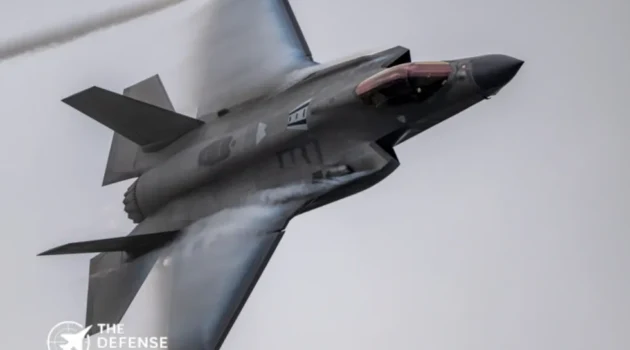
The F-22 stealth fighters deployment aligns with the Pentagon’s broader modernization and deterrence strategy focused on peer competition with China. While newer platforms like the F-35 are more widely distributed, the F-22 remains unmatched in pure air-to-air combat performance.
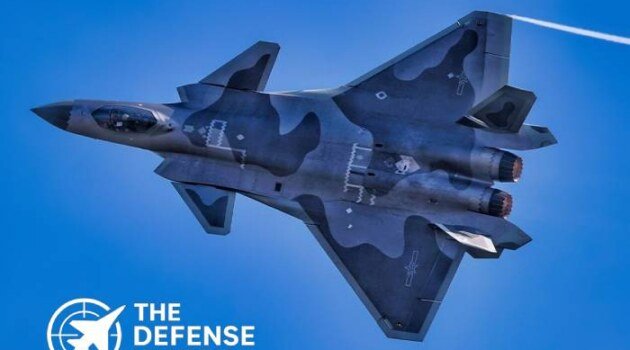
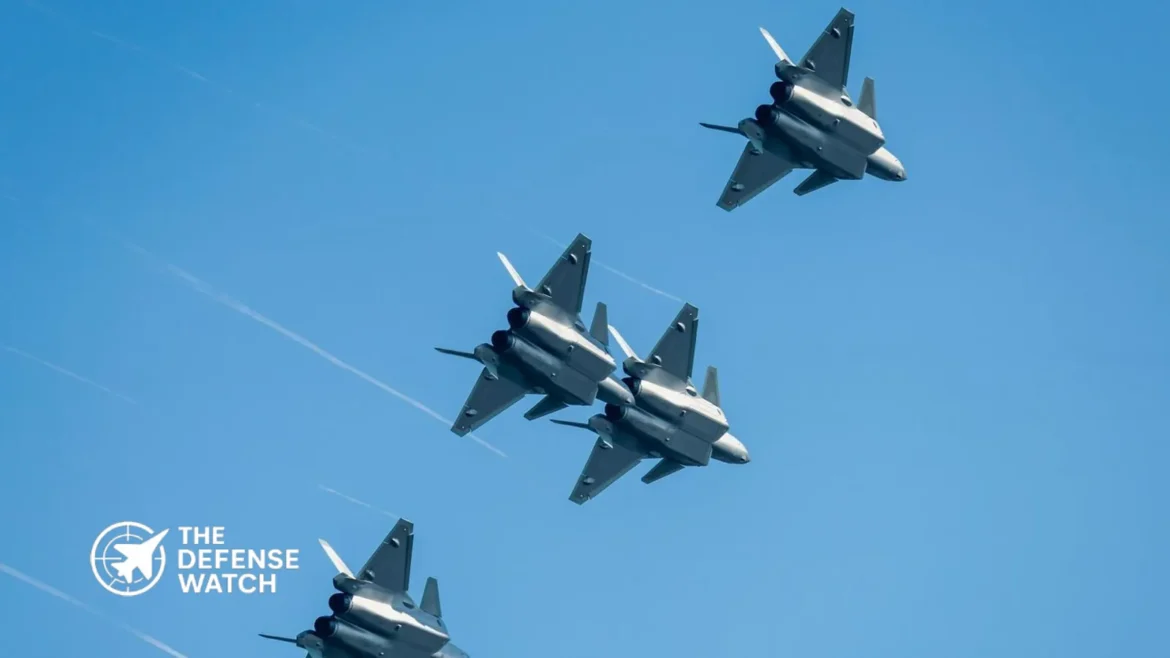
China, for its part, continues to field advanced systems such as the J-20 stealth fighter and long-range surface-to-air missile networks. This evolving threat environment has driven the U.S. to prioritize survivable, high-end capabilities in forward positions.
Defense analysts note that positioning F-22s closer to China also supports the concept of agile combat employment (ACE), which emphasizes dispersal, mobility, and rapid redeployment across multiple bases to reduce vulnerability.
Analysis: Speed, Deterrence, And Escalation Risks
The F-22 stealth fighters deployment reflects a calculated balance between deterrence and escalation management. On one hand, forward positioning strengthens U.S. credibility and reassures regional allies. On the other, it increases the proximity of high-end military assets between competing powers.
From a strategic standpoint, this move signals that the U.S. is prioritizing readiness for high-intensity conflict scenarios, particularly in the Taiwan Strait. It also highlights the importance of air superiority as a foundational element of any potential operation.
However, closer deployments may also heighten risks of miscalculation, especially during periods of increased military activity. Encounters between U.S. and Chinese aircraft have become more frequent, raising concerns among policymakers and military leaders.
Conclusion
The F-22 stealth fighters deployment closer to China underscores a clear shift toward faster, more responsive U.S. airpower in the Indo-Pacific. As tensions over Taiwan persist, the ability to rapidly project advanced combat capability will remain central to deterrence and crisis response.
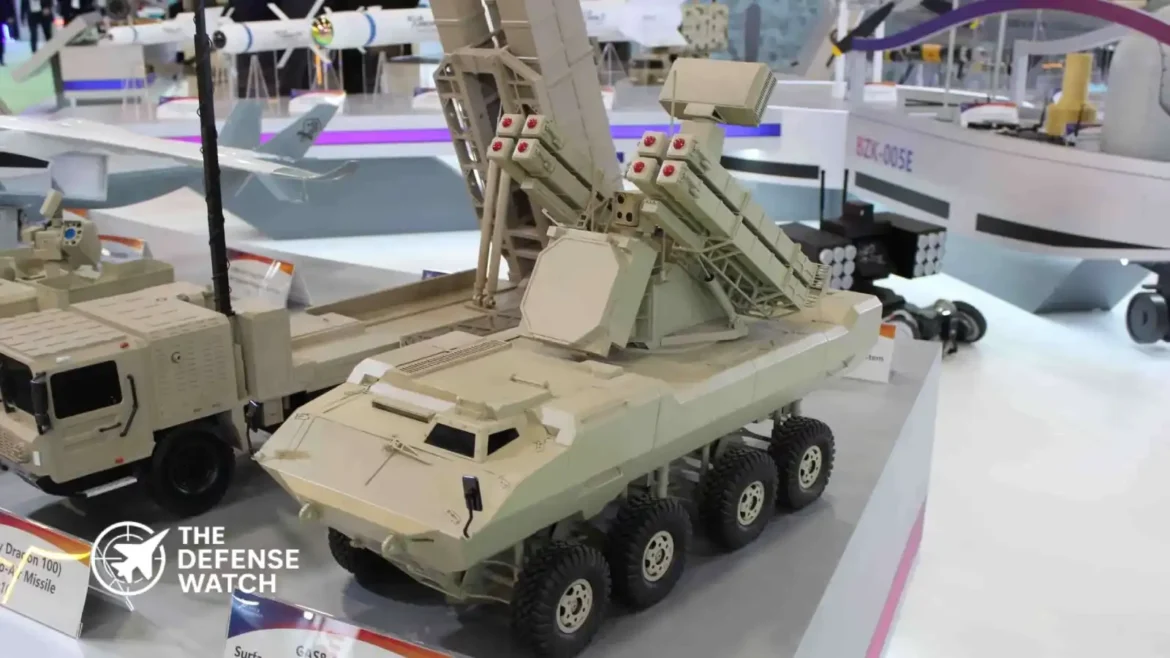
Executive Summary: China has unveiled the Yitian II 8×8 SHORAD system, a mobile air defense platform equipped with 20 km-range missiles designed to counter drones and low-altitude threats. The system reflects Beijing’s response to evolving battlefield conditions where UAVs and precision-guided munitions dominate. Its deployment highlights growing competition with U.S. and allied forces adapting to similar threats.
China Introduces Yitian II SHORAD System
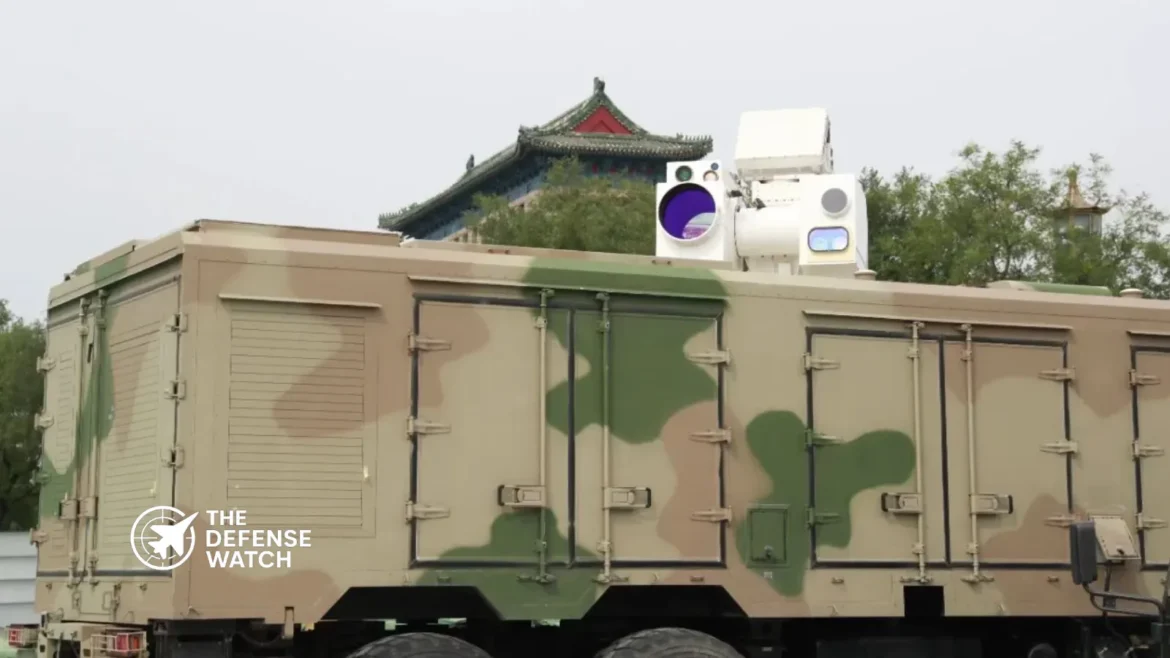
China has revealed its latest short-range air defense system, the Yitian II, mounted on an 8×8 wheeled armored platform. The system is designed to intercept a range of aerial threats, including drones, helicopters, and low-flying aircraft.
The most notable upgrade is its extended missile range of up to 20 kilometers, a significant improvement over earlier SHORAD systems. This positions the Yitian II as a more capable asset in layered air defense networks.
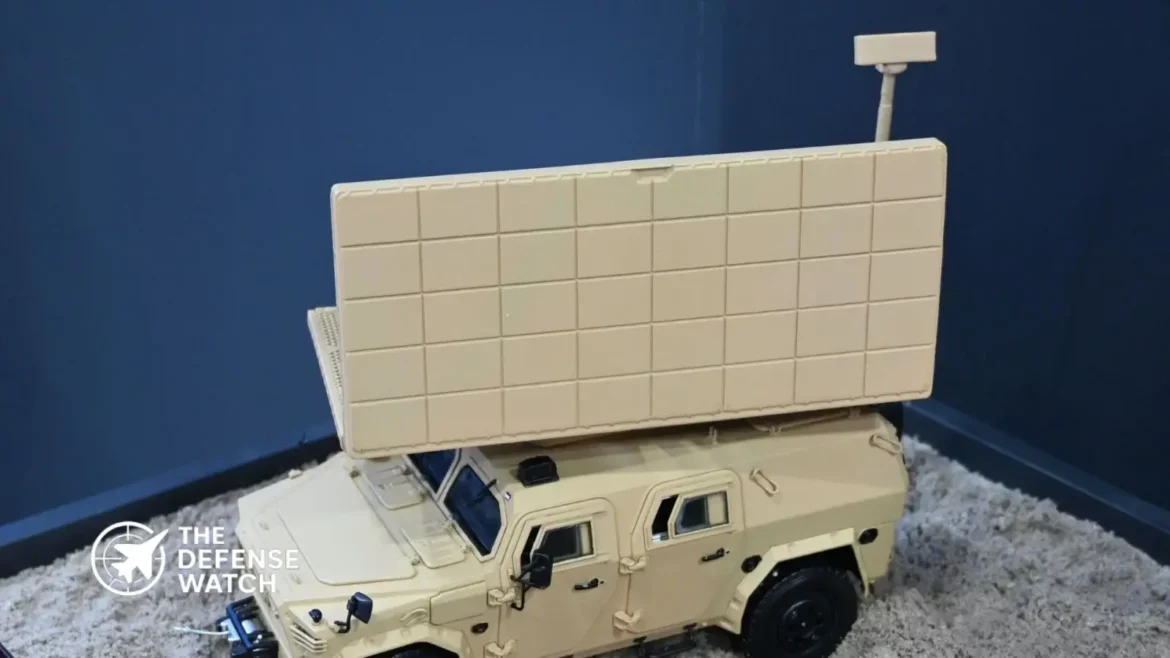
The system integrates radar, electro-optical tracking, and missile launch capabilities into a single mobile unit, enabling rapid deployment and autonomous engagement.
Key Features and Capabilities
Enhanced Engagement Range and Targeting
- Missile range: up to 20 km, expanding coverage against aerial threats
- Capable of engaging low-altitude and slow-moving targets, including drones
- Likely incorporates improved seeker technology for higher hit probability
Mobility and Survivability
- Mounted on a high-mobility 8×8 chassis for rapid repositioning
- Designed for shoot-and-scoot tactics to avoid counterfire
- Suitable for both frontline and rear-area defense roles
Integrated Sensor Suite
- Combines radar and electro-optical systems for all-weather operation
- Enhanced tracking against small radar cross-section targets such as UAVs
- Network-capable for integration into broader air defense systems
Comparison with Legacy and Competitor Systems
System Range Payload Status Key Technology Yitian II 20 km Short-range SAMs Emerging (China) EO + radar fusion, anti-drone focus Yitian (Legacy) ~6–10 km Short-range SAMs In service (China) Basic IR-guided missiles Avenger (U.S.) ~8 km Stinger missiles Operational IR-guided, mobile SHORAD Pantsir-S1 (RU) ~20 km Missiles + guns Operational Combined gun-missile system Responding to the Drone Warfare Shif
The development of Yitian II reflects a broader shift in military priorities driven by the rapid proliferation of drones. Conflicts in recent years have demonstrated how low-cost UAVs can overwhelm traditional air defenses.
China appears to be aligning its doctrine with these lessons by fielding systems optimized for:
- Counter-UAV operations
- Defense against loitering munitions
- Protection of mobile and static assets
The extended range also allows earlier interception, reducing the risk posed by swarm attacks.
Strategic Implications for U.S. and Allied Forces
The unveiling of Yitian II comes amid growing concerns within U.S. military circles about vulnerabilities to drone attacks. American forces have increasingly focused on SHORAD modernization, but systems like Yitian II highlight the pace of Chinese advancements.
Key implications include:
- Intensified competition in tactical air defense systems
- Increased emphasis on multi-layered air defense networks
- Potential challenges in Indo-Pacific operational environments
China’s continued investment in mobile, networked air defense platforms suggests a long-term effort to deny air superiority in contested regions.
Outlook
The Yitian II represents a clear step forward in China’s SHORAD capabilities. Its combination of mobility, extended range, and anti-drone specialization aligns with evolving battlefield requirements.
As drone warfare continues to shape modern conflict, systems like Yitian II are likely to play a central role in future military operations, particularly in high-intensity and hybrid warfare scenarios.
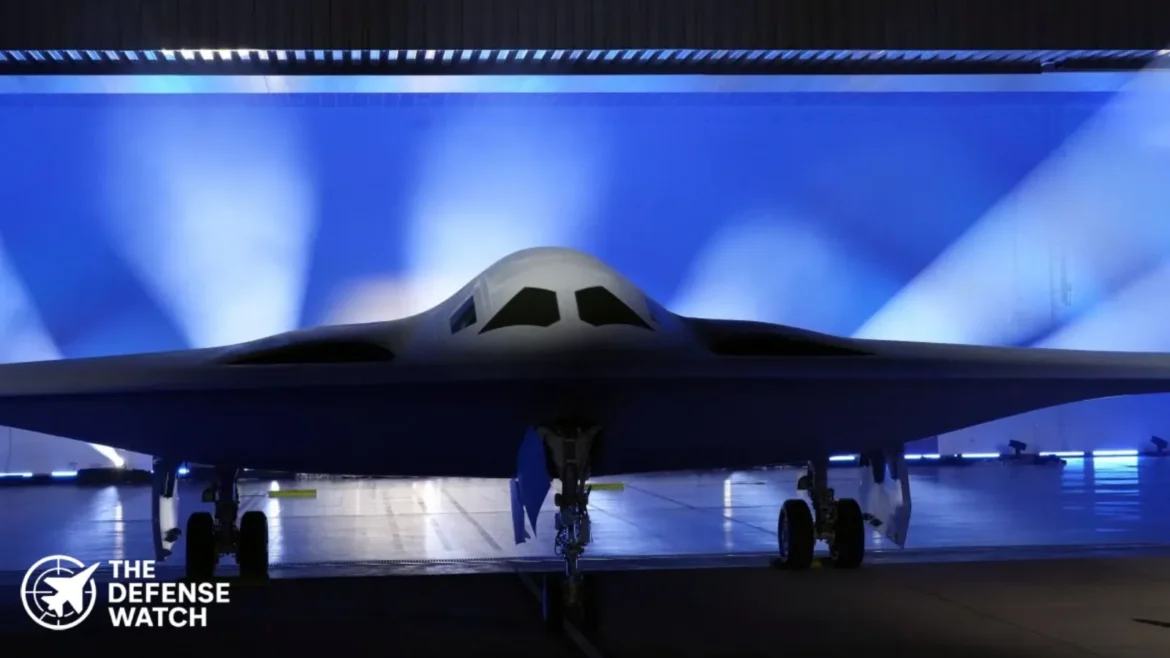
U.S. Air Power Plan Signals New Focus On Deep Strike
The U.S. air power plan worth roughly $102 billion highlights Washington’s push to strengthen deep strike capacity and maintain air superiority against rising challenges from China and Russia. The spending profile, aligns with broader Pentagon modernization priorities focused on stealth aircraft, long range weapons, survivable networks, and next generation combat aviation.
KEY FACTS AT A GLANCE- U.S. funding package centers on long range strike and future air superiority programs.
- Major priorities include stealth bombers, advanced fighters, weapons, and support networks.
- Strategy reflects rising concern over Chinese force growth and Russian combat aviation threats.
- Investment scale signals multi year modernization rather than a one year surge.
- The central goal is to preserve U.S. ability to strike first, survive, and sustain operations.
The Big Picture
Airpower remains central to U.S. military strategy. It enables rapid response, precision strike, intelligence collection, airlift, and deterrence across Europe, the Indo Pacific, and the Middle East.
That advantage is no longer uncontested. China has expanded fighter production, long range missile forces, airborne sensors, and integrated air defenses. Russia, despite combat losses in Ukraine, still fields a capable tactical aviation force and layered air defense architecture. For U.S. planners, the era of automatic air dominance is over.
The result is a shift from counterinsurgency era fleets toward systems built for heavily defended battlespace.
What’s Happening
The reported U.S. air power plan allocates major resources toward several categories:
- Stealth bomber procurement, led by the B-21 Raider
- Tactical fighter modernization, including F-35A Lightning II fleets
- Future air dominance programs, including sixth generation concepts
- Precision munitions and stand off strike weapons
- Tankers, command and control, and support infrastructure
- Research into collaborative autonomous aircraft and networked warfare systems
This reflects a force design built for penetrating defended airspace and sustaining long range campaigns rather than short duration permissive operations.
Why It Matters
Modern air warfare depends on more than fighters. Aircraft need tankers, electronic warfare support, resilient communications, munitions stockpiles, and distributed bases.
That is why the U.S. air power plan matters. It suggests Washington understands that advanced adversaries will target airfields, satellites, fuel logistics, and command networks early in any conflict.
Buying aircraft without fixing those enablers would leave gaps. Funding both strike platforms and supporting architecture is strategically more credible.
Strategic Implications
For the Indo Pacific, range is the defining challenge. Distances are vast, bases are exposed, and resupply could be contested. Long range bombers and survivable tankers become essential.
For Europe, readiness and mass matter more. NATO would need rapid sortie generation, missile defense integration, and sustained combat power if facing Russian escalation.
In both theaters, airpower is tied directly to deterrence. If adversaries believe U.S. forces can penetrate defenses and keep fighting after initial attacks, the threshold for aggression rises.
Competitor View
China is likely to read this investment as confirmation that the U.S. intends to preserve power projection inside the first and second island chains. That may reinforce Beijing’s own spending on missiles, sensors, fighters, and counter space tools.
Russia will likely view the plan through a NATO lens, especially if paired with more rotational deployments and precision strike capacity in Europe.
Neither competitor is standing still, which means procurement speed may matter as much as total dollars.
Capability Gap The Plan Aims To Close
The most serious U.S. weakness is not pilot skill or technology quality. It is the combination of aging fleets, limited production rates, fragile logistics chains, and insufficient munition depth for a prolonged high end war.
The U.S. air power plan appears designed to close four gaps:
- Range against distant targets
- Survivability in contested airspace
- Mass after early attrition
- Sustainment over long campaigns
A realistic limitation remains industrial capacity. Even large budgets cannot instantly produce engines, airframes, chips, or trained maintainers.
What To Watch Next
Watch these indicators over the next 12 to 24 months:
- Annual procurement numbers for bombers and fighters
- Progress on next generation air dominance programs
- Missile stockpile expansion
- New tanker and dispersal basing concepts
- Defense industry production timelines
- Congressional support during budget negotiations
If funding turns into timely deliveries, the plan gains real weight. If programs slip, strategic value falls quickly.
The Bottom Line
The $102 billion push shows the United States is investing not just in aircraft, but in restoring credible air dominance for a more contested era.
China NI-HP1000 High-Power Microwave System Highlights Counter-Drone Push
The China NI-HP1000 high-power microwave system reflects Beijing’s growing focus on defeating drone swarms with directed-energy weapons. Coverage of DSA 2026, Chinese industry is presenting the NI-HP1000 as a mobile system built to neutralize unmanned aerial threats by attacking onboard electronics rather than relying on conventional interceptors.
KEY FACTS AT A GLANCE- China is promoting the NI-HP1000 high-power microwave system as a counter-drone solution at DSA 2026.
- The system is designed to disable drone electronics using directed microwave energy rather than missiles.
- High-power microwave weapons are seen as useful against multiple drones in a single engagement.
- China is expanding exports of non-kinetic air defense systems alongside laser weapons.
- Global militaries are accelerating similar programs to counter low-cost drone swarms.
That matters because low-cost drones have changed battlefield economics. Small unmanned aircraft can be produced cheaply, launched in large numbers, and used to overwhelm expensive missile defenses. Militaries worldwide are now searching for lower-cost counters that can engage many targets quickly.
What The NI-HP1000 Is Designed To Do
High-power microwave weapons emit concentrated electromagnetic energy intended to disrupt or damage electronic components. In counter-drone missions, that can include flight controls, communications links, navigation systems, or payload electronics.
Unlike a missile that destroys one target at a time, microwave systems are often marketed as area-effect defenses. If several drones enter the engagement zone, multiple systems may be affected at once. That makes them especially relevant against swarm tactics.
China has already publicized similar systems. Earlier reporting on the Chinese Hurricane 3000 said it could engage light drones and swarms beyond 3 kilometers, suggesting sustained Chinese investment in this technology field.
Why China Is Showing It Now
The NI-HP1000 appears as countries reassess air defense after conflicts in Ukraine, the Middle East, and the Red Sea demonstrated the scale of drone threats. Cheap one-way attack drones and quadcopters have forced militaries to spend costly interceptors on low-value targets.
That creates a clear demand for systems with:
- Lower cost per shot
- Fast repeat engagement cycles
- Deeper magazines than missile launchers
- Ability to counter grouped targets
- Mobility for base and field defense
China’s defense industry likely sees export potential in that market, particularly among states seeking affordable layered air defense options.
How It Compares With U.S. Efforts
The United States is also investing heavily in microwave counter-drone systems. Recent reporting highlighted accelerated U.S. work on high-powered microwave and laser weapons to defeat mass drone attacks over the next several years.
This shows a wider trend: major powers increasingly agree that traditional missile-only air defense is too expensive for persistent drone warfare.
Where missiles remain essential against aircraft and ballistic threats, microwave systems may fill the lower tier by handling smaller unmanned targets.
Limits And Real Battlefield Questions
Despite the promise, directed-energy systems still face real constraints:
- Power generation requirements
- Weather and environmental effects
- Line-of-sight limitations
- Integration with radar and command networks
- Effectiveness against hardened electronics
Those factors mean the NI-HP1000 is more likely to complement existing air defenses than replace them.
Strategic Takeaway
The China NI-HP1000 high-power microwave system signals that counter-drone warfare is entering a new phase. Instead of firing expensive missiles at every low-cost UAV, militaries are moving toward scalable electronic defeat systems.
For China, showcasing the NI-HP1000 is about more than one product. It demonstrates that Beijing wants a larger role in the future market for directed-energy air defense, where demand is rising fast and battlefield lessons are reshaping procurement priorities.
KEY FACTS AT A GLANCE- China unveiled two new laser weapons designed to counter drones and loitering munitions.
- Systems focus on low altitude threats with rapid engagement and low cost per shot.
- Development reflects growing global emphasis on counter UAV and directed energy defenses.
- Systems appear optimized for mobile deployment and point defense missions.
- Directed energy weapons are becoming central to modern layered air defense strategies.
China Laser Weapons Target Drones And Loitering Munitions
China laser weapons targeting drones and loitering munitions mark a significant step in Beijing’s push to field next generation air defense systems. Chinese defense industry sources revealed two new directed energy platforms designed to neutralize low altitude aerial threats with precision and speed.
The systems focus on countering small unmanned aerial systems and loitering munitions, threats that have reshaped modern battlefields from Eastern Europe to the Middle East.
The Big Picture
Directed energy weapons have moved from experimental programs to operational priorities across major military powers. The United States, China, and several NATO members are investing heavily in laser based air defense to counter the rapid proliferation of drones.
Small UAVs and loitering munitions present a unique challenge. They are cheap, difficult to detect, and can overwhelm traditional air defense systems through saturation tactics. Conventional interceptors often cost far more than the targets they destroy, creating an unfavorable cost exchange ratio.
China’s latest laser systems reflect a broader shift toward scalable, cost effective defenses that can operate in high threat environments without relying solely on missiles.
What’s Happening
Chinese developers introduced two laser weapon systems designed specifically for low altitude air defense missions. These systems are intended to detect, track, and engage drones and loitering munitions in real time.
The platforms appear to be mobile, suggesting deployment with ground forces or for point defense of critical infrastructure. Their primary role is to intercept slow moving, low flying targets that may evade radar or traditional air defense coverage.
Laser weapons offer several operational advantages. They engage targets at the speed of light, provide deep magazines limited mainly by power supply, and significantly reduce per shot costs compared to missile interceptors.
The unveiling highlights China’s continued investment in directed energy technology as part of its broader military modernization strategy.
Why It Matters
China laser weapons targeting drones address one of the most pressing operational challenges facing modern militaries. Drone warfare has evolved rapidly, with even non state actors deploying swarms of low cost systems.
Traditional air defense networks struggle to keep pace with the volume and diversity of these threats. Missile based systems remain effective but are not economically sustainable for large scale drone engagements.
Laser systems change that equation. They allow forces to engage multiple targets quickly and at minimal cost, making them ideal for counter swarm scenarios.
This development also signals that directed energy is no longer a niche capability. It is becoming a core element of integrated air and missile defense architectures.
Strategic Implications
China’s investment in laser weapons strengthens its ability to defend forward deployed forces and critical assets. These systems could enhance protection for air bases, logistics hubs, and command centers.
In a regional context, this capability supports China’s anti access and area denial strategy. By improving defenses against drones and precision guided munitions, Beijing can complicate adversary strike planning.
The systems may also play a role in protecting naval assets and expeditionary forces, especially in contested environments such as the South China Sea.
More broadly, the deployment of operational laser weapons contributes to a shift in the balance of air defense technologies. Countries that integrate directed energy effectively will gain an advantage in countering emerging aerial threats.
Competitor View
The United States has pursued similar capabilities through programs led by the US Army and Navy, including high energy laser systems for short range air defense. China’s progress will likely reinforce Washington’s focus on accelerating deployment timelines and scaling production.
Russia has also explored directed energy weapons, though its operational deployment remains less clear. Meanwhile, regional actors in Asia may view China’s advancements as part of a broader effort to modernize its layered defense network.
For U.S. allies in the Indo Pacific, this development underscores the need to invest in counter drone technologies and integrate them into existing air defense systems.
What To Watch Next
Future testing and operational deployment will determine the effectiveness of these systems under real combat conditions. Key indicators include integration with radar and command systems, power generation capabilities, and performance in adverse weather.
Procurement and deployment timelines will also provide insight into how quickly China intends to field these systems at scale.
Export potential could become another factor, as China may market lower cost laser systems to partner nations seeking counter drone solutions.
Capability Gap
China laser weapons targeting drones aim to close a critical gap in short range air defense. Traditional systems struggle against low signature, low altitude threats, especially in large numbers.
However, laser weapons still face limitations. Their effectiveness can degrade in poor weather conditions such as fog, rain, or dust. Power generation and thermal management also remain key challenges for sustained operations.
Despite these constraints, lasers offer a complementary layer rather than a replacement for missile based defenses.
The Bottom Line
China’s new laser weapons signal a decisive move toward cost effective, high speed counter drone defense as directed energy becomes central to modern warfare.
¦ KEY FACTS AT A GLANCE- China is increasing production capacity for both J-20 and J-35 stealth fighters.
- Expanded manufacturing lines aim to accelerate delivery of fifth-generation aircraft to the PLA.
- The move supports China’s broader strategy to compete with U.S. and allied airpower in the Indo-Pacific.
- J-20 production continues to scale, while J-35 is positioned for both naval and export roles.
- China is shifting from limited production to sustained high-rate output of stealth fighters.
China Stealth Fighter Production Expands Rapidly
China stealth fighter production is accelerating as Beijing increases manufacturing capacity for both the J-20 and the emerging J-35 programs, signaling a sustained push to expand its fifth-generation combat aircraft fleet.
The Big Picture
China is moving from incremental modernization to large-scale force expansion. The focus is no longer just on fielding advanced platforms, but on producing them in volume.
The United States has long maintained an advantage in fifth-generation aircraft numbers through the F-22 and F-35 programs. China’s current effort suggests a shift toward narrowing that gap, not only in capability but in fleet size.
The Indo-Pacific remains the central theater for this competition. Air superiority, long-range strike, and survivability against advanced air defenses define operational planning for both sides.
What’s Happening
China is increasing production capacity for the J-20, its primary fifth-generation stealth fighter, while also advancing the J-35, a carrier-capable platform under development.
According to Source, new or expanded production lines are enabling higher output rates. The J-20 program, already in serial production, continues to scale, with improved variants and engine upgrades expected to support sustained manufacturing.
The J-35, often compared to U.S. carrier-based stealth fighters, is progressing toward operational deployment. It is expected to serve both the People’s Liberation Army Air Force and the People’s Liberation Army Navy.
Chinese industry appears to be transitioning toward parallel production of multiple stealth aircraft types, a capability historically associated with mature aerospace powers.
Why It Matters
Higher production capacity directly translates into operational mass. Even the most advanced aircraft cannot shape the battlefield if available in limited numbers.
China’s ability to produce the J-20 at scale strengthens its air dominance strategy. The aircraft’s stealth profile, long-range engagement capability, and networked operations make it central to Beijing’s air combat doctrine.
The addition of the J-35 expands flexibility. A carrier-capable stealth fighter enhances naval aviation, supporting power projection beyond China’s immediate coastline.
This dual-track production model reduces reliance on a single platform and creates redundancy in force structure.
Strategic Implications
China’s expanding stealth fighter production affects regional military balance in several ways.
First, it increases pressure on U.S. and allied air forces to maintain qualitative and quantitative advantages. Countries such as Japan and Australia rely heavily on the F-35 program, but production rates and fleet size remain critical factors.
Second, it strengthens China’s anti-access and area denial strategy. A larger stealth fleet complicates adversary planning by increasing the number of survivable strike and interception assets.
Third, it enhances China’s ability to sustain operations in a prolonged conflict. High production capacity suggests resilience, allowing the replacement of losses and continuous force generation.
Competitor View
The United States and its allies are likely to view China’s production surge as a signal of long-term strategic intent rather than a short-term buildup.
Washington has emphasized distributed operations and advanced networking to offset numerical challenges. However, increased Chinese output could erode that advantage over time.
Regional actors may interpret the J-35’s development as a direct response to carrier-based airpower in the Pacific. Its potential export role could also influence defense partnerships, particularly in regions where access to Western systems is limited.
Russia, while a traditional aerospace competitor, may view China’s industrial scaling as a benchmark for its own production challenges.
What To Watch Next
Key indicators will shape how this development unfolds.
Engine maturity remains critical. Indigenous engine programs will determine whether China can sustain high production rates without foreign dependencies.
Operational deployment timelines for the J-35 will also be closely watched, particularly its integration with aircraft carriers.
Production tempo is another factor. If China maintains consistent output growth, it will signal a durable industrial base rather than a temporary surge.
Export activity could further amplify the impact. If the J-35 enters the international market, it could reshape the global fighter landscape.
Capability Gap
China’s push addresses a clear gap in fleet size relative to the United States and its allies.
While the J-20 provides advanced capabilities, earlier production levels limited overall operational impact. Scaling production helps close that gap.
The J-35 addresses another gap, carrier-based stealth aviation. China’s naval air wing has historically relied on non-stealth platforms, limiting survivability in contested environments.
However, challenges remain. Engine performance, pilot training, and integration into joint operations will determine real-world effectiveness.
The Bottom Line
China’s expansion of J-20 and J-35 production marks a shift toward sustained, high-volume stealth fighter output that could reshape the balance of airpower in the Indo-Pacific.
KEY FACTS AT A GLANCE- China increased its 2026 defense budget by 7% to roughly 1.91 trillion yuan, about $277 billion.
- The increase marks the 11th consecutive year of single digit growth in Chinese military spending.
- The budget expansion comes alongside a sweeping purge of senior People’s Liberation Army generals.
- Analysts estimate actual Chinese defense spending may be significantly higher than the official figure.
- China now accounts for roughly 44% of total military expenditure across Asia.
China Defense Budget 2026 Reflects Continued Military Modernization
The China defense budget 2026 will increase by 7% bringing total military spending to approximately 1.91 trillion yuan, or about $277 billion, according to figures released during China’s annual National People’s Congress in Beijing.
The budget announcement highlights Beijing’s continued focus on modernizing the People’s Liberation Army (PLA) while President Xi Jinping simultaneously pursues one of the most extensive purges of senior military leadership in decades.
Chinese officials say the increase supports national security requirements and ongoing efforts to modernize the armed forces. The spending growth follows three consecutive years of 7.2% increases and represents the 11th straight year of single digit budget growth for China’s military.
Despite the modest percentage increase, China’s defense budget remains the second largest in the world after the United States.
The Big Picture
China’s steady defense spending growth reflects a long term strategy to transform the PLA into a fully modern military by 2035.
The modernization campaign includes large investments in advanced missile systems, naval expansion, stealth aircraft, cyber capabilities, and space based military assets. Analysts also link these efforts to Beijing’s objective of achieving a “world class military” capable of projecting power beyond its immediate region.
Regional security concerns, particularly tensions surrounding Taiwan and broader competition with the United States in the Indo Pacific, continue to shape Beijing’s defense priorities.
China conducted a record 5,709 military aircraft sorties near Taiwan’s air defense identification zone in the past year, highlighting the increasing operational tempo of PLA forces in the region.
At the same time, the country’s economic growth is slowing, forcing Beijing to balance military investment with domestic economic pressures.
What’s Happening
Chinese authorities announced the 7 percent defense spending increase on March 5 during the opening of the National People’s Congress, the country’s annual legislative session.
The new China defense budget 2026 brings the official figure to approximately $277 billion.
However, several defense analysts and U.S. government assessments suggest that China’s actual military spending may be substantially higher than its declared budget.
The U.S. Department of Defense has previously estimated that China’s true defense expenditures could be 32 to 63 percent greater than the publicly released figure.
Some military related costs, including certain research and development programs, internal security activities, and mobilization efforts, are not fully included in the official defense budget.
Meanwhile, China’s leadership is conducting a sweeping anti corruption campaign across the PLA. The purge has removed a large number of senior officers, including top generals and members of the Central Military Commission.
According to the Center for Strategic and International Studies, more than 100 senior PLA leaders have been purged since 2022.
Why It Matters
The simultaneous increase in military spending and purge of senior commanders signals a major restructuring inside China’s armed forces.
Xi Jinping has repeatedly emphasized political loyalty and centralized control over the military. Analysts say the purge is intended to eliminate corruption while reinforcing the Chinese Communist Party’s authority over the PLA.
This approach reflects Beijing’s long standing doctrine that the military must remain firmly under party control.
However, removing large numbers of senior officers also creates leadership gaps across the command structure. Such disruptions could temporarily slow operational planning, procurement decisions, and modernization programs.
Even so, the broader objective remains clear. Beijing wants a more disciplined and technologically advanced military capable of conducting high intensity joint operations.
Strategic Implications
China’s defense spending trajectory continues to reshape the regional military balance in Asia.
According to the International Institute for Strategic Studies, China now accounts for nearly 44 percent of total military expenditure across Asia, far exceeding the defense budgets of neighboring countries.
Japan’s military spending, for example, is roughly one fifth of China’s budget, while Taiwan’s defense spending is approximately one ninth of Beijing’s total.
China’s expanding naval fleet, long range missile forces, and rapidly advancing aerospace capabilities are particularly significant for regional deterrence dynamics.
The PLA Navy already operates the world’s largest fleet by ship count, while China continues to field advanced anti ship ballistic missiles and next generation fighter aircraft.
Taken together, these capabilities strengthen China’s ability to project power across the Western Pacific.
Competitor View
Strategic competitors are watching China’s defense spending trends closely.
The United States views the PLA’s modernization drive as a central component of great power competition in the Indo Pacific. Washington’s own defense strategy increasingly focuses on maintaining technological and operational advantages over China.
Regional partners including Japan, Australia, and South Korea have also expanded defense budgets in response to China’s growing military capabilities.
Taiwan in particular monitors PLA activity carefully. Increased Chinese military flights near the island and ongoing modernization of amphibious and missile forces directly affect Taiwan’s defense planning.
For many regional governments, China’s rising defense spending reinforces the need for stronger alliances and improved military interoperability.
What To Watch Next
Several developments will shape the future trajectory of China’s military modernization.
First, analysts will monitor how Beijing restructures the PLA leadership after the ongoing purge of senior officers. Filling key command positions will be essential to maintaining operational readiness.
Second, the next phase of China’s defense investments will likely focus on emerging technologies, including artificial intelligence, hypersonic weapons, and advanced unmanned systems.
Third, observers will watch for changes in PLA operational activity around Taiwan and in the South China Sea, where Chinese military deployments have increased in recent years.
Upcoming military exercises and equipment announcements may provide additional insight into Beijing’s modernization priorities.
Capability Gap
China’s expanding defense budget addresses several operational gaps identified by Chinese military planners over the past two decades.
Historically, the PLA lagged behind Western militaries in areas such as joint operations, long range power projection, and advanced command and control systems.
Modernization efforts aim to close those gaps by integrating networked battlefield systems, improving naval aviation capabilities, and expanding strategic missile forces.
At the same time, the recent purge of senior commanders highlights ongoing institutional challenges within the PLA, including corruption risks and bureaucratic inefficiencies that can complicate large scale military reform.
The Bottom Line
China’s rising defense spending and sweeping leadership purge reflect a single strategic objective, building a modern, politically loyal military capable of competing with the world’s most advanced armed forces.
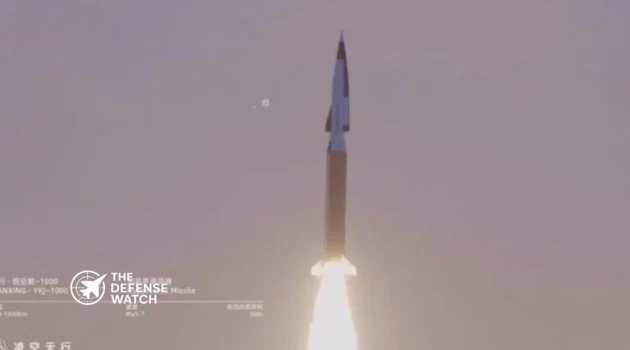
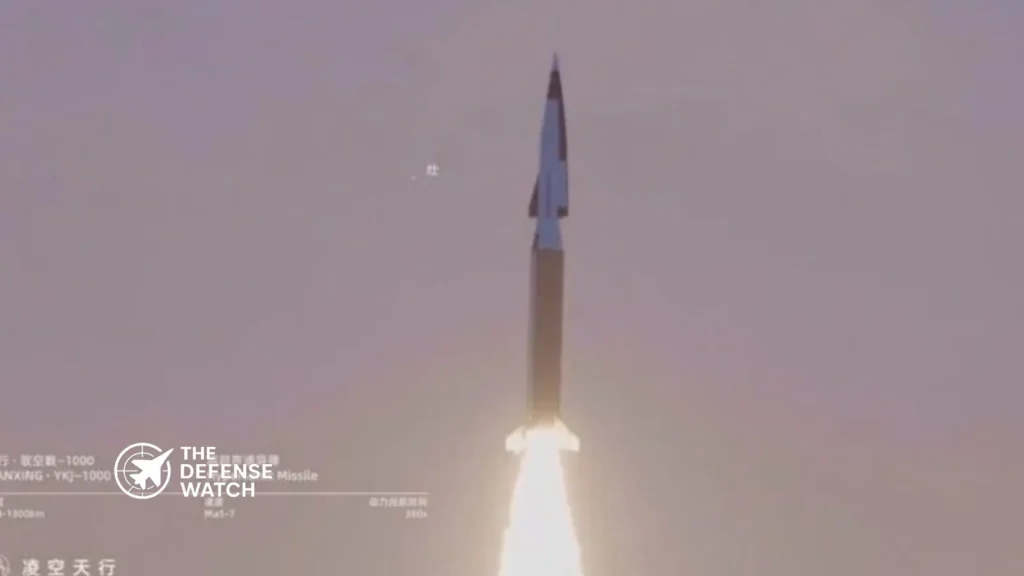
■ KEY FACTS AT A GLANCE- ► China’s Sichuan Lingkong Tianxing Technology unveiled the YKJ-1000 hypersonic glide missile in late November 2025, advertising a unit cost of approximately $99,000.
- ► The YKJ-1000 is claimed to achieve speeds up to Mach 7 (~8,575 km/h) with a range of 500 to 1,300 kilometers depending on configuration.
- ► A single U.S. Navy SM-6 interceptor costs approximately $4.1 million; THAAD interceptors range from $12 million to $15 million per round.
- ► The missile uses civilian-grade components including consumer drone optics, automotive processors, BeiDou navigation chips, and foamed concrete thermal coatings in place of traditional aerospace-grade materials.
- ► The system is road-mobile and container-launched, enabling rapid concealment and deployment from non-military platforms.
- ► An AI-enabled swarm variant is under development, designed to coordinate multiple YKJ-1000 missiles against single targets simultaneously.
- ► No independent third-party verification of the missile’s performance claims or actual production cost has been published as of February 2026.
China’s YKJ-1000 Doesn’t Have to Be Perfect to Be a Problem
The YKJ-1000 hypersonic missile may be the most strategically consequential weapon system announced in 2025 — not necessarily because it works as advertised, but because of what it signals about the direction of Chinese military development and the economic logic it introduces into modern deterrence.
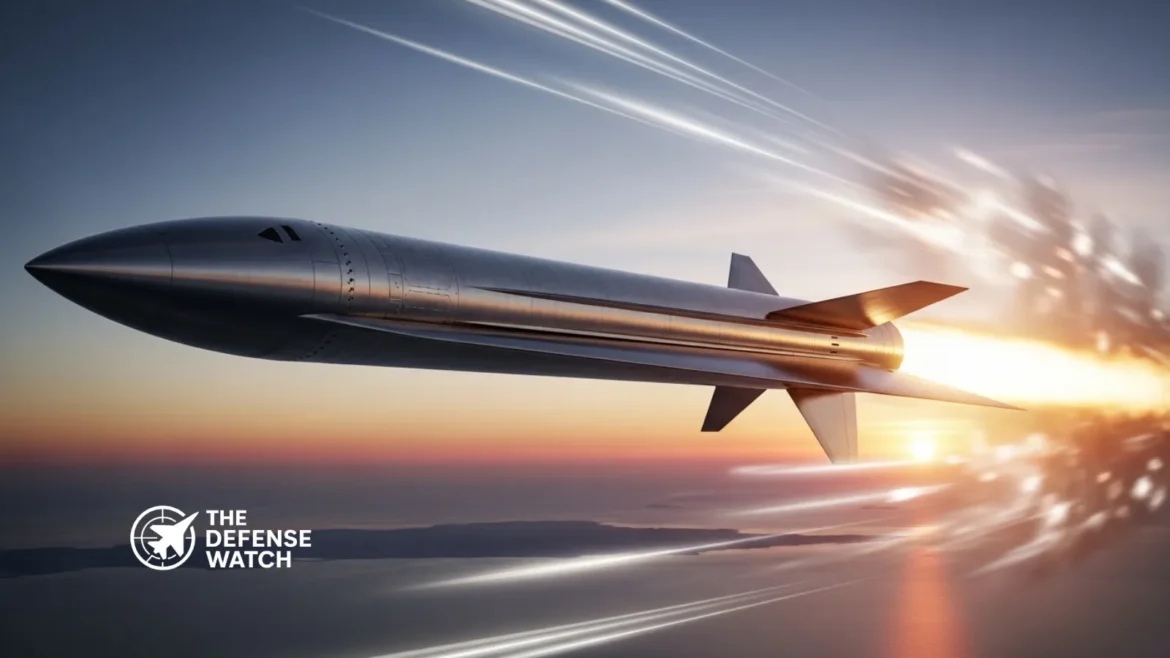
Developed by Chengdu-based private aerospace firm Sichuan Lingkong Tianxing Technology, the YKJ-1000 is a boost-glide hypersonic missile reportedly capable of Mach 7 flight across a range of 500 to 1,300 kilometers. Its claimed price tag of roughly $99,000 per unit — compared to a $4.1 million SM-6 or a $12–15 million THAAD interceptor — immediately dominated defense discussions when the system was disclosed in late November 2025. Whether or not those numbers hold up under scrutiny, they frame a strategic challenge the U.S. missile defense enterprise cannot afford to ignore.
The Real Story Is the Cost-Exchange Ratio
Western missile defense doctrine has long rested on an uncomfortable but manageable asymmetry: interceptors are expensive, but adversary missiles capable of penetrating them are even more expensive. That equation made layered defense architectures — Patriot, THAAD, SM-6, and eventually NGAD-era directed energy — fiscally painful but strategically viable.
The YKJ-1000 directly attacks that assumption.
If a salvo of even 20 such missiles can be fielded for under $2 million and forces the expenditure of $80 to $300 million in SM-6 or THAAD rounds to defeat it, the attacker wins economically even in a failed strike. The Pentagon’s own Missile Defense Agency has acknowledged in successive budget justifications — including the FY2025 and FY2026 submissions — that the cost-exchange ratio in missile defense is a primary driver of procurement strategy. The YKJ-1000 scenario, however credible, places that entire calculus under pressure.
-
This is not a new concept. Ukraine’s conflict demonstrated it repeatedly: Iranian-origin Shahed-136 drones costing an estimated $20,000–$50,000 each routinely forced Ukrainian forces to expend Patriot or NASAMS rounds worth orders of magnitude more. The YKJ-1000 follows the same logic, but adds hypersonic speed and claimed maneuverability — factors that complicate intercept geometry in ways that slow drones simply do not.
What China’s Military-Civil Fusion Model Actually Produces
Lingkong Tianxing was founded in 2018 and initially focused on reusable launch vehicles and suborbital systems. Its pivot to hypersonic weapons reflects Beijing’s military-civil fusion policy in unusually concrete form: a private company with commercial space DNA, leveraging China’s dominant position in global consumer electronics manufacturing to undercut the cost structure of traditional weapons development.

The YKJ-1000’s use of BeiDou navigation chips — commercially available for a few dollars in smartphone and automotive applications — in place of bespoke military-grade inertial or GPS/INS systems is an instructive example. U.S. and allied defense contractors face regulatory, labor, and supply-chain constraints that prevent equivalent substitution. China does not face those barriers at the same scale, and its dominance in printed circuit board production, optical sensor fabrication, and chip packaging gives Lingkong Tianxing access to economies of scale that no Western hypersonics program can replicate through comparable means.
This structural advantage is more durable than any single weapon system. Even if the YKJ-1000 fails to meet its stated performance parameters, the next iteration — built on the same industrial base — may well close the gap.
Verifying the Claims: Significant Skepticism Is Warranted
Serious technical questions surround the YKJ-1000. No independent test data has been publicly released. Available disclosure material consists of promotional imagery, computer-rendered animations, and static display photographs. The company’s publicity officer has confirmed that the widely cited $99,000 figure is not precisely accurate, while affirming that the design does rely on mass-market industrial components.
The most significant technical concern involves thermal management. Sustained Mach 7 flight generates surface temperatures exceeding 1,600°C. Traditional hypersonic programs — including the U.S. AGM-183A ARRW and the Russian Kinzhal — rely on purpose-engineered carbon-ceramic or ablative composites specifically rated for those conditions. The YKJ-1000’s reported use of foamed concrete and industrial cement-based coatings raises legitimate questions about whether those materials can survive full-envelope hypersonic flight without structural degradation, loss of maneuverability, or guidance system failure from thermal ingress.
-
Similarly, integrating consumer-grade optical and processor components into a hypersonic terminal guidance system presents non-trivial engineering challenges. Commercial drone cameras and automotive processors are not radiation-hardened, vibration-qualified, or validated for the electromagnetic environment associated with hypersonic plasma sheaths.
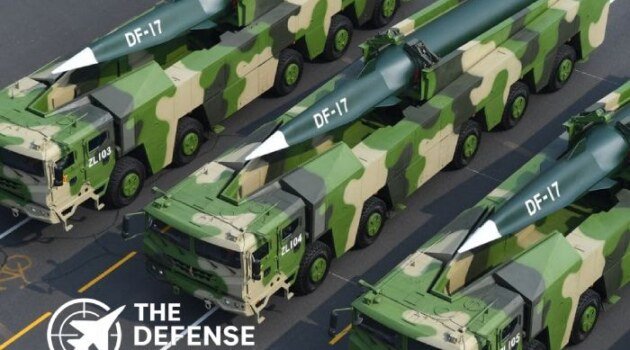
None of this means the program is fraudulent or without merit. China has conducted verified hypersonic tests — the DF-ZF glide vehicle and the DF-17 missile system are real, fielded, and assessed by the Defense Intelligence Agency as operational. Lingkong Tianxing’s principals have credible aerospace backgrounds, and the September 2025 visit by Vice Premier Zhang Guoqing to the company’s facility signals genuine high-level political backing. The question is not whether China can build a functional low-cost hypersonic weapon. The question is whether the YKJ-1000 specifically achieves its stated specifications at its stated price — and that remains unverified.
The Proliferation Risk Is the Most Urgent Concern
Independent of its actual performance, the YKJ-1000’s disclosure introduces a proliferation dynamic that demands immediate policy attention.
If China moves to export this system — even in a degraded or range-limited variant — to aligned states, the strategic landscape in the Middle East, South Asia, and sub-Saharan Africa changes materially. Iran, which already fields Shahed drones and the Abu Mahdi anti-ship missile, would gain a potential first-strike hypersonic capability against Gulf Cooperation Council infrastructure and U.S. naval assets in the Arabian Sea. North Korea, with its established ballistic and hypersonic test programs, could receive design or materials assistance accelerating its own low-cost glide vehicle development. Non-state actors with state backing — Hezbollah, the Houthis — could in theory deploy systems of this class if export controls fail.
China’s own export control regime is more restrictive than its public arms promotion narrative suggests. Beijing has not exported its most capable ballistic missile systems freely, and the YKJ-1000 involves technologies sensitive enough that selective proliferation — calibrated for maximum geopolitical leverage — is a more likely outcome than open market sales. Still, the entry of hypersonic weapons into the export price range of advanced conventional systems is a threshold that, once crossed, is difficult to reverse.
How the U.S. Should Respond: Three Immediate Priorities
The YKJ-1000 disclosure clarifies what U.S. missile defense planners have known but underfunded for years. Three responses are warranted.
First, directed energy. The only sustainable answer to mass-produced low-cost hypersonic saturation attacks is interceptors that are cheaper per shot than the incoming weapon. High Energy Laser with Integrated Optical-dazzler and Surveillance (HELIOS) and the Layered Laser Defense (LLD) programs need accelerated fielding timelines. Congress allocated funding for shipboard laser systems in FY2024 and FY2025, but operational deployment lags development. A $99,000 incoming hypersonic missile defeated by a $1-per-shot laser kill changes the cost-exchange ratio permanently.
Second, distributed defense architecture. Concentrating high-value assets — carriers, large-deck amphibious ships, fixed air bases — in predictable locations within the YKJ-1000’s 1,300-kilometer engagement envelope is a posture problem, not just a missile defense problem. The Navy’s Distributed Maritime Operations concept and the Air Force’s Agile Combat Employment doctrine both address this structurally. They need resourcing that matches the rhetoric.
Third, independent assessment. Congress should direct the Defense Intelligence Agency, in coordination with the Missile Defense Agency, to produce an unclassified assessment of the YKJ-1000’s probable performance parameters, production scalability, and export potential within the next budget cycle. Policy cannot outpace intelligence when the weapons concerned are novel.
Strategic Assessment
The YKJ-1000 represents a convergence of three trends that have been building separately for years: the democratization of precision manufacturing through consumer electronics supply chains, China’s deliberate use of military-civil fusion to compress defense development timelines, and the broader shift toward cost-imposing strategies in peer competition.
Whether or not this specific missile functions as advertised, it reflects a Chinese defense industrial approach that the United States has not yet fully countered at the structural level. American missile defense systems are optimized for quality and reliability at price points that assume adversary systems are equally expensive. That assumption is now actively under challenge.
The deterrence implication is significant. A credible low-cost hypersonic arsenal — even one of uncertain reliability — forces defensive planners to treat every potential engagement as a saturation scenario. That demands more interceptors, more sensors, and more magazine depth than current procurement plans provide. The FY2026 defense budget request, at $849.8 billion, is the largest in nominal terms in U.S. history, but it was structured before the YKJ-1000’s public disclosure and before full assessment of what low-cost hypersonic proliferation means for interceptor inventory requirements.
Regional allies face an even more acute challenge. Japan, Australia, and the Philippines have invested heavily in Aegis-based missile defense. South Korea fields THAAD under political duress. None of these architectures was designed for an environment where a near-peer adversary can field hundreds or thousands of maneuvering hypersonic threats at a unit cost below that of a commercial automobile. The alliance management dimension — specifically, whether partners will sustain missile defense investments if the cost-exchange ratio visibly shifts against them — deserves as much attention as the technical specifications of the missile itself.
-
Finally, the export signal matters more than the current weapon. The narrative that hypersonic weapons can be manufactured and exported at consumer-goods price points — regardless of current technical reality — will shape procurement decisions, threat perceptions, and arms race dynamics across multiple regions for the next decade. That is itself a strategic effect, independent of whether a single YKJ-1000 ever strikes a target.
-
China Investigates Zhang Youxia and Liu Zhenli
China’s Ministry of National Defense has announced an investigation into two of the People’s Liberation Army’s highest‑ranking officers, including Vice Chairman of the Central Military Commission Gen. Zhang Youxia and Chief of Staff of the Joint Staff Department Gen. Liu Zhenli. Both are accused of suspected serious violations of discipline and law, according to the official announcement.
Senior PLA Figures Targeted
The ministry statement said the decision to initiate formal probes was made by the Communist Party of China’s Central Committee following a review of both officers’ conduct. Zhang and Liu were described as “suspected of serious violations of discipline and law,” a phrase typically used in Chinese state media to denote potential corruption, abuse of power or other serious breaches of party rules and state law.
Zhang Youxia, 75, is one of China’s most senior uniformed officers and serves as vice chairman of the Central Military Commission (CMC), the top military command body led by President Xi Jinping. He is also a member of the Political Bureau of the Communist Party.
Liu Zhenli, 61, has been chief of staff of the CMC Joint Staff Department, the branch responsible for joint operations, training and combat readiness.
Official Statement and Context
The ministry gave no further details about the nature of the alleged violations, and state media did not elaborate on specific charges. The announcement is part of China’s long‑running anti‑corruption campaign within the party and military.
Xi Jinping, as chairman of the CMC, has pushed disciplinary actions across the military for years, targeting senior commanders and defense officials. Analysts view the latest investigation as one of the most prominent in recent years, given Zhang’s status as one of the few active‑duty generals with wartime experience and high political standing.
Wider Impact on PLA Leadership
The probe into Zhang and Liu follows a string of disciplinary actions against senior military officials. In recent years, the anti‑corruption campaign has reached various branches of the military, including the elite Rocket Force and other high‑level commanders.
State media commentary, including from the official PLA Daily, framed the investigation as essential to strengthening discipline and party control within the armed forces, outlining that no one is exempt from accountability regardless of rank.
What Comes Next
Chinese official channels have said further updates will be released as the investigations proceed, but there has been no immediate information about detentions, formal charges or changes in positions. Both generals have been absent from recent high‑level party events, a detail noted by some observers as preceding the official announcement.
Best Aircraft Carriers in the World 2026, Why It Matters
The best aircraft carriers in the world in 2026 matter because they remain the clearest measure of global naval power. These ships project airpower far from home ports, support allies, deter rivals, and shape crisis response. As competition sharpens in the Indo Pacific, the Atlantic, and the Middle East, carrier capability is no longer about prestige. It is about who can sustain combat power at sea.
How the Ranking Assessment Was Made
The ranking assessment looks at how well each aircraft carrier can perform real world combat and sustained operations in 2026, not just how large or new the ship is. Key factors include the size and capability of the air wing, launch and recovery systems, power generation, survivability, and how often the carrier can generate sorties during high intensity operations. Operational experience also matters. Navies with decades of carrier deployments score higher because training, maintenance, and command integration are proven under stress. Finally, the assessment weighs how each carrier fits into its nation’s wider naval strategy, including escort ships, logistics support, and alliance interoperability. This approach gives a clearer picture of actual combat value rather than paper specifications alone.
What follows is a fresh analysis of the top aircraft carriers shaping naval balance in 2026, written for TheDefenseWatch.com audience.
1. Gerald R. Ford Class, United States
The Gerald R. Ford class remains the benchmark for modern aircraft carriers. These nuclear powered ships are the largest warships ever built and represent a generational leap over the older Nimitz class.
Why It Leads the Ranking
Ford class carriers introduce electromagnetic catapults, advanced arresting gear, and a redesigned flight deck. These changes increase sortie rates while reducing crew workload. The class is built to operate modern aircraft like the F 35C alongside legacy platforms.
Strategic Impact
In 2026, USS Gerald R. Ford and USS John F. Kennedy anchor U.S. carrier strike groups in the Atlantic and Pacific. Their ability to generate sustained air operations gives Washington unmatched reach. No other navy can deploy comparable power at similar scale or tempo.
2. Nimitz Class, United States
Even as newer ships enter service, the Nimitz class remains a core pillar of U.S. naval power. Several of these carriers will remain active into the 2030s.
Still Relevant in 2026
Despite their age, Nimitz class carriers have received major upgrades. Improved radars, combat systems, and air wings keep them combat credible. Their nuclear propulsion allows long deployments without refueling.
Operational Value
Nimitz class carriers continue to shoulder much of the U.S. Navy’s global presence mission. From freedom of navigation patrols to crisis response, these ships remain central to American maritime strategy.
3. Fujian, China
China’s Fujian aircraft carrier marks a turning point for the People’s Liberation Army Navy. It is Beijing’s first carrier designed from the start with electromagnetic catapults.
A Leap Forward for China
Unlike earlier Chinese carriers, Fujian is not based on Soviet era designs. It is larger, more capable, and better suited for high tempo flight operations. This allows China to operate heavier aircraft with greater range and payload.
Regional Consequences
While Fujian does not yet match U.S. carriers in experience or integration, its entry into service signals China’s intent to operate blue water carrier groups. In the Western Pacific, this adds pressure on U.S. and allied naval planners.
4. HMS Queen Elizabeth, United Kingdom
The United Kingdom’s Queen Elizabeth class focuses on flexibility rather than raw size. These carriers operate short takeoff and vertical landing aircraft, primarily the F 35B.
Strength Through Integration
HMS Queen Elizabeth and HMS Prince of Wales are designed to operate closely with NATO allies, especially the United States. U.S. Marine Corps F 35Bs routinely deploy aboard British carriers, creating combined air wings.
Strategic Role
In 2026, British carriers support NATO operations, reinforce presence in the Indo Pacific, and provide London with independent strike options. Their strength lies in coalition warfare rather than solo power projection.
5. Charles de Gaulle, France
France’s Charles de Gaulle remains Europe’s only nuclear powered aircraft carrier. Though smaller than U.S. carriers, it packs significant capability.
Compact but Capable
The ship operates CATOBAR systems, allowing it to launch heavier aircraft than STOVL carriers. Its air wing includes Rafale M fighters with nuclear strike capability.
Global Reach
Charles de Gaulle gives France an independent global strike option. Regular deployments to the Indo Pacific and Middle East underline Paris’s role as a global naval actor.
Comparing Carrier Capabilities in 2026
Size vs Effectiveness
Bigger is not always better, but size still matters. Larger decks allow more aircraft, higher sortie rates, and better sustainment. This remains a U.S. advantage.
Technology and Training
Catapult systems, aircraft integration, and crew experience often matter more than displacement. The U.S. Navy still leads in operational knowledge built over decades.
Numbers Matter
The United States operates more aircraft carriers than the rest of the world combined. Even as rivals improve individual ships, overall capacity remains uneven.
Analysis, What This Ranking Tells Us
The best aircraft carriers in the world in 2026 reflect a shifting but still U.S. led naval order. China’s progress is real and should not be dismissed. However, experience, integration, and logistics remain decisive advantages for the United States and its allies.
European carriers show a different model. They focus on alliance operations and crisis response rather than sustained high intensity conflict alone. This complements U.S. strategy and spreads risk across partners.
For Washington, the message is clear. Maintaining carrier readiness matters as much as building new hulls. For rivals, closing the gap will take more than hardware. It will require decades of training and operational learning.
FAQs
Which country has the best aircraft carriers in 2026?The United States operates the most capable and numerous aircraft carriers in the world in 2026.
Is China close to matching U.S. aircraft carriers?China is improving rapidly, but it still lacks the operational experience and global reach of the U.S. Navy.
Why are aircraft carriers still important?They provide mobile airpower, deterrence, and rapid response without relying on foreign bases.
Do smaller carriers still matter?Yes. British and French carriers play key roles in coalition operations and regional security.
Newer Posts
-