

Table of Contents
In a changing security landscape of 2025, the top 5 strongest armies in the world reflect a mix of global power projection, advanced technology, manpower, and defense investment. Military strength is measured by a broad set of factors including defense budgets, personnel numbers, logistics capacity, and strategic assets like nuclear forces and naval fleets. One widely referenced source for these rankings is the Global Firepower Index, which evaluates over 60 variables to produce a composite military strength score for nations worldwide.
What Constitutes Military Strength?
A nation’s military power is not just about how many soldiers it fields. Modern assessments include air power, naval reach, missile capability, logistical networks, and even cyber and space defense. Lower PowerIndex scores indicate greater strength under the Global Firepower methodology.
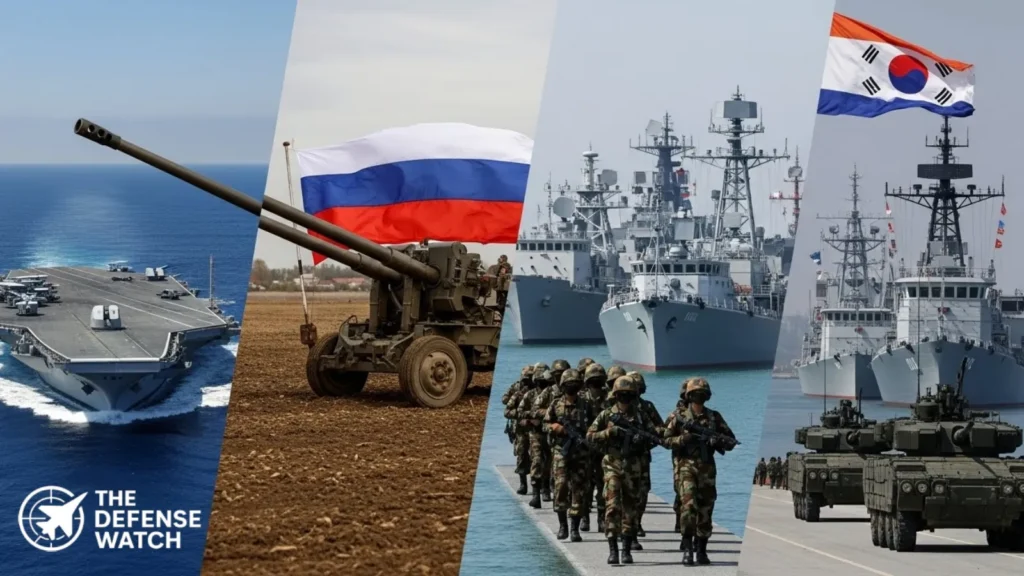
Top 5 Strongest Armies in the World
1) United States
The United States holds the top spot as the strongest army in the world in 2025. It leads in virtually every major military category, from defense spending to global deployment capabilities. The U.S. fields unmatched air power with advanced platforms like the F-35 and B-2, and its naval force features the largest carrier fleet and extensive amphibious capability. Its defense budget dwarfs that of any other nation, underpinning extensive research and force modernization.
Despite adjustments in senior leadership structures aimed at improving efficiency, the U.S. military continues to maintain a decisive edge in readiness and force projection. (analysis)
2) Russia
Russia ranks second among the strongest military forces in 2025. Even amid operational strains and sanctions, it maintains a large standing force with deep experience in conventional and missile warfare. Russia’s artillery and rocket systems remain formidable, supported by substantial reserves and strategic nuclear forces.
The sustained focus on modernization of key systems and doctrine ensures that Russia remains a heavyweight military actor on the global stage. (analysis)
3) China
China continues to hold the third position in the world military strength ranking. Its People’s Liberation Army boasts the largest active personnel numbers, rapid industrial production of equipment, and significant investments in naval expansion and aerospace capabilities. China’s shipbuilding output now rivals that of other major naval powers.
China’s military strategy increasingly integrates space and cyber capabilities, which are likely to shape future global security dynamics.
4) India
India ranks fourth globally, reflecting a blend of one of the largest troop numbers, a growing defense budget, and a push for indigenous weapons development. The Indian Army is supported by missile systems and a robust air force, with ongoing upgrades across platforms and systems.
India’s military growth is closely tied to regional security priorities, particularly along its northern and western borders, and to partnerships including defense trade and exercises with other major powers.
5) South Korea
South Korea rounds out the top five strongest armies in the world. Its conscription system and reserve forces give it considerable manpower, while its defense industry fields advanced indigenous systems from guided munitions to armored vehicles and next-generation fighters. South Korea’s strategic position near key flashpoints in East Asia enhances its military significance.
Recent statements from Seoul’s leadership point to even greater emphasis on defense industry autonomy and broader export ambitions in advanced weapons. (analysis)
Ranking Snapshot: Top 5 Strongest Armies in the World (2025)
- United States
- Russia
- China
- India
- South Korea
Notes About the Ranking
Different analysts weigh factors like nuclear weapons, airpower, naval capacity, and logistics differently. This list is focused on army (ground forces) strength and capability, rather than overall military power that also includes air and naval forces. If we included all branches, some rankings might shift.
FAQs
Strength combines manpower, funding, technology, logistics, weapons, and ability to operate globally.
Most rankings consider conventional assets. Nuclear forces are often listed separately but contribute to overall national power.
China has more personnel overall, but the US leads in technology, budget, and global reach.
Yes, shifts in defense spending, geopolitical crises, and technological breakthroughs can alter the list over time.
Some do, but most traditional military indices focus on land, sea, and air power first, with cyber and space increasingly considered.
