

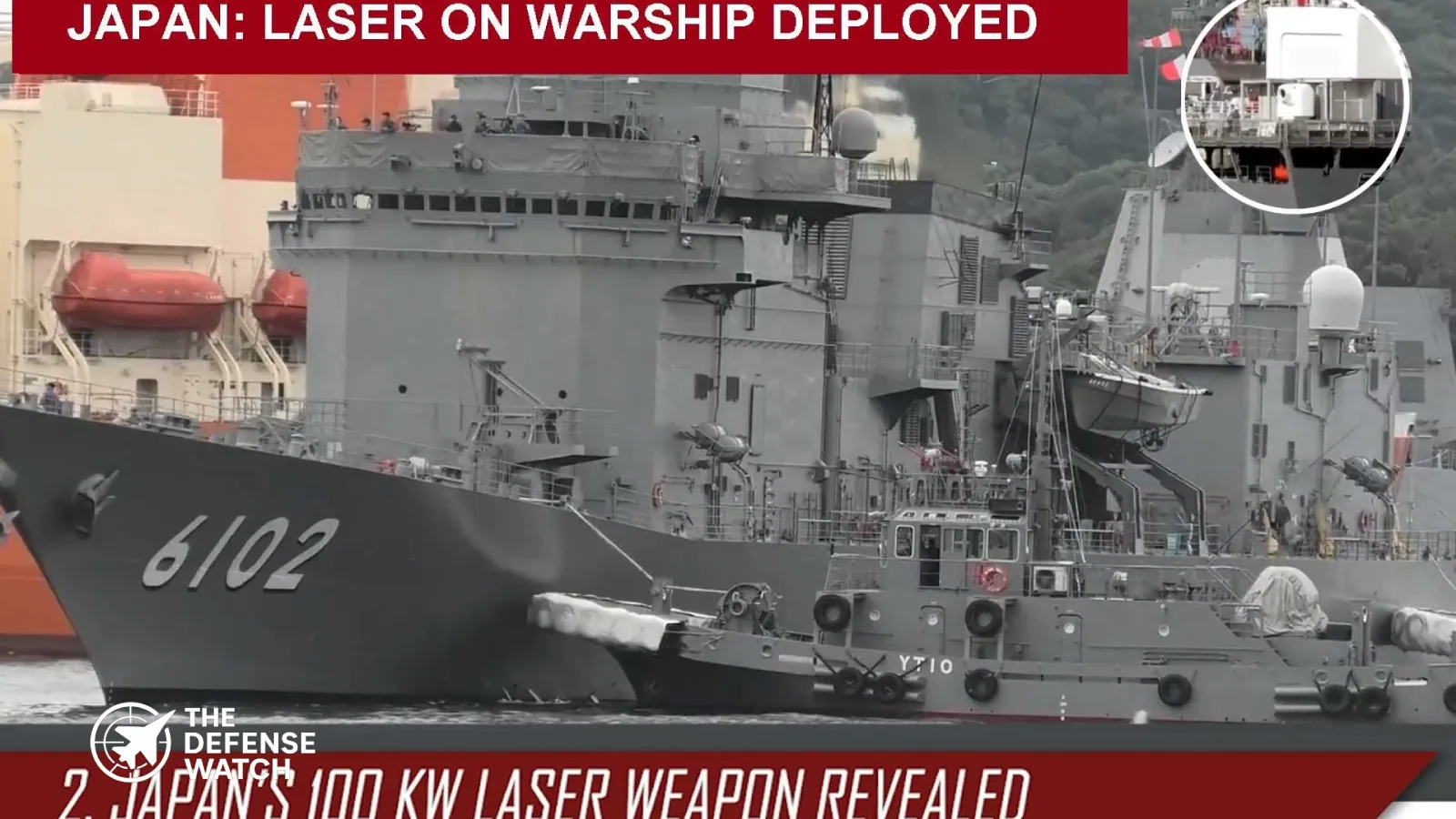
Japan Deploys Laser Weapons on Warships
Japan has officially deployed laser weapons on its naval vessels, joining the United States and the United Kingdom in integrating advanced directed-energy systems into its fleet. This development marks a significant leap in maritime defense, emphasizing the strategic importance of laser weapons in modern naval operations.
The announcement comes as Japan continues to modernize its Self-Defense Forces amid regional security challenges. The deployment reportedly began in 2025, with the Japan Maritime Self-Defense Force (JMSDF) equipping select ships with high-energy laser systems designed to counter drones, small boats, and incoming threats with precision and minimal logistical footprint.
Background on Naval Laser Technology
Directed-energy weapons, such as shipborne lasers, have emerged as a transformative technology for naval defense. These systems deliver precise, speed-of-light engagements against aerial and surface threats, significantly reducing reliance on traditional missile or gun systems.
The United States Navy first operationalized laser systems aboard vessels like the USS Portland and USS Preble. The U.K. followed with trials on its Type 45 destroyers, deploying mid-power laser weapons for defensive purposes. Japan’s entry into this domain demonstrates the growing international adoption of directed-energy technologies.
Naval lasers operate using high-energy beams that can disable or destroy small craft, drones, and other aerial threats. The technology offers advantages in speed, accuracy, and cost per engagement compared with conventional weapons. Experts note that laser systems also allow ships to engage multiple targets in rapid succession without the logistical constraints of missile inventories.
Japanese Deployment Details
According to defense sources, Japan’s initial deployment involves mid-power laser systems mounted on key destroyers and frigates. The systems are reportedly capable of tracking multiple targets simultaneously and engaging threats at ranges sufficient to protect the vessel and its immediate operational area.
While official specifications remain classified, JMSDF statements indicate that the laser weapons have been successfully tested against unmanned aerial systems and small surface targets during trials conducted in Japanese territorial waters. The deployment is expected to expand gradually as the technology is integrated into additional vessels and fleet operations are adjusted to leverage the new capabilities.
Expert and Policy Perspective
Analysts highlight that Japan’s move aligns with broader regional security concerns, particularly the rise of drone swarms, fast attack craft, and missile threats in East Asia. By adopting directed-energy weapons, Japan strengthens its defensive posture while keeping pace with allied navies in terms of technological capability.
A naval defense analyst commented that “Japan’s integration of laser systems underscores the shift toward cost-effective, rapid-response solutions for ship protection. It also signals a commitment to interoperability with U.S. and U.K. forces, which increasingly rely on similar technologies.”
Implications and Future Prospects
The integration of laser weapons enhances the JMSDF’s operational flexibility, particularly in littoral zones and congested maritime environments. Experts anticipate that Japan will continue to invest in higher-power laser systems capable of countering larger threats, including missiles, as technology matures.
This deployment also contributes to the broader global trend of modernizing naval forces through directed-energy systems. Japan, by joining the U.S. and U.K., signals a shift in naval strategy that emphasizes technological superiority and precision defense.

3 comments
[…] would include a 20mm M61A2 Vulcan cannon with 1,000 rounds or an optional gas dynamic laser weapon, plus two internal weapons bays rated for a combined 17,000 pounds of ordnance. Four external wing […]
[…] the announcement, 64.3 million dollars in Navy funds and 32.7 million dollars in FMS funding from Japan were obligated immediately and will not expire at the end of the current fiscal […]
[…] INS Anjadip now operational, the Indian Navy continues to build a multi layer maritime defense architecture that combines indigenous shipbuilding, sensor development, and operational […]