Table of Contents
How the Ranking of the Most Advanced Fighter Jets Is Changing
The ranking of the most advanced fighter jets continues to evolve as air forces modernize fleets, integrate new sensors, and field upgraded weapons. As of 2025, only a handful of nations operate true fifth-generation platforms, while several others deploy high-end fourth-plus generation aircraft with advanced avionics and limited stealth. This report provides an updated, fact-driven assessment of today’s most capable fighters currently in operational service.
The ranking below is based on publicly available data regarding stealth characteristics, sensor fusion, range, weapons integration, electronic warfare (EW), and operational maturity.
The Top 10 Most Advanced Fighter Jets in Active Service (2025)
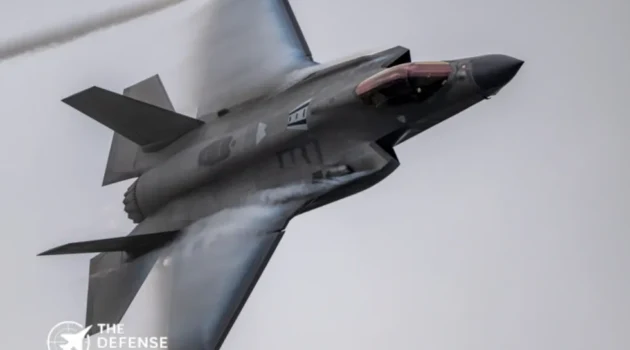
1. Lockheed Martin F-35 Lightning II (USA) — The Global Benchmark
The F-35 remains the most widely deployed fifth-generation fighter, operated by more than a dozen allied air forces. Its strength lies in its fused sensor suite, advanced AESA radar, low-observable design, secure datalinks, and extensive weapons certification. Ongoing upgrades under the Block 4 modernization program expand its electronic attack capabilities and enable new long-range strike options.
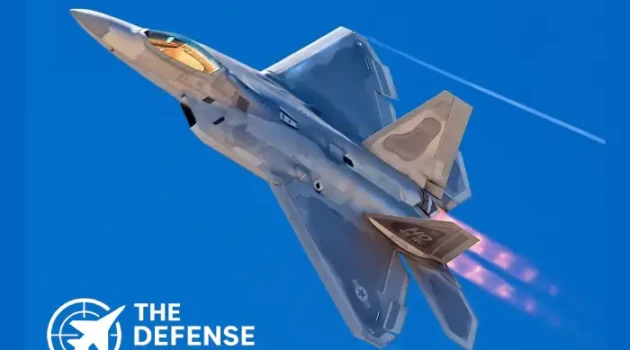
2. Lockheed Martin F-22 Raptor (USA) — Air Superiority Standard
Although produced in limited numbers, the F-22 remains unmatched in high-end air dominance missions. Its superior stealth, agility, supercruise performance, and integrated EW suite keep it at the top tier. The Raptor’s sensors and avionics continue to receive upgrades to maintain relevance against modern threats.
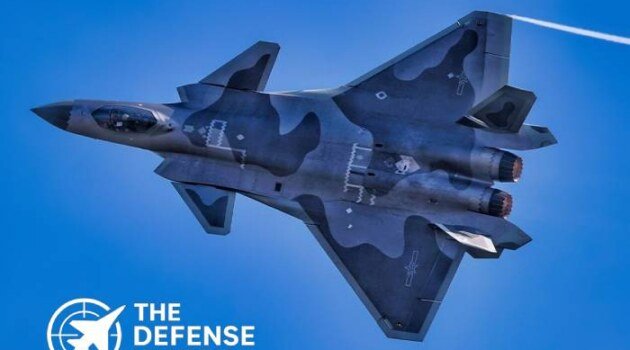
3. Chengdu J-20 Mighty Dragon (China)
China’s first operational fifth-generation fighter has entered mass production, with the latest “J-20B” variants reportedly fielding improved engines and avionics. Its large internal volume supports long-range missions in the Indo-Pacific, and its evolving sensor suite enhances situational awareness. Operational details remain classified, but the aircraft is now firmly established in front-line service.
4. Sukhoi Su-57 Felon (Russia)
Russia’s Su-57 combines stealth shaping, supermaneuverability, and multi-role capability. While fleet numbers remain limited, the aircraft is actively deployed within the Russian Aerospace Forces. Its low-observable signature is less mature than U.S. or Chinese designs, but its advanced IRST and EW systems contribute to its ranking.
5. Eurofighter Typhoon (Europe) — Fully Mature 4.5-Gen Platform
Operated by the UK, Germany, Italy, Spain, and several export customers, the Typhoon’s latest Tranche 3 and ECR variants offer upgraded radars, expanded weapons integration, and strong electronic attack capability. Its high-altitude performance and reliability make it one of the leading non-stealth fighters.
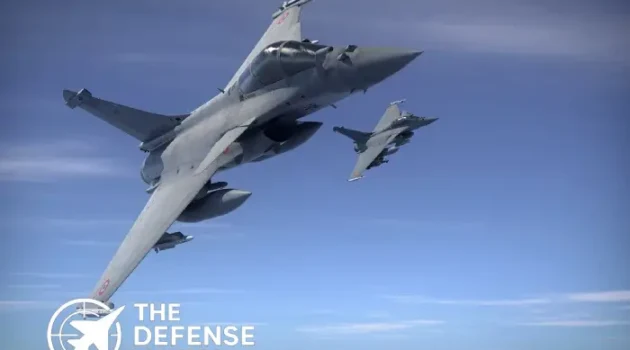
6. Dassault Rafale F3R/F4 (France)
The Rafale combines multi-role flexibility with advanced avionics, AESA radar, and cutting-edge EW systems (SPECTRA). The F4 standard enhances connectivity, weapons accuracy, and sensor performance, solidifying its position as a top-tier European fighter.
7. Boeing F-15EX Eagle II (USA)
Built on the proven F-15 lineage, the F-15EX introduces digital fly-by-wire controls, an advanced EPAWSS EW suite, and the world’s highest air-to-air weapons capacity. It lacks stealth but excels in payload, speed, and long-range combat.
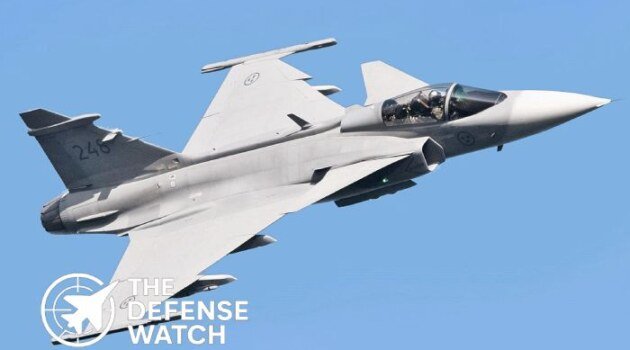
8. Saab JAS 39E/F Gripen (Sweden)
Designed for network-centric warfare, the Gripen E/F features the PS-05/A Mk5 radar suite, low operating costs, and a strong electronic warfare package. It is among the most cost-efficient high-performance fighters in service.
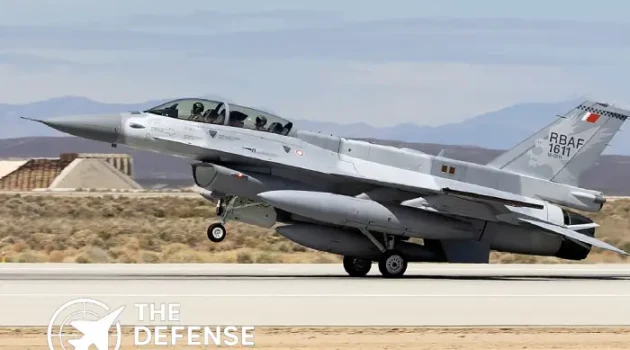
9. F-16V “Viper” Upgrade (USA / Allied Operators)
The F-16V represents the latest and most advanced configuration of the F-16 family. It incorporates an AESA radar, upgraded mission computer, modern cockpit displays, and advanced weapons — extending the operational relevance of this long-serving platform.
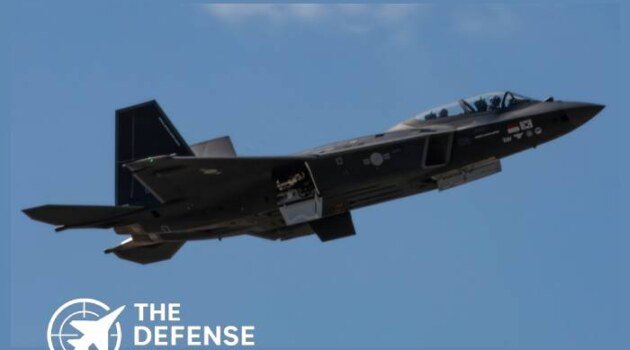
10. KAI KF-21 Boramae (South Korea) — Early Operational Entry
Although still in its formative operational stages, the KF-21 entered limited service with the Republic of Korea Air Force. Its capabilities — AESA radar, advanced sensors, and a modular open architecture — position it as one of the most promising future 4.5-generation designs.
Factors That Determine Fighter Jet Ranking
To evaluate the ranking of the most advanced fighter jets, several core criteria were applied:
Stealth & Survivability
Low-observable design and advanced EW systems significantly influence survivability in denied-airspace environments.
Sensors, Fusion, and Targeting
Platforms that integrate radar, IRST, EW, and communications into a unified display offer superior situational awareness.
Weapons Capability
Air-to-air missiles, stand-off weapons, precision strike systems, and integration flexibility are key differentiators.
Operational Maturity
Platforms with proven readiness, reliable maintenance cycles, and global deployment scores higher.
Analysis: Strategic Implications of the Current Rankings
The concentration of fifth-generation aircraft among a small group of nations shapes global airpower balance. The U.S. maintains a decisive advantage through the combined strength of the F-22 and F-35 fleets, supported by a robust industry and upgrade pipeline.
China’s J-20 is rapidly maturing, contributing to shifting dynamics in the Indo-Pacific and compelling regional states to accelerate modernization programs. Europe continues to rely on 4.5-generation fighters while preparing for sixth-generation partnerships such as FCAS and GCAP.
The presence of advanced but non-stealth platforms like the F-15EX illustrates that speed, payload, and EW capabilities still play critical roles in multi-domain operations, especially where stealth is not the primary factor.
Basis for Ranking: Why the F-35 Is No. 1 and the KF-21 Is No. 10
Why the F-35 Ranks #1
The F-35 is evaluated as the most advanced fighter jet in active service due to:
- Full fifth-generation stealth performance
- Mature sensor fusion and situational awareness
- Widest deployment among allied air forces
- Advanced electronic warfare and data-link systems
- Block 4 upgrade pathway expanding weapons and capabilities
- Proven operational record across multiple regions
These factors collectively position the F-35 as the top combat aircraft currently fielded anywhere in the world.
Why the KF-21 Ranks #10
The KF-21 Boramae is placed at Number 10 because:
- It is operational only in limited early deployment
- It is classified as a 4.5-generation fighter, not fifth-generation
- Its stealth characteristics are partial, not full-spectrum
- Weapons and avionics integration are still expanding
- Export and combat readiness remain unproven
However, it ranks within the top 10 because:
- It features modern AESA radar and sensor architecture
- It is designed with open systems for rapid upgrades
- It represents one of the most advanced emerging platforms
The KF-21 is considered a future growth aircraft, but as of 2025, it ranks below mature systems like the Rafale, Typhoon, and F-15EX.
FAQs
What is the most advanced fighter jet in service today?The F-35 is considered the most advanced due to its sensor fusion, stealth, and global operational maturity.
Which countries operate fifth-generation fighters?The United States, China, and Russia are the only nations with operational, indigenous fifth-generation aircraft.
Is the Su-57 fully deployed?Yes, but in limited numbers. Russia continues incremental deliveries and capability upgrades.
How does the J-20 compare to the F-22?The F-22 remains superior in air dominance, but the J-20 offers longer range and is improving rapidly.
Is the KF-21 considered a fifth-generation jet?Not yet — it is classified as a 4.5-generation platform, though it may gain low-observable features in future blocks.

https://www.effectivecpmnetwork.com/s00uqrtd55?key=0eb6b1d808afb61db521795b88762ea2