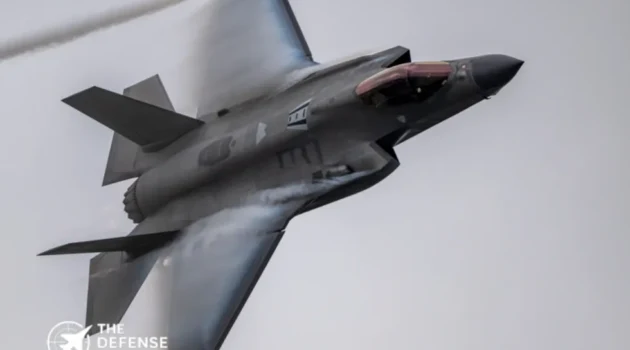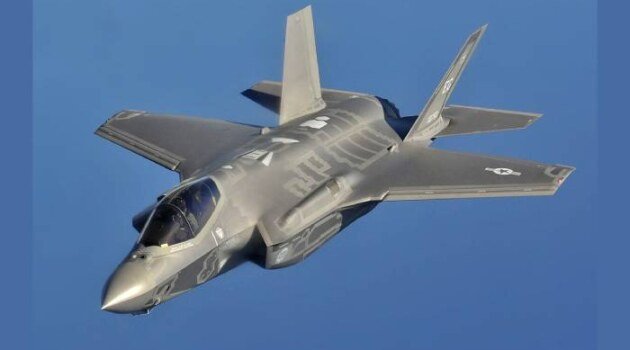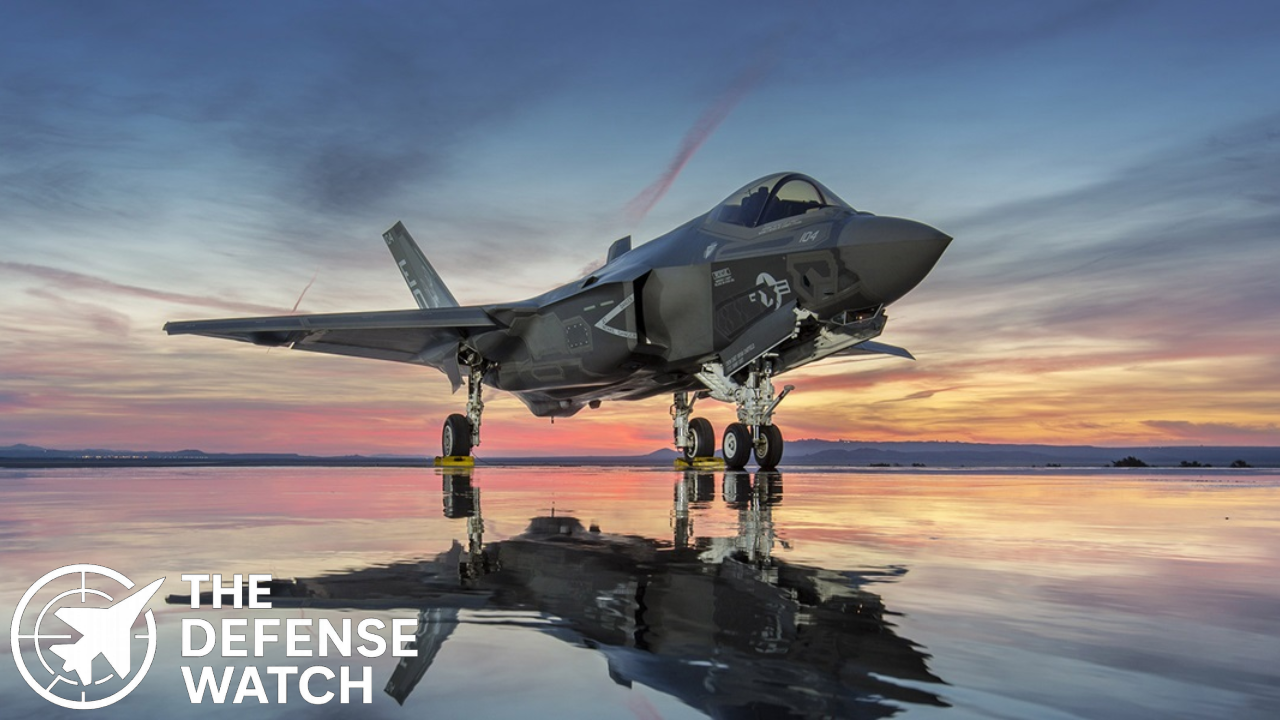
Lockheed Martin has received a $114.63 million U.S. Navy order to redesign two navigation subsystems used by the F-35 Lightning II, addressing obsolete electronic components that could otherwise disrupt aircraft production and long-term support.
The order covers engineering, redesign, integration, qualification and testing for the Global Positioning System Electronic Unit and the NAV100 Inertial Navigation System. Work is scheduled to continue through January 2030, according to the contract announcement.
The award is being managed by Naval Air Systems Command (NAVAIR) in Patuxent River, Maryland, and supports F-35 requirements across the U.S. Air Force, Navy, Marine Corps and international cooperative program partners.
Why the F-35 navigation redesign matters
The contract addresses a common challenge in long-running military aircraft programs: keeping established electronic systems in production as their original components become difficult or impossible to obtain.
Electronic parts can become obsolete long before an aircraft reaches the end of its service life. Manufacturers may discontinue chips, processors or other components, forcing aircraft program offices and suppliers to redesign equipment that still performs its intended function.
For the F-35, the Navy’s order is intended to replace obsolete components while maintaining the navigation systems’ performance and compatibility with the aircraft’s existing architecture.
That distinction matters. The announced work is a component-level redesign effort, not confirmation of a new navigation capability or a broader upgrade to the F-35’s avionics suite.
The contract notice does not identify the specific components being replaced, the original suppliers, or the technical changes planned for either unit. It also does not disclose whether the redesigned systems will introduce additional navigation features.
Two systems, complementary navigation roles
The order covers two separate pieces of navigation equipment.
Global Positioning System Electronic Unit: This unit supports the aircraft’s use of satellite-based positioning information. GPS provides an external reference for determining position and supporting navigation functions, although its availability and reliability can be affected by interference or hostile electronic warfare.
NAV100 Inertial Navigation System: Inertial navigation uses onboard sensors to estimate an aircraft’s movement and position without depending continuously on an external positioning signal. Such systems complement satellite navigation, particularly when GPS reception is degraded or unavailable.
The two technologies serve complementary purposes. Satellite navigation provides positioning information from external signals, while inertial navigation allows an aircraft to continue estimating its movement independently between external updates.
However, the contract announcement does not establish the exact architecture, redundancy arrangements or degraded-navigation performance of these specific F-35 units. Their roles should not be taken as evidence that the redesign will improve resistance to jamming or introduce new operational capabilities.
The stated objective is to maintain existing performance and compatibility while replacing obsolete electronics.
Contract details and funding
The Navy awarded the order to Lockheed Martin Aeronautics Co. of Fort Worth, Texas, under a previously issued basic ordering agreement.
Contract value$114.63 millionExpected completionJanuary 2030Contract number: N0001927F1037Basic ordering agreement: N0001924G0010Contracting activity: Naval Air Systems CommandProcurement method: NoncompetitiveThe order uses a cost-plus-fixed-fee structure. Under this arrangement, the government reimburses allowable contract costs and pays a negotiated fixed fee, subject to the terms of the agreement. This structure is commonly used for engineering and development work when the full effort cannot be priced as a straightforward fixed-price production purchase.
The announced funding is divided among three sources:
Funding source Amount Fiscal 2026 Air Force aircraft procurement $46,411,323 Fiscal 2026 Navy aircraft procurement $46,411,322 F-35 cooperative program partners $21,807,321 Total $114,629,966 The full amount is scheduled to be obligated at the time of award, according to the contract announcement.
The funding split reflects the joint nature of the F-35 program. Although the aircraft has three U.S. service variants, common equipment and shared development work can affect multiple customers. International cooperative partners also participate in the program and contribute funding for relevant activities.
The announcement does not provide a country-by-country breakdown of the partner contribution.
Where the work will take place
The engineering effort will be distributed across three U.S. locations.
Location Share of work El Segundo, California 70.1% Fort Worth, Texas 27.5% Clearwater, Florida 2.4% El Segundo will account for the largest share of the work, with Fort Worth handling more than one-quarter of the effort. Clearwater will account for the remaining portion.
The contract announcement does not assign specific engineering tasks to individual sites. It would therefore be premature to conclude which location will lead the redesign, integration or qualification phases.
The planned completion date of January 2030 gives the program several years to carry out the engineering changes and associated testing. The announcement does not provide intermediate milestones, qualification dates or the expected date when redesigned units will enter production.
Production continuity is the immediate priority
The central procurement issue is the risk that obsolete components could interfere with F-35 production and sustainment.
The F-35 program relies on a large international supplier network and a common aircraft architecture across its A, B and C variants. Maintaining component availability is therefore important not only for newly manufactured aircraft, but also for the long-term support of aircraft already in service.
A redesign can require more than finding a replacement part. Engineers may need to verify electrical interfaces, physical fit, software compatibility, environmental performance and behavior under operating conditions. Qualification testing is intended to establish that the revised equipment meets the required standards before it is accepted for use.
The Navy’s order explicitly includes redesign, integration, qualification and testing, indicating that the effort extends beyond a simple component substitution.
Still, the available contract information does not establish that a production stoppage was imminent, that aircraft deliveries had already been delayed, or that the existing navigation systems had suffered a performance failure. The stated purpose is preventive: reducing supply-chain risk and supporting continued production and sustainment.
What the award does not establish
Several important details remain undisclosed.
The contract announcement does not identify the obsolete components, provide a technical comparison between the existing and redesigned units, or specify how many navigation systems will ultimately receive the replacement hardware.
It also does not announce a new F-35 navigation capability, a change in the aircraft’s operational performance, or an upgrade to its resistance to electronic attack.
The noncompetitive award identifies the procurement method, but the announcement does not provide a detailed explanation of why a competitive procurement was not used for this order.
These limits matter when assessing the award. Its confirmed purpose is to maintain the availability and compatibility of existing navigation equipment, rather than introduce a new combat capability.
For the F-35 program, the practical value will depend on whether the redesigned components can be qualified on schedule and supplied without disrupting aircraft production or ongoing support. The January 2030 completion target provides the published endpoint for the engineering effort, but the announcement does not establish when the first redesigned units will be delivered.