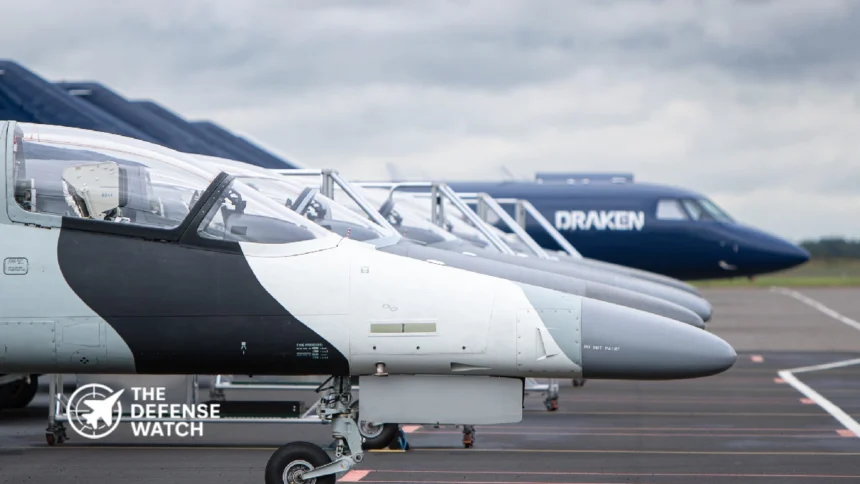
Draken Combines Sting and Phantom Sky for RAF Training
Draken has deployed its Sting surface threat simulation system alongside its Phantom Sky range control platform for the first time, bringing simulated ground-based air defenses and digital exercise management into a combined military training environment, according to FlightGlobal’s October 2026 report.
The combination addresses a practical challenge for modern air forces: preparing combat crews to operate against integrated air defense systems (IADS), where radar sensors, surface-to-air missile units and command networks can work together to detect and engage aircraft.
The Royal Air Force (RAF) has already introduced Sting for training. In a May 20, 2026, announcement, the service said the system was delivered by Draken to generate realistic simulated enemy air defense threats for frontline aircrews.
How the two systems work together
Sting generates simulated threat signals intended to replicate aspects of the electronic environment created by ground-based air defense systems. These signals challenge aircraft sensors and allow pilots to practice identifying, assessing and responding to simulated threats during live training sorties.
Draken describes Sting as a deployable system that can represent individual surface-to-air missile sites. Its architecture supports multiple threat emitters and surrogate platforms, allowing training organizers to construct more complex simulated air defense environments.
Phantom Sky provides the digital control and coordination layer. According to Draken, it connects participating assets, monitors activity across the training environment and supports the assessment of simulated engagements.
The integration allows simulated threats to respond within a managed exercise rather than functioning only as static electronic targets. Training personnel can monitor events, assess engagement outcomes and reconstruct activity for post-mission debriefing.
This distinction matters because defeating an air defense network requires more than detecting a radar signal. Crews must interpret the threat, make decisions under pressure, coordinate with other aircraft and execute the assigned mission while responding to changing conditions.
Why realistic air defense training matters
Modern integrated air defense systems can combine surveillance radars, tracking sensors, command-and-control networks and multiple missile engagement layers. Their effectiveness depends partly on how these elements exchange information and respond to an aircraft’s actions.
Training against isolated or predictable threats may not fully reproduce the demands of operating in such an environment. A coordinated simulation can provide aircrews with more varied threat behavior and allow instructors to assess how pilots respond as conditions change.
The Sting and Phantom Sky combination is intended to support this type of training. It allows simulated ground threats to be incorporated into a wider exercise environment, with the control system helping manage activity and evaluate outcomes.
For the RAF, this capability is relevant to preparing crews for suppression of enemy air defenses (SEAD) and other missions that involve operating near hostile air defense networks. These missions can require aircraft to detect and characterize threats, coordinate with supporting forces and avoid or defeat engagements while completing their objectives.
The training system does not, by itself, establish that crews can defeat a particular operational air defense system. Its value depends on how accurately the simulated threats represent relevant sensors and engagement behavior, as well as the quality of the scenarios and instructor feedback.
Part of the RAF’s wider training program
The RAF said in May that Sting forms part of its Interim Medium Speed Operational Readiness Training Service (IMSORTS) contract, which provides integrated adversary training for the service and allied nations. The contract places the system within a broader training framework rather than treating it as a standalone equipment purchase.
Draken’s wider Red Force offering includes adversary air services, electronic warfare simulation, surface threat replication and uncrewed threat development. Phantom Sky is designed to connect these capabilities and support training that combines live, virtual and constructive elements.
That approach can help air forces introduce different threat types into the same exercise. For example, a training scenario could combine airborne adversary aircraft with simulated ground-based air defenses, requiring crews to account for more than one source of threat.
The exact composition of the first Sting and Phantom Sky deployment, including the aircraft involved, the exercise location and the number of systems used, could not be independently established from the available public sources.
What the integration changes for military training
The principal benefit is the ability to connect threat simulation with exercise control and assessment. This can make training more responsive and give instructors a clearer record of how crews acted during a mission.
Three areas are particularly relevant:
- Threat response: Pilots can practise recognizing simulated air defense signals and responding to changing threat conditions.
- Exercise coordination: Phantom Sky can manage and monitor activity across participating assets, helping instructors maintain a coherent training scenario.
- Mission assessment: Recorded exercise activity supports post-flight analysis, allowing crews and instructors to review decisions and identify areas for improvement.
These functions may improve the usefulness of each training sortie, although public information does not provide independent performance measurements or quantify any improvement in readiness.
There are also limits to what simulation can reproduce. The accuracy of the training depends on the fidelity of the threat models, the available equipment and the scenarios selected. Simulated engagements cannot automatically reproduce every uncertainty, tactical adaptation or technical limitation encountered against a real adversary.
For that reason, the system should be understood as a training capability that complements operational aircraft, electronic warfare equipment and other training resources, rather than a substitute for them.
The integration of Sting with Phantom Sky gives Draken a way to combine simulated surface threats with digital exercise management in one training environment. Its operational value will depend on how effectively the RAF and other participating forces use that capability to prepare crews for the complexity of modern air defense networks.