• Home
  • About
  • Defense Systems
  • Manufacturer
  • Comparisons
  • Compare 
  • Tools
TheDefenseWatch.com
  • Aerospace & Aviation
  • Military & Ordnance
  • Naval & Maritime
  • Cyber & Space Defense
  • Policy & Strategy
  • Global News
  • Tools Library
    • Smart Calculator
    • Drone Flight Time Calculator
    • Drone Range Calculator
    • Counter-Drone Jammer Effective Range Calculator
    • Counter-Battery Radar Detection Calculator
    • Artillery Fire Correction Calculator
    • Thermal Camera Detection Range Calculator
    • Missile Range & Time-of-Flight Calculator
    • Radar Detection Range Calculator
    • FPV Strike Drone Payload vs Range Calculator
    • Loitering Munition Endurance Calculator
    • Sniper Ballistic Drop & Windage Calculator
    • Bullet Drop Calculator
    • U.S. Army Combat Fitness Test (ACFT) Calculator
    • Military Pension Calculator
    • Military Retirement Calculator
    • Military Pension Calculator
    • Large Number Calculator
Font ResizerAa

TheDefenseWatch.com

The Defense Watch | U.S. & Global Defense News, Analysis & Military Updates

Search
  • Home
  • About
  • Defense Systems
  • Manufacturer
  • Comparisons
  • Compare 
  • Tools

Stay Updated

Get the latest update

Subscribe

Explore

  • Drone
  • Fighter Jets & Military Aircraft
  • Hypersonic Weapons
  • Aircraft Carriers
  • Strategic History & Missions
  • Tools Library
Home » Pentagon Certifies Bath Iron Works for Second Arleigh Burke Destroyer
Naval & MaritimeNaval Strategy & Maritime Security

Pentagon Certifies Bath Iron Works for Second Arleigh Burke Destroyer

Samuel Drake | Defense Analyst
Last updated: October 12, 2026 11:07 pm
Samuel Drake | Defense Analyst
Share
7 Min Read
Bath Iron Works second destroyer
Image : U.S. Navy
SHARE

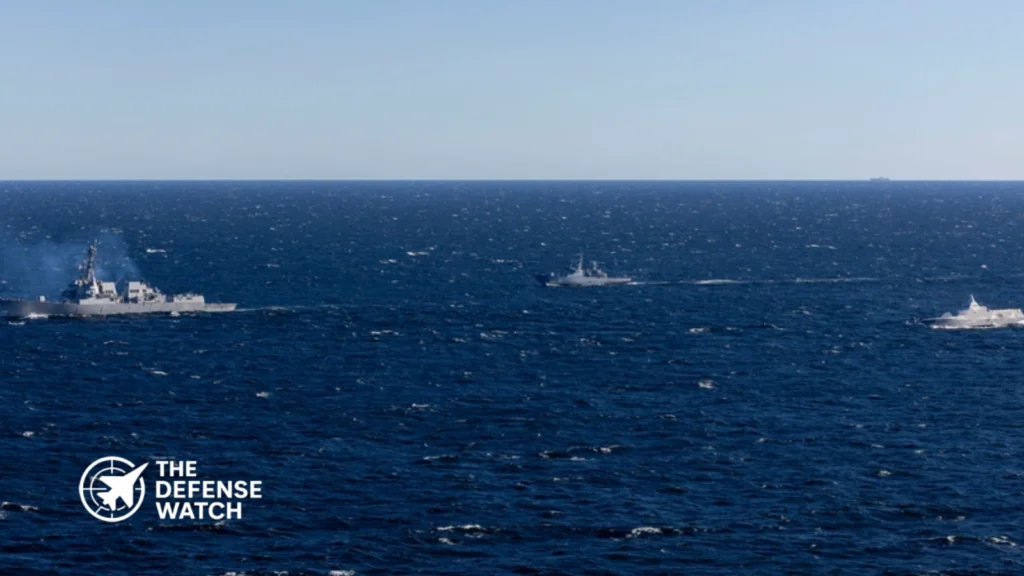
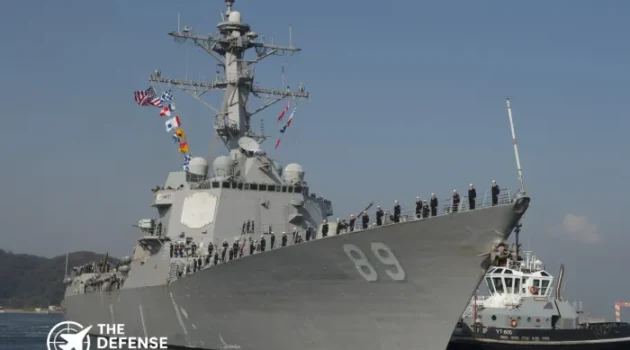
The U.S. Department of War has certified General Dynamics Bath Iron Works (BIW) in Maine as capable of supporting construction of a second Arleigh Burke-class guided-missile destroyer, subject to congressional funding and continued improvements in shipyard performance.

Contents
  • Funding remains the next hurdle
  • Production capacity is more than a shipyard decision
  • A second ship would build on an established procurement program

The decision follows a multi-phase review of the shipyard’s production throughput, schedule performance, quality assurance, supply chain resilience and workforce management. According to the department’s announcement, improvements in operations and management have established the conditions needed to take on additional destroyer construction while continuing existing work.

The certification removes an important industrial-capacity concern from consideration, but it does not constitute a shipbuilding contract or confirm that another destroyer has been funded.

Deputy Secretary of War Steve Feinberg said the shipyard had demonstrated the capacity and stability required to support a second ship. He also cautioned that Bath Iron Works must sustain its improvements to address longstanding production challenges.

- Advertisement -

Funding remains the next hurdle

The decision creates an opportunity for the Navy to expand destroyer procurement at one of its two principal Arleigh Burke-class shipbuilders. However, the additional workload will depend on congressional appropriations and subsequent acquisition decisions.
Bath Iron Works second destroyer
Image : U.S. Navy

Sen. Susan Collins, R-Maine, welcomed the certification, saying she had advocated for including a second destroyer in the year’s budget. She also pointed to the shipyard’s workforce of approximately 6,800 employees and its importance to Maine’s economy.

Collins said she had worked with the administration during its review, including visits to the facility intended to assess whether BIW could construct another ship without compromising its existing commitments.

The department has not disclosed a contract value, construction start date, delivery schedule or specific hull number for the potential additional destroyer. The announcement also does not identify the individual performance metrics used to determine that the shipyard had met the required standard.

Those details matter because authorizing an additional ship is only one part of the process. The Navy must also align funding, design and material availability, labor requirements, supplier deliveries and the shipyard’s existing production schedule.

Bath Iron Works, located in Bath, Maine, builds Arleigh Burke-class destroyers for the U.S. Navy alongside Huntington Ingalls Industries’ Ingalls Shipbuilding division in Pascagoula, Mississippi.

  • Arleigh Burke Class Destroyer

    Arleigh Burke Class Destroyer

    • Displacement: Approx 9,200 tons full load
    • Maximum Speed: 30 plus knots
    • Radar Range: Over 300 km air targets
    • Vertical Launch Cells (VLS): 90 to 96 cells
    • View Details →
    8.0

    The Navy describes the DDG 51 class as a central component of its surface fleet. The ships perform air defense, ballistic missile defense, anti-submarine warfare and surface warfare missions, depending on their configuration and assigned equipment. They also support carrier strike groups and other naval formations.

    The Flight III configuration incorporates the AN/SPY-6(V)1 Air and Missile Defense Radar, together with associated electrical power and cooling improvements. These changes are intended to strengthen the ships’ ability to conduct integrated air and missile defense missions.

    • AN/SPY-6(V)1 Air and Missile Defense Radar

      AN/SPY-6(V)1 Air and Missile Defense Radar

      • Detection Range: 300+ nautical miles
      • Frequency Band: S-Band
      • Antenna Type / Technology: AESA (Active Electronically Scanned Array)
      • Target Tracking Capacity: 600+ simultaneous targets
      • View Details →
      9.3

      An additional destroyer would therefore contribute to the Navy’s planned inventory of multi-mission surface combatants. The precise operational benefit, however, would depend on the ship’s eventual delivery date, configuration, and the availability of trained personnel and supporting systems.

      Production capacity is more than a shipyard decision

      The Pentagon’s review focused on several interconnected areas of industrial performance. Each can affect whether an additional ship can be built without worsening delays elsewhere in the program.

      • Production throughput: The rate at which the shipyard can complete fabrication, assembly and outfitting work.
      • Schedule adherence: Whether construction milestones can be met while existing ships progress through production.
      • Quality assurance: The ability to identify and correct defects without creating additional rework.
      • Supply chain resilience: Whether key components and equipment arrive in time to support planned construction.
      • Workforce optimization: Whether the shipyard has the labor, skills and management processes needed to handle additional work.

      The department’s certification indicates that its review found sufficient capacity and stability to support the proposed expansion. It does not, by itself, establish that the shipyard has eliminated every delay or can immediately increase output without further investment.

      This distinction is important across the U.S. naval shipbuilding industry. Adding another ship to a production plan increases demand not only on the shipyard, but also on suppliers producing propulsion equipment, combat systems, electrical components and other specialized hardware.

      If those suppliers cannot increase output at a corresponding pace, additional funding may not translate into faster fleet deliveries.

      A second ship would build on an established procurement program

      The Navy has used multi-year procurement contracts to provide greater production stability for the DDG 51 program. In August 2023, it awarded multi-year procurement contracts to Bath Iron Works and Ingalls Shipbuilding covering fiscal years 2023 through 2027.

      That arrangement provides a useful context for the latest decision. A second destroyer at BIW would expand the potential workload at an existing production facility rather than establish a new shipbuilding location or introduce a new destroyer design.

      Nevertheless, the additional ship would have to be integrated into the Navy’s procurement and production plans. The department’s certification establishes a basis for considering that option, not confirmation of an award.

      The administration has framed the decision as part of its effort to strengthen the U.S. maritime industrial base and improve the country’s ability to respond to growing naval competition, including China’s expanding fleet.

      Whether the proposed addition produces a meaningful increase in delivered ships will depend on execution across the entire production chain. A funded hull, timely component deliveries, a stable workforce and adherence to construction milestones will matter more to fleet readiness than the certification alone.

      For now, Bath Iron Works has cleared an important capacity review. Congress must still provide the necessary funding, and the Navy must translate that approval into a procurement decision before a second additional destroyer can enter the shipyard’s workload.
TAGGED:Arleigh Burke-classBath Iron WorksshipbuildingU.S. Navy
Share This Article
Facebook Copy Link Print
BySamuel Drake | Defense Analyst
Follow:
Samuel Drake is a defense analyst at TheDefenseWatch.com covering naval warfare, military ordnance, maritime technology, fleet modernization, and defense procurement. His reporting focuses on documented capabilities, procurement programs, and military technology.

Latest Defense Systems

  • SPY-6 Radar SPY-6 Radar
  • Boeing VC-25B Presidential Aircraft Boeing VC-25B Presidential Aircraft
  • SM-3 Block IB Missile SM-3 Block IB Missile
  • USS Abraham Lincoln Aircraft Carrier USS Abraham Lincoln Aircraft Carrier
  • M142 HIMARS M142 HIMARS
  • Terrex S5 Infantry Vehicle Terrex S5 Infantry Vehicle
  • A-29 Super Tucano Aircraft A-29 Super Tucano Aircraft
  • DSAR 15 Rifle DSAR 15 Rifle
  • ASMP Missile ASMP Missile

Recent Compares

  • Tejas vs Gripen: Key Differences and Capabilities Tejas vs Gripen: Key Differences and Capabilities View Comparison →
  • Tejas vs MiG-21 Bison: How India Replaced Its Iconic Supersonic Fighter Tejas vs MiG-21 Bison: How India Replaced Its Iconic Supersonic Fighter View Comparison →
  • F-35 vs F-16: Stealth, Sensors and Combat Roles F-35 vs F-16: Stealth, Sensors and Combat Roles View Comparison →
  • Tejas Fighter Jet vs F-16 Fighting Falcon: Capability Compared Tejas Fighter Jet vs F-16 Fighting Falcon: Capability Compared View Comparison →
  • Rafale Fighter Jet vs F-16 Fighting Falcon : Which Fighter Has the Edge? Rafale Fighter Jet vs F-16 Fighting Falcon : Which Fighter Has the Edge? View Comparison →
  • Su-57 Fighter Jet vs J-20 Fighter Jet: Stealth and Air Combat Compared Su-57 Fighter Jet vs J-20 Fighter Jet: Stealth and Air Combat Compared View Comparison →
  • Mirage 2000 vs Tejas Mk1A: Legacy Combat Power vs Indigenous Modernization Mirage 2000 vs Tejas Mk1A: Legacy Combat Power vs Indigenous Modernization View Comparison →
  • Rafale Fighter Jet vs F-22 Raptor: Which Air Dominance Fighter Has the Edge? Rafale Fighter Jet vs F-22 Raptor: Which Air Dominance Fighter Has the Edge? View Comparison →
  • Tejas Fighter Jet vs. Rafale Fighter Jet: India’s Indigenous Fighter Meets France’s Proven Multirole Combat Aircraft Tejas Fighter Jet vs. Rafale Fighter Jet: India’s Indigenous Fighter Meets France’s Proven Multirole Combat Aircraft View Comparison →
  • F-22 Raptor vs. F-35 Joint Strike Fighter: Which Fifth Generation Fighter Has the Edge? F-22 Raptor vs. F-35 Joint Strike Fighter: Which Fifth Generation Fighter Has the Edge? View Comparison →

Recent Posts

  • Raytheon Tests Faster Coyote Interceptor With New Rocket Motor
  • Raytheon to Develop Software Upgrades for U.S. Navy Radar Detection
  • Kim Jong Un Opens North Korea Weapons Museum as Pyongyang Claims Missile Test Success
  • Pentagon Certifies Bath Iron Works for Second Arleigh Burke Destroyer
  • North Korea Fires Unidentified Projectile Toward East Coast, Seoul Says

You Might Also Like

USS Guitarro sinking
Naval & MaritimeSubmarines

When a Manhole Killed a Sub: Lessons from the USS Guitarro Sinking

October 8, 2025
Bell Boeing V-22 contract
Defense Contracts

Bell Boeing Wins $19.8M V-22 Tactical Software Support Contract

September 19, 2026
Fleet Ballistic Missile program history
Naval & MaritimeSubmarines

Lockheed Martin’s Fleet Ballistic Missile Program Marks 70 Years of U.S. Nuclear Deterrence at Sea

September 8, 2026
USS New Jersey Attack Submarine
Naval & MaritimeSubmarines

UK Lawmakers Warn SSN-AUKUS Risks Delay As British Submarine Program Faces Serious Gaps

September 7, 2026

Logo

Copyright © 2026 TheDefenseWatch.com

Helpful Links

  • Home
  • About Us
  • Privacy Policy
  • Terms of Use / Disclaimer
  • U.S. Privacy Notice – CCPA Compliance

Defense Systems

  • Defense Systems
  • Comparisons 
  • Manufacturer
  • Tactical Calculators

Popuplar

Which 5 Air Forces Possess the Costliest Fighter Jet Fleets in the World
Evolving Strategic Value: Carrier Strike Groups in the Indo-Pacific’s Future Security Architecture
Autonomous Weapon Systems Spark U.S. Ethics Debate Amid Rapid Military AI Integration

We report on developments involving military forces, governments, defense companies, research organizations, and security institutions around the world. 

Welcome Back!

Sign in to your account

Username or Email Address
Password

Lost your password?