• Home
  • About
  • Defense Systems
  • Manufacturer
  • Comparisons
  • Compare 
  • Tools
TheDefenseWatch.com
  • Aerospace & Aviation
  • Military & Ordnance
  • Naval & Maritime
  • Cyber & Space Defense
  • Policy & Strategy
  • Global News
  • Tools Library
    • Smart Calculator
    • Drone Flight Time Calculator
    • Drone Range Calculator
    • Counter-Drone Jammer Effective Range Calculator
    • Counter-Battery Radar Detection Calculator
    • Artillery Fire Correction Calculator
    • Thermal Camera Detection Range Calculator
    • Missile Range & Time-of-Flight Calculator
    • Radar Detection Range Calculator
    • FPV Strike Drone Payload vs Range Calculator
    • Loitering Munition Endurance Calculator
    • Sniper Ballistic Drop & Windage Calculator
    • Bullet Drop Calculator
    • U.S. Army Combat Fitness Test (ACFT) Calculator
    • Military Pension Calculator
    • Military Retirement Calculator
    • Military Pension Calculator
    • Large Number Calculator
Font ResizerAa

TheDefenseWatch.com

The Defense Watch | U.S. & Global Defense News, Analysis & Military Updates

Search
  • Home
  • About
  • Defense Systems
  • Manufacturer
  • Comparisons
  • Compare 
  • Tools

Stay Updated

Get the latest update

Subscribe

Explore

  • Drone
  • Fighter Jets & Military Aircraft
  • Hypersonic Weapons
  • Aircraft Carriers
  • Strategic History & Missions
  • Tools Library
Home » Boeing MQ-28 Ghost Bat Expands Stealth Combat Capability Through Successful Radar Validation
Aerospace & AviationDrones & UAVs

Boeing MQ-28 Ghost Bat Expands Stealth Combat Capability Through Successful Radar Validation

Daniel Mercer / Defense & Aerospace Analyst
Last updated: September 12, 2026 4:50 pm
Daniel Mercer / Defense & Aerospace Analyst
Share
7 Min Read
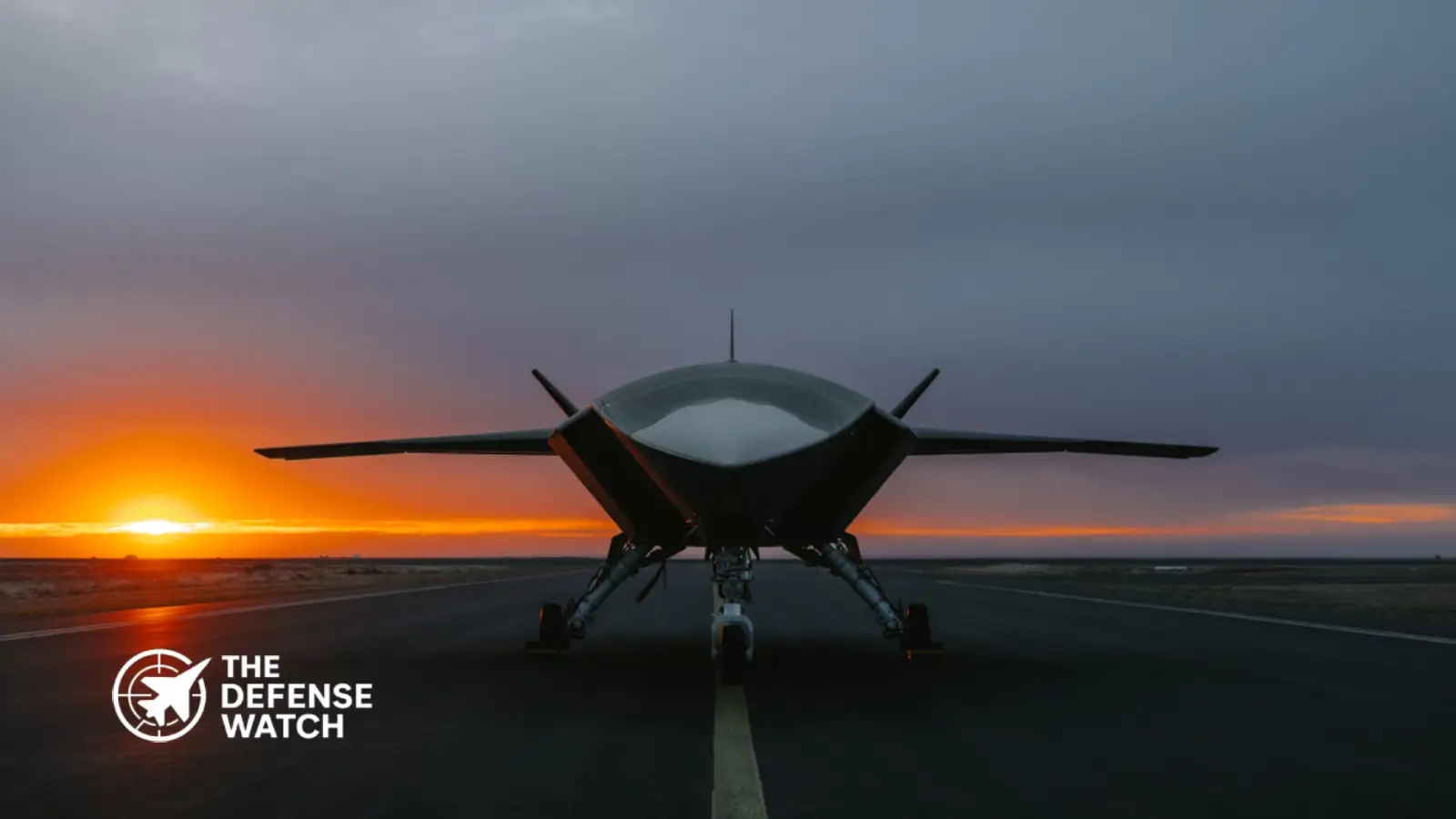
Boeing MQ-28 Ghost Bat undergoing radar cross-section testing inside a specialized stealth evaluation facility.
Image Source : Boeing
SHARE

Executive Summary:

Boeing has successfully validated the radar cross-section performance of its MQ-28 Ghost Bat collaborative combat aircraft through a series of radar signature tests announced on June 1, 2026. The milestone provides objective data on the aircraft’s survivability and detection risk, supporting its role as a stealthy autonomous wingman designed to operate alongside advanced crewed fighters in contested environments.

(adsbygoogle = window.adsbygoogle || []).push({});

Boeing MQ-28 Ghost Bat Completes Key Stealth Validation Testing

Boeing’s MQ-28 Ghost Bat collaborative combat aircraft has successfully completed a major radar cross-section (RCS) testing campaign, marking an important milestone in the maturation of one of the most advanced autonomous combat aircraft currently under development.

Contents
  • Boeing MQ-28 Ghost Bat Completes Key Stealth Validation Testing
  • Why Radar Cross-Section Testing Matters
    • Key Benefits of Low Radar Signature
  • Designed for Fighter Teaming Operations
  • Recent Program Momentum Accelerates
  • Strategic Significance for Collaborative Combat Aircraft
    • Why This Matters for Future Air Combat
  • Export Potential Continues to Grow
  • Looking Ahead

The company announced that the testing validated the aircraft’s low-observable characteristics and generated objective, repeatable data regarding survivability and radar detection risk. The results represent another step toward operational deployment of the MQ-28 as a collaborative combat aircraft capable of supporting crewed fighters during high-threat missions.

  • MQ-28 Ghost Bat

    MQ-28 Ghost Bat

    • Primary Effect / Kill Mechanism: AI-guided kinetic or electronic attack
    • Operational Range / Engagement Envelope: ~3,700 km (2,000+ nm)
    • Autonomy / Guidance Level: Supervised autonomy with AI teaming
    • Power / Propulsion Type: Jet turbine engine
    • View Details →
    8.0

    The testing comes as air forces across the United States, Australia, and Europe accelerate efforts to field autonomous aircraft that can operate alongside manned platforms as force multipliers.

    Why Radar Cross-Section Testing Matters

    Radar cross-section testing is one of the most important assessments performed on a stealth aircraft. It measures how much radar energy is reflected back toward an enemy sensor when the aircraft is illuminated by radar signals.

    (adsbygoogle = window.adsbygoogle || []).push({});

    A lower radar signature generally reduces the distance at which an aircraft can be detected, tracked, and engaged by hostile air defense systems.

    According to Boeing, the MQ-28 testing was conducted to provide customers with measurable data on survivability and detection risks rather than relying solely on computer modeling or design predictions.

    Key Benefits of Low Radar Signature

    CapabilityOperational Benefit
    Reduced detection rangeIncreases survivability in contested airspace
    Lower tracking probabilityComplicates enemy targeting processes
    Enhanced penetration capabilitySupports operations near advanced air defenses
    Improved force protectionReduces risk to crewed aircraft operating nearby

    While Boeing has not disclosed specific RCS measurements, the company stated that the testing validated the effectiveness of the aircraft’s design, manufacturing approach, and material selection in reducing radar visibility.

    Designed for Fighter Teaming Operations

    The MQ-28 Ghost Bat was originally developed by Boeing Defence Australia under the Loyal Wingman program in partnership with the Royal Australian Air Force.

    (adsbygoogle = window.adsbygoogle || []).push({});

    Unlike traditional remotely piloted drones, the aircraft is designed to operate as an autonomous teammate for crewed aircraft.

    The platform can perform a range of missions, including:

    • Intelligence, surveillance, and reconnaissance (ISR)
    • Electronic warfare
    • Airborne sensing
    • Decoy operations
    • Strike support
    • Force protection missions

    The aircraft’s open-architecture design and modular nose section allow operators to rapidly swap mission payloads depending on operational requirements.

    Boeing states that the MQ-28 can fly more than 2,000 nautical miles and is designed to complement both current and future combat aircraft.

    Recent Program Momentum Accelerates

    The radar validation milestone follows several significant achievements for the Ghost Bat program over the past year.

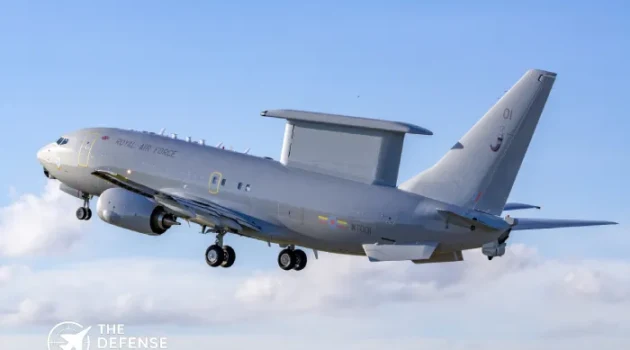
    In December 2025, Boeing and the Royal Australian Air Force successfully conducted an autonomous air-to-air missile engagement involving an MQ-28, an E-7A Wedgetail airborne early warning aircraft, and an F/A-18F Super Hornet. The exercise demonstrated the aircraft’s ability to participate in complex cooperative combat operations.

    • Boeing E-7A Wedgetail Aircraft

      Boeing E-7A Wedgetail Aircraft

      • Maximum Speed: Mach 0.82
      • Range: 6,500 km
      • Payload Capacity: Mission systems and operator stations
      • Crew: 10 to 12
      • View Details →
      7.0

      More recently, the MQ-28 completed its first operational flights outside Australia during testing at Point Mugu, California. The deployment demonstrated the aircraft’s ability to operate from allied bases and validated autonomous mission functions in an international environment.

      These achievements indicate that the program is moving beyond basic flight testing and into increasingly operationally relevant demonstrations.

      Strategic Significance for Collaborative Combat Aircraft

      The successful RCS validation carries implications beyond the MQ-28 program itself.

      (adsbygoogle = window.adsbygoogle || []).push({});

      Collaborative Combat Aircraft (CCA) are expected to become a central component of future air warfare concepts. The U.S. Air Force, Australian Defence Force, and several NATO allies are investing heavily in autonomous wingman programs intended to increase combat mass without proportionally increasing personnel requirements.

      For these aircraft to operate effectively in high-threat environments, survivability is essential.

      A stealthy collaborative combat aircraft can move closer to enemy defenses, collect intelligence, perform electronic warfare missions, or act as a forward sensor while reducing risks to more expensive crewed platforms.

      Why This Matters for Future Air Combat

      Several trends are driving demand for stealth-capable autonomous aircraft:

      • Expansion of integrated air defense systems
      • Growth of long-range surface-to-air missile networks
      • Increasing aircraft procurement costs
      • Demand for greater combat mass
      • Requirements for distributed operations across the Indo-Pacific

      The MQ-28 addresses many of these challenges by combining autonomy, modularity, and low-observable design into a platform intended to support fourth, fifth, and future sixth-generation aircraft.

      Export Potential Continues to Grow

      The timing of the radar validation is also significant as Boeing seeks to position the MQ-28 for broader international adoption.

      The aircraft has already attracted attention from allied nations evaluating collaborative combat aircraft solutions. Successful RCS validation provides an important data point for prospective operators assessing survivability requirements.

      Combined with recent operational demonstrations in the United States and ongoing integration activities with allied air forces, the milestone strengthens the MQ-28’s standing within the rapidly expanding global market for autonomous combat aircraft.

      Looking Ahead

      The MQ-28 Ghost Bat program has progressed from an experimental loyal wingman concept into one of the most mature collaborative combat aircraft initiatives currently flying.

      (adsbygoogle = window.adsbygoogle || []).push({});

      The successful radar cross-section testing confirms that the platform’s stealth design performs as intended and provides additional evidence of the aircraft’s readiness for increasingly demanding operational evaluations.

      As militaries continue pursuing manned-unmanned teaming concepts, low-observable autonomous aircraft such as the MQ-28 are expected to play an increasingly important role in future air combat operations.

TAGGED:Boeing DefenseMQ-28 Ghost Bat
Share This Article
Facebook Copy Link Print
ByDaniel Mercer / Defense & Aerospace Analyst
Follow:
Daniel Mercer is a defense and aerospace analyst at TheDefenseWatch.com covering military aviation, aerospace technology, unmanned systems, air warfare, and defense procurement. His reporting uses official documents, government and military statements, company announcements, and other public sources.
Leave a Comment

Leave a Reply Cancel reply

Your email address will not be published. Required fields are marked *

Latest Defense Systems

  • SU-57 Felon Stealth Fighter SU-57 Felon Stealth Fighter
  • Boeing F/A-XX Fighter Boeing F/A-XX Fighter
  • JF-17 Thunder Fighter Jet JF-17 Thunder Fighter Jet
  • Gaurav Glide Bomb Gaurav Glide Bomb
  • F-47 Fighter Jet F-47 Fighter Jet
  • Spirit UAS Spirit UAS
  • GBU-43/B MOAB Bomb GBU-43/B MOAB Bomb
  • John F. Kennedy Aircraft Carrier John F. Kennedy Aircraft Carrier
  • Voyager Tanker Voyager Tanker

Recent Compares

  • J-10C vs JF-17 Thunder: Which Fighter Is More Capable? J-10C vs JF-17 Thunder: Which Fighter Is More Capable? View Comparison →
  • Tejas vs Gripen: Key Differences and Capabilities Tejas vs Gripen: Key Differences and Capabilities View Comparison →
  • Tejas vs MiG-21 Bison: How India Replaced Its Iconic Supersonic Fighter Tejas vs MiG-21 Bison: How India Replaced Its Iconic Supersonic Fighter View Comparison →
  • F-35 vs F-16: Stealth, Sensors and Combat Roles F-35 vs F-16: Stealth, Sensors and Combat Roles View Comparison →
  • Tejas Fighter Jet vs F-16 Fighting Falcon: Capability Compared Tejas Fighter Jet vs F-16 Fighting Falcon: Capability Compared View Comparison →
  • Rafale Fighter Jet vs F-16 Fighting Falcon : Which Fighter Has the Edge? Rafale Fighter Jet vs F-16 Fighting Falcon : Which Fighter Has the Edge? View Comparison →
  • Su-57 Fighter Jet vs J-20 Fighter Jet: Stealth and Air Combat Compared Su-57 Fighter Jet vs J-20 Fighter Jet: Stealth and Air Combat Compared View Comparison →
  • Mirage 2000 vs Tejas Mk1A: Legacy Combat Power vs Indigenous Modernization Mirage 2000 vs Tejas Mk1A: Legacy Combat Power vs Indigenous Modernization View Comparison →
  • Rafale Fighter Jet vs F-22 Raptor: Which Air Dominance Fighter Has the Edge? Rafale Fighter Jet vs F-22 Raptor: Which Air Dominance Fighter Has the Edge? View Comparison →
  • Tejas Fighter Jet vs. Rafale Fighter Jet: India’s Indigenous Fighter Meets France’s Proven Multirole Combat Aircraft Tejas Fighter Jet vs. Rafale Fighter Jet: India’s Indigenous Fighter Meets France’s Proven Multirole Combat Aircraft View Comparison →

Recent Posts

  • Department of War and Lockheed Martin Sign 10-Year F-35 Agreement With $7 Billion Investment Commitment
  • Pentagon Approves Active Denial System for Potential U.S. Southern Border Use
  • U.S. Air Force Plans Larger F-35 Role in 1,509-Aircraft Fighter Fleet
  • Raytheon Wins Two-Year Extension for AN/TPY-2 Radar Support
  • Space Force Selects Northrop Grumman, True Anomaly for New Orbital Reconnaissance Satellites

You Might Also Like

F-15 fighter jet
Aerospace & AviationFighter Jets & Military Aircraft

The F-15 Fighter Jet: Evolution of America’s Legendary Air Superiority Aircraft

September 8, 2026
China Changying-8 cargo UAV
Aerospace & AviationDrones & UAVs

China Unveils Changying-8 Cargo UAV To Expand Long-Range Logistics Capability

April 1, 2026
MQ-28 Ghost Bat Germany
Aerospace & AviationFighter Jets & Military Aircraft

Germany Evaluates MQ-28 Ghost Bat As Loyal Wingman To Support Eurofighter Fleet

September 9, 2026
Danish F-35 Arctic training
Aerospace & AviationFighter Jets & Military Aircraft

Danish F-35s Refuel From French MRTT in Arctic Training Over Greenland

January 19, 2026

Logo

Copyright © 2026 TheDefenseWatch.com

Helpful Links

  • Home
  • About Us
  • Privacy Policy
  • Terms of Use / Disclaimer
  • U.S. Privacy Notice – CCPA Compliance

Defense Systems

  • Defense Systems
  • Comparisons 
  • Manufacturer
  • Tactical Calculators

Popuplar

Which 5 Air Forces Possess the Costliest Fighter Jet Fleets in the World
Evolving Strategic Value: Carrier Strike Groups in the Indo-Pacific’s Future Security Architecture
Autonomous Weapon Systems Spark U.S. Ethics Debate Amid Rapid Military AI Integration

We report on developments involving military forces, governments, defense companies, research organizations, and security institutions around the world. 

Welcome Back!

Sign in to your account

Username or Email Address
Password

Lost your password?