• Home
  • About
  • Defense Systems
  • Manufacturer
  • Comparisons
  • Compare 
  • Tools
TheDefenseWatch.com
  • Aerospace & Aviation
  • Military & Ordnance
  • Naval & Maritime
  • Cyber & Space Defense
  • Policy & Strategy
  • Global News
  • Tools Library
    • Smart Calculator
    • Drone Flight Time Calculator
    • Drone Range Calculator
    • Counter-Drone Jammer Effective Range Calculator
    • Counter-Battery Radar Detection Calculator
    • Artillery Fire Correction Calculator
    • Thermal Camera Detection Range Calculator
    • Missile Range & Time-of-Flight Calculator
    • Radar Detection Range Calculator
    • FPV Strike Drone Payload vs Range Calculator
    • Loitering Munition Endurance Calculator
    • Sniper Ballistic Drop & Windage Calculator
    • Bullet Drop Calculator
    • U.S. Army Combat Fitness Test (ACFT) Calculator
    • Military Pension Calculator
    • Military Retirement Calculator
    • Military Pension Calculator
    • Large Number Calculator
Font ResizerAa

TheDefenseWatch.com

The Defense Watch | U.S. & Global Defense News, Analysis & Military Updates

Search
  • Home
  • About
  • Defense Systems
  • Manufacturer
  • Comparisons
  • Compare 
  • Tools

Stay Updated

Get the latest update

Subscribe

Explore

  • Drone
  • Fighter Jets & Military Aircraft
  • Hypersonic Weapons
  • Aircraft Carriers
  • Strategic History & Missions
  • Tools Library
Home » British Aircraft Carrier Arrives In Norway As NATO Expands Northern Operations
Aircraft CarriersNaval & Maritime

British Aircraft Carrier Arrives In Norway As NATO Expands Northern Operations

Samuel Drake | Defense Analyst
Last updated: September 7, 2026 10:40 am
Samuel Drake | Defense Analyst
Share
3 Min Read
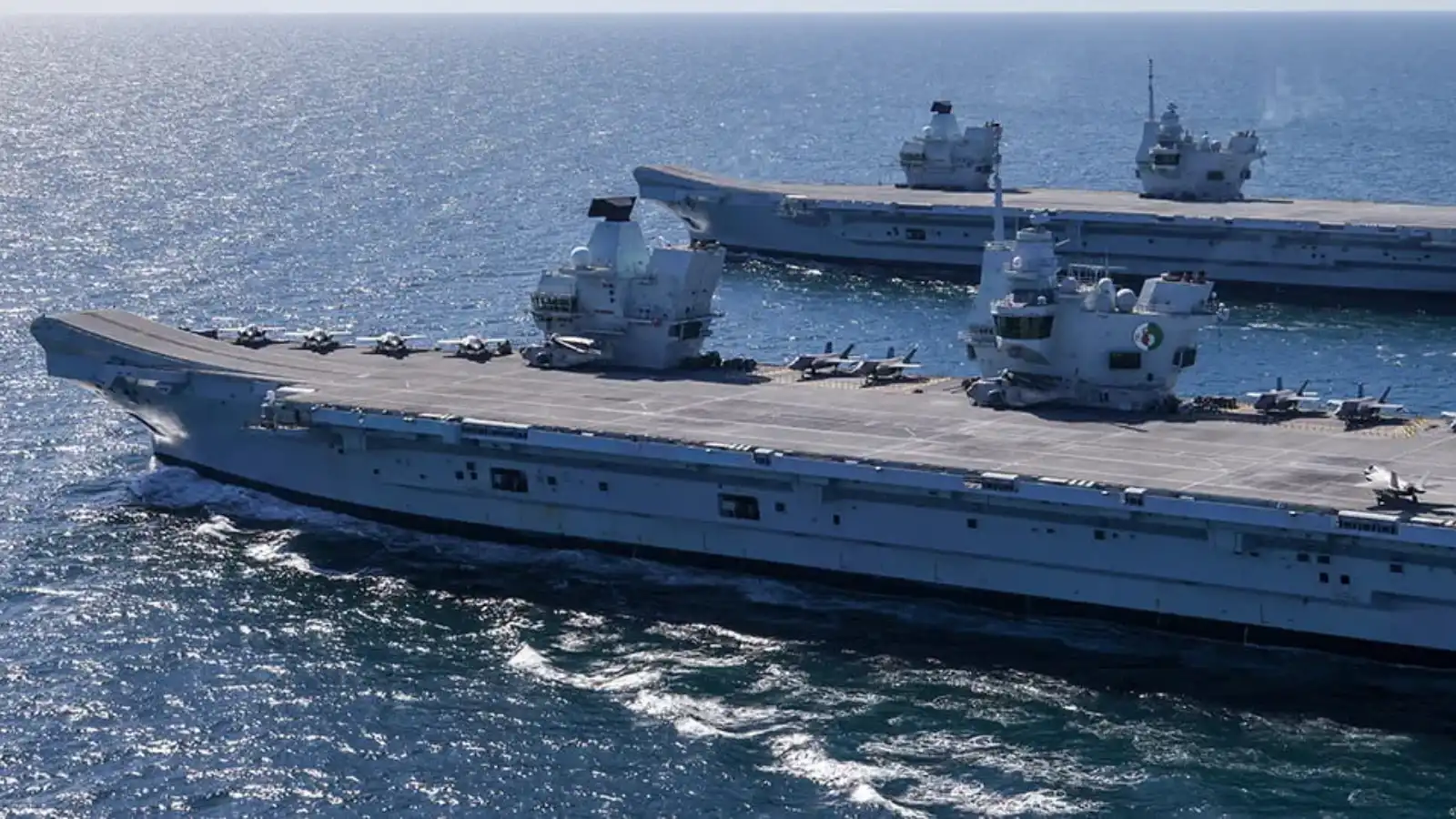
British aircraft carrier sailing in northern waters during NATO maritime operations near Norway
Image Source : Royal Navy
SHARE

Executive Summary: A British aircraft carrier has arrived in Norway as part of NATO maritime operations in the North Atlantic region. The deployment supports joint training and strengthens allied naval coordination in northern waters. It reflects growing emphasis on Arctic and high north security planning.

British Aircraft Carrier Arrives In Norway Strengthening NATO Maritime Posture

British aircraft carrier Norway deployment highlights continued NATO efforts to reinforce maritime readiness in the North Atlantic and Arctic approaches. The arrival of the carrier strike group underscores coordinated allied operations focused on training, deterrence, and interoperability in northern waters.

Contents
British Aircraft Carrier Arrives In Norway Strengthening NATO Maritime PostureStrategic Context of the DeploymentRole of Carrier Strike Group OperationsNorthern Flank Security and NATO PrioritiesRoyal Navy Carrier Capability in FocusNATO Interoperability and Training ValueRegional and Geopolitical ImplicationsExpert Analysis and Defense PerspectiveConclusion

The deployment involves a Royal Navy carrier strike group operating alongside Norwegian forces and NATO allies. The activity reflects an increasing pattern of allied naval presence in strategically sensitive regions, where sea lines of communication and Arctic access routes remain central to defense planning.

Strategic Context of the Deployment

British aircraft carrier Norway deployment comes at a time when NATO members are expanding their operational focus toward northern Europe and the Arctic region. Cold weather training environments and complex maritime geography make Norway a key partner for allied naval exercises.

The Royal Navy carrier strike group typically integrates a carrier, destroyers, frigates, and support vessels, along with embarked air wings. This structure allows for flexible response options across air defense, maritime patrol, and strike missions during joint operations.

- Advertisement -

Norwegian waters provide access to deep-water training areas and Arctic operating conditions that are difficult to replicate elsewhere in Europe. These conditions are critical for testing readiness in environments where weather, ice, and limited infrastructure can affect operations.

Role of Carrier Strike Group Operations

NATO carrier strike group operations are designed to enhance interoperability among allied navies and air forces. The presence of a carrier allows for sustained air operations far from home bases, supporting both defensive and training missions.

In the Norwegian theater, these operations typically focus on:

Joint air patrol coordination
Anti submarine warfare training
Maritime domain awareness drills
Integrated air defense exercises
Logistics and replenishment operations

The British carrier deployment also enables embarked aircraft to operate in coordination with Norwegian F35 fleets and other NATO air assets, improving shared tactics and communication systems across allied platforms.

Northern Flank Security and NATO Priorities

The North Atlantic and Arctic regions are increasingly central to NATO planning. British aircraft carrier Norway deployment fits into broader efforts to maintain presence and readiness in areas where maritime routes are strategically important.

Key concerns in the region include:

Protection of sea lanes connecting the Atlantic and Arctic
Monitoring of submarine activity in northern waters
Rapid reinforcement capability for northern Europe
Coordination between Nordic NATO members

- Advertisement -

Norway plays a central role due to its geography and extensive coastline facing the North Atlantic. Its infrastructure supports allied naval operations and provides staging points for training exercises involving carrier strike groups.

Royal Navy Carrier Capability in Focus

The Royal Navy carrier strike group is built around modern carrier aviation and integrated command systems. These capabilities allow it to operate as a mobile airbase, supporting a range of missions without reliance on fixed infrastructure.

Core elements include:

F35B short takeoff and vertical landing aircraft
Maritime helicopters for anti submarine operations
Surface escorts for protection and area control
Replenishment vessels for sustained deployment

This configuration allows the carrier to operate across multiple domains, including air defense, surface warfare, and intelligence gathering, making it a central asset in NATO naval exercises.

NATO Interoperability and Training Value

One of the main objectives of British aircraft carrier Norway deployment is improving interoperability between allied forces. Training in Norwegian waters allows multiple NATO members to operate in a shared environment under realistic conditions.

Exercises in the region often include coordinated strike planning, airspace deconfliction, and joint maritime surveillance. These activities help align procedures across different platforms and national doctrines.

The presence of a carrier strike group also provides a command and control hub, enabling large scale coordination across air and sea assets during multinational exercises.

Regional and Geopolitical Implications

While the deployment is framed as routine training, it also reflects broader geopolitical shifts in Europe’s security environment. NATO has increased its focus on northern defense planning, especially following expanded cooperation among Nordic countries.

British aircraft carrier Norway deployment signals continued emphasis on forward presence and allied visibility in strategic maritime corridors. It also reinforces deterrence through regular rotation of high value naval assets in the region.

Expert Analysis and Defense Perspective

From a defense planning standpoint, carrier deployments to Norway provide measurable advantages in readiness testing. Cold weather operations, long range coordination, and multi domain integration are all stress tested in the North Atlantic environment.

Such deployments also highlight the evolving role of carriers. Rather than purely power projection platforms, modern carrier strike groups increasingly function as integrated command nodes within NATO force structures.

The operational experience gained in Norway contributes to refining tactics for distributed maritime operations, where smaller units operate across wide geographic areas while remaining networked through shared command systems.

Conclusion

British aircraft carrier Norway deployment reinforces NATO’s focus on maritime readiness and northern security coordination. The operation demonstrates continued allied investment in joint training, interoperability, and sustained presence in strategically important waters.

As NATO adapts to evolving security challenges in the North Atlantic, carrier strike group operations are likely to remain a key component of multinational exercises and deterrence planning.


TAGGED:NATO operationsRoyal Navy
Share This Article
Facebook Copy Link Print
BySamuel Drake | Defense Analyst
Follow:
Samuel Drake is a defense analyst at TheDefenseWatch.com covering naval warfare, military ordnance, maritime technology, fleet modernization, and defense procurement. His reporting focuses on documented capabilities, procurement programs, and military technology.
Leave a Comment

Leave a Reply Cancel reply

Your email address will not be published. Required fields are marked *

Search Defense Systems

Latest Defense Systems

  • TRML-4D Radar TRML-4D Radar
  • F-47A Fighter Jet F-47A Fighter Jet
  • China DF-61 Missile China DF-61 Missile
  • B61 Nuclear Bomb B61 Nuclear Bomb
  • Japan E-767 Airborne Japan E-767 Airborne
  • Remington 870 Shotgun Remington 870 Shotgun
  • RUTA B1 Cruise Missile RUTA B1 Cruise Missile
  • XQ-67A Drone XQ-67A Drone
  • B-25 Mitchell Bomber B-25 Mitchell Bomber

Recent Compares

  • J-10C vs JF-17 Thunder: Which Fighter Is More Capable? J-10C vs JF-17 Thunder: Which Fighter Is More Capable? View Comparison →
  • Tejas vs Gripen: Key Differences and Capabilities Tejas vs Gripen: Key Differences and Capabilities View Comparison →
  • Tejas vs MiG-21 Bison: How India Replaced Its Iconic Supersonic Fighter Tejas vs MiG-21 Bison: How India Replaced Its Iconic Supersonic Fighter View Comparison →
  • F-35 vs F-16: Stealth, Sensors and Combat Roles F-35 vs F-16: Stealth, Sensors and Combat Roles View Comparison →
  • Tejas Fighter Jet vs F-16 Fighting Falcon: Capability Compared Tejas Fighter Jet vs F-16 Fighting Falcon: Capability Compared View Comparison →
  • Rafale Fighter Jet vs F-16 Fighting Falcon : Which Fighter Has the Edge? Rafale Fighter Jet vs F-16 Fighting Falcon : Which Fighter Has the Edge? View Comparison →
  • Su-57 Fighter Jet vs J-20 Fighter Jet: Stealth and Air Combat Compared Su-57 Fighter Jet vs J-20 Fighter Jet: Stealth and Air Combat Compared View Comparison →
  • Mirage 2000 vs Tejas Mk1A: Legacy Combat Power vs Indigenous Modernization Mirage 2000 vs Tejas Mk1A: Legacy Combat Power vs Indigenous Modernization View Comparison →
  • Rafale Fighter Jet vs F-22 Raptor: Which Air Dominance Fighter Has the Edge? Rafale Fighter Jet vs F-22 Raptor: Which Air Dominance Fighter Has the Edge? View Comparison →
  • Tejas Fighter Jet vs. Rafale Fighter Jet: India’s Indigenous Fighter Meets France’s Proven Multirole Combat Aircraft Tejas Fighter Jet vs. Rafale Fighter Jet: India’s Indigenous Fighter Meets France’s Proven Multirole Combat Aircraft View Comparison →

Recent Posts

  • Raytheon JR3 Rocket: History, Design and Military Role
  • Raytheon Wins DARPA Contract to Develop All-Optical Signal Processing Technology
  • Lockheed Martin Delivers 100,000th GMLRS Rocket as Production Reaches 14,000 a Year
  • L3Harris CEO Sam Mehta Discusses Defense Spending and Missile Production on CNBC
  • L3Harris Demonstrates Multi-Domain Defense Network for Pacific Security

You Might Also Like

USS Abraham Lincoln Thailand arrival
Aircraft CarriersNaval & Maritime

USS Abraham Lincoln Arrives In Thailand After 286 Days At Sea

September 13, 2026
Royal Navy warship retirement
Naval & MaritimeNaval Strategy & Maritime Security

Royal Navy Moves To Retire Three Warships As Fleet Modernization Accelerates

September 7, 2026
Taiwan military drills energy routes
Naval & MaritimeNaval Strategy & Maritime Security

Taiwan Moves To Secure Energy Supply Routes As China Blockade Pressure Intensifies

September 7, 2026
US seizes Iranian cargo ship
Naval & MaritimeNaval Strategy & Maritime Security

Iran Moves To Seize Ships In Strait Of Hormuz As Trump Halts U.S. Attacks

September 7, 2026

Logo

Copyright © 2026 TheDefenseWatch.com

Helpful Links

  • Home
  • About Us
  • Privacy Policy
  • Terms of Use / Disclaimer
  • U.S. Privacy Notice – CCPA Compliance

Defense Systems

  • Defense Systems
  • Comparisons 
  • Manufacturer
  • Tactical Calculators

Popuplar

Which 5 Air Forces Possess the Costliest Fighter Jet Fleets in the World
Evolving Strategic Value: Carrier Strike Groups in the Indo-Pacific’s Future Security Architecture
Autonomous Weapon Systems Spark U.S. Ethics Debate Amid Rapid Military AI Integration

We report on developments involving military forces, governments, defense companies, research organizations, and security institutions around the world. 

Welcome Back!

Sign in to your account

Username or Email Address
Password

Lost your password?