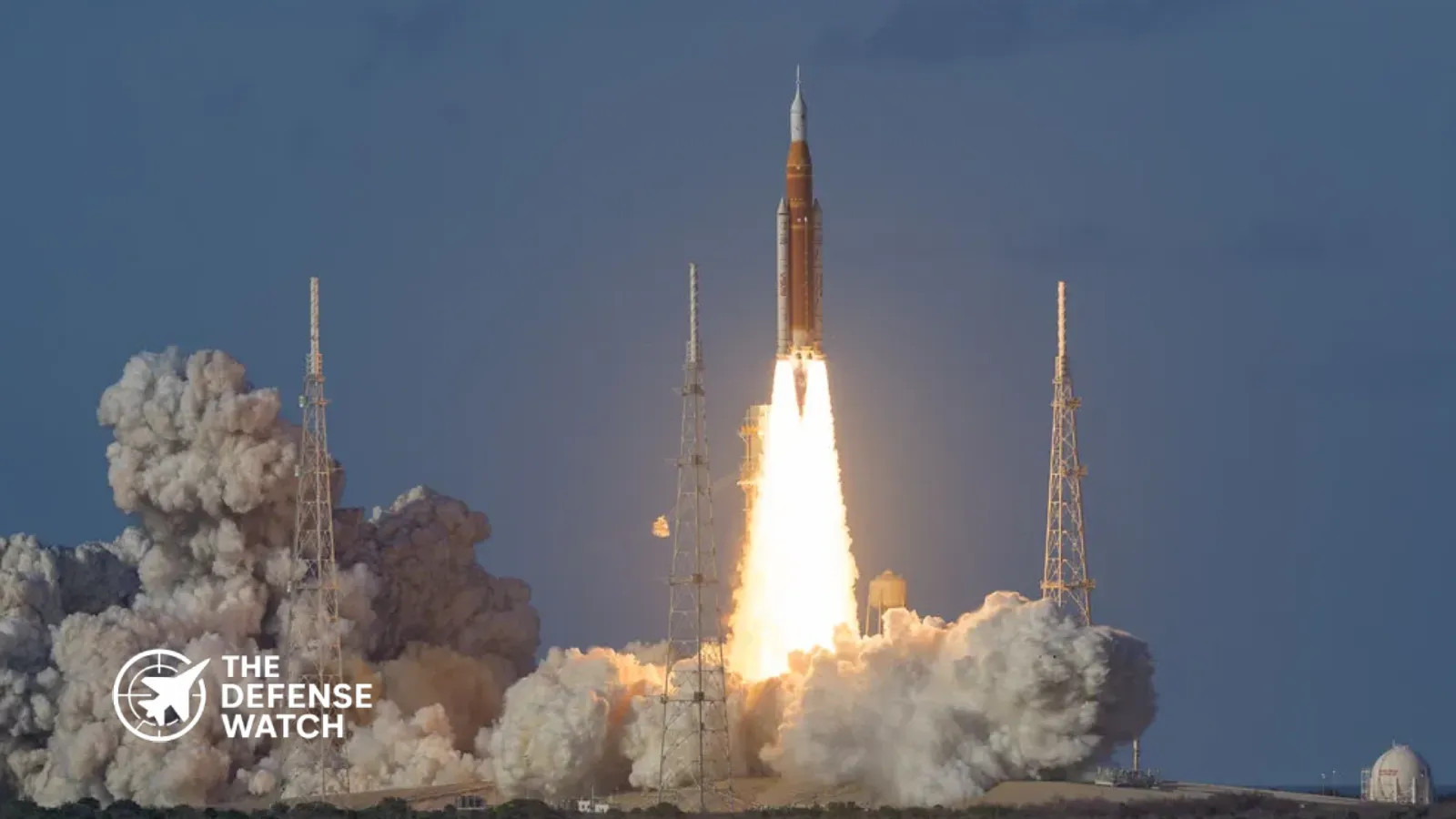
- NASA’s SLS rocket lifted off from Kennedy Space Center’s Launch Pad 39B on April 1, 2026 at 6:35 p.m. EDT, carrying four astronauts aboard the Orion spacecraft named “Integrity.”
- Artemis II is the first crewed mission of the Artemis program and the first time humans have flown toward the Moon since the Apollo era — more than 50 years ago.
- The crew includes NASA astronauts Reid Wiseman, Victor Glover, and Christina Koch, along with Canadian Space Agency astronaut Jeremy Hansen.
- The approximately 10-day mission will include a lunar flyby on April 6, with crew conducting manual pilot demonstrations, life support system checks, and lunar surface observations.
- The mission lays critical groundwork for future Artemis surface landings and eventual crewed missions to Mars under NASA’s long-range exploration strategy.
NASA Launches Artemis II On Historic Crewed Lunar Flyby — First Since Apollo
The NASA Artemis II mission lifted off from Florida on April 1, 2026, marking the most significant human spaceflight milestone in more than half a century. At 6:35 p.m. EDT, the Space Launch System (SLS) rocket roared off Launch Pad 39B at Kennedy Space Center, propelling four astronauts aboard the Orion spacecraft on a trajectory toward the Moon — the first time humans have traveled to lunar distance since Apollo 17 in December 1972.
This is not merely a symbolic return. Artemis II represents a live systems-integration test under actual crewed conditions — evaluating everything from Orion’s life support to its propulsion capabilities in the demanding environment of deep space. The stakes are high, and what NASA learns from this mission will directly determine the pace and safety of future lunar surface landings.
The Crew And The Mission Objective
The four-person crew brings a diverse blend of experience and historic significance to the mission. Commander Reid Wiseman, a Navy test pilot and former International Space Station commander, leads the team. Pilot Victor Glover, who made history as the first Black astronaut to serve on a long-duration ISS mission, serves as pilot. Mission Specialist Christina Koch — who holds the record for the longest single spaceflight by a woman — rounds out the NASA contingent. Canadian Space Agency astronaut Jeremy Hansen, making his first spaceflight, represents the first non-American to fly on a crewed lunar mission.
The mission is planned to last approximately 10 days, with a lunar flyby scheduled for Monday, April 6. During that flyby, the astronauts will photograph and observe the Moon’s surface as the first people to view certain areas of the lunar far side. Conditions during the flyby are expected to produce long shadows that reveal surface depth, ridges, slopes, and crater rims that are difficult to detect under full illumination.
Launch Sequence And Orbital Profile
About 49 minutes after liftoff, the SLS upper stage fired to place Orion into an elliptical Earth orbit. A second planned burn by the upper stage will propel Orion into a high Earth orbit extending roughly 46,000 miles beyond Earth, after which the spacecraft will separate and fly independently.
During the high Earth orbit phase lasting approximately one day, the crew will conduct a manual pilot demonstration to test Orion’s handling capabilities, while Mission Control teams at Johnson Space Center in Houston continue checking spacecraft systems.
If all systems perform as expected, mission controllers will command Orion’s European-built service module to execute the translunar injection burn on Thursday, April 2 — an approximately six-minute firing to set the spacecraft on a trajectory carrying the crew around the Moon while using lunar gravity to slingshot them back toward Earth.
Following a successful lunar flyby, the astronauts will return to Earth and splash down in the Pacific Ocean.
Strategic Context: Why Artemis II Matters Now
The Artemis II flight arrives at a pivotal moment in the geopolitics of space exploration. China’s lunar ambitions have accelerated sharply — Beijing has publicly targeted crewed lunar landings by 2030 and is developing its own Long March 10 super-heavy rocket alongside a next-generation crewed spacecraft. Russia, despite its ongoing focus on low Earth orbit infrastructure, has signaled continued collaboration with China on a proposed International Lunar Research Station.
Against that backdrop, Artemis II is more than a test flight — it is a demonstration of American operational capability and programmatic commitment. The United States is signaling to both allies and competitors that the SLS-Orion architecture is functional, crewed, and moving toward sustained lunar presence.
NASA Administrator Jared Isaacman underscored that dimension directly after launch, stating that the mission marks a return to the Moon “not just to visit, but to eventually stay,” and that it lays the foundation for future crewed missions to Mars.
This framing is significant. The Artemis program has faced years of cost overruns, schedule slippage, and congressional scrutiny over the viability of the SLS rocket compared to commercial alternatives. A flawless Artemis II execution would substantially strengthen the program’s political position and validate the tens of billions invested since the program’s inception in 2017.
Secondary Payloads: International Scientific Contributions
Beyond the crew, a ring on the SLS upper stage will deploy four CubeSats from Argentina’s Comisión Nacional de Actividades Espaciales, the German Aerospace Center, the Korea AeroSpace Administration, and the Saudi Space Agency to conduct scientific investigations and technology demonstrations.
The inclusion of international CubeSat payloads reflects NASA’s broader strategy of using Artemis as a platform for multinational scientific engagement — tying allied space agencies to the U.S.-led lunar framework and reinforcing the Artemis Accords coalition, which now includes more than 50 signatory nations.
What Comes Next
Artemis II is explicitly a precursor mission. Among its primary objectives, the flight will demonstrate life support systems for the first time with crew aboard and establish the operational foundation for an enduring presence on the Moon ahead of future missions to Mars.
The data gathered — on crew health, spacecraft thermal performance, guidance and navigation in translunar space, and the behavior of Orion’s systems under crewed load — will directly inform the design of Artemis III, the mission currently planned to land astronauts on the lunar south pole. That landing, targeting an area of confirmed water ice deposits of significant scientific and resource value, is currently slated no earlier than 2027, though schedule pressure remains a factor.
NASA Associate Administrator Amit Kshatriya noted after launch that the Artemis II crew will put Orion through its paces so that subsequent crews can descend to the Moon’s surface with confidence, describing the mission as “one mission into a long campaign” with significant work still ahead.
The stakes for that campaign are considerable. A successful Artemis II would cement U.S. leadership in crewed deep-space exploration for the near term, provide a credible deterrent to China’s accelerating lunar timeline, and validate the public-private architecture that underpins the broader Artemis ecosystem — including SpaceX’s Human Landing System contract and commercial cargo delivery through the CLPS program.