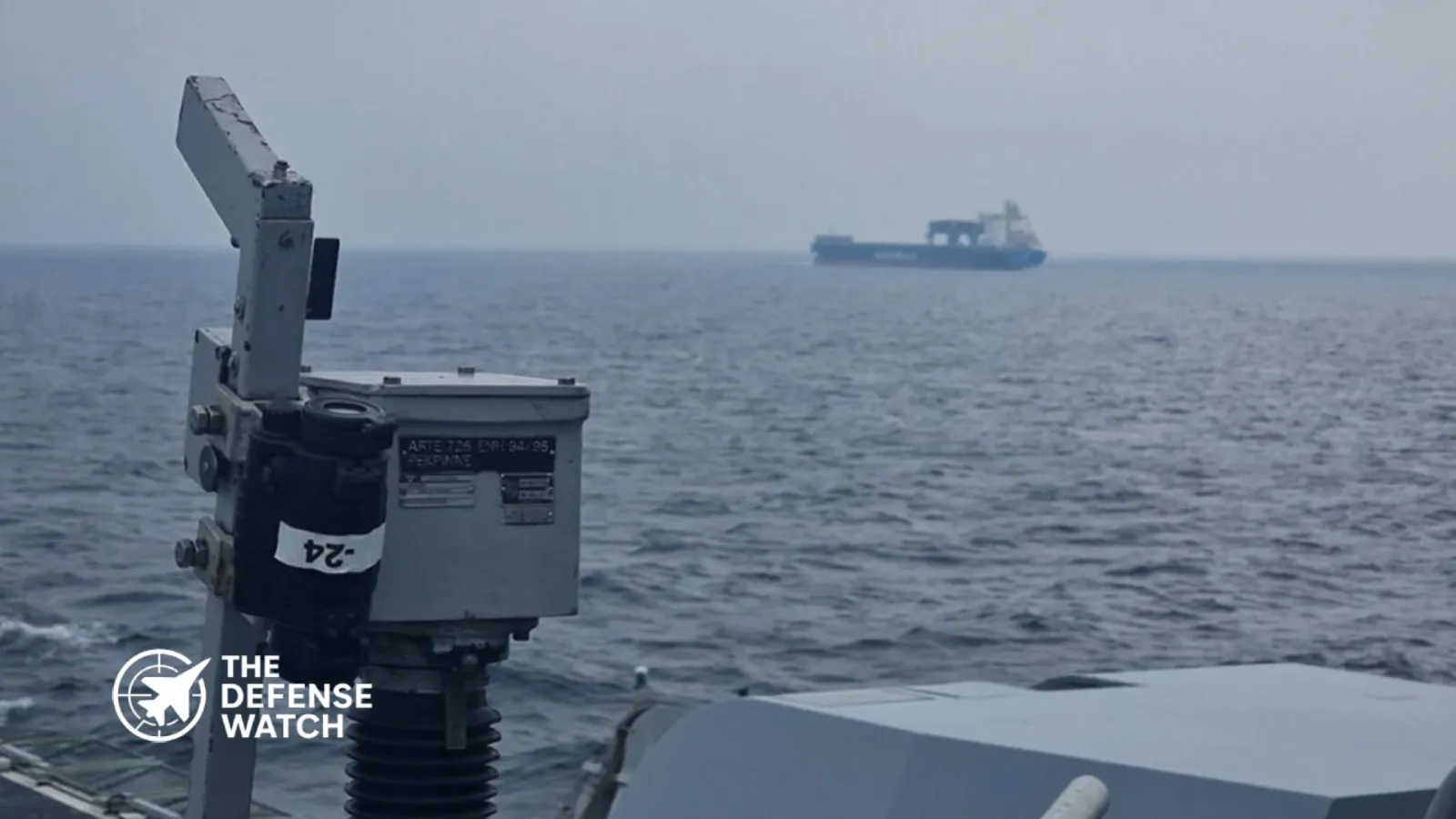
- The UK plans to board vessels suspected of being part of Russia’s shadow fleet used to evade oil sanctions.
- The move targets aging tankers operating under opaque ownership structures and flags of convenience.
- These vessels are believed to transport sanctioned Russian oil outside Western regulatory oversight.
- The policy marks a more assertive UK maritime enforcement posture in coordination with allies.
- Analysts warn of legal, operational, and escalation risks in physically intercepting such ships.
Britain Targets Russian Shadow Fleet Vessels With Boarding Operations
The Russian shadow fleet vessels network is now at the center of a new British enforcement strategy, as the UK government moves to authorize the boarding of ships suspected of evading sanctions on Russian oil exports.
According to reporting by UK Defence Journal, British authorities are preparing to take a more direct role in disrupting maritime networks used by Moscow to bypass Western restrictions. The initiative reflects growing concern that existing sanctions enforcement mechanisms are insufficient to curb illicit oil flows.
The so-called shadow fleet consists largely of older oil tankers operating under complex ownership structures, often flagged in jurisdictions with limited regulatory oversight. These ships are widely believed to transport Russian crude outside the price cap regime imposed by G7 nations.
Shift From Monitoring To Direct Interdiction
Until now, Western efforts to counter the Russian shadow fleet vessels have focused primarily on tracking, financial sanctions, and insurance restrictions. Britain’s latest move signals a shift toward physical interdiction at sea.
Boarding operations would likely involve maritime security forces, potentially supported by Royal Navy assets, conducting inspections to verify cargo, ownership documentation, and compliance with sanctions frameworks.
This approach introduces a new level of enforcement risk. Intercepting vessels on the high seas raises legal complexities under international maritime law, particularly regarding jurisdiction and the rights of flagged states.
However, UK officials appear to be aligning with a broader Western effort to tighten enforcement gaps that have allowed Russian oil exports to continue at scale despite sanctions.
Strategic Context Behind The Move
The expansion of the Russian shadow fleet vessels network has been one of the most significant unintended consequences of sanctions imposed following Russia’s invasion of Ukraine.
Estimates suggest that hundreds of tankers may now be involved in these operations, forming an alternative logistics chain that operates largely outside Western-controlled insurance and compliance systems.
This development has had two major implications:
First, it has enabled Russia to sustain critical oil revenue streams, mitigating the intended economic pressure of sanctions.
Second, it has increased maritime safety and environmental risks, as many of these vessels are older and may not meet modern safety standards.
By moving to board suspect ships, Britain is attempting to address both concerns, disrupting revenue flows while also signaling a commitment to maritime governance standards.
Operational And Legal Challenges
Despite its intent, enforcing action against Russian shadow fleet vessels presents significant operational hurdles.
Boarding a vessel requires clear legal authority, typically derived from flag state consent, United Nations mandates, or specific bilateral agreements. In cases where ships operate under flags of convenience, determining jurisdiction can be complex.
There is also the risk of escalation. Direct interference with vessels linked to Russian trade could trigger diplomatic or military responses, particularly if incidents occur in contested or strategically sensitive waters.
From a naval operations standpoint, such missions demand careful coordination, intelligence support, and clear rules of engagement to avoid unintended confrontation.
Broader Implications For Maritime Security
Britain’s decision highlights a growing trend toward more assertive maritime enforcement among Western nations. As sanctions regimes evolve, enforcement is increasingly shifting from financial systems to physical domains, including shipping lanes and ports.
The focus on Russian shadow fleet vessels also underscores the adaptability of global trade networks under pressure. When traditional routes are constrained, alternative systems emerge, often exploiting regulatory gaps.
For policymakers, this creates a continuous cycle of enforcement and adaptation, requiring increasingly sophisticated monitoring and intervention tools.
Industry And Allied Response
The shipping industry is likely to watch these developments closely. Increased boarding operations could introduce new risks for commercial operators, particularly those unknowingly engaging with shadow fleet networks.
Meanwhile, allied nations may consider similar measures, potentially leading to a more coordinated multinational effort to target sanction evasion at sea.
Such coordination would be critical for effectiveness, as the shadow fleet operates globally, spanning multiple jurisdictions and maritime regions.