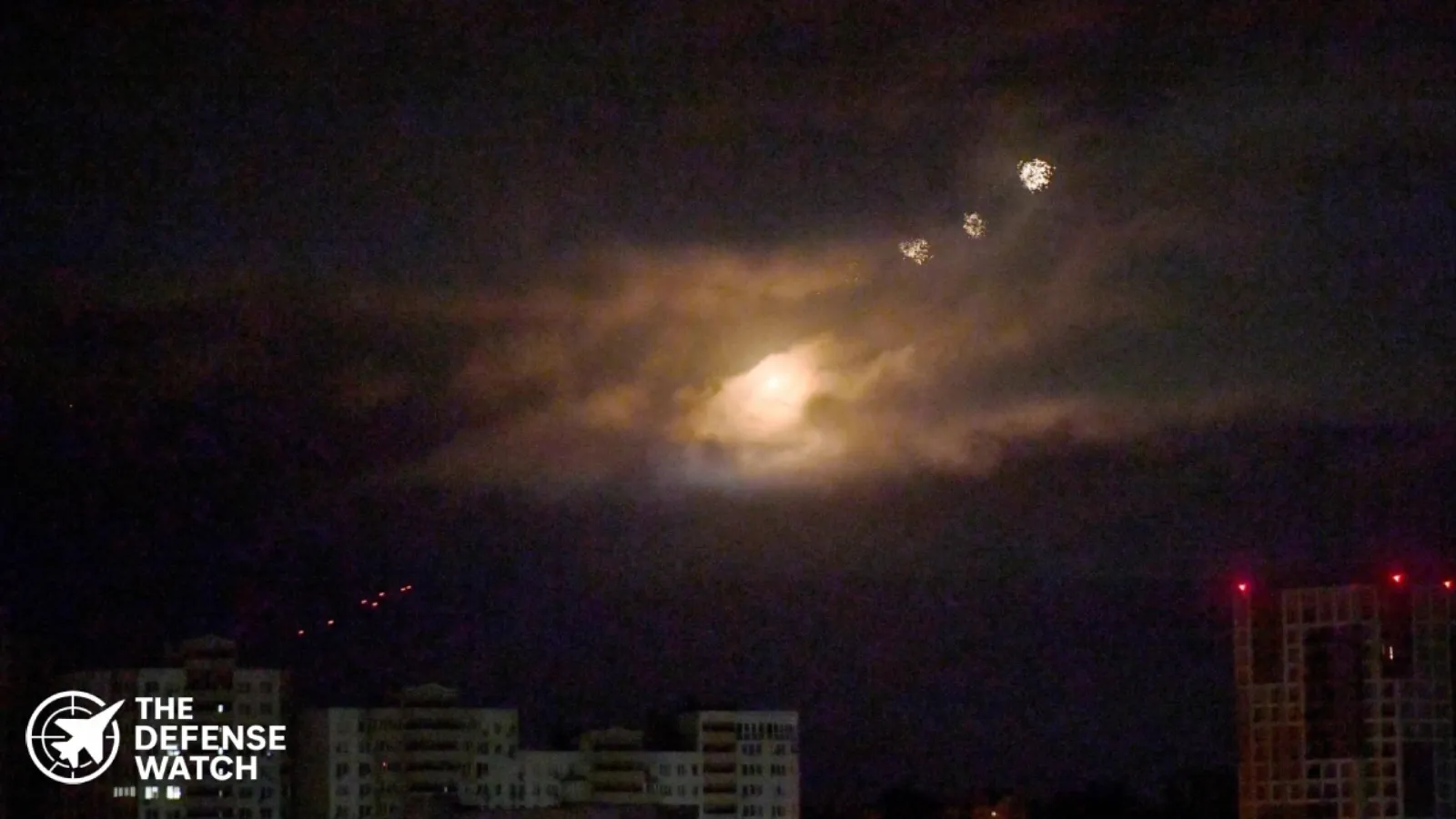
Russia Ukraine air attack operations intensified overnight on February 3, as Russian forces launched one of the largest combined missile and drone strikes of the war, targeting Ukraine critical infrastructure across multiple regions. According to Ukrainian military officials, the assault involved 521 air attack assets, including ballistic missiles, cruise missiles, hypersonic weapons, and Shahed type unmanned aerial vehicles.
Ukrainian air defense forces reported intercepting the majority of incoming threats, highlighting the growing effectiveness of Ukraine integrated air and missile defense network amid continued Russian long range strike operations.
Scale and Composition of the Russian Strike
The February 3 assault reflected a coordinated, multi vector air campaign designed to overwhelm Ukrainian defenses and degrade energy and transport infrastructure.
According to official Ukrainian Air Force data, Russia employed the following air attack assets:
- 4 Zircon or Oniks missiles
- 32 Iskander M or S 300 ballistic missiles
- 7 Kh 22 or Kh 32 cruise missiles
- 28 Kh 101 or Iskander K cruise missiles
- 450 Shahed type one way attack UAVs
The combination of hypersonic, ballistic, cruise missile, and drone systems underscores Russia continued reliance on layered strike packages to complicate detection and interception timelines.
This Russia Ukraine air attack represents one of the highest single night drone employment figures recorded since the start of the conflict.
Ukrainian Air Defense Performance
Ukrainian air defenders reported a high interception rate despite the scale and complexity of the attack.
Confirmed intercepts include:
- 4 Zircon or Oniks missiles destroyed
- 11 Iskander M or S 300 ballistic missiles intercepted
- 3 Kh 22 or Kh 32 cruise missiles shot down
- 20 Kh 101 or Iskander K cruise missiles neutralized
- 412 Shahed type UAVs destroyed
The results indicate continued improvement in Ukraine layered air defense architecture, which integrates Western supplied systems with legacy Soviet era platforms and domestically adapted solutions.
Ukrainian officials emphasized that air defense crews operated continuously through the night to protect population centers and critical infrastructure nodes.
Role of Drones in the Attack
Shahed type UAVs accounted for the majority of the Russia Ukraine air attack, reflecting Moscow sustained emphasis on low cost, long range drones to saturate defenses.
These drones are typically used to:
- Exhaust interceptor missile stocks
- Force radar activation and reveal air defense positions
- Strike energy infrastructure and logistics hubs
Ukraine success in neutralizing over 400 UAVs suggests improved counter drone tactics, including electronic warfare, mobile fire teams, and radar cueing from integrated air defense networks.
Missile Systems Used
The inclusion of Zircon or Oniks missiles points to Russia continued deployment of advanced anti ship and hypersonic capable weapons in a land attack role.
Iskander M ballistic missiles and S 300 surface to air missiles repurposed for ground attack remain a core element of Russia strike inventory, particularly for short notice launches from occupied territory.
Kh series cruise missiles continue to be used against hardened and strategic targets, though interception rates have increased compared to earlier phases of the conflict.
Strategic Implications
This Russia Ukraine air attack highlights several ongoing trends:
- Russia sustained capacity to launch large scale combined strikes
- Increasing Ukrainian interception effectiveness
- Continued targeting of infrastructure rather than frontline military units
- Heavy reliance on drones to supplement missile inventories
While damage assessments are still ongoing, Ukrainian authorities stated that power and transport systems remained operational in most areas following emergency repairs.
International Context
Western defense analysts have consistently noted Ukraine air defense resilience as a key factor limiting the strategic impact of Russian long range strikes.
The continued delivery of air defense interceptors, radar systems, and command and control support from NATO countries remains central to Ukraine ability to counter mass attacks of this scale.
Conclusion
The February 3 Russia Ukraine air attack stands as one of the largest single night aerial assaults of the war, combining missiles and drones in unprecedented numbers. Despite the scale of the strike, Ukrainian air defense forces intercepted the majority of incoming threats, reinforcing the critical role of layered air defense in modern high intensity conflict.
As the war continues, long range strike and air defense operations are expected to remain central to both sides strategic planning.