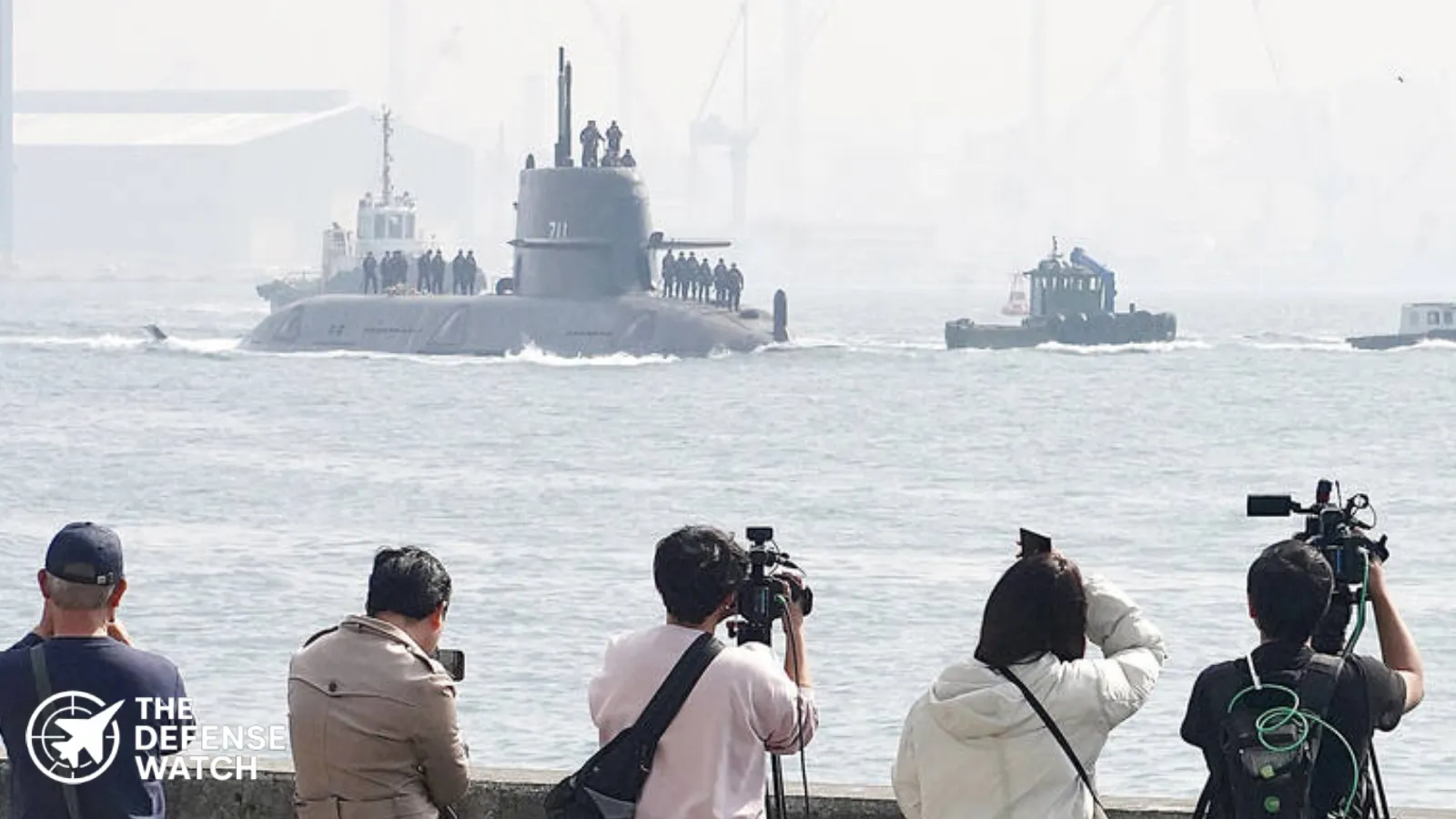
Taiwan Achieves Major Submarine Milestone
Taiwan’s first domestically built submarine, the Narwhal, successfully completed its maiden undersea trial on January 29, 2026, representing a significant advancement in the island nation’s defense modernization efforts. The achievement marks a critical step in Taiwan’s asymmetric warfare strategy designed to counter China’s growing naval capabilities in the Indo-Pacific region.
CSBC Corporation Taiwan, the primary contractor leading construction of up to eight planned submarines, confirmed the vessel completed shallow-water submerged navigation testing off the southern port of Kaohsiung. The milestone comes despite international pressures and technical challenges that have plagued the ambitious indigenous submarine program since its inception.
Strategic Significance for Regional Defense
The successful undersea trial represents more than a technical achievement. Defense officials characterize submarines as key strategic capabilities with significant deterrent power against potential aggression. Taiwan’s pursuit of indigenous submarine capabilities addresses a critical gap in its naval forces, which currently operate only two aging submarines acquired from the Netherlands during the 1980s.
The $1.58 billion program draws on international expertise and technology from multiple nations, including the United States and Britain. This multinational collaboration represents a diplomatic breakthrough for Taiwan, which faces isolation from formal international relationships due to Beijing’s territorial claims and political pressure on potential partner nations.
The submarine incorporates a combat system developed by Lockheed Martin Corporation and will be armed with U.S.-made Mark 48 heavyweight torpedoes, enhancing interoperability with allied forces and ensuring access to proven weapons systems.
Technical Development and Testing Phases
According to CSBC’s published technical documentation, the submarine testing program follows a methodical progression through multiple phases. Initial trials focused on snorkel-depth operations at 10 to 20 meters, verifying watertight integrity, underwater balance, and systems integration. Subsequent testing phases will advance to shallow-water operations between 50 and 100 meters before proceeding to deep-water trials extending to the vessel’s maximum designed operational depth.
The comprehensive test program includes evaluations of sonar systems, propulsion mechanisms, underwater navigation equipment, and combat systems integration. Additional sea acceptance trials will validate tactical capabilities, including weapons firing exercises, single-vessel operations, multi-platform coordination, and extended patrol endurance testing.
Program Delays and Challenges
The Narwhal’s development has encountered significant setbacks. Originally scheduled for navy delivery in 2024, the program has faced multiple delays attributed to international political pressures, technical complexities inherent in submarine development, and the challenges of establishing indigenous production capabilities.
CSBC has acknowledged that completing all trial phases could require more than one year based on international experience with prototype submarine development. The company has been assessed contractual penalties since November 2025 for missing delivery deadlines, though officials maintain the program remains on track with costs remaining within projected parameters.
CSBC officials stated that international constraints and pressure from Beijing have created numerous difficulties throughout the program’s development. These challenges underscore the complex geopolitical environment in which Taiwan pursues advanced military capabilities.
Asymmetric Warfare Strategy
Taiwan’s submarine program forms a cornerstone of its asymmetric warfare doctrine. Facing a military disparity against China, which operates three aircraft carriers, ballistic missile submarines, and advanced stealth aircraft, Taiwan has prioritized mobile and agile defense systems.
The asymmetric approach emphasizes submarines, unmanned aerial vehicles, and mobile missile systems capable of complicating invasion scenarios and imposing costs on potential aggressors. This strategy recognizes that Taiwan cannot match China’s conventional military capabilities in terms of scale but can develop specialized capabilities that enhance deterrence.
President Lai Ching-te announced in November 2025 that Taiwan would allocate an additional $40 billion for defense spending, signaling continued commitment to military modernization. The submarine program represents a significant component of this broader defense investment strategy.
International Support and Technology Transfer
The program’s success demonstrates Taiwan’s ability to leverage international partnerships despite diplomatic isolation. U.S. and British technical assistance has proven essential to developing submarine capabilities that Taiwan could not acquire through direct foreign military sales due to political sensitivities.
The collaboration model established through the submarine program could serve as a template for future defense cooperation on advanced systems. Taiwan’s demonstration of technical competence in integrating complex submarine technologies may facilitate additional technology transfer agreements in other defense sectors.
Regional Security Implications
The submarine program has drawn close attention from regional security analysts. China conducts near-daily military exercises around Taiwan, asserting sovereignty claims that Taipei’s government firmly rejects. The addition of modern submarines to Taiwan’s naval forces could significantly complicate Chinese military planning for potential cross-strait contingencies.
Submarines offer unique advantages in the Taiwan Strait operational environment. Their stealth characteristics enable persistent surveillance, sea lane protection, and anti-surface warfare capabilities that would force Chinese naval planners to allocate substantial resources to anti-submarine warfare operations.
Japan and other regional partners have expressed support for Taiwan’s defensive capabilities, viewing enhanced maritime security around Taiwan as beneficial to broader regional stability. The successful development of indigenous submarine capabilities may encourage other nations facing similar security challenges to pursue comparable programs.
Future Program Development
Taiwan aims to deploy at least two domestically developed submarines by 2027, with potential for equipping later vessels with land-attack cruise missiles. This timeline faces uncertainty given the technical complexities demonstrated during the Narwhal’s extended testing period.
The planned eight-submarine fleet would transform Taiwan’s undersea warfare capabilities, providing persistent maritime presence and creating multiple dilemmas for potential adversaries. However, achieving this ambitious goal requires sustained political support, continued international cooperation, and successful navigation of remaining technical challenges.
The program has also generated domestic economic benefits by establishing indigenous submarine construction capabilities, creating specialized technical expertise, and developing domestic supply chains for complex maritime systems. These industrial capabilities have applications beyond purely military uses, potentially supporting Taiwan’s maritime technology sector more broadly.
Conclusion
The Narwhal’s successful completion of its first undersea trial marks a watershed moment in Taiwan’s defense modernization efforts. While significant testing and operational validation work remains, the achievement demonstrates Taiwan’s determination and capability to develop advanced military systems despite formidable political and technical obstacles.
As regional security dynamics continue evolving, Taiwan’s indigenous submarine program represents a concrete step toward enhanced deterrence capabilities and greater strategic autonomy. The program’s ultimate success will depend on completing remaining test phases, achieving operational certification, and successfully integrating the submarine into Taiwan’s broader naval operational concepts.