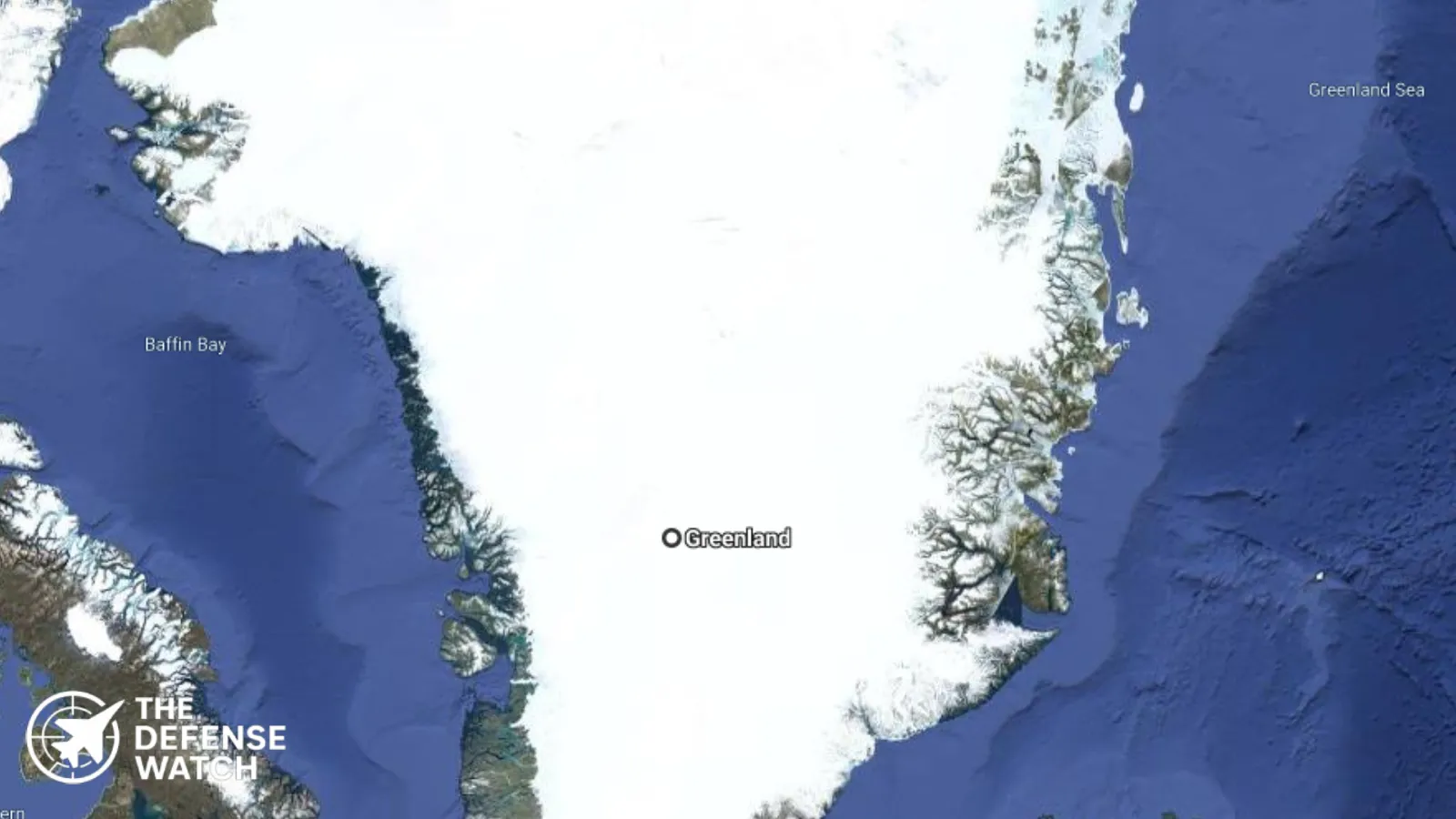
Greenland Stands Firm on Resource Control
Greenland’s government has rejected any agreement linking security cooperation to external control over its mineral resources, challenging a framework deal announced by U.S. President Donald Trump and NATO Secretary General Mark Rutte at the World Economic Forum in Davos.
In a January 23 interview with Politico Europe, Greenland’s Minister for Business, Minerals, Energy, Justice and Gender Equality, Naaja Nathanielsen, delivered an unequivocal response to the proposed arrangement. “We will not accept that the future development of our mineral sector is decided outside of Greenland,” Nathanielsen stated, emphasizing the territory’s determination to maintain control over its natural resources.
Sovereignty Concerns Over Proposed Oversight
The Trump-Rutte framework reportedly includes provisions for an oversight board to supervise Greenland’s mineral extraction activities. When questioned about this element, Nathanielsen was categorical in her rejection. “That would amount to giving up sovereignty,” she said, framing the issue as a fundamental matter of self-determination for the semi-autonomous Danish territory.
Greenland’s position highlights growing tensions between Western security interests in the Arctic and the rights of territories to control their own strategic resources. The island possesses significant deposits of rare earth minerals, critical for defense technologies, renewable energy systems, and advanced electronics manufacturing.
Strategic Implications for Arctic Security
The rejection complicates U.S. and NATO efforts to secure reliable access to critical minerals amid increasing geopolitical competition. Rare earth elements and other strategic minerals found in Greenland are essential for military applications, including missile guidance systems, aircraft components, and communications equipment.
President Trump has previously expressed interest in Greenland, both during his first administration and following his 2024 election victory. The territory’s geographic position provides strategic advantages for missile defense, Arctic navigation monitoring, and early warning systems. Thule Air Base, located in northwest Greenland, hosts U.S. Space Force operations and serves as a critical component of North American aerospace defense.
Greenland’s Economic and Political Context
Greenland operates as a self-governing territory within the Kingdom of Denmark, maintaining control over most domestic affairs while Denmark handles foreign policy and defense matters. The territory has been gradually expanding its autonomy, with resource development representing a key element of long-term economic independence strategies.
The island’s population of approximately 57,000 people has increasingly sought greater self-determination, with mineral wealth seen as a potential path toward reduced dependence on annual subsidies from Denmark. However, Greenlandic officials have consistently emphasized that economic development must occur on their own terms.
International Response and Future Outlook
The public rejection by Greenland’s government signals potential challenges for coordinating Arctic security arrangements that involve resource access. Neither the Trump administration nor NATO headquarters has issued detailed responses to Nathanielsen’s statements as of publication.
The situation reflects broader debates about balancing security cooperation with respect for territorial sovereignty, particularly for smaller territories with strategic importance. As climate change opens new Arctic shipping routes and resource extraction possibilities, these tensions are likely to intensify.
Denmark has not publicly commented on the disagreement between its security partner and Greenland’s government. The Danish government traditionally supports Greenlandic self-determination on domestic matters while maintaining responsibility for the territory’s defense and international relations.
Critical Minerals and Defense Supply Chains
Greenland’s mineral deposits include rare earth elements, uranium, zinc, lead, and potentially significant oil and gas reserves. Global supply chains for rare earth minerals are currently dominated by China, which controls approximately 70 percent of worldwide production and 90 percent of processing capacity.
Western nations have identified rare earth supply chain vulnerabilities as critical national security concerns. The U.S. Department of Defense has initiated multiple programs to develop alternative sources and reduce dependence on Chinese rare earth supplies for weapons systems and military technologies.
The Trump-Rutte framework appears designed to address these supply chain concerns by establishing closer coordination between NATO members and Greenland on mineral development. However, the proposal’s reported oversight mechanisms have triggered strong resistance from Greenlandic officials who view external control as incompatible with their sovereignty aspirations.