
KEY FACTS AT A GLANCE
- ► A U.S. source told Middle East Eye that Washington questioned Saudi Arabia’s need to pursue Turkey’s KAAN fighter.
- ► U.S. pressure reportedly included concerns over a potential Saudi purchase of the Pakistan China JF 17 fighter.
- ► Saudi officials have indicated they will not proceed with acquiring JF 17 aircraft.
- ► Riyadh has not signaled withdrawal from participation in the KAAN program led by Turkish Aerospace Industries.
- ► Saudi analyst Hisham El Gannam warned that continued pressure could produce unintended consequences.
The White House KAAN warning to Riyadh signals rising tension in U.S.–Saudi defense ties at a moment of strategic transition in the Gulf.
According to reporting by Middle East Eye, U.S. officials privately questioned why Saudi Arabia would need to pursue Turkey’s next generation KAAN fighter if Washington is already meeting its defense requirements. The message, delivered to Saudi interlocutors, reportedly extended beyond Turkey’s aircraft to include concerns over the Pakistan China jointly produced JF 17.
While Saudi officials have indicated they will not proceed with the JF 17 purchase, they have not provided assurances that they will withdraw from participation in the KAAN program led by Turkish Aerospace Industries.
The episode matters because it touches on more than a single fighter platform. It reflects competition over influence, industrial alignment, and the long term future of Gulf airpower.
Why Washington Is Concerned About KAAN
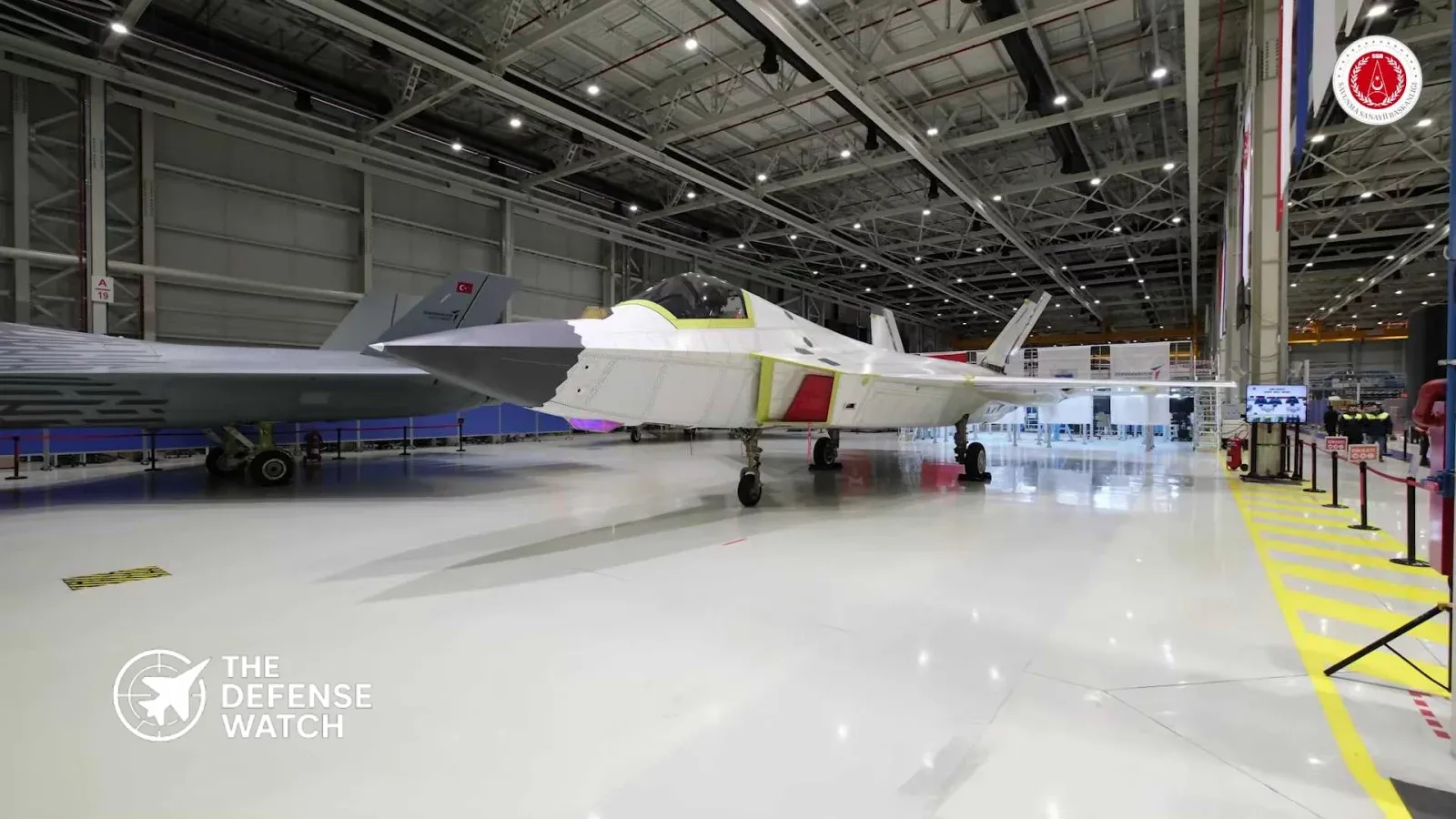
The KAAN fighter, previously known as TF X, is Turkey’s fifth generation combat aircraft project. Ankara positions it as a stealth capable, twin engine platform designed to replace its F 16 fleet and reduce reliance on Western suppliers.
For the United States, Saudi participation in KAAN presents three core concerns.
First, technology alignment. Gulf air forces, particularly Saudi Arabia’s, are deeply integrated with U.S. systems. The Royal Saudi Air Force operates F 15 variants and relies on American weapons, maintenance pipelines, and training infrastructure. Introducing a Turkish designed fifth generation platform would diversify supply chains and potentially reduce Washington’s leverage.
Second, precedent. If Riyadh joins KAAN as an industrial partner or future customer, it signals that advanced U.S. fighters such as the F 35 are not the only pathway for modernization. That could encourage other regional actors to hedge.
Third, geopolitical signaling. Turkey has pursued a more independent defense policy in recent years, including closer ties with non Western partners. A major Saudi investment in KAAN would elevate Ankara’s role as a defense exporter and strategic actor in the Gulf.
The JF 17 Factor and China’s Shadow
The reported U.S. pressure also extended to the JF 17, co produced by Pakistan and China. While Saudi Arabia has now indicated it will not move forward with that purchase, the episode highlights broader U.S. sensitivity to Chinese defense penetration in the Middle East.
The JF 17 is not a fifth generation platform. It is a lightweight, lower cost fighter designed for affordability and flexibility. For Saudi Arabia, it would likely have served niche roles rather than replacing high end assets.
However, from Washington’s perspective, any expansion of Chinese aerospace influence in a core U.S. security partner raises concerns about data security, interoperability, and long term alignment.
The U.S. has consistently warned partners about integrating Chinese systems into Western linked networks. In the Gulf, where missile defense and air surveillance are increasingly interconnected, platform choices have alliance wide implications.
Operational Impact for the Royal Saudi Air Forc
From an operational standpoint, Saudi Arabia faces a modernization question.
Its F 15SA fleet remains highly capable, with advanced radar and electronic warfare suites. Yet regional competition is evolving. Iran continues to expand its missile and drone capabilities. Israel operates the F 35I. The UAE has pursued next generation options, though its F 35 acquisition has stalled.
If Riyadh seeks a true fifth generation aircraft with stealth, advanced sensor fusion, and network centric capability, the U.S. F 35 remains the benchmark in Western markets. The KAAN program, while ambitious, is still in development and will take years to reach operational maturity.
That timeline matters. Committing to KAAN now would be a long term industrial and political bet rather than a near term capability fix.
Industrial and Budget Dimensions
For Saudi Arabia, fighter procurement is not only about performance. It is also about industrial participation.
Under Vision 2030, Riyadh aims to localize defense production. Turkish Aerospace Industries has shown flexibility in technology transfer arrangements with partners. That may appeal to Saudi planners seeking domestic aerospace growth.
The United States, by contrast, tightly controls technology transfer on its most advanced platforms. Even close allies face restrictions.
This creates a structural tension. Washington offers the most mature fifth generation aircraft but with limits. Ankara offers partnership and potential co production but with higher developmental risk.
Budget pressures also play a role. Next generation fighters are expensive not only to buy but to sustain. Saudi Arabia must balance airpower modernization with investments in missile defense, naval expansion, and domestic economic transformation.
Regional Security Context
The Gulf security environment is shifting.
Iran’s strategy relies heavily on ballistic missiles, cruise missiles, and drones rather than high end manned aviation. That challenges traditional air superiority models.
At the same time, Israel’s qualitative military edge remains a central U.S. policy pillar. Any sale of advanced fighters to Arab states must account for that framework.
Turkey’s emergence as a defense exporter complicates the picture. Ankara has gained credibility through drone exports and now seeks to move into the high end fighter segment. A Saudi stake in KAAN would deepen Turkish influence in Arab defense markets.
For Washington, maintaining interoperability across Gulf Cooperation Council air forces has long been a strategic objective. Divergent procurement paths risk fragmenting that architecture.
Strategic Assessment
The White House KAAN warning reflects a broader recalibration in U.S.–Saudi defense relations.
Impact on regional power balance: If Saudi Arabia were to fully commit to KAAN, it would not immediately shift the military balance. The aircraft is years from operational deployment. However, over time it could reduce U.S. dominance in Gulf airpower supply chains and increase Turkey’s strategic footprint.
Deterrence implications: The signal value may be more important than the platform itself. Saudi diversification suggests hedging behavior. That can weaken perceptions of tight U.S. Gulf alignment, potentially emboldening competitors or complicating deterrence messaging toward Iran.
Budget and procurement signals: Riyadh appears to be using competition to expand its options. By engaging Ankara, it gains leverage in discussions with Washington. The cancellation of the JF 17 plan indicates Saudi leaders are responsive to U.S. concerns but not willing to abandon diversification outright.
Alliance dynamics: The episode highlights friction but not rupture. The United States remains Saudi Arabia’s primary defense partner. Yet the relationship is no longer exclusive. Gulf states increasingly pursue multi vector defense ties.
Escalation risks: If U.S. pressure becomes public or punitive, it could accelerate Saudi efforts to broaden partnerships. As analyst Hisham El Gannam warned, sustained pressure can produce counterproductive outcomes.
What happens next will likely depend on whether Washington offers a credible pathway for Saudi fifth generation access, whether through the F 35 or an alternative framework. Absent that, Riyadh will continue exploring options.
Why This Matters Now
This development comes at a time when U.S. defense policy is under scrutiny in the Middle East. Washington is balancing competition with China, support for Israel, and a desire to avoid deeper regional entanglement.
Fighter aircraft decisions are long term strategic commitments. They shape training, logistics, and political alignment for decades.
The White House KAAN warning is therefore not simply about one aircraft. It is about who sets the terms of Gulf airpower modernization in the next generation.
Get real time update about this post category directly on your device, subscribe now.
