
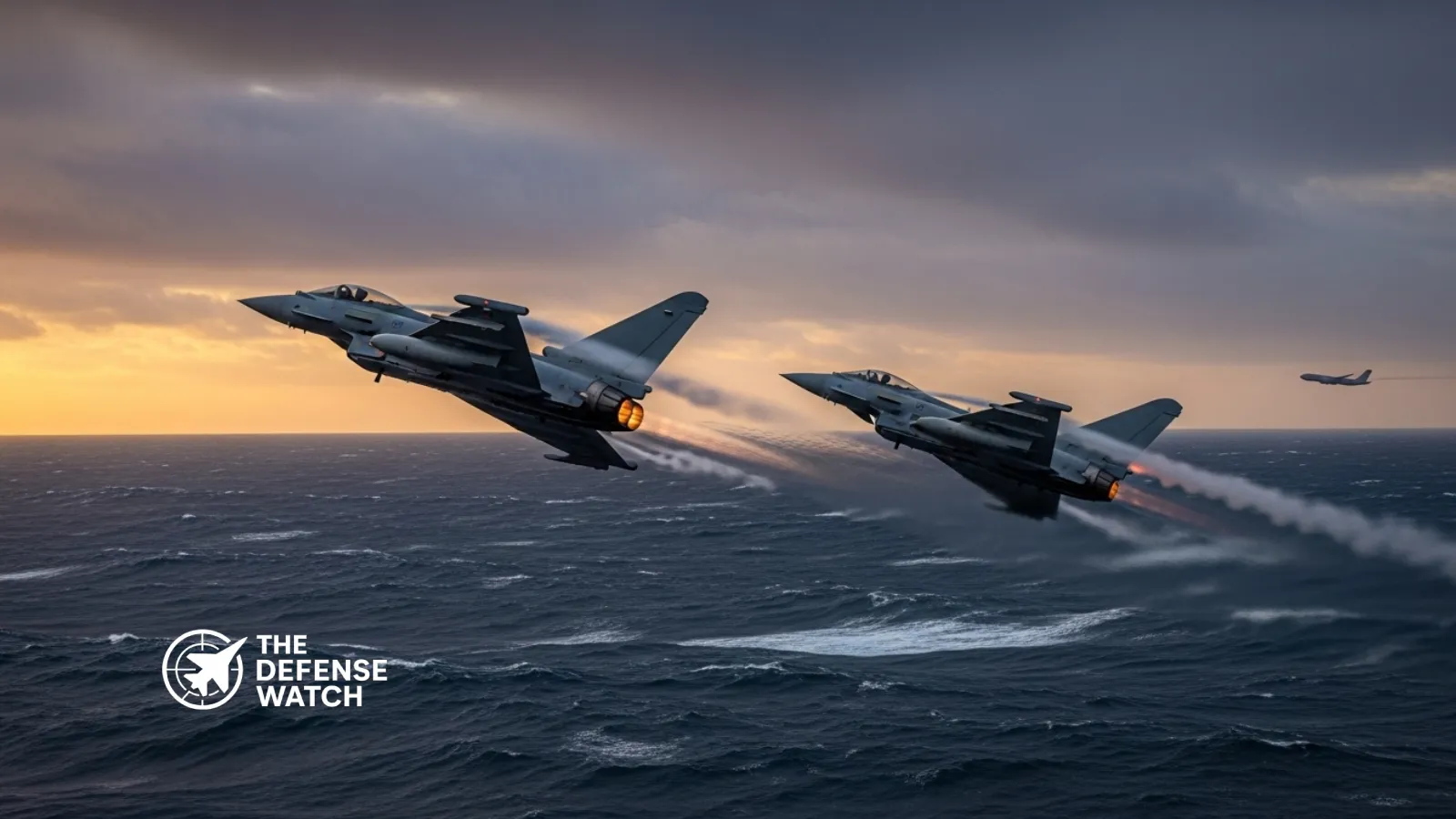
UK Confirms Limits on Military Access to Irish Airspace
The United Kingdom Ministry of Defence has confirmed that UK military aircraft do not enter the sovereign airspace of Ireland for operational purposes without the express prior agreement of the Irish Government, officials said during a UK parliamentary session on January 20, 2026.
In response to a question in the House of Commons, Defence Minister Al Carns outlined the formal arrangements governing access to Irish airspace and reiterated that all military flights are subject to diplomatic clearance and international norms.
Background on Airspace Cooperation
Ireland’s sovereign airspace extends over its territory and surrounding waters and remains under the control of the Irish Government, consistent with international law on state airspace rights. The Republic’s longstanding policy of military neutrality means it is not part of formal defence alliances and maintains a limited air defence capability.
Historically, Dublin has relied on informal arrangements with London that date back to the early 1950s, when Ireland permitted the Royal Air Force to assist with intercepting unidentified aircraft due to the Irish Air Corps’ lack of fast-jet interception capability. These arrangements have been periodically renewed through bilateral engagement, though they are not regarded as formal defence treaties.
Details of the Defence Ministry Response
The issue was raised in the UK parliament by Carla Lockhart, a Member of Parliament for the Democratic Unionist Party, who asked officials to clarify arrangements for intercepting unidentified or potentially hostile aircraft in Irish airspace.
Minister Carns said that access to Irish airspace by UK military aircraft is managed through established diplomatic processes, with clearances requested and granted under set conditions. He emphasized that the UK does not conduct operational flights within Ireland’s sovereign airspace without prior political approval from Dublin.
Carns made a point that matters relating to sovereign airspace access ultimately rest with the individual states involved, and suggested that questions about Irish regulations be directed to Irish authorities.
Longstanding Interception Role
The UK’s role in responding to unidentified aircraft near Irish airspace stems from practical considerations. Ireland has not operated dedicated interceptor fighters since it retired its sole air combat aircraft in 1999, leaving it without the ability to rapidly identify or intercept high-speed aircraft on its own.
Under past arrangements, RAF jets have been dispatched to visually identify aircraft that enter the Irish Flight Information Region (FIR) and fail to establish contact with civil air traffic control. The UK position has been that these missions are focused on aviation safety, helping to re-route civilian flights and maintain safe airspace around one of Europe’s busiest transatlantic corridors, rather than taking responsibility for Irish air defence.
Diplomatic and Legal Framework
According to international norms, military aircraft, including warplanes, require permission from the sovereign state to enter its airspace. That permission typically comes through diplomatic channels and formal clearance requests. The UK Defence Ministry’s statement underlines this principle and confirms that routine access is not assumed based on past cooperative arrangements.
Ireland’s constitution and aviation regulations reinforce state control over foreign military flights. Previous reporting has noted that foreign military aircraft must receive express invitation or permission from Irish authorities to fly over or land in the state, and must meet specified conditions related to armament and purpose.
The longstanding cooperation between the UK and Ireland around air traffic safety and airspace monitoring does not equate to a formal defence pact. Instead it is framed within mutual interest in civil aviation safety and shared operational risks.
Policy and Strategic Implications
The reaffirmation of diplomatic clearance requirements comes amid ongoing discussion in Ireland about its defence posture and the nature of its cooperation with the UK. Some Irish officials and analysts have in the past called for greater transparency regarding airspace arrangements, reflecting concerns about sovereignty and Dublin’s neutral stance.
For the UK, clarifying the limits on military access to Irish airspace helps define the scope of bilateral defence cooperation and reaffirms respect for Irish sovereignty. It also reflects broader efforts to maintain clear international norms governing military flights and state airspace rights.
What’s Next
Looking ahead, the UK and Ireland are expected to continue dialogue on defence cooperation, including air and maritime security. Both governments have engaged in periodic reviews of existing arrangements, and Dublin may consider adjustments to its own air defence capabilities.
The confirmation that UK military aircraft require explicit Irish government approval for operational flights into Irish airspace underscores the importance of diplomatic channels in managing shared security challenges, particularly in the context of neutral defence policies and evolving regional threats.
Get real time update about this post category directly on your device, subscribe now.
