
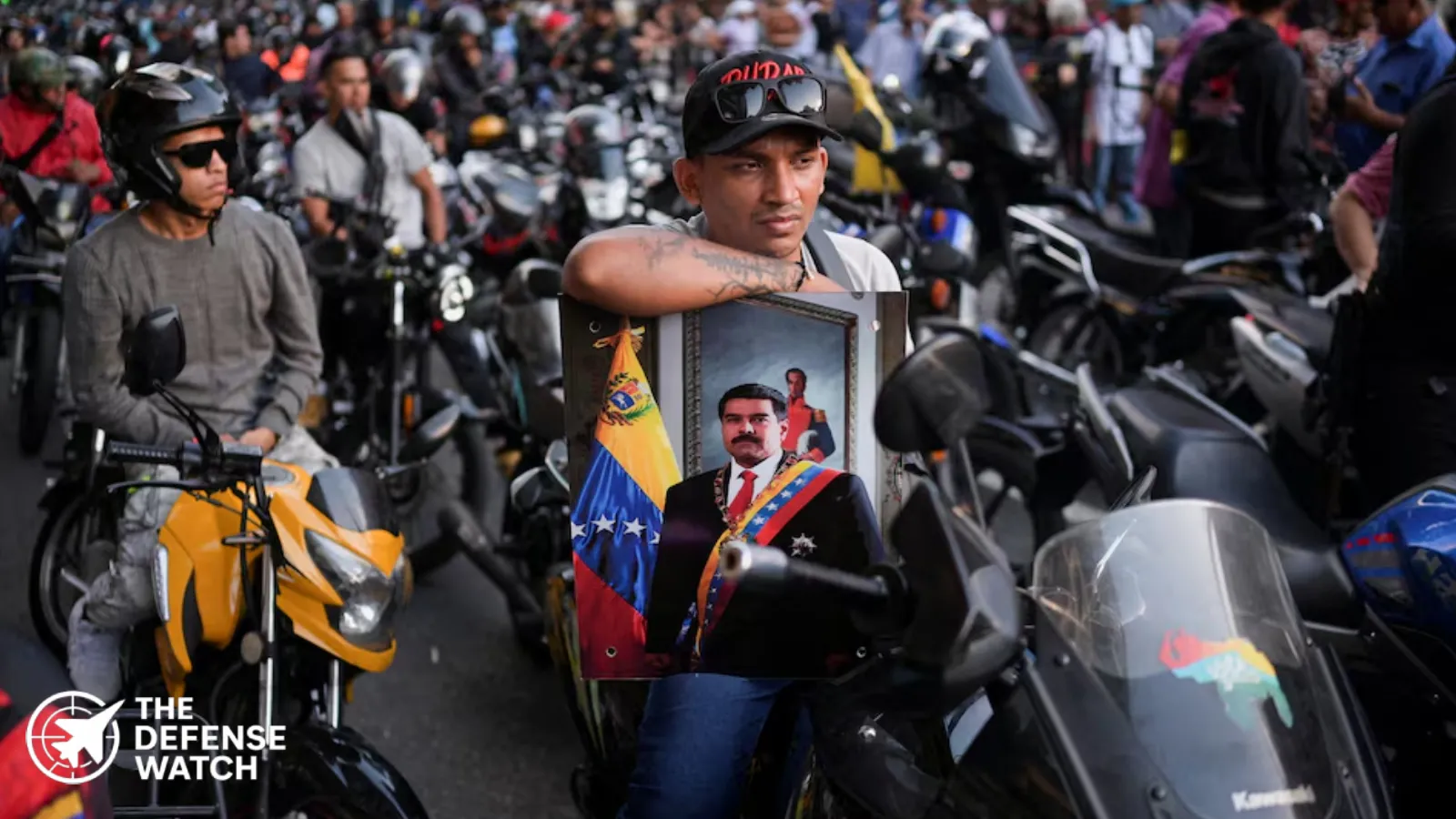
Trump Warns Second Venezuela Strike Possible
U.S. President Donald Trump said a second Venezuela strike is possible if remaining members of Nicolas Maduro’s government refuse to cooperate with Washington, following Maduro’s capture and transfer to U.S. custody.
Speaking to reporters aboard Air Force One on Sunday, Trump linked future U.S. military action to drug trafficking, migration, and access to Venezuela’s oil sector. His remarks signaled a hard line approach that could reshape U.S. policy toward Latin America.
Maduro is being held in a New York detention facility ahead of a court appearance on drug related charges first filed by U.S. prosecutors in 2020. U.S. officials have framed the operation as a law enforcement action, though its scale and consequences have drawn sharp regional and international reaction.
Warning of Broader Military Action
Trump suggested that Venezuela would not be the only country at risk of U.S. military pressure. He said Colombia and Mexico could also face action if they fail to curb the flow of illicit drugs into the United States.
He also commented on Cuba’s political stability, saying the long time Venezuelan ally appeared close to internal collapse without direct U.S. intervention.
Defense and regional security analysts note that such statements mark one of the most explicit U.S. threats of military action in Latin America in decades, recalling comparisons to the 1989 invasion of Panama.
Power Struggle in Caracas
Despite Maduro’s detention, senior figures from his government remain in control inside Venezuela. Interior Minister Diosdado Cabello denounced the operation as a kidnapping and insisted Maduro remains the country’s legitimate president.
Venezuela’s defense minister, General Vladimir Padrino, said on state television that U.S. forces killed soldiers, civilians, and much of Maduro’s security detail during the operation. He said the armed forces had been placed on alert to protect national sovereignty.
The Cuban government said 32 Cuban citizens were killed during the raid, further escalating diplomatic tensions between Washington and Havana.
Interim Leadership and U.S. Pressure
Vice President Delcy Rodriguez, who also serves as oil minister, has assumed interim leadership with the backing of Venezuela’s top court. She has stated publicly that Maduro remains president and denied any willingness to cooperate with Washington.
Trump, however, warned that Rodriguez could face consequences if she does not comply with U.S. demands. The Venezuelan communications ministry has not responded to requests for comment on those remarks.
Rodriguez has long been viewed by diplomats as one of the more pragmatic figures in the Maduro inner circle, particularly on economic and energy matters. Her role will be central to any negotiations over sanctions, oil exports, and political transition.
Oil, Sanctions, and Strategic Interests
Trump said U.S. oil companies need full access to Venezuela’s vast reserves, reinforcing long standing accusations from Caracas that Washington’s actions are driven by resource interests.
Senior U.S. officials have emphasized that Venezuela’s oil sector must be kept out of the hands of U.S. adversaries. Secretary of State Marco Rubio cited an ongoing U.S. blockade on oil tankers, saying economic recovery would remain impossible until U.S. conditions are met.
Venezuela’s economy, once among the strongest in Latin America, collapsed under years of mismanagement, sanctions, and declining oil production. The downturn triggered one of the largest migration crises in the world, with roughly one in five Venezuelans leaving the country.
Regional and Strategic Implications
The capture of Maduro and the threat of a second Venezuela strike have injected fresh uncertainty into regional security planning. Defense officials across Latin America are closely watching U.S. force posture, intelligence activity, and naval movements tied to sanctions enforcement.
For Washington, the episode underscores a strategy that blends law enforcement, economic pressure, and military force. For the region, it raises concerns about sovereignty, escalation, and the precedent set by direct U.S. intervention.
Get real time update about this post category directly on your device, subscribe now.
