F-22 and F-35 Airpower at the Center of Venezuela Operation
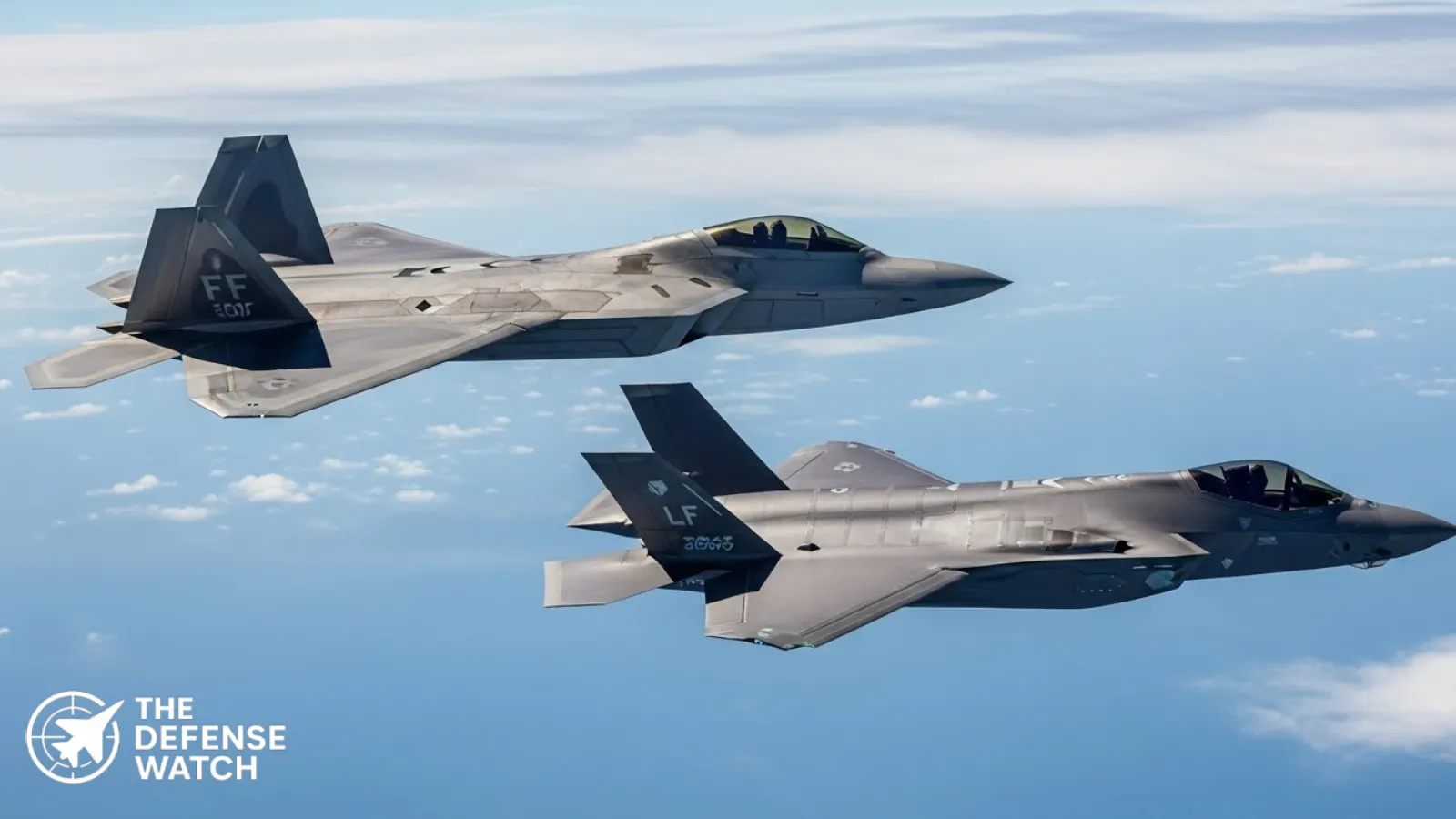
F-22 Raptor and F-35 Lightning II fighter jets reportedly played a central role in a US led airpower operation that enabled the capture of Venezuelan leader Nicolas Maduro, according to a report published by Defence Industry Europe. The account highlights how advanced US stealth aircraft were used to establish air dominance and suppress Venezuelan military responses during the operation.
While US officials have not publicly confirmed the details, the report underscores how fifth generation airpower remains a key tool for Washington in high risk contingency operations. The focus keyword F-22 and F-35 airpower operation has emerged prominently in coverage of the incident, reflecting the aircraft’s strategic value.
Establishing Air Superiority with Stealth Fighters
According to the report, F-22 Raptors were deployed to secure air superiority early in the operation. Designed primarily for air dominance, the F-22’s stealth profile, high speed, and advanced sensors reportedly allowed US forces to neutralize potential aerial threats before they could react.
The F-35 Lightning II complemented this role by conducting precision strikes, electronic warfare tasks, and intelligence gathering. With its sensor fusion and networked warfare capabilities, the F-35 is described as providing real time targeting data to US and allied forces involved in the operation.
Together, the F-22 and F-35 formed a layered airpower approach that limited Venezuela’s ability to respond militarily.
Role of US Airpower in Ground Operations
The report suggests that US airpower over Venezuela was not limited to combat aircraft alone. Airborne early warning platforms, aerial refueling tankers, and intelligence assets reportedly supported sustained operations across Venezuelan airspace.
By controlling the air domain, US forces were able to support ground elements tasked with securing key locations. The capture of Maduro, as described in the report, was made possible by the absence of effective Venezuelan air or air defense resistance during the critical phases of the mission.
This approach aligns with longstanding US doctrine, where air dominance is achieved first to reduce risk to personnel on the ground.
Venezuela’s Air Defenses and Regional Implications
Venezuela operates a mix of Russian supplied air defense systems and combat aircraft, including older generation fighters. However, analysts have long questioned their effectiveness against US stealth platforms such as the F-22 and F-35.
If the report is accurate, the operation highlights the widening airpower gap between the United States and regional militaries in Latin America. The ability to deploy stealth aircraft with minimal warning reinforces Washington’s freedom of action in contested environments.
Analysis, What This Means for US Airpower Strategy
The reported use of F-22 and F-35 jets in Venezuela underscores how fifth generation fighters are increasingly central to US crisis response options. Rather than relying on large scale troop deployments, Washington appears to favor precision airpower combined with limited ground action.
This model reduces political risk while maintaining decisive military advantage. It also sends a clear signal to adversaries that advanced air defenses alone may not be sufficient to deter US intervention.
At the same time, the lack of official confirmation means the full scope of the operation remains unclear. Future disclosures may refine or challenge the current narrative.
Broader Geopolitical Context
The reported operation comes amid ongoing instability in Venezuela and heightened US focus on maintaining influence in the Western Hemisphere. Control of airspace through platforms like the F-22 Raptor and F-35 Lightning II remains a cornerstone of that strategy.
As global competition intensifies, US airpower capabilities continue to shape outcomes far beyond traditional conflict zones.
FAQs
Did the US officially confirm the use of F-22 and F-35 jets in Venezuela?No official confirmation has been issued. Details are based on external reporting.
Why are F-22 and F-35 aircraft important in modern operations?They offer stealth, advanced sensors, and the ability to operate in contested airspace.
Does Venezuela have defenses against stealth aircraft?Venezuela operates legacy air defenses that are generally considered ineffective against fifth generation fighters.
What does this mean for regional airpower balance?It highlights the significant technological gap between US forces and most Latin American militaries.
Trump Warns Second Venezuela Strike Possible
U.S. President Donald Trump said a second Venezuela strike is possible if remaining members of Nicolas Maduro’s government refuse to cooperate with Washington, following Maduro’s capture and transfer to U.S. custody.
Speaking to reporters aboard Air Force One on Sunday, Trump linked future U.S. military action to drug trafficking, migration, and access to Venezuela’s oil sector. His remarks signaled a hard line approach that could reshape U.S. policy toward Latin America.
Maduro is being held in a New York detention facility ahead of a court appearance on drug related charges first filed by U.S. prosecutors in 2020. U.S. officials have framed the operation as a law enforcement action, though its scale and consequences have drawn sharp regional and international reaction.
Warning of Broader Military Action
Trump suggested that Venezuela would not be the only country at risk of U.S. military pressure. He said Colombia and Mexico could also face action if they fail to curb the flow of illicit drugs into the United States.
He also commented on Cuba’s political stability, saying the long time Venezuelan ally appeared close to internal collapse without direct U.S. intervention.
Defense and regional security analysts note that such statements mark one of the most explicit U.S. threats of military action in Latin America in decades, recalling comparisons to the 1989 invasion of Panama.
Power Struggle in Caracas
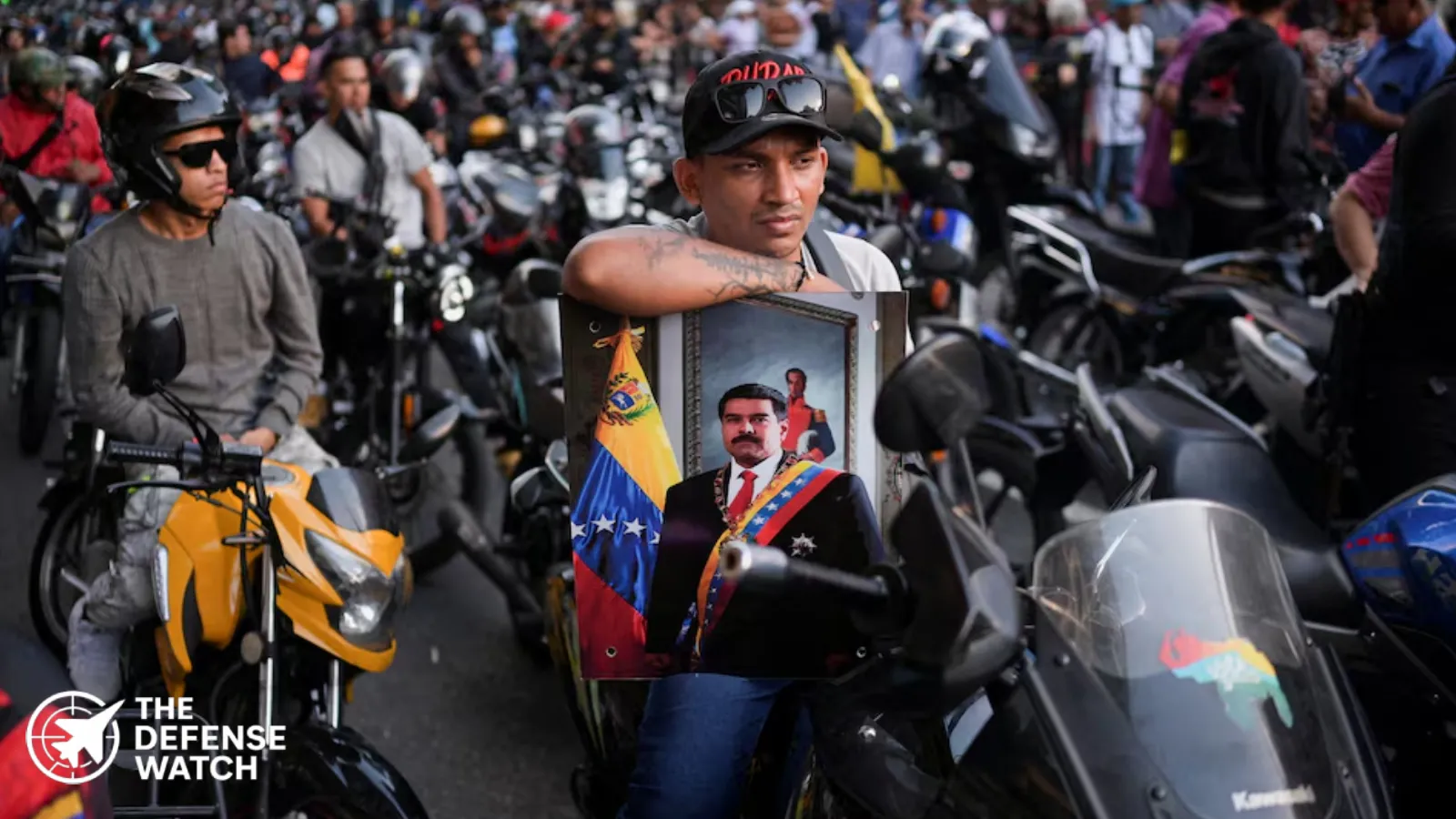
Despite Maduro’s detention, senior figures from his government remain in control inside Venezuela. Interior Minister Diosdado Cabello denounced the operation as a kidnapping and insisted Maduro remains the country’s legitimate president.
Venezuela’s defense minister, General Vladimir Padrino, said on state television that U.S. forces killed soldiers, civilians, and much of Maduro’s security detail during the operation. He said the armed forces had been placed on alert to protect national sovereignty.
The Cuban government said 32 Cuban citizens were killed during the raid, further escalating diplomatic tensions between Washington and Havana.
Interim Leadership and U.S. Pressure
Vice President Delcy Rodriguez, who also serves as oil minister, has assumed interim leadership with the backing of Venezuela’s top court. She has stated publicly that Maduro remains president and denied any willingness to cooperate with Washington.
Trump, however, warned that Rodriguez could face consequences if she does not comply with U.S. demands. The Venezuelan communications ministry has not responded to requests for comment on those remarks.
Rodriguez has long been viewed by diplomats as one of the more pragmatic figures in the Maduro inner circle, particularly on economic and energy matters. Her role will be central to any negotiations over sanctions, oil exports, and political transition.
Oil, Sanctions, and Strategic Interests
Trump said U.S. oil companies need full access to Venezuela’s vast reserves, reinforcing long standing accusations from Caracas that Washington’s actions are driven by resource interests.
Senior U.S. officials have emphasized that Venezuela’s oil sector must be kept out of the hands of U.S. adversaries. Secretary of State Marco Rubio cited an ongoing U.S. blockade on oil tankers, saying economic recovery would remain impossible until U.S. conditions are met.
Venezuela’s economy, once among the strongest in Latin America, collapsed under years of mismanagement, sanctions, and declining oil production. The downturn triggered one of the largest migration crises in the world, with roughly one in five Venezuelans leaving the country.
Regional and Strategic Implications
The capture of Maduro and the threat of a second Venezuela strike have injected fresh uncertainty into regional security planning. Defense officials across Latin America are closely watching U.S. force posture, intelligence activity, and naval movements tied to sanctions enforcement.
For Washington, the episode underscores a strategy that blends law enforcement, economic pressure, and military force. For the region, it raises concerns about sovereignty, escalation, and the precedent set by direct U.S. intervention.
What the Announcement Entails
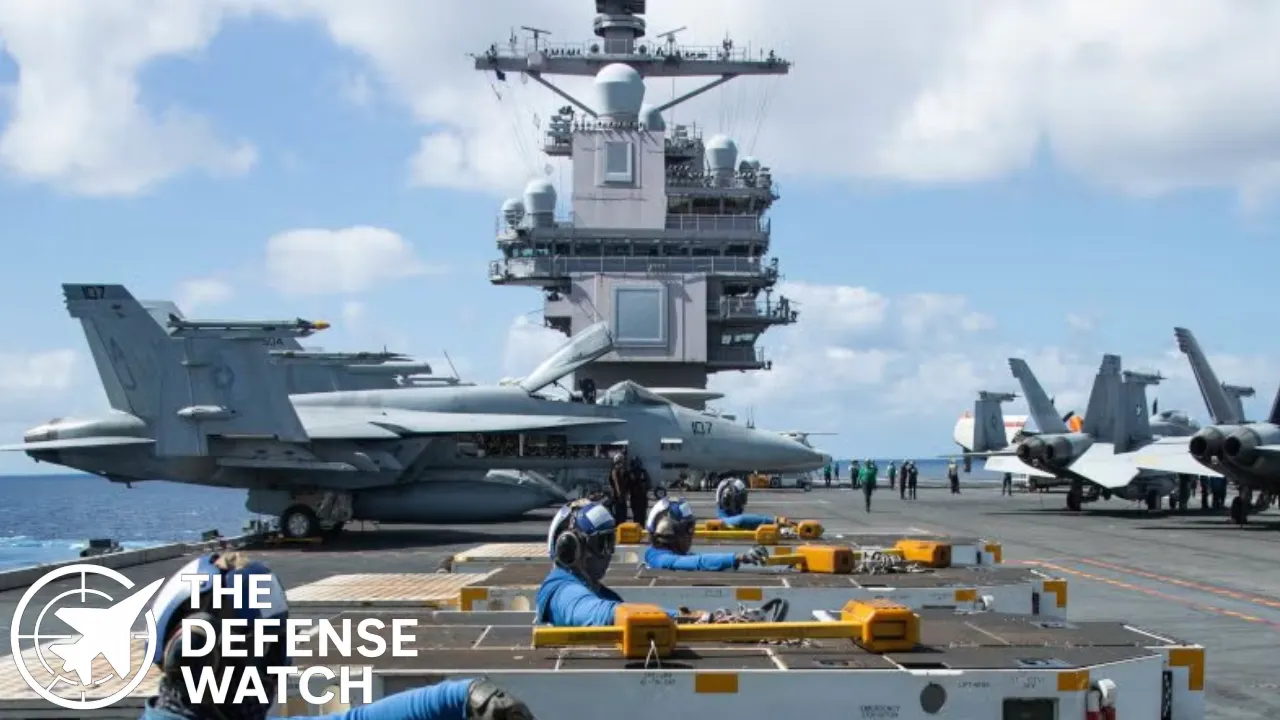
The USS Gerald R. Ford (CVN-78) carrier strike group is being ordered to the operational area of the U.S. Southern Command (SOUTHCOM) in the Caribbean/South American region. According to Pentagon spokesperson Sean Parnell, the deployment aims to “bolster U.S. capacity to detect, monitor, and disrupt illicit actors and activities that compromise the safety and prosperity of the United States homeland and our security in the Western Hemisphere.”
The strike group will include the carrier itself, associated warships, and potentially advanced air assets. This move comes amid intensifying U.S. counter-narcotics and “narcoterrorism” operations in the region.
Key elements:
- The carrier is transiting from its previous deployment area and will join existing U.S. naval assets in the Caribbean and off the coast of South America.
- The stated mission covers detection, monitoring and disruption of illicit trafficking networks — notably those tied to the Tren de Aragua gang and other transnational criminal organisations.
- The timing coincides with recent U.S. air- and sea-strikes on suspected drug trafficking vessels in the Caribbean and eastern Pacific — at least 40 lives have been lost in those operations since early September.
Strategic Context and Regional Implications
Counter-Narcotics and the Hemisphere
The deployment takes place against the backdrop of an expanded U.S. campaign to confront what the administration describes as narco-terrorism. The U.S. has repositioned stealth fighters (F‑35) in Puerto Rico, conducted nighttime maritime strikes and asserted that criminal groups in Venezuela and neighbouring states constitute direct threats to U.S. national security.
This marks a departure from the more traditional role of U.S. law-enforcement and Coast-Guard responses in the Western hemisphere; the integration of carrier strike groups signals a far more robust military posture in the region. Wikipedia+1

Geopolitical Flashpoint: Venezuela, Colombia and Beyond
Tension with the Venezuela regime under Nicolás Maduro is escalating. U.S. officials have accused Maduro’s government of facilitating or tolerating trafficking and have even labelled gangs such as Tren de Aragua as terrorist organisations. Maduro has responded by warning of resistance and calling the U.S. build-up a threat to regional sovereignty. Meanwhile, U.S. relations with Colombia’s government have also become strained after accusations by U.S. officials that Colombian leadership has allowed cartels to flourish — triggering sanctions and diplomatic friction.
The deployment of a high-value strategic asset like the Gerald Ford serves as a signal not just to criminal networks but to regional governments that Washington is prepared to elevate the operational stakes.
U.S. Naval Capacity & Operational Significance
The Gerald R. Ford represents the U.S. Navy’s most advanced carrier platform — nuclear-powered, with a large air wing (more than 75 aircraft) and cutting-edge radars and defensive/missile systems.
Deploying such a capability to the South American/Caribbean theatre underscores two things:
- A commitment of high-end naval power to what has traditionally been a lower-intensity theatre (counter-narcotics rather than peer state conflict).
- A potential shift in how the U.S. frames threats: from narco-trafficking as law-enforcement matter, to viewing some actors as quasi-military adversaries warranting carrier-based response.
From an operations-logistics perspective, carriers are limited in number (only 11 in the U.S. inventory) and their schedules are tightly planned — moving one into a new theatre with short notice suggests a purposeful strategic signal.
Analysis — What This Means for U.S. Defense & Global Security
This deployment signals a broader trend: the U.S. treating the Western hemisphere more as a contested security space rather than a stable backyard. That has implications both for defense planning and alliance management.
For U.S. Defense Planning
- Resource trade-offs: Diverting a carrier strike group from other theatres means less availability elsewhere, potentially impacting U.S. flexibility in the Indo-Pacific or Europe.
- Doctrine shift: Using maritime strike assets in counternarcotics raises questions about legal authorities, rules of engagement and the oversight framework. Some legal scholars already question the justification of recent strikes at sea.
- Inter-agency operations: The blending of intelligence (CIA), Navy/Marine Corps, and DHS/Coast Guard functions suggests a more integrated “whole-of-government” push.
For Regional & Global Security
- Regional stability: Countries in Latin America may see this as a projection of U.S. interventionism; that could drive them into deeper ties with non-Western powers.
- Precedent for other theatres: If the U.S. uses full carrier strike groups for non-peer threats (drug trafficking), other states may interpret this as a lowered threshold for major-power involvement in lower-level conflicts.
- Message to other great-power contenders: The deployment might also serve as a demonstration to China or Russia that the U.S. retains global reach — even into the Americas — and can reposition significant naval assets rapidly.
In short: This is more than a counternarcotics move. It reflects a U.S. defense posture that is increasingly global, high-end and less constrained by traditional theatres.
Conclusion — What to Watch Next
In the coming weeks and months, key indicators will include:
- The actual arrival and mission pattern of the carrier strike group, and whether it conducts high-visibility operations or remains in deterrent posture.
- Diplomatic fallout with regional governments — alliances could be strained, and alternative security arrangements may emerge.
- Legal/political reactions within the U.S. Congress regarding authorisations for use of force and oversight of operations outside declared warzones.
- Whether this deployment marks a first step toward even broader operations, such as land-based strikes inside Venezuela or other South American states, as hinted by administration statements.
If this campaign progresses, it may mark a pivot in hemispheric defense dynamics — one in which the U.S. Navy’s carrier fleet plays an active role in the Americas, not just the Indo-Pacific or Mediterranean.