
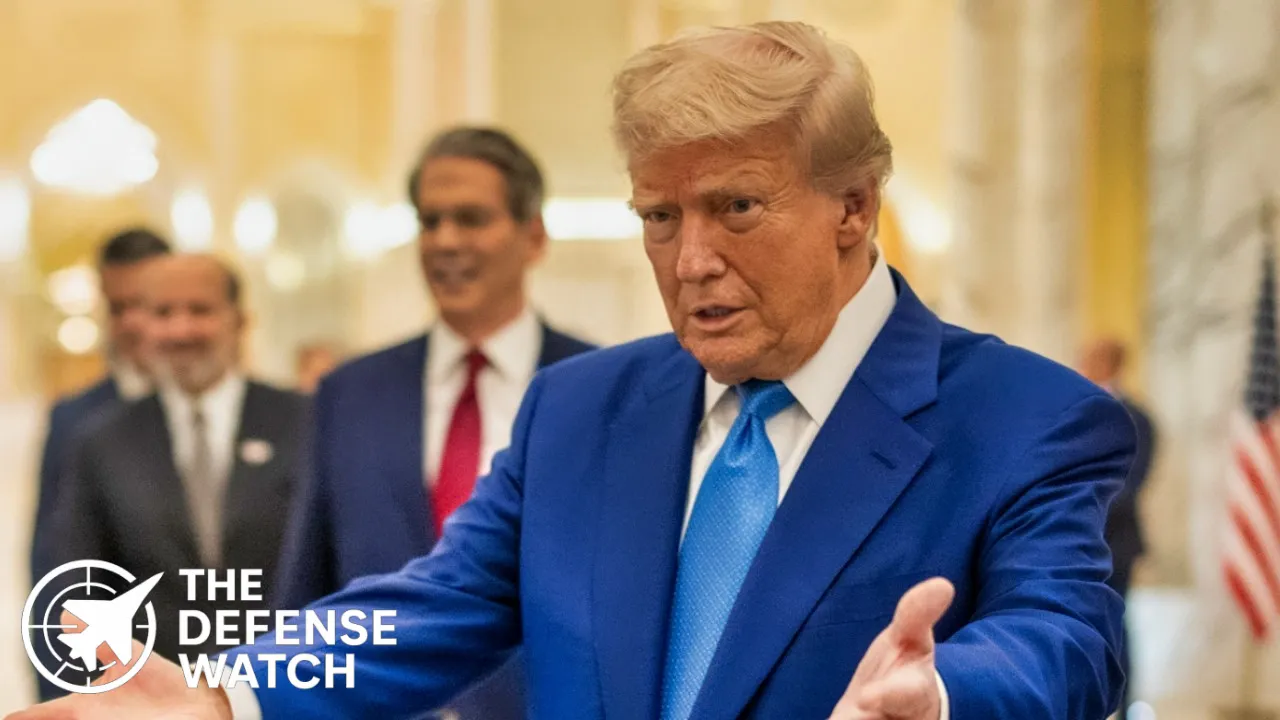
Supreme Court May Curb Trump’s Tariff Authority
The U.S. Supreme Court is reviewing a case that could significantly limit President Donald Trump’s authority to impose tariffs without Congressional approval. The decision, expected later this year, carries major implications for U.S. trade policy, foreign relations, and economic coercion tactics.
Background: Trump’s Tariff-Centric Policy
Since assuming office, Trump has relied heavily on tariffs as a strategic tool to influence global trade dynamics. Using the International Economic Emergency Powers Act (IEEPA) of the 1970s, the president has levied tariffs on a wide range of countries and products, citing national economic security and international leverage. While historically Congress controls tariff authority under the Constitution, IEEPA grants emergency powers for executive action in economic crises.
Tariffs under Trump have been both domestic and international instruments, intended to protect U.S. industries, encourage foreign investment, and coerce trading partners into specific agreements. Deals with countries such as South Korea, India, and Brazil often included tariff adjustments in exchange for long-term investment commitments.
Legal Challenges and Supreme Court Review
The Supreme Court case challenges whether the president can continue imposing tariffs under IEEPA without explicit Congressional authorization. Though the Court has previously supported Trump’s emergency powers in some instances, recent hearings have cast doubt on the administration’s legal justification.
Legal experts note that if the Court limits executive authority, the administration may need alternative legislative backing to maintain its tariff policies. “Every deal that Trump has compelled a foreign government to undertake becomes precarious if he loses the ability to levy tariffs,” said Dr. Robert Farley of the University of Kentucky.
Economic and Geopolitical Implications
Tariffs have complex short- and long-term effects. In the short term, they generate revenue but raise consumer prices and disrupt supply chains. Over the long term, sustained tariffs can protect domestic industries and incentivize foreign investment. However, uncertainty about the permanence of tariffs reduces investor confidence, potentially undermining U.S. industrial policy.
Internationally, tariffs have been used as coercive instruments to influence foreign governments. Examples include threats to impose tariffs during tensions between Thailand and Cambodia, as well as India and Pakistan. If the Supreme Court restricts Trump’s authority, such coercive leverage may diminish, limiting U.S. capacity to influence foreign behavior through economic pressure.
Alternative Options and Congressional Role
Even if the Court limits executive power, other legal avenues exist, though none provide the flexibility Trump has enjoyed under IEEPA. Congress could theoretically pass legislation to restore or expand tariff authority, but partisan divisions and negative public perception make this unlikely. Senate Republicans, historically supporters of free trade, show little appetite for creating new frameworks favoring expansive tariffs.
Without a clear legal basis, the administration’s ability to use tariffs as both domestic and foreign-policy tools will be curtailed, affecting ongoing negotiations and planned deals with international partners.
What Happens Next?
The Supreme Court’s decision could reshape U.S. trade policy and economic strategy. If Trump’s authority is curtailed, the administration may pivot to alternative tools, but the flexibility and strategic leverage of executive-driven tariffs would be greatly reduced. Analysts suggest that the effectiveness of tariffs as a coercive instrument in U.S. foreign policy could be significantly weakened, impacting ongoing and future international agreements.
Conclusion
The Supreme Court review of Trump’s tariff authority represents a pivotal moment for U.S. economic and foreign policy. The ruling could redefine the balance of power between the executive and legislative branches in trade matters, with far-reaching consequences for domestic industries, international relations, and the use of economic coercion as a strategic tool.
Get real time update about this post category directly on your device, subscribe now.

2 comments
[…] Trump’s tariff threat targets Canadian industrial sectors including metals, automotive, and machinery. He also suggested that China could attempt to use Canada as a “drop-off port” to circumvent U.S. tariffs, warning Ottawa against serving as a transit point for Chinese goods into the United States. […]
[…] to prepare for the end of the rules-based global order, comments widely interpreted as criticism of U.S. trade policy. Treasury Secretary Scott Bessent subsequently warned Carney that such statements could backfire […]