

Netanyahu Affirms U.S. Vow to Safeguard Israel’s “Qualitative Military Edge” in Face of Saudi F-35 Sale
Tel Aviv — Prime Minister Benjamin Netanyahu said on Thursday that the United States has reaffirmed its commitment to preserving Israel’s qualitative military edge (QME), despite a high-profile U.S. plan to provide F-35 fighter jets to Saudi Arabia. The assurances, he said, came after direct discussions with U.S. Secretary of State Marco Rubio.
Background: What Is at Stake
For decades, the U.S. has enshrined in its defense policy a doctrine that guarantees Israel maintains a technological and operational edge over regional adversaries. Known as Israel’s qualitative military edge, this principle is codified in American law and has influenced arms sales across the Middle East.
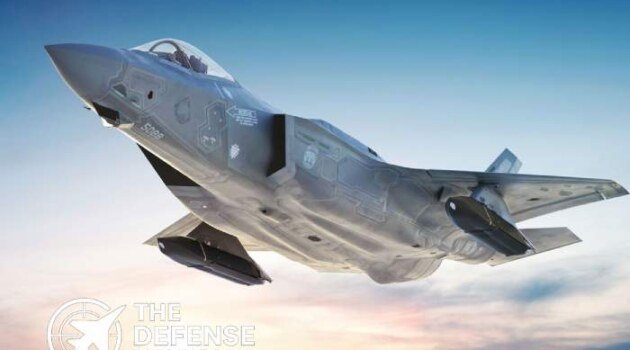
In May 2025, the Trump administration announced a sweeping $142 billion arms package to Saudi Arabia — the centerpiece of which reportedly includes F-35 stealth fighters. That prospect alarms Israeli military officials, who warn that the transfer of advanced fifth-generation jets could erode Israel’s air superiority.
Key Details: Netanyahu’s Reassurances
In an interview on the Telegram channel Abu Ali Express, Netanyahu said that Riyadh “did not get everything it wanted.” He added that following the F-35 plan, he spoke by phone with U.S. Secretary of State Marco Rubio, who reiterated the U.S. pledge to maintain Israel’s defense edge.
According to Netanyahu:
“They didn’t ask us before the sale … but once it happened, I spoke with [Rubio] and made sure of it.”
A spokeswoman for Netanyahu’s office, Shosh Bedrosian, echoed the claim at a press briefing, stating that Washington and Jerusalem have a “long-standing understanding” to guarantee Israel’s qualitative edge. She said:
“That has been true yesterday, … today, … and … tomorrow … and in the future.”
Technical Safeguards: How Israel Maintains Its Advantage
U.S. defense officials and analysts have noted that the Saudi-bound F-35s will likely be less capable than those in Israeli service. According to Reuters, the jets destined for Riyadh will lack several sensitive features such as advanced electronic-warfare packages, radar-jamming systems, and certain integrated weapons.
Moreover, Israel enjoys a special arrangement that allows it to customize its F-35 fleet — locally integrating its own systems, making software modifications, and fielding weapons developed by Israeli defense firms without requiring U.S. re-approval.
Some observers also highlight that one of the most advanced air-to-air missiles in development, the AIM-260 Joint Advanced Tactical Missile, may remain restricted to Israel, thereby preserving its technological superiority.
Military and Strategic Concerns in Israel
Senior Air Force officials in Jerusalem have formally voiced reservations, warning that a Saudi F-35 fleet could undercut Israel’s long-held regional dominance. A classified IAF position paper reportedly argues that similar stealth-capable jets in Saudi hands may erode Israel’s operational freedom in future missions.
Analysts also note that the F-35 sale could complicate Israel’s own fleet expansion. According to the report, if the Saudi order moves forward, it could delay Israel’s delivery schedule for new aircraft.
U.S.-Israeli Diplomatic Dimension
Although the deal has stirred concern in Israel’s military community, Netanyahu has been cautious in his public remarks. He characterized Saudi Arabia as “not a state of confrontation” but stressed that Israel’s reluctance would be far more forceful should a similar sale be proposed to Turkey.
Netanyahu has also emphasized his view on regional normalization, saying he is “cautiously optimistic” about prospects for Saudi-Israeli ties — but reiterated his opposition to a sovereign Palestinian state emerging from any agreement.
Expert & Policy Angle
Legal Safeguards:
Under U.S. law, any arms transfer that might threaten Israel’s qualitative military edge triggers a QME review, requiring assessment by U.S. Congress. Defense analysts have long seen such limits as a controlling factor in Gulf states’ pursuit of the most advanced U.S. platforms.Regional Dynamics:
Some experts suggest that Washington’s move to sell F-35s to Riyadh reflects broader geopolitical ambitions — including further integrating Saudi Arabia into a U.S.-led security architecture in the Middle East. However, keeping the jets technologically inferior is key to avoiding a major shift in regional airpower balance.Israeli Calculus:
By pushing for reassurance from Washington, Netanyahu may also be trying to balance competing priorities: assuring his domestic political base of Israel’s security supremacy while signaling openness to a gradual rapprochement with Saudi Arabia. Analysts note that such a deal could be tied to deeper normalization talks — though Netanyahu has publicly denied granting too many concessions, particularly on Palestinian statehood.What Comes Next
- QME Review: The deal is expected to undergo a formal qualitative military edge assessment in the U.S., potentially slowing or reshaping the sale.
- Congressional Approval: Any major arms sale of this scale will require authorization by the U.S. Congress, where Israel’s strategic concerns could influence votes.
- Normalization Dynamics: Saudi-Israel diplomatic rapprochement remains uncertain. Analysts will watch whether strategic reassurance on military parity becomes part of a broader normalization deal.
- Israeli Modernization: Israel may accelerate its own F-35 orders or push for further upgrades, in part to ensure it retains a clear technological lead.
Get real time update about this post category directly on your device, subscribe now.

1 comment
[…] in China’s internal affairs. Chinese officials have repeatedly called on Washington to halt all military sales and contacts with the […]