
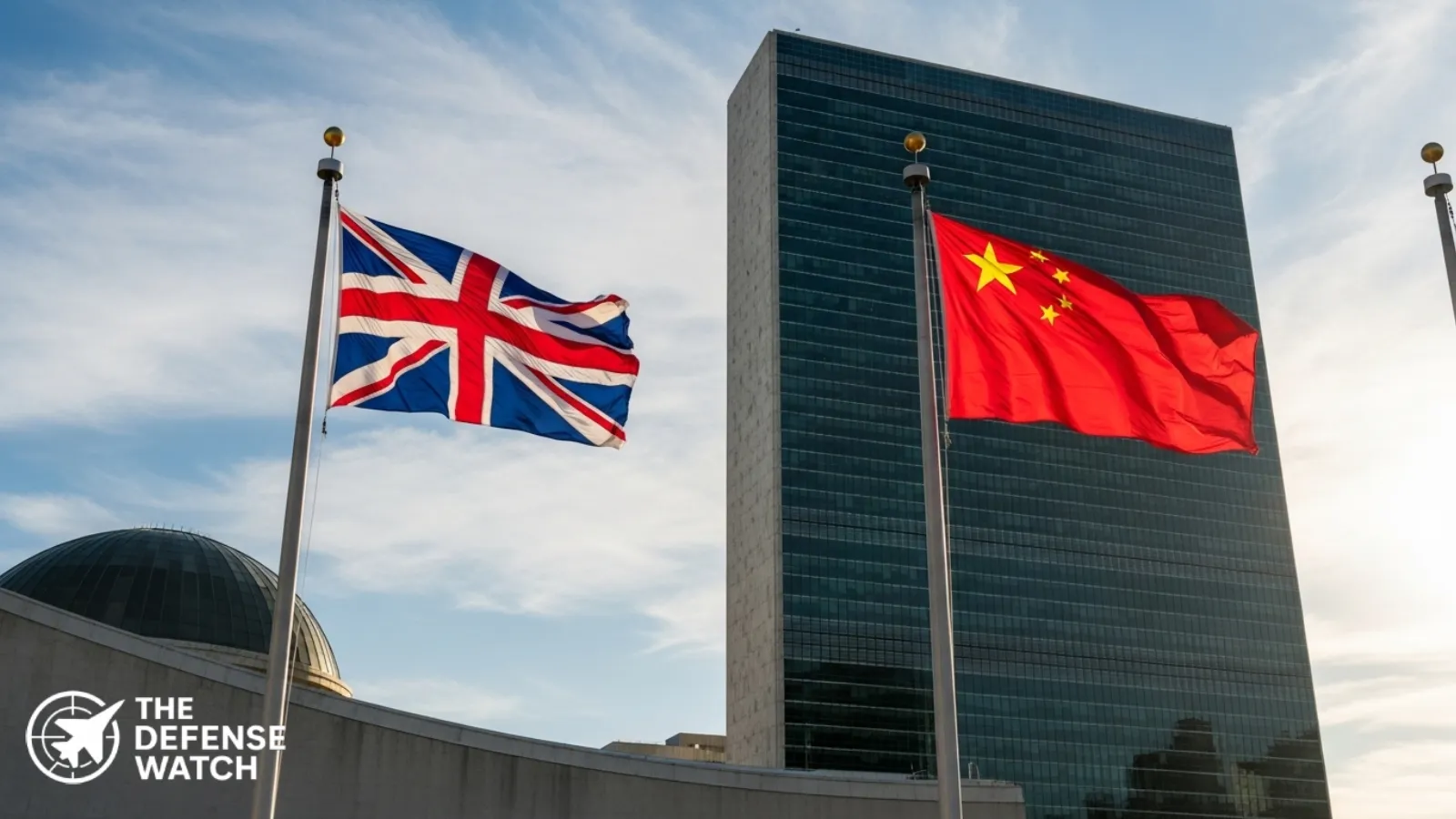
China-UK Relations and Strategic Dialogue
China-UK relations have faced mounting strain over the past year, shaped by disputes over security policy, technology controls, and broader geopolitical alignment. Yet officials in both London and Beijing continue to stress that dialogue remains necessary, citing their shared responsibilities as permanent members of the United Nations Security Council and major global economies.
The bilateral relationship has become a test case for how mid-sized Western powers manage engagement with China amid rising competition between Beijing and Washington. For the UK, China policy now sits at the intersection of economic risk management, national security, and alliance commitments. For China, relations with London remain important as Beijing seeks stable ties with European powers.
Officials on both sides have framed engagement not as endorsement, but as a tool for managing risk and avoiding miscalculation.
A Relationship Marked by Friction
China-UK relations deteriorated steadily over the past year, driven by disagreements on issues ranging from technology supply chains to regional security. London has taken a more cautious stance on Chinese investment in sensitive sectors, while expanding scrutiny of research collaboration and telecommunications infrastructure.
The UK government has publicly described China as a systemic challenge, while also acknowledging areas where cooperation remains necessary. Beijing, in turn, has criticized what it sees as politicization of trade and security issues, warning against alignment with broader containment strategies.
Despite this, neither side has formally downgraded diplomatic ties. Embassy-level engagement, military attaché channels, and multilateral contacts remain in place.
Security and Defense Context
From a defense and security perspective, China-UK relations are shaped less by direct military confrontation and more by global posture and alliance dynamics. The UK plays a leading role in NATO and remains closely aligned with US Indo-Pacific strategy, including freedom of navigation operations and defense partnerships in Asia.
China views these moves as part of a wider security environment that increasingly involves European actors. While there is no direct military standoff between China and the UK, defense signaling, arms control dialogue, and crisis communication are increasingly relevant.
As permanent members of the UN Security Council, both countries retain influence over sanctions regimes, peacekeeping mandates, and conflict response. Analysts note that sustained communication between London and Beijing reduces the risk of diplomatic gridlock during international crises.
Economic Ties Under Review
Economic engagement remains a central but contested pillar of China-UK relations. China continues to rank among the UK’s largest trading partners, though investment flows have slowed amid tighter screening rules and political caution.
British officials have emphasized a policy of risk reduction rather than wholesale decoupling. This approach seeks to protect critical technologies while maintaining trade in non-sensitive sectors such as consumer goods and basic manufacturing.
Chinese officials have urged the UK to maintain an open investment environment and avoid what they describe as security overreach. Both sides appear aware that economic disengagement would carry costs at a time of global supply chain uncertainty.
Why Dialogue Still Matters
Despite tensions, policymakers in both capitals continue to argue that structured dialogue is essential. This includes diplomatic talks, economic working groups, and engagement through international institutions.
China and the UK share overlapping interests on climate policy, nuclear non-proliferation, and global financial stability. Cooperation in these areas does not require alignment on all political issues, but it does depend on sustained communication.
From a strategic perspective, dialogue also serves a stabilizing function. Even limited engagement can help clarify intentions, reduce misperception, and manage disagreements before they escalate.
Multilateral Pressure and Global Stability
The broader international environment has added urgency to calls for engagement. Ongoing conflicts, rising defense spending, and strained global governance mechanisms have placed additional pressure on major powers to coordinate where possible.
Within the UN Security Council, China and the UK are often required to engage directly on sanctions, ceasefire resolutions, and humanitarian access. Functional working relationships at this level can influence outcomes well beyond bilateral ties.
Defense analysts note that great power competition does not eliminate the need for cooperation on crisis response, arms control, and escalation management.
Outlook for China-UK Relations
China-UK relations are unlikely to return to the expansive tone seen in earlier decades. Structural differences on security, values, and alliance alignment remain. However, neither side appears to be seeking a full rupture.
Instead, the relationship is evolving into a more transactional and risk-managed framework. Dialogue, while limited, is increasingly viewed as a practical necessity rather than a political concession.
For London and Beijing alike, the challenge will be balancing strategic caution with the need to keep communication channels open in an increasingly fragmented global security environment.
Get real time update about this post category directly on your device, subscribe now.
