
AUKUS Nations Advance Autonomous Maritime Technology Plans For 2026
The AUKUS autonomous maritime systems program is set to expand in 2026 as the United Kingdom, United States, and Australia intensify trilateral trials focused on uncrewed and autonomous technologies. According to official Royal Navy releases, the initiative will build on 2025 experiments through live training events, collaborative command and control development, and integrated testing environments designed to strengthen naval interoperability.
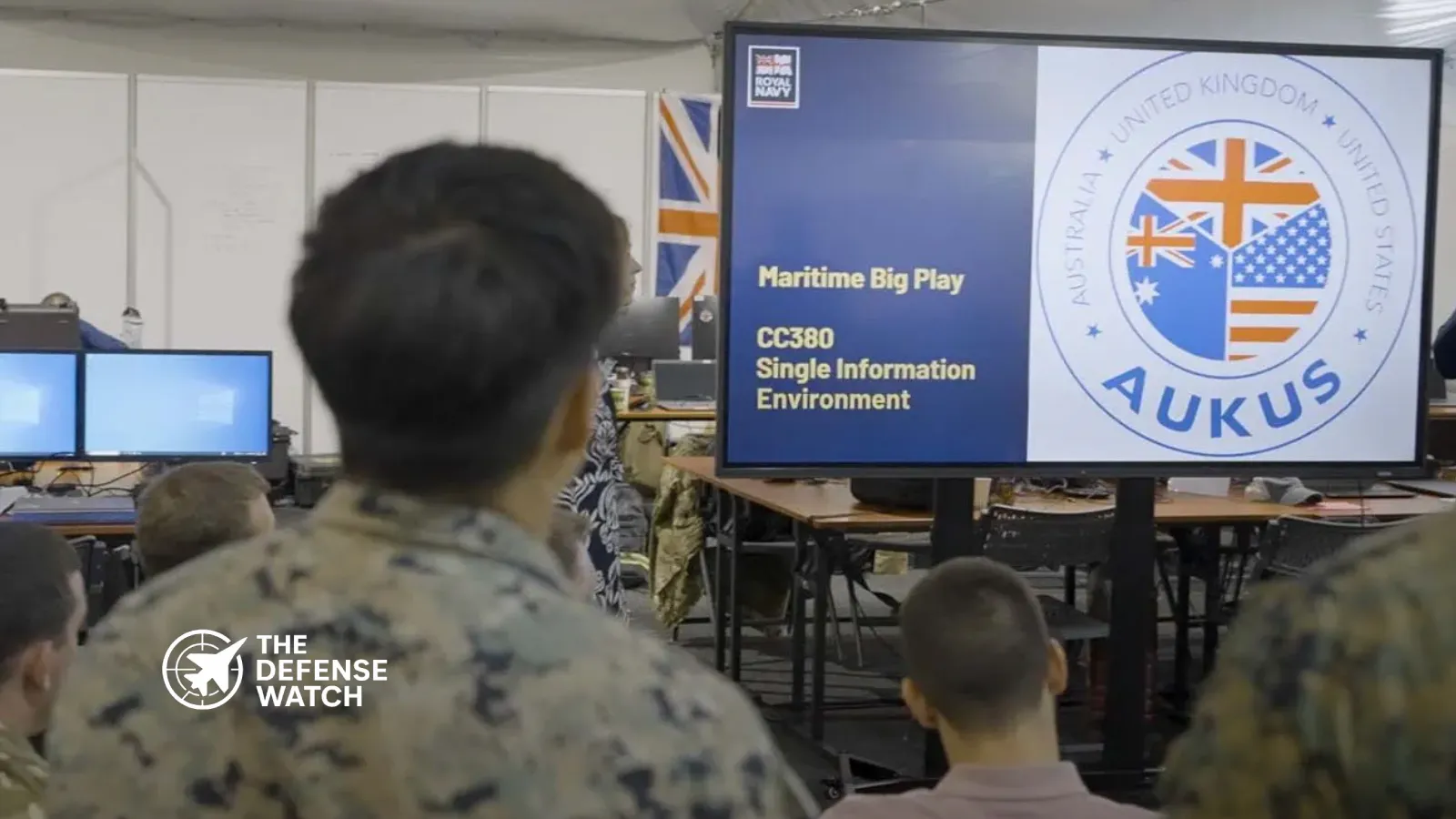
The effort falls under AUKUS Pillar II and the Maritime Big Play program, which emphasizes rapid experimentation and operational integration of emerging technologies across maritime forces.
AUKUS Pillar II Drives Expansion Of Uncrewed Maritime Systems
The AUKUS partnership continues to focus heavily on uncrewed naval capabilities, with the AUKUS autonomous maritime systems initiative aiming to create a cohesive trilateral fleet capable of operating across surface, air, and underwater domains.
Officials stated that exercises scheduled over the coming year will simulate real world combat environments, reflecting an increased emphasis on operational readiness and joint capability development.
Key objectives for 2026 include:
- Development of a shared command and control software architecture
- Creation of a common autonomous technology baseline
- Establishment of a joint testing and simulation environment
These initiatives aim to reduce duplication across the three partner nations while improving the ability to coordinate complex multinational operations.
Maritime Big Play Program Accelerates Technology Integration
The Maritime Big Play program continues to serve as the primary mechanism for integrating autonomous capabilities into operational fleets. Royal Navy officials noted that trilateral collaboration allows partners to accelerate the development of robotic systems and bring them closer to deployment readiness.
The program’s scope includes anti submarine warfare, maritime strike operations, and seabed warfare technologies.
Previous exercises conducted across Australia, Poland, Portugal, and the United States laid the groundwork for expanded activities in 2026 by validating new operational concepts and enhancing joint experimentation.
Lessons From 2025 Trials Shape Future Exercises
Recent AUKUS experiments demonstrated growing operational maturity in autonomous maritime technology. During Exercise Talisman Sabre, personnel in Australia remotely operated an extra large autonomous underwater vehicle located in the United Kingdom, highlighting the partnership’s ability to control assets across global distances.
Additional trials at the REPMUS exercise in Portugal evaluated command and control frameworks for crewless systems, while Coalition Warrior Interoperability Exercise testing focused on improving data sharing between allied forces.
The ability to remotely launch uncrewed aerial systems through secure communication networks was also demonstrated, contributing to improved situational awareness and targeting data collection for participating forces.
Growing Emphasis On Autonomous Naval Warfare
The expansion of the AUKUS autonomous maritime systems initiative reflects a broader trend toward integrating uncrewed technologies into naval operations. Defense analysts and naval leadership have increasingly emphasized autonomous platforms as force multipliers capable of enhancing fleet size, persistence, and operational reach.
Joint experimentation across the AUKUS partnership has already tested underwater drones for infrastructure protection and seabed warfare missions, highlighting the operational value of these systems in real world scenarios.
The focus on interoperability and shared standards is expected to enable more seamless coordination among allied forces during complex maritime missions.
Strategic Importance Of The AUKUS Partnership
The trilateral AUKUS agreement remains a central pillar of defense cooperation among the United States, United Kingdom, and Australia. Beyond advanced technologies, the partnership also includes nuclear powered submarine development and industrial collaboration aimed at strengthening deterrence and alliance interoperability.
Under Pillar II, the emphasis on advanced capabilities such as artificial intelligence, autonomous systems, and cyber technologies reflects the evolving character of modern naval warfare.
Joint training programs and personnel exchanges continue to expand the partnership’s operational foundation, preparing allied forces for future combined operations in both the Indo Pacific and Euro Atlantic regions.
Operational Outlook For 2026 And Beyond
As the AUKUS partners move into 2026, the continued development of the AUKUS autonomous maritime systems program is expected to produce increasingly complex exercises and demonstrations. The shared testing environment and unified command and control architecture are designed to improve decision making speed and enable integrated multi domain operations.
Future experimentation is likely to focus on enhancing interoperability between crewed and uncrewed assets, a critical capability for modern naval forces facing evolving threats across maritime theaters.
Officials emphasized that the ultimate goal is to transition emerging technologies from experimental phases into operational deployments, ensuring that allied navies maintain a technological advantage in contested environments.
Get real time update about this post category directly on your device, subscribe now.
