U.S. Navy Uses LCAC Hovercraft With USS Boxer During Middle East Deployment
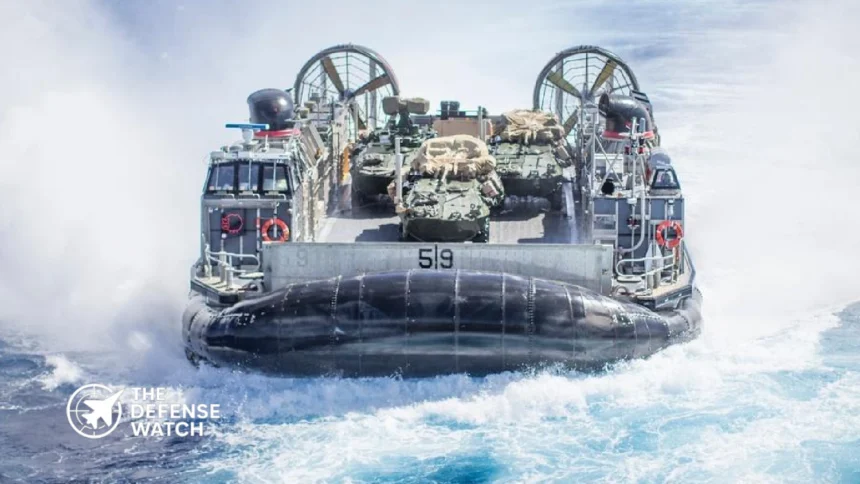
The U.S. Navy is continuing amphibious readiness operations in the Middle East, with Landing Craft, Air Cushion (LCAC) hovercraft conducting launch and recovery activities alongside the Wasp-class amphibious assault ship USS Boxer (LHD 4).
Photographs released on November 27, 2026, show LCAC 44, assigned to Assault Craft Unit 5 (ACU-5), operating with Boxer in the U.S. 5th Fleet area of responsibility. The imagery documents preparations for launch, hovercraft movements near the ship’s well deck, and landing craft recovery operations.
According to the U.S. Navy imagery described in the reporting, the activity took place on November 25. However, the Navy has not identified the precise operating location or disclosed whether the craft were conducting a specific operational mission beyond maintaining amphibious capabilities.
The operations demonstrate how the Navy maintains its ability to move Marine Corps personnel, vehicles and equipment from an amphibious ship to shore without relying entirely on established port facilities.
What the November Operations Show
The November 25 activity involved multiple stages of LCAC operations aboard USS Boxer.
The published imagery identifies LCAC 44 alongside the amphibious assault ship. Other photographs document sailors preparing a hovercraft for launch, LCAC 32 approaching the ship’s well deck, and a landing craft returning to the vessel.
These activities involve coordination between the ship’s crew and ACU-5 personnel. The well deck must be prepared for launch and recovery, while LCAC crews operate the craft through the transition between the ship and open water.
The distinction between training, routine readiness activity and an actual amphibious mission is important. The available imagery confirms hovercraft operations, but does not establish that Marines conducted a beach landing, that heavy vehicles were transported during this particular activity, or that the craft supported a combat operation.
Why the LCAC Matters to Marine Amphibious Operations
The LCAC is designed to solve a persistent problem in amphibious warfare: moving heavy equipment from ships to shore when conventional landing craft or port infrastructure may not provide suitable access.
Unlike conventional displacement landing craft, an LCAC uses large fans to generate an air cushion beneath its hull. This allows it to travel across the water and continue over suitable beach terrain.
The U.S. Navy identifies the LCAC as a high-speed, fully amphibious transport platform capable of carrying a normal payload of approximately 60 tons, with an overload capacity of up to 75 tons.
Its cargo can include:
- Main battle tanks and other armored vehicles.
- Marine Corps tactical vehicles.
- Weapons systems and supporting equipment.
- Personnel and logistical supplies.
The Navy says the air-cushion design allows LCACs to access more than 70 percent of the world’s coastline, compared with approximately 15 percent accessible to conventional landing craft. This provides amphibious forces with more potential landing locations, although actual access depends on coastal conditions, terrain, weather and operational security.
For the Marine Corps, this capability is particularly relevant when moving heavier equipment that cannot be transported efficiently by helicopters or tiltrotor aircraft.
USS Boxer Provides the Ship-to-Shore Platform
USS Boxer is the fourth ship in the U.S. Navy’s Wasp class of amphibious assault ships. Its design combines an aviation flight deck with an internal well deck, allowing it to support both aircraft operations and surface-based amphibious transportation.
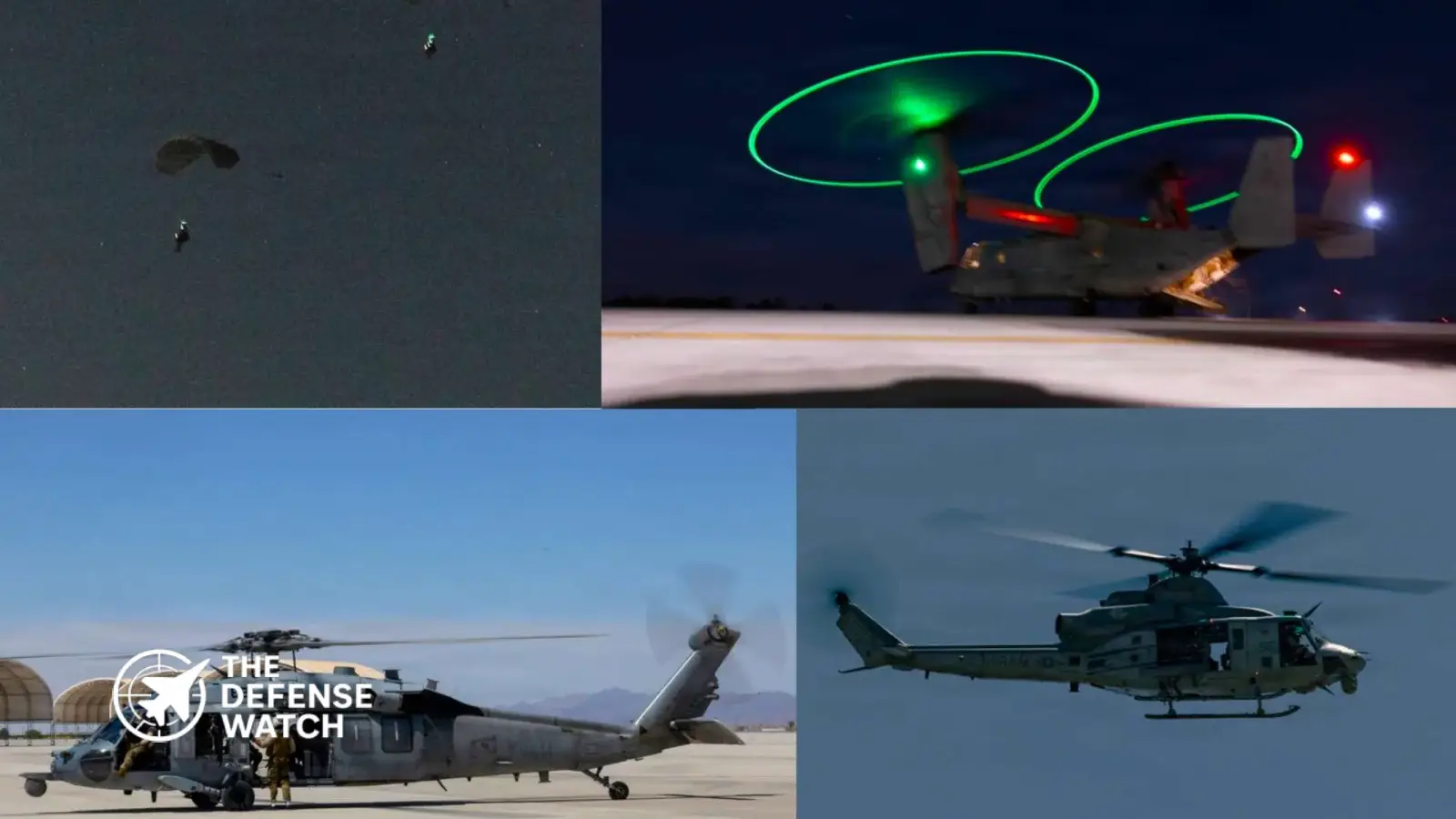
The flight deck supports aircraft including:
- F-35B Lightning II short-takeoff and vertical-landing fighters.
- MV-22B Osprey tiltrotor aircraft.
- CH-53E Super Stallion heavy-lift helicopters.
- MH-60-series helicopters.
The well deck provides a separate route for moving landing craft between the ship and the sea. According to the Navy, Wasp-class ships can accommodate up to three LCACs or two conventional Landing Craft Utility vessels in their well decks.
This arrangement gives an embarked Marine force multiple transportation options. Aircraft can move personnel and selected cargo quickly, while LCACs provide a means of delivering heavier equipment and larger loads.
The combination is particularly useful when forces need to operate from the sea without depending on an available commercial or military harbor.
ACU-5 and the Navy’s Amphibious Transport Capability
The hovercraft involved in the USS Boxer operations belong to Assault Craft Unit 5, a U.S. Navy unit responsible for providing operationally ready LCACs.
ACU-5’s official mission is to provide commanders with fully manned, trained, maintained and supported landing craft for sustained combat and non-combat operations.
The unit was commissioned in October 1983. Its official history identifies a fleet of 28 landing craft and more than 600 military and civilian personnel, although these figures describe the unit’s published organizational information rather than the number deployed with Boxer.
The Navy identifies the LCAC as a platform for transporting Marine Air-Ground Task Force personnel, weapons, equipment and cargo between amphibious ships and shore.
Maintaining the relationship between ACU-5 and amphibious ships is important because LCAC operations require more than a capable hovercraft. Shipboard handling, launch procedures, navigation, beach access and recovery all have to work together.
Why the Capability Matters in the Middle East
Boxer’s deployment places this amphibious capability within a strategically important maritime region.
The Arabian Sea, Persian Gulf and surrounding waterways are central to U.S. naval operations in the Middle East. Amphibious forces operating in this environment need the flexibility to move personnel and equipment between ships and suitable coastal locations.
The LCAC offers one option for doing so without requiring a conventional port. Its ability to travel over suitable beaches can help reduce dependence on fixed maritime infrastructure during an expeditionary operation.
The distinction matters in a regional contingency where port access could be restricted, damaged or unavailable. However, the existence of this capability does not mean that a particular landing operation is planned.
The November photographs also do not establish that USS Boxer or its LCACs were assigned a specific role in maritime blockade enforcement against Iran. The Navy’s stated purpose for the ship’s Middle East deployment is to support maritime security and stability.
Amphibious Readiness Is About Sustaining Operations
An LCAC’s payload capacity is only one part of its military value. Amphibious operations depend on the ability to repeat ship-to-shore movements, recover landing craft and maintain a steady flow of equipment and supplies.
A successful initial landing does not by itself establish the ability to sustain a force ashore. Fuel, ammunition, maintenance equipment, food and other supplies must continue reaching the landing force.
Regular launch and recovery operations help maintain coordination between the amphibious ship and landing craft crews. They also provide opportunities to practice the procedures needed to operate the system during more demanding conditions.
There is an important limitation to what the latest imagery establishes. It documents hovercraft activity at sea, but does not provide evidence of beach landing performance, cargo delivery rates or operations under hostile conditions.
Previous Operations With USS Boxer
The November activity is not the first documented cooperation between Boxer and ACU-5 during 2026.
U.S. Navy imagery and video published through the Defense Visual Information Distribution Service (DVIDS) documented well-deck operations involving the same ship and unit on September 21, 2026.
Additional Navy photographs from September 24 and September 29 showed LCAC launch and recovery activity alongside Boxer in the U.S. 5th Fleet area of responsibility.
The November 25 imagery therefore provides further evidence that the ship continued maintaining its surface amphibious transportation capability during its Middle East deployment.
What the Latest Activity Does Not Confirm
Several important details remain undisclosed:
- The exact location of the November 25 operations.
- Whether LCAC 44 or LCAC 32 transported vehicles or other cargo.
- Whether Marines conducted an actual beach landing.
- The number of landing craft deployed with Boxer.
- Whether the activity supported a specific contingency or operational task.
These details matter when assessing the difference between routine amphibious readiness and an operational deployment.
For now, the available evidence establishes that USS Boxer and ACU-5 continued conducting LCAC launch and recovery operations in the Middle East. It does not establish that an amphibious assault or beach landing is imminent.
Enjoying our coverage?
Make The Defense Watch a preferred source on Google to see more of our geopolitical and defense insights when relevant to you.