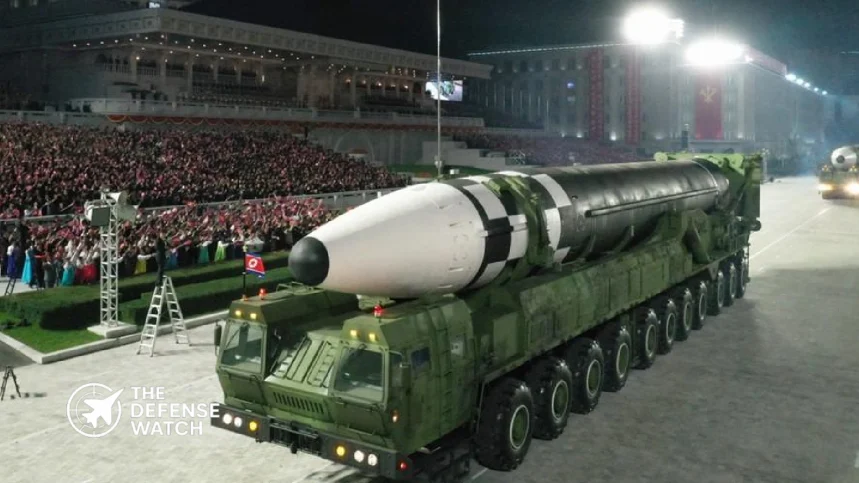
North Korea has reportedly suspended new deliveries of KN-23 ballistic missiles and artillery ammunition to Russia, potentially disrupting an important part of Moscow’s military supply relationship with Pyongyang.
Ukraine’s Defense Intelligence Directorate (HUR) announced the reported restrictions on November 26, 2026. According to the Ukrainian agency, the decision followed diplomatic disagreements between North Korea and Russia over Moscow’s willingness to improve relations with South Korea.
The reported suspension also covers Russian military transport aircraft using North Korean airspace and a Russian request to increase the number of North Korean troops deployed on Russian territory.
The allegations have not been independently verified. Reuters reported that it could not confirm the account or the public statements attributed to North Korean officials. Neither Moscow nor Pyongyang had publicly confirmed the suspension at the time of reporting.
A Diplomatic disagreement with military consequences
The reported restrictions followed comments by Russian Deputy Foreign Minister Andrey Rudenko in October 2026 concerning Moscow’s relationship with Seoul.
According to Reuters, Rudenko said Russia had received signals from South Korea indicating interest in normalizing bilateral relations after the war in Ukraine. The two countries were also discussing a possible resumption of direct commercial flights.
Ukrainian intelligence interpreted Moscow’s position as inconsistent with the relationship Pyongyang expects from its strategic partner.
HUR said North Korean Foreign Minister Choe Son Hui demanded clarification of Russia’s policy toward South Korea before announcing the temporary suspension.
The exact circumstances surrounding the alleged announcement remain unclear. Reuters could not independently verify the statements attributed to either Choe or Rudenko, and did not confirm that Russia had formally promised to mediate tensions between the two Koreas.
The disagreement is significant because North Korea has increasingly treated its relationship with Russia as a strategic partnership rather than simply an arms-export arrangement.
The two countries signed a Comprehensive Strategic Partnership Treaty in June 2024. Its mutual assistance provisions strengthened their military relationship and provided a formal framework for expanded cooperation.
Russia’s dependence on North Korean ammunition
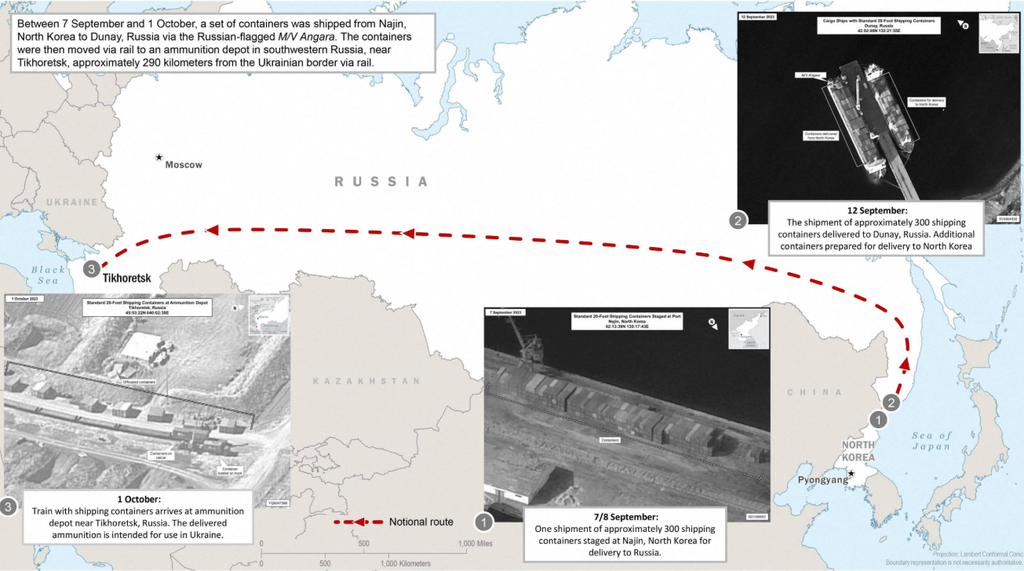
North Korean ammunition has become an important source of additional supplies for Russian forces fighting in Ukraine.
The deliveries have included artillery shells, multiple-launch rocket system ammunition and ballistic missiles. These supplies help Russia maintain artillery activity while supporting its domestic defense industry with additional ammunition stocks.
A March 2026 assessment by South Korea’s Defense Intelligence Agency, reported by Yonhap, estimated that North Korea had shipped approximately 33,000 containers of military supplies to Russia.
The assessment said the ammunition volume could correspond to more than 15 million 152 mm artillery shells. It also identified approximately 220 artillery systems supplied by North Korea, including 170 mm self-propelled guns and 240 mm multiple-launch rocket systems. These are South Korean intelligence estimates rather than independently verified shipment totals.
The Multilateral Sanctions Monitoring Team (MSMT), in its 2025 investigation into North Korean and Russian military cooperation, documented extensive ammunition transfers.
According to the report, participating states estimated that Russian-flagged cargo vessels transported as many as nine million rounds of mixed artillery and multiple-launch rocket ammunition from North Korea during 2024.
The report also identified ballistic missile transfers and shipments of military equipment through maritime and rail networks.
These figures illustrate the scale of the supply relationship before the reported November suspension.
A temporary interruption would not automatically stop Russian artillery operations. Moscow retains domestic ammunition production, existing stockpiles and other supply channels. However, losing an additional external source could increase pressure on its ammunition procurement and logistics system if the suspension continues.
Why the KN-23 matters to Russian operations
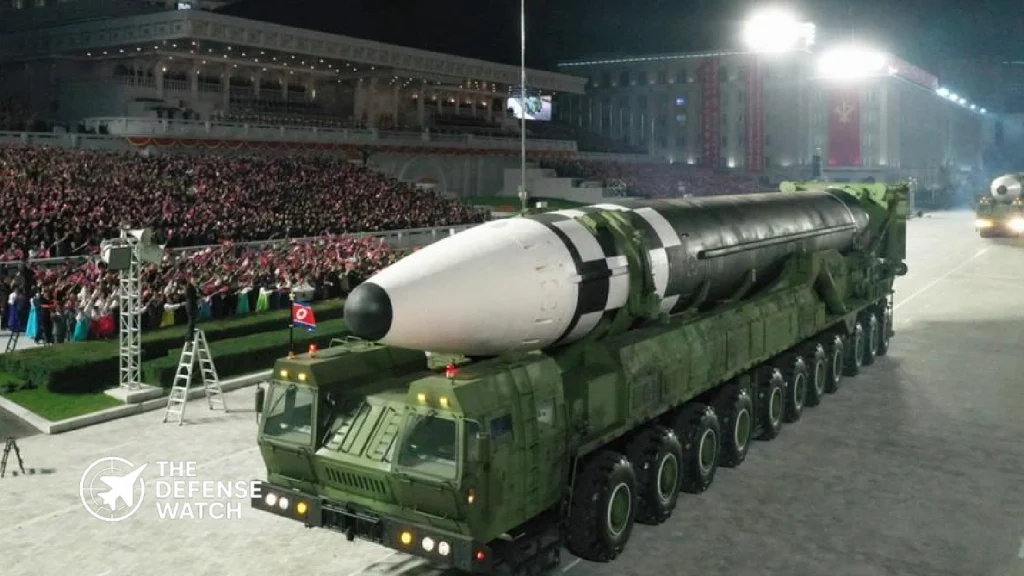
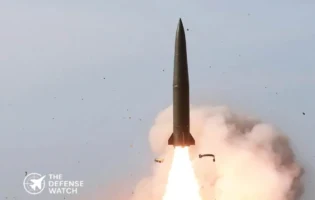
The KN-23, also known as the Hwasong-11Ga, is a North Korean short-range ballistic missile that has been used by Russian forces against Ukrainian targets, according to Ukrainian and Western reporting.
Its inclusion in the reported suspension is particularly important because ballistic missiles provide a different strike capability from conventional artillery.
Artillery ammunition supports sustained ground operations and repeated fire missions. Ballistic missiles provide a means of attacking targets at greater distances, including infrastructure and military facilities.
On November 7, Ukrainian President Volodymyr Zelenskyy said Russia had used KN-23 missiles against a Ukrainian energy facility. Reuters reported this statement while covering the alleged suspension, although the specific November strike details were attributed to the Ukrainian president.
For Russia, North Korean missile supplies provide another source of weapons for its campaign against Ukraine.
For Pyongyang, the transfers offer an opportunity to gain financial and strategic benefits, while potentially obtaining information about how its weapons perform under operational conditions.
However, the extent of any Russian technical feedback, modifications or assistance to North Korea’s missile industry remains difficult to establish from publicly available information.
The troop request exposes another point of tension
The reported disagreement extends beyond ammunition and missiles.
According to HUR, Moscow had requested an increase in North Korea’s military presence in Russia from approximately 8,500 personnel to 50,000. Pyongyang was reportedly delaying its response.
This would represent a substantial expansion of North Korea’s military commitment.
North Korean troops have already participated in Russia’s campaign against Ukrainian forces in the Kursk region. Their deployment became publicly acknowledged by Moscow and Pyongyang in 2025.
The Congressional Research Service, in its September 18, 2026 assessment of Russia-North Korea relations, describes North Korea’s deployment of more than 10,000 troops as part of its support for Russia’s operations in Kursk.
The reported 8,500 figure should not be confused with the cumulative number of North Korean personnel deployed or rotated through Russia. These figures can represent different measurements of the military presence.
An expansion to 50,000 would also require additional arrangements for transportation, accommodation, command relationships, equipment and logistical support.
For North Korea, a larger deployment could provide further operational experience but would also increase the commitment of personnel to a foreign conflict.
There is currently no independent confirmation that Moscow formally submitted the reported request or that Pyongyang rejected it.
A temporary pause does not mean the partnership is collapsing
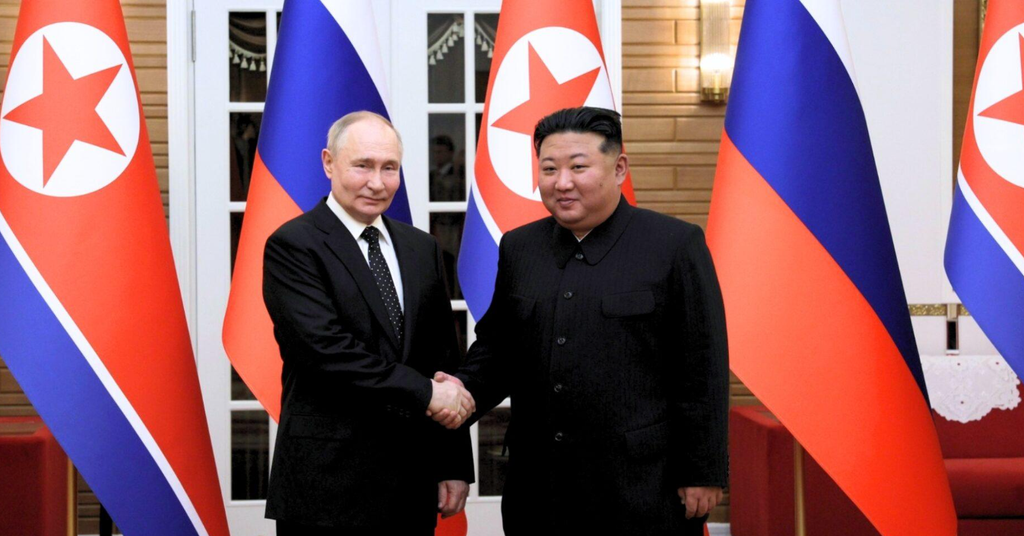
The reported restrictions should be viewed against the wider relationship between Moscow and Pyongyang.
Their June 2024 Comprehensive Strategic Partnership Treaty established mutual assistance obligations in the event of armed aggression against either country. The agreement also provided a political framework for expanding military, economic and technological cooperation.
The partnership has delivered benefits to both governments.
Russia has gained access to North Korean ammunition, ballistic missiles and military personnel. North Korea, meanwhile, has received a stronger diplomatic relationship with Moscow and potentially valuable economic and military cooperation.
The Congressional Research Service has warned that Russian military technology transfers and North Korean combat experience could strengthen Pyongyang’s capabilities, with implications for U.S. and allied security interests in East Asia.
Importantly, diplomatic engagement has continued despite the reported disagreement.
Reuters reported that Russian President Vladimir Putin met senior North Korean official Jo Yong Won in Moscow in November. Both sides reportedly praised their bilateral cooperation.
This suggests that the alleged restrictions have not yet translated into a publicly acknowledged breakdown in diplomatic relations.
What the reported suspension means for the Ukraine war
The immediate military impact remains uncertain.
If North Korea has stopped new deliveries, Russia could face additional pressure to replace ammunition and missile supplies through domestic production or alternative procurement channels.
The consequences would depend on the duration of the interruption, existing Russian inventories and whether previously agreed shipments are still moving through the supply network.
There is also a distinction between suspending new deliveries and terminating the underlying military relationship.
The available reporting does not establish that North Korea has withdrawn its existing personnel, ended its defense treaty with Russia or permanently stopped weapons exports.
For the United States, South Korea and Japan, the more important question may be whether the disagreement produces a lasting change in military cooperation or simply a temporary negotiating dispute.
Until Moscow or Pyongyang confirms the restrictions, the reported suspension remains an assessment attributed to Ukrainian intelligence rather than an independently established change in North Korean export policy.
Enjoying our coverage?
Make The Defense Watch a preferred source on Google to see more of our geopolitical and defense insights when relevant to you.