

Executive Summary:
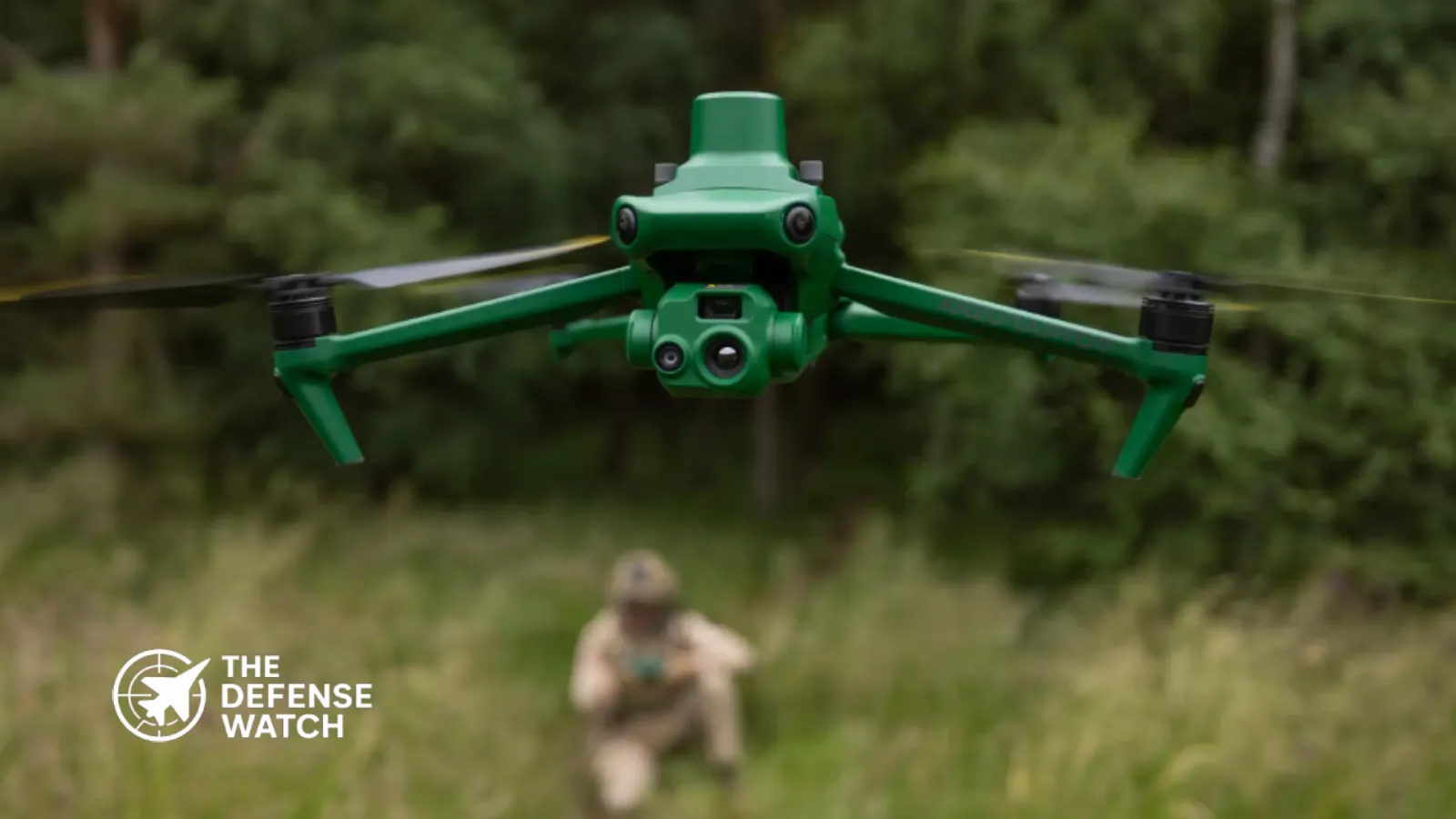
The British Army is restructuring its military presence in Estonia by reducing its deployment of Challenger 2 main battle tanks and introducing a larger fleet of tactical drones. The move reflects the UK’s wider modernization strategy, emphasizing intelligence, surveillance, precision targeting, and autonomous systems while maintaining its commitment to NATO’s eastern flank.
British Army Replaces Tanks With Drones In Estonia
The British Army replacing tanks with drones in Estonia marks a significant shift in how the United Kingdom intends to contribute to NATO’s forward deterrence mission. British defense officials confirmed that future deployments will rely less on heavy armored formations and increasingly on unmanned aerial systems capable of providing persistent surveillance and battlefield awareness.
The changes are part of the British Army’s ongoing transformation under the Future Soldier program and align with lessons drawn from recent conflicts, particularly the extensive use of drones in Ukraine. The UK Ministry of Defence has repeatedly emphasized that future land warfare will combine armored forces with autonomous and remotely operated systems rather than relying exclusively on traditional heavy platforms.
Why The UK Is Changing Its Force Structure
The British Army currently leads NATO’s forward land forces in Estonia under the Alliance’s Forward Land Forces framework.
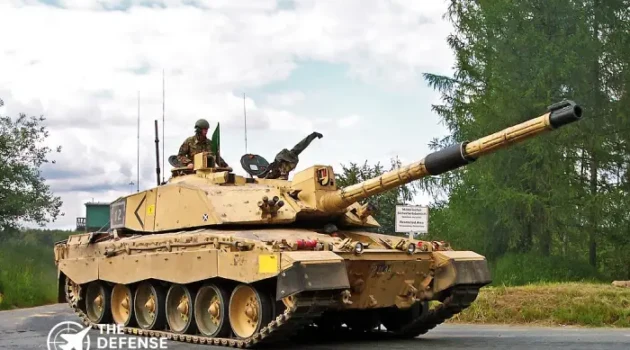
Rather than eliminating armored capability altogether, the UK is adjusting the composition of its deployed force. Fewer Challenger 2 tanks will be stationed in Estonia while additional unmanned aerial systems will support reconnaissance, target acquisition, force protection, and command decision making.
British officials describe the change as an effort to create a more agile and information driven force capable of responding quickly to evolving battlefield conditions.
The shift reflects broader trends across NATO, where armed forces are investing heavily in drones, loitering munitions, electronic warfare, and networked command systems.
Drones Have Become Essential On Modern Battlefields
Recent conflicts have demonstrated that drones now perform missions once reserved for larger, more expensive platforms.
Modern tactical UAVs provide capabilities including:
Capability Operational Benefit Intelligence, Surveillance and Reconnaissance (ISR) Continuous battlefield monitoring Target Identification Faster precision engagement Force Protection Early warning against enemy movement Battle Damage Assessment Immediate post-strike evaluation Communications Support Improved situational awareness Small drones can remain airborne for extended periods, operate at relatively low cost, and deliver real time imagery directly to commanders.
For NATO forces operating near Russia’s western military district, persistent surveillance significantly improves operational awareness without requiring constant armored patrols.
Challenger Tanks Remain An Important Capability
The restructuring does not signal the end of Britain’s armored forces.
The UK continues upgrading its heavy armor through the Challenger 3 program, which introduces:
- New 120 mm smoothbore main gun
- Improved modular armor
- Digital battlefield architecture
- Enhanced sensors
- Greater interoperability with NATO allies
Heavy tanks remain essential for high intensity combat, breaching operations, and direct fire support.
Instead, British planners increasingly view drones and armored vehicles as complementary capabilities rather than alternatives.
Lessons From Ukraine Continue To Shape NATO Planning
Military planners across Europe have closely studied the war in Ukraine, where inexpensive drones have dramatically influenced battlefield tactics.
Commercial quadcopters, military reconnaissance UAVs, loitering munitions, and first person view (FPV) drones have proven capable of:
- Detecting armored formations
- Directing artillery fire
- Destroying individual vehicles
- Conducting precision strikes
- Supporting infantry operations
These developments have accelerated drone procurement programs throughout NATO.
The British Army has expanded investments in tactical UAVs, autonomous logistics, electronic warfare, and counter drone technologies to address emerging operational requirements.
What This Means For NATO’s Eastern Flank
Estonia occupies one of NATO’s most strategically important positions, sharing a border with Russia.
The UK’s forward deployment serves as part of NATO’s collective deterrence posture designed to reassure allies and complicate any potential aggression against Alliance territory.
Replacing some tanks with drones allows British forces to:
- Increase battlefield awareness
- Improve reconnaissance coverage
- Detect threats earlier
- Reduce logistical demands
- Integrate more closely with NATO’s digital command networks
Rather than reducing combat power, the adjustment seeks to improve the effectiveness of deployed forces by expanding their ability to observe and understand the operational environment.
Analysis: A Shift Toward Information Dominance
The decision illustrates a broader evolution in land warfare rather than a rejection of armored forces.
Modern military operations increasingly prioritize information superiority. Commanders who can detect threats first, share targeting data rapidly, and coordinate precision fires often gain significant tactical advantages before heavy units even engage.
Drones provide continuous surveillance at a fraction of the cost of manned aircraft and can operate alongside satellites, ground sensors, and electronic intelligence systems.
For the British Army, integrating unmanned systems into forward deployments enhances reconnaissance while reducing the logistical footprint associated with maintaining larger armored formations overseas.
At the same time, tanks remain indispensable during high intensity combat. Protected mobility, direct firepower, and survivability cannot currently be replicated by unmanned aerial systems. The UK’s modernization effort therefore reflects a balanced approach that combines heavy armor with advanced sensing and autonomous capabilities.
For NATO, the move also demonstrates how alliance members are adapting force structures based on operational lessons from contemporary conflicts. Similar investments in drones, artificial intelligence, electronic warfare, and networked command systems are underway across multiple allied militaries, suggesting that Estonia will continue serving as a testing ground for the next generation of integrated land operations.

Estonia Says NATO Remains Strong Despite Pressure
Estonia NATO defense policy moved into focus this week after Estonian Defense Minister Hanno Pevkur said the alliance remains intact and that the United States would honor its commitment to defend allies in the event of a Russian attack.
Speaking in Vilnius, Pevkur dismissed fears that NATO could fracture under political pressure, saying disagreements inside the alliance should be seen as part of a long-term partnership rather than evidence of collapse. Reuters reported the remarks on April 17.
- Estonian Defense Minister Hanno Pevkur said NATO will not collapse despite recent alliance tensions.
- Pevkur said he is confident the United States would defend Estonia if Russia attacked.
- Estonia plans to spend 5.1% of GDP on defense, among the highest levels in NATO.
- The minister said Europe still cannot fully defend itself without U.S. support.
- Comments come as NATO members debate spending targets before the next summit.
The comments come at a sensitive moment for transatlantic security. NATO members are balancing continued support for Ukraine, rising military budgets, and debate over burden-sharing between North America and Europe.
Why Estonia’s Message Matters
Estonia is one of NATO’s frontline states, bordering Russia and positioned on the alliance’s northeastern flank. Because of geography alone, statements from Tallinn carry more weight than similar comments from countries farther from the threat environment.
For Baltic governments, deterrence depends on two things:
- Forward-deployed NATO forces
- Clear U.S. political commitment
- Faster European rearmament
- Sustained support for Ukraine
When Estonia publicly states confidence in Washington, it sends a message to both allies and adversaries that alliance cohesion remains intact.
Defense Spending Pressure Builds Across NATO
Pevkur also argued that European states must increase military spending faster. He criticized many allies for failing to meet higher spending ambitions now being discussed inside NATO. Estonia plans to allocate 5.1% of GDP to defense, placing it among the top spenders in the alliance.
That matters because NATO’s future credibility will likely be measured less by speeches and more by ammunition stocks, air defense capacity, industrial output, and deployable brigades.
Several European governments have already launched procurement drives for:
- Air and missile defense systems
- Long-range fires
- Armored vehicles
- Drone and counter-drone systems
- Ammunition production lines
Europe Still Depends On U.S. Military Power
One of the most notable parts of Pevkur’s remarks was his acknowledgment that Europe cannot yet defend itself independently.
That assessment reflects a widely recognized capability gap in areas such as:
- Strategic airlift
- Intelligence, surveillance and reconnaissance
- Missile defense
- Precision strike networks
- Nuclear deterrence
- Large-scale logistics
While Europe is spending more, replacing decades of reliance on U.S. capabilities will take years, not months.
Strategic Outlook For NATO In 2026
The real issue facing NATO is not immediate collapse, but adaptation. The alliance must prove it can deter Russia, support Ukraine, and rebalance responsibilities among members without weakening unity.
Estonia’s position suggests smaller frontline states want two outcomes at once: stronger European militaries and continued U.S. leadership.
That dual-track approach is likely to dominate discussions at upcoming NATO meetings.
Bottom Line
Estonia’s latest message is clear: NATO remains credible, the U.S. security guarantee still matters, and Europe must move faster to strengthen its own defenses. For countries closest to Russia, those are not abstract political debates, they are core security requirements.

What Happened
On September 19, 2025, three Russian MiG-31 fighter aircraft entered Estonian airspace near Vaindloo Island in the Gulf of Finland and stayed over Estonia for approximately 12 minutes, according to Estonia’s Ministry of Foreign Affairs and military.
The incursion was characterized by several alarming markers:
- The Russian fighters did not file flight plans.
- Their transponders were off.
- They were not in communication with Estonian air traffic control.
Italian F-35 jets, deployed as part of NATO’s Baltic Air Policing mission, responded to the intrusion.
Estonian Foreign Minister Margus Tsahkna described this violation as “unprecedentedly brazen,” noting that while there have been four airspace violations by Russia this year, this is the first involving multiple fighter aircraft crossing into Estonian airspace.
Russia has not yet issued an official comment. Estonian authorities summoned the Russian charge d’affaires and submitted a formal protest note.
Geopolitical Context
This incident comes amid growing unease across NATO about cross-border incidents since Russia’s full-scale invasion of Ukraine began in February 2022. Previous infractions have included drone overflights, aircraft entering airspace without clearance, and occasional diving or banking over international or NATO member territory.
A case earlier this month had seen Russian drones downed over Poland, heightening concern that spillover effects from the Ukraine conflict might extend into allied airspace.
The Baltic region has been a flashpoint: Latvia, Lithuania, and Estonia have repeatedly logged violations of their airspaces or near misses. Baltic Air Policing, with rotating NATO assets (often including U.S., Italian, Finnish, or other partners’ aircraft), has been one key mechanism to deter or respond to such incidents.
NATO and Estonian Response
- Air Policing: The Italian F-35s on station reacted. These rapid response assets are central to enforcing national airspace and signaling resolve.
- Diplomatic Pressure: Estonia summoned a Russian diplomat. This is standard protocol in response to breaches, but when language escalates (e.g., calling an incursion “unprecedentedly brazen”), it signals a degree of diplomatic severity.
- Political Statements: Estonia’s foreign minister called for increased political and economic pressure on Russia. NATO’s member states observe such incidents as potential tests of collective resolve.
Analysis – Implications for U.S. Defense & Global Security
U.S. Forward Presence & Deterrence in Europe
For the United States, incidents like this underscore the importance of its forward stationed air and missile defense assets in Europe. U.S. Air Force and U.S. Navy units often contribute to NATO air policing, radar coverage, intelligence gathering, and quick-reaction alert forces. Any lapse in response or capability could encourage further probing by Russia.
Alliance Credibility and Cohesion
Frequent airspace violations test NATO’s deterrence credibility. If member states fail to respond or if responses are inconsistent, Russia may interpret that as a weakening of resolve. For the U.S., maintaining commitment to Allies like Estonia is part of upholding the credibility of extended deterrence, which includes protection against both military and hybrid threats.
Escalation Risk & Miscalculation
Flying with transponders off and without filing plans are typical of operations intended to test reactions or gather intelligence. Such behavior increases risk of miscalculation, especially if NATO or national air defenses misidentify intent, or if an intercept goes wrong. For the U.S., which maintains several mutual defense treaties and obligations in NATO, risk management, rule of engagement, and rules of intercept remain crucial.
Technological Trends & Airspace Domain Awareness
This incursion highlights ongoing challenges in airspace domain awareness—identifying and tracking aircraft when transponders are off or communication is lacking. The U.S. defense community has been investing in better radar, passive sensors, space-based tracking, and more autonomous detection systems. These incidents validate the need for enhanced sensor fusion, rapid data sharing among NATO and partner states, and resilient command and control systems.
Conclusion: What to Watch Moving Forward
As tensions between Russia and NATO remain elevated, incidents like the MiG-31 incursion over Estonia are likely to recur. We can expect:
- Increased NATO air policing and surveillance posture in the Baltic region, possibly with more frequent or rotated deployments of high-capability fighters and AWACS-type platforms.
- Augmented U.S. capabilities in Eastern Europe, potentially more joint training, missile defense enhancements, or forward deployments.
- Heightened diplomatic friction, including protests, sanctions, or diplomatic demarches in response to any further violations.
- Policy debate in Washington over funding for European Deterrence Initiative (EDI) and supplemental appropriations if spillover threats grow.
In sum, this incursion is emblematic of a broader pattern of Russian probing of NATO borders — challenging allies to respond not just with words, but with enhanced readiness, technology, and unity.