Moroccan FREMM Frigate Mohammed VI Joins French Carrier in ORION 2026
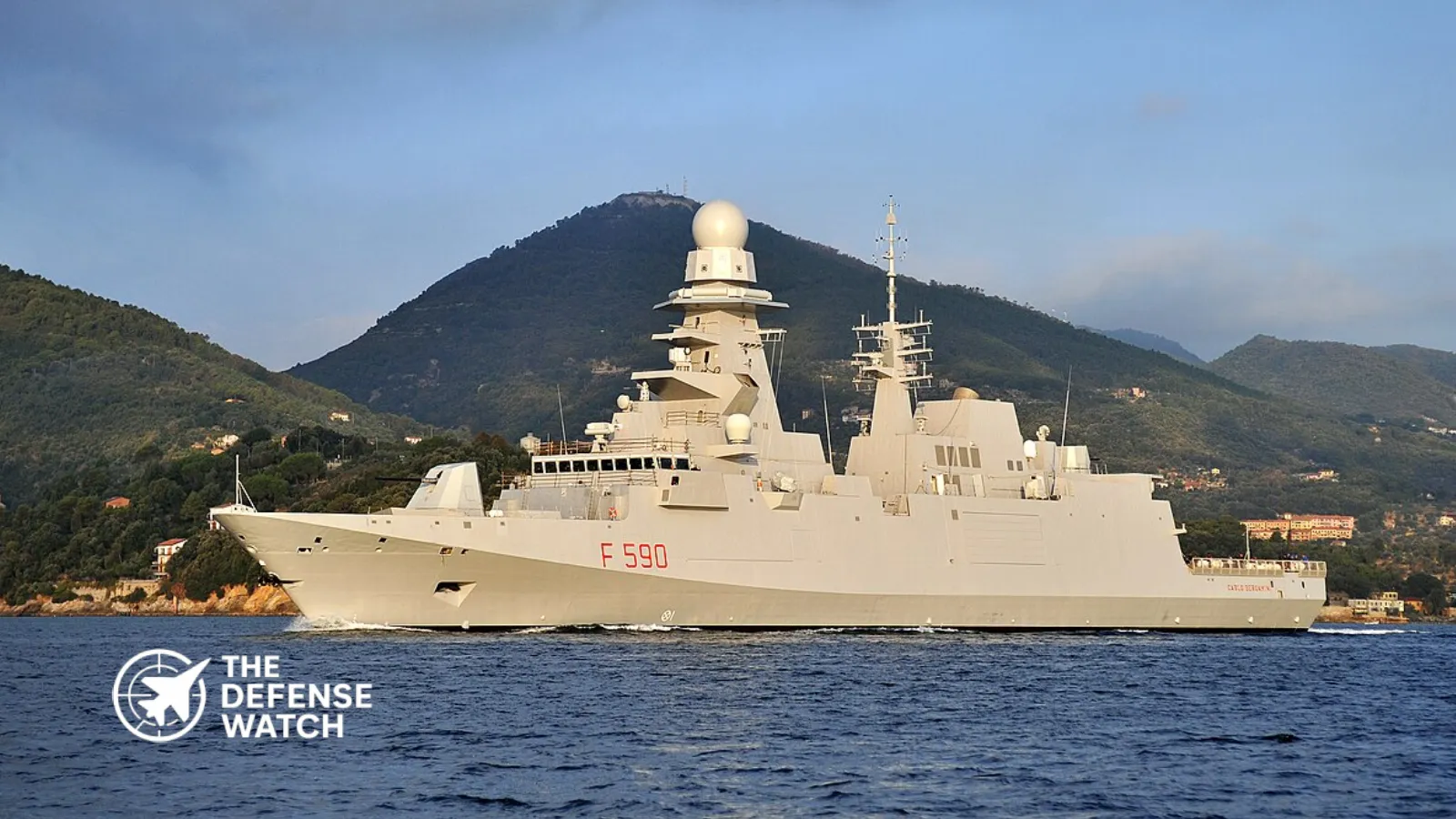
The Royal Moroccan Navy’s FREMM frigate Mohammed VI has been integrated into the escort group of the French aircraft carrier Charles de Gaulle during the build-up for the high-intensity maritime exercise ORION 2026.
The deployment of Mohammed VI marks Morocco’s direct contribution to one of the largest current naval drills under French leadership, reinforcing coalition interoperability in contested sea environments.
Exercise ORION 2026: Scope and Objectives
ORION 2026 is a multinational military exercise led by France that runs from early February through late April. Its design aims to test joint operational planning, force integration, and command structures across land, sea, air, cyber, and information domains.
The naval component centers on a Carrier Strike Group anchored by the nuclear-powered Charles de Gaulle, operating in the North Atlantic, with the possibility of extending toward Arctic waters. More than 12,000 personnel, 25 major surface units, and over 140 aircraft and drones are involved, alongside ground forces in European training zones.
Morocco’s participation with its flagship frigate underscores a deeper security partnership with France and reflects an emphasis on maritime cooperation and interoperability with Western naval forces.
Mohammed VI’s Role in the Escort Group
The Mohammed VI, a FREMM (Frigate European Multi-Mission) class vessel, brings balanced capabilities to the multinational screen. Designed primarily for anti-submarine warfare, it combines hull-mounted and variable-depth sonar with lightweight torpedoes and an embarked helicopter suited for sub-surface threats.
The frigate also contributes to air defense with vertical-launch surface-to-air missiles and a medium-caliber main gun, and adds surface strike capacity with anti-ship missiles. In a carrier escort role, such ships typically form part of the outer or intermediate detection and defense rings, enhancing layered protection around high-value units like carriers.
Multinational Participation and Strategic Context
Alongside Morocco and France, ORION 2026 includes partner navies from Spain, Germany, Belgium, Brazil, Canada, South Korea, Estonia, Croatia, Italy, Greece, Japan, Norway, Luxembourg, the Netherlands, Poland, Qatar, Romania, the United Kingdom, Singapore, and Switzerland.
The broad participation reflects France’s effort to reinforce allied readiness and test coalition operations under realistic high-end scenarios. It also aligns with NATO standards for interoperability, even though the exercise is French-led and not a formal NATO operation.
For Morocco, deploying Mohammed VI alongside seasoned Western maritime forces offers practical training in high-tempo, multi-domain operations and deepens ties with European navies.
Operational Significance
Carrier strike group escort operations are among the most demanding at sea. They require precise coordination of ASW, air defense, surface warfare, and logistics under simulated contested conditions. Includes frequent communications, shared sensor data, and tight tactical formations.
By integrating the Mohammed VI into this context, ORION 2026 provides Moroccan naval forces with exposure to advanced coalition tactics and command structures. For the French Navy and its partners, it tests the ability of a diverse maritime coalition to protect critical assets and operate as a unified force.
Looking Ahead
As ORION 2026 transitions from the assembly phase into full execution, Mohammed VI and its crew are expected to participate in a series of high-tempo drills focused on carrier defense, anti-submarine warfare, integrated air defense, and joint maritime strike operations.
The expanded exercise will serve as a benchmark for coalition readiness and a test of combined sea power projection in the Atlantic and beyond.
Get real time update about this post category directly on your device, subscribe now.