
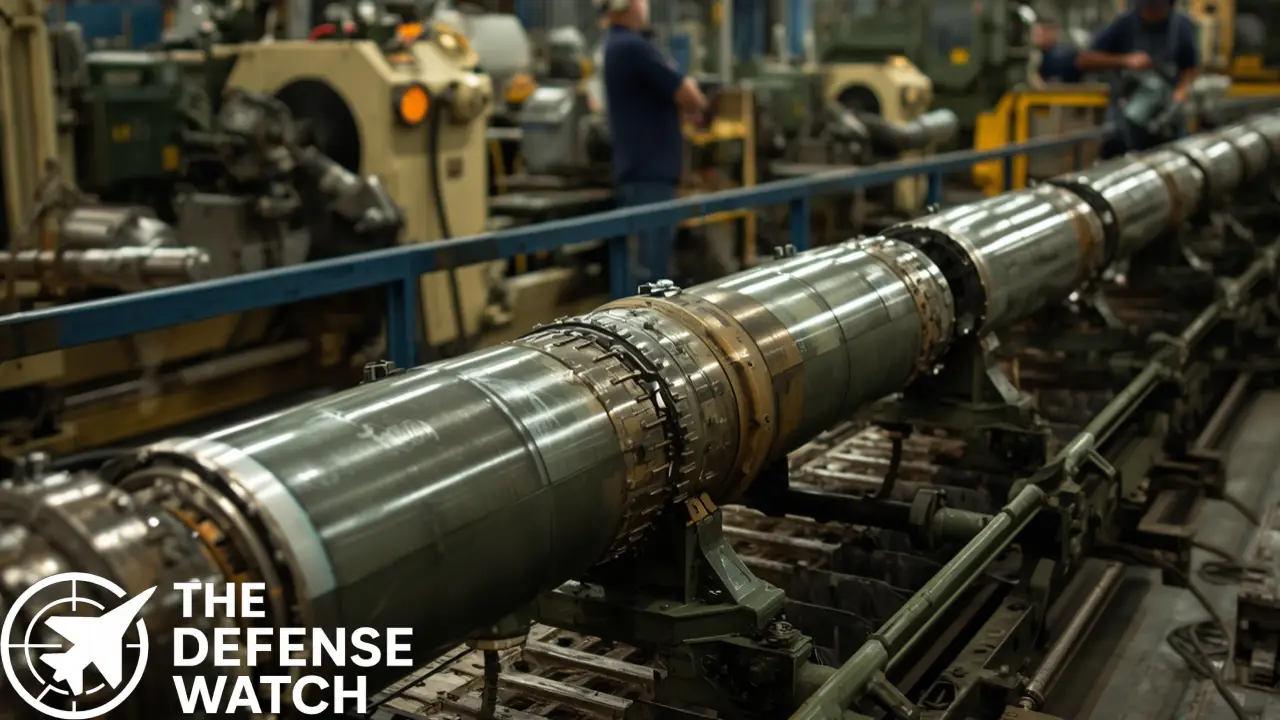
The United States continues to grapple with a persistent shortfall in artillery shell production, especially of 155mm rounds, well into 2025. Despite massive investments and aggressive expansion plans, the Pentagon remains unable to meet its own replenishment targets, leaving both U.S. and allied stockpiles vulnerable.
Production Goals vs. Reality
In early 2024, the Army laid out an ambitious ramp-up plan: from 60,000 shells per month in October 2024, to 75,000 by April 2025, and ultimately reaching 100,000 per month by October 2025. But by mid-2025, production stalled at approximately 40,000 rounds per month. The Army now expects to hit the 100,000-round target only by mid-2026.
Underlying Causes of the Shortfall
Industrial Atrophy and Infrastructure Gaps
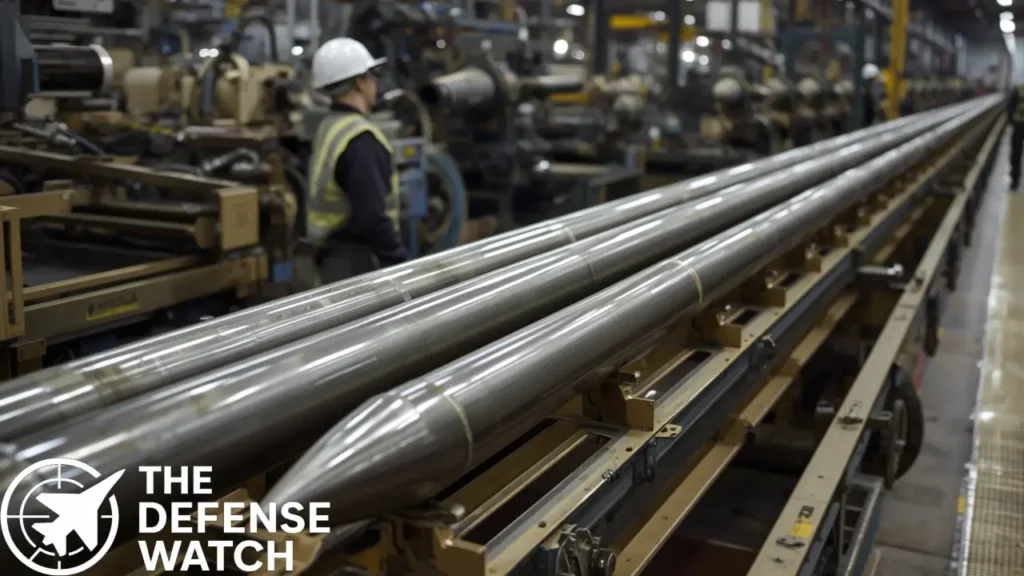
Much of the U.S. artillery industrial base is rooted in Cold War-era plants—many have not been modernized or expanded, leaving fragile production chains unable to surge quickly.
Supply Chain Constraints
The ramp-up has been hindered by long lead times for critical manufacturing equipment and materials, often sourced internationally. Moreover, shell casings and propellants require complex metallurgy and stringent quality control, slowing capacity expansion.
Propellant and Charge Bottlenecks
While shell projectiles production has increased, the U.S. has lagged in producing full rounds—complete with propellant and fuze. As of mid-2025, only about 18,000 complete rounds were being produced per month, down from 40,000 projectiles, due to limited domestic propellant capacity.
Long-Term Underinvestment
Reuters and defense analysts point to decades of neglect—plants shuttered after post–Cold War cutbacks, ignored warnings from NATO leaders, and absent strategic planning, all setting the stage for today’s shortages. Only now are investments—described as the most significant since WWII—flowing back into infrastructure.
Steps Toward Resolution
New Facilities and Contracts
- On August 15, 2025, the Army awarded a $635 million contract to MSM Group North America to build a modern, automated “Future Artillery Complex” at the Iowa Army Ammunition Plant, set to open in 2029.
- In April, the Army and General Dynamics opened a new load-assemble-pack facility in Camden, Arkansas, capable of handling up to 50,000 rounds per month once fully operational.
- An earlier $435 million contract funded a new TNT production plant in Kentucky; further new facilities are underway.
Mineral and Raw-Material Pressures
Escalating military demand has intensified competition for critical metals like copper, crucial to ammunition manufacture. U.S. supply chains are exposed and reliant on imports, while demand continues to outstrip domestic reserves.
Industrial Base Resilience Strategies
Lawmakers have proposed creating a network of commercial high-tech factories that could be tapped during wartime for rapid munitions production. Innovative procurement models, such as open-source shell design licensing through startups like Tiberius Aerospace, could offer long-term agility.
Strategic Implications and Outlook
The inability to swiftly regenerate artillery stockpiles underlines a dangerous hollowing of the U.S. defense industrial base. With only a small percentage of the defense budget going toward procurement, replenishing munitions is slow—exacerbated by a fragile supplier ecosystem and budgetary constraints. Alternative technologies like precision drones and extended-range artillery are on the rise, but traditional high-volume shells remain indispensable for sustained combat operations.
Analysis:
These delays highlight how, across decades, strategic foresight faltered at key junctures. Today’s crisis reflects the cumulative effects of industrial complacency, flawed budgeting, and underpreparedness. While new facilities and policies signal recovery, they often take years to come online—a risk in an era of fast-escalating conflicts.
Looking Ahead
The U.S. is on an uneven trajectory to rebuild ammunition capacity. With new infrastructure underway and innovative models emerging, supply shortfalls may ease—but only over the medium to long term. In the meantime, policymakers face a difficult balance: sustain aid to allies, fortify domestic readiness, and invest in a resilient industrial foundation capable of responding to future crises.
FAQs
Cold-war era plants are outdated, supply chains are stretched, and raw materials and specialized equipment have long lead times—all limiting a rapid scale-up.
As of mid-2025, production is about 40,000 155mm rounds per month—far short of the 100,000 monthly target, which is now postponed to mid-2026.
New facilities in Iowa, Arkansas, Kentucky are under construction or online; industrial investments are the largest since WWII; supply chain diversification and innovative procurement models are being explored.
Copper is a critical component in shell manufacture. Increased military demand for copper strains already tight supply, disrupting production capabilities.
Yes. Efforts like the extended-range ERCA systems, open-source munitions designs, and drone integration could boost flexibility—but mass-produced traditional shells remain vital.
Get real time update about this post category directly on your device, subscribe now.

5 comments
[…] Dome (Israel) – Highly effective against short-range rockets and artillery shells, with an interception rate exceeding 90% in recent […]
[…] and Propellants: The U.S. Army and industry partners are expanding facilities to produce artillery shells and rockets, but shortages of energetics and aging infrastructure continue to slow […]
[…] Cloud… Dean-of-Defense Strategy 2025: U.S. Shifts Focus to Homeland and Indo-Pacific Amid… Why U.S. Artillery Shells Remain in Short Supply in 2025 SUBSCRIBE […]
[…] Global Power Balance First Flight of Air Force’s YFQ-42A Drone Wingman Marks Major Step… Why U.S. Artillery Shells Remain in Short Supply in 2025 F-35 Program in 2025: Record Deliveries Expected but Upgrade Delays Cloud… China, Russia Hold […]
[…] its eventual replacement by the Sentinel program is scheduled for the 2030s. Ensuring the legacy missile remains reliable until that transition is a policy and technical […]