
Table of Contents
M1 Abrams Tank battlefield performance: The Backbone of U.S. Armored Forces
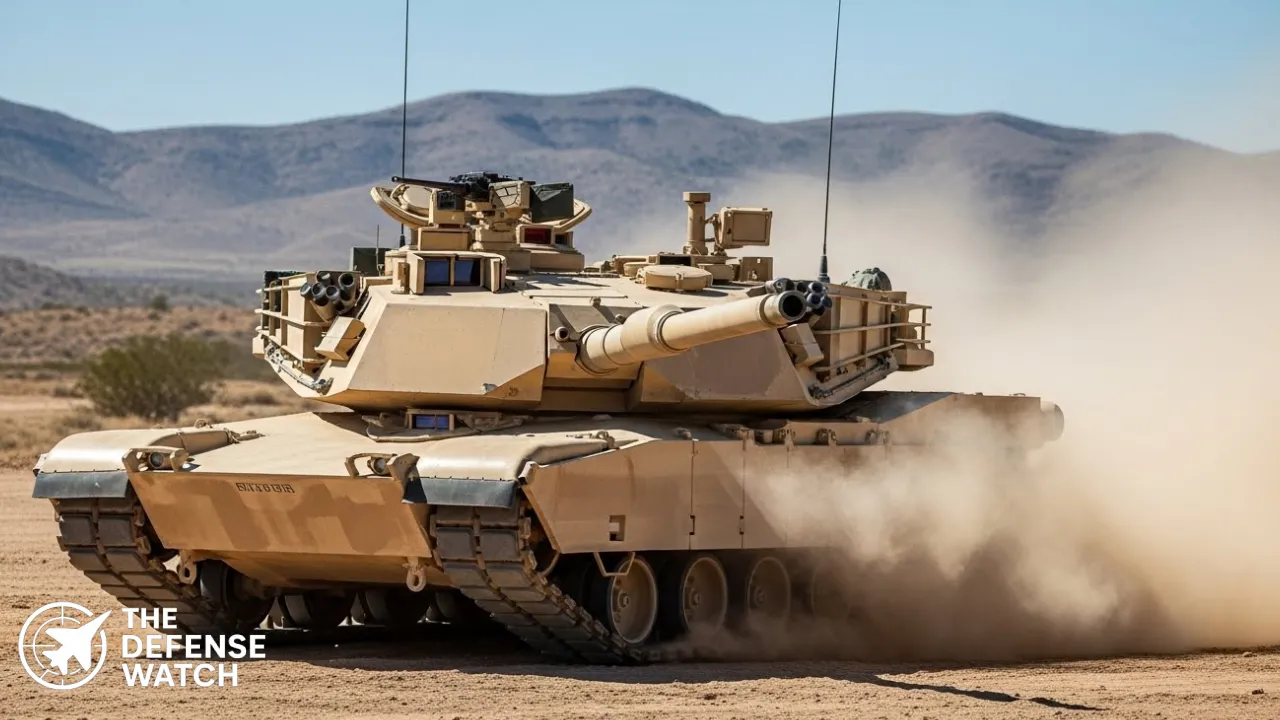
The M1 Abrams Tank continues to serve as the cornerstone of U.S. Army armored capabilities, decades after its initial deployment. Developed by General Dynamics Land Systems, this Main Battle Tank (MBT) has undergone multiple upgrades to remain relevant on modern battlefields. With its combination of advanced armor, high mobility, and devastating firepower, the Abrams is recognized globally as one of the most capable tanks in service.
The latest variant, the M1A2 SEPv3, features enhancements in crew survivability, digital fire control, and networked battlefield operations. Its 120mm smoothbore main gun allows rapid engagement of armored threats, fortified positions, and personnel targets. Complementary secondary armaments include a 12.7mm heavy machine gun and dual 7.62mm machine guns, ensuring the Abrams can handle both heavy and light targets in diverse combat scenarios.
Performance, Mobility, and Modern Upgrades
Powered by a 1,500 horsepower gas turbine engine, the M1 Abrams can reach speeds up to 67 km/h on roads and maintain significant off-road mobility at 40 km/h. Its operational range of 425 km allows sustained combat operations without frequent resupply. Modern variants incorporate Trophy Active Protection Systems, upgraded composite armor with depleted uranium layers, and automatic fire suppression systems, making it one of the most survivable MBTs in existence.
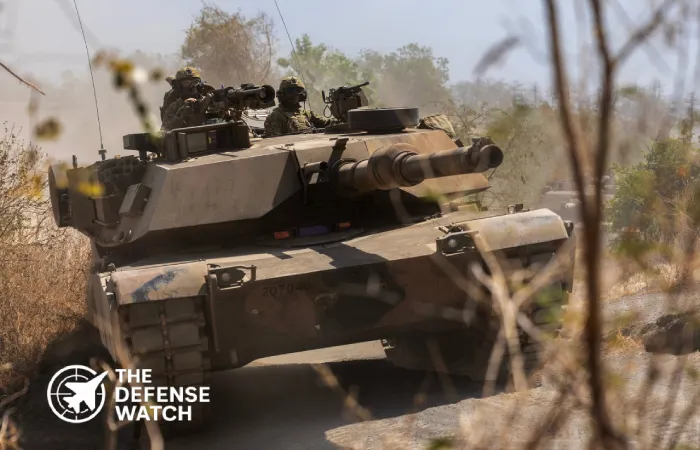
The tank’s crew of four – commander, gunner, loader, and driver – benefits from advanced digital systems including thermal imaging, laser rangefinders, and secure battlefield communications. These upgrades allow the Abrams to perform effectively under night and all-weather conditions while maintaining networked battlefield awareness.
Combat Experience and Global Context
The M1 Abrams has proven itself in multiple U.S. and coalition operations, notably in Iraq and Afghanistan, where it excelled in urban and desert warfare environments. Its modernizations reflect lessons learned from these deployments, emphasizing survivability against improvised explosive devices (IEDs), precision-guided munitions, and anti-tank guided missiles.

Analysts note that the M1 Abrams’ combination of firepower, armor protection, and mobility continues to shape U.S. armored doctrine, ensuring that it remains relevant despite advances in unmanned systems, drones, and hybrid warfare tactics. This adaptability also positions the Abrams for future upgrades under the SEPv4 program, which may include artificial intelligence integration for targeting and predictive battlefield analytics.
Strategic Relevance
As U.S. forces focus on near-peer competition and potential high-intensity conflict scenarios, the M1 Abrams Tank will remain central to ground combat strategies. Its ability to operate seamlessly with infantry, artillery, and air support enhances combined arms operations, offering the U.S. Army a decisive edge against armored adversaries.
FAQs
What is the maximum speed of the M1 Abrams Tank?Up to 67 km/h on roads and 40 km/h off-road.
What upgrades distinguish the M1A2 SEPv3 from earlier models?SEPv3 includes enhanced armor, Trophy APS, advanced fire control, and improved battlefield communications.
How many crew members operate the Abrams?Four: commander, gunner, loader, and driver.
What type of main gun does the M1 Abrams use?A 120mm M256 smoothbore main gun.
Has the Abrams seen combat?Yes, in Iraq, Afghanistan, and other coalition operations.
Get real time update about this post category directly on your device, subscribe now.

3 comments
[…] inexpensive drones equipped with explosive payloads can inflict significant damage on armored vehicles, artillery, and infrastructure, even when individually less capable than conventional air-delivered […]
[…] Anti-Tank Missile: Intended for battlefield support against armored formations, providing Su-25s with enhanced anti-armor […]
[…] that acoustic and directed energy technologies are areas of research, but public evidence of battlefield use with described effects remains […]